Learning how to avoid AI detection has become one of the most searched questions among writers, students, and marketers since language models made it possible to draft content in minutes instead of hours.
That shift changed how the internet gets written. As websites and schools caught on to the trend, detection tools followed close behind, and they were quickly adopted by everyone from Google SEO specialists to university administrators.
The technology behind these scanners is sophisticated, but avoiding detection is absolutely possible if you know the right techniques. The secret is making sure your content is properly humanized and polished before it ever hits a scanner.
Lassen Sie uns eintauchen.
Wichtigste Erkenntnisse
- AI detection is probabilistic, meaning it calculates the likelihood of machine origin rather than offering definitive proof of “guilt.”
- Die Vermenschlichung ist die wichtigste Abwehrmaßnahme, denn sie erfordert, dass Sie die symmetrischen Muster und vorhersehbaren Wortwahlen, die Maschinen standardmäßig verwenden, durchbrechen.
- Detectors are not applied evenly. Non-native English writers and formal, careful writers are flagged far more often, so a high score is never proof on its own.
- Google gibt dem Wert den Vorrang vor der Herkunft und konzentriert sich auf hilfreiche Inhalte, die Fachwissen aus erster Hand bieten, unabhängig davon, ob KI beim Schreiben geholfen hat.
- Ethics remain the central pillar, since bypassing detection for academic dishonesty carries real risk, while doing so for creative efficiency is widely accepted.
- Hybrides Schreiben ist der Goldstandard, der die Geschwindigkeit der KI mit den spezifischen Anekdoten und der emotionalen Tiefe kombiniert, die nur ein Mensch bieten kann.
- Tools like Undetectable AI pair detection and humanization in a single workflow, so you can spot the exact passages a scanner would flag and fix them before you publish, rather than guessing at what to change.
Was ist AI Detection?
Bei der KI-Erkennung wird ein Textblock gescannt, um die Wahrscheinlichkeit zu ermitteln, dass er von einem Algorithmus und nicht von einem Menschen erstellt wurde.
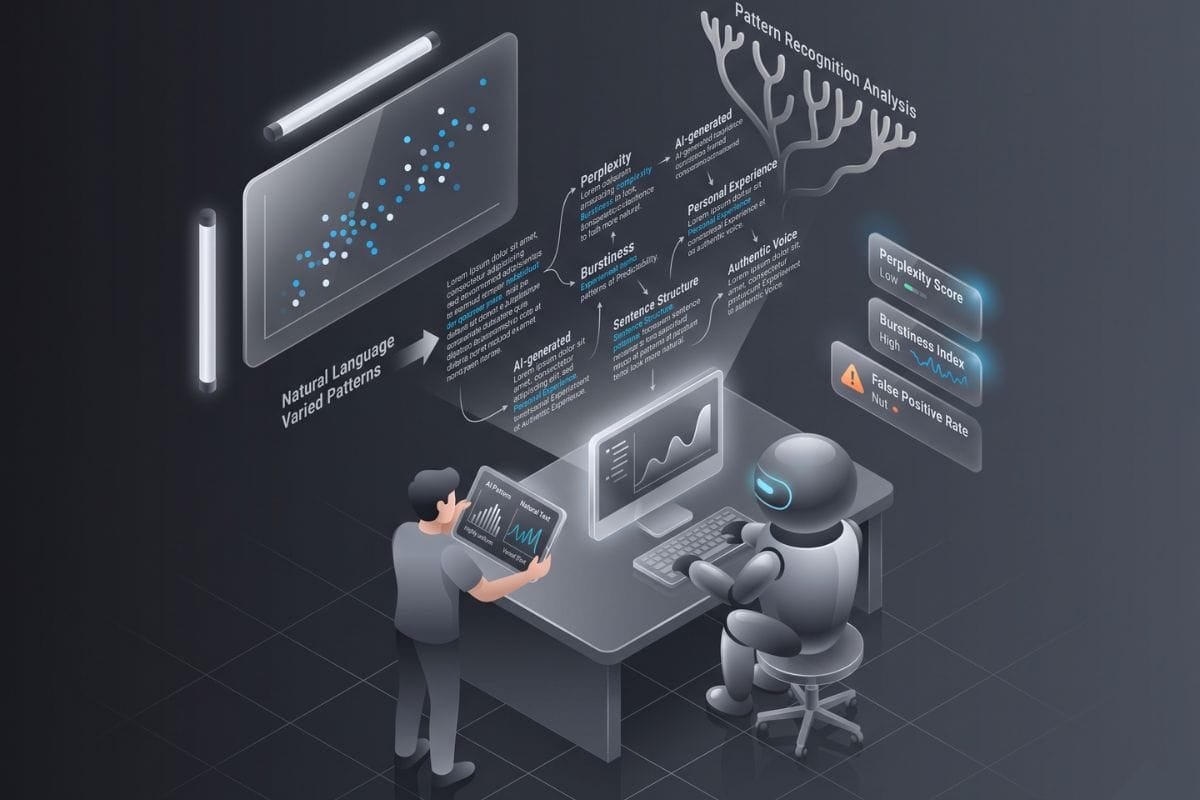
It’s important to remember that these tools are not “reading” the content for meaning. They are performing a statistical analysis.
They look for specific “fingerprints” left behind by large language models, such as uniform sentence structures and a lack of creative vocabulary.
Machen Sie sich nie wieder Sorgen, dass KI Ihre Texte erkennt. Undetectable AI Kann Ihnen helfen:
- Lassen Sie Ihr AI-unterstütztes Schreiben erscheinen menschenähnlich.
- Bypass alle wichtigen KI-Erkennungstools mit nur einem Klick.
- Verwenden Sie AI sicher und zuversichtlich in Schule und Beruf.
When you receive an AI detection score, it’s often misunderstood. A score of 70% does not mean that 70% of the words are AI-generated.
Instead, it indicates that the detector is 70% confident the entire passage was produced by a machine. Because these tools rely on math rather than intuition, they are notorious for false positives, flagging human-written work simply because it is clear, formal, or structured logically.
Warum die Menschen eine KI-Erkennung von vornherein vermeiden wollen
The desire to bypass these filters usually stems from a need to protect one’s reputation or search engine rankings.
For students, the motivation is often survival. Universities have integrated detection into platforms like Turnitin, und eine Beanstandung kann zu schweren akademischen Strafen oder zum Ausschluss führen.
Even if a student used AI only for minor brainstorming, a high detection score can trigger a grueling investigation. It’s part of why so many students now look into which AI tools are actually safe to use for schoolwork before they ever open a blank document.
Für Fachleute geht es oft darum, das Vertrauen zu erhalten. Autoren von Inhalten und Blogger befürchten, dass sich eine Kennzeichnung ihrer Arbeit negativ auf die Autorität ihrer Marke auswirken oder zu einem geringeren Engagement eines skeptischen Publikums führen könnte.
While the technology is a tool for efficiency, no one wants their readers to feel like they’re being served “recycled data.” Avoiding detection is about proving that a human was still the primary architect of the message.
Wie KI-Detektionswerkzeuge tatsächlich funktionieren
Um das System zu schlagen, müssen Sie verstehen, wie das System “denkt”. KI-Detektoren verwenden drei Hauptkriterien, um Ihre Arbeit zu beurteilen.
Mustererkennung und Vorhersagbarkeit
KI-Modelle sind so konzipiert, dass sie das statistisch wahrscheinlichste Wort auswählen, das auf das vorhergehende folgt. Dies verleiht dem Text eine “Geschmeidigkeit”, die bei menschlicher Schrift sehr selten ist.
Detektoren suchen nach diesem Mangel an “Reibung”. Wenn jedes Wort die sicherste, am meisten erwartete Wahl ist, steigt die Wahrscheinlichkeit des KI-Ursprungs sprunghaft an.
Perplexität und Zerbrechlichkeit einfach erklärt
“Perplexity” refers to the complexity of the text. If a detector finds the writing too simple and easy to predict, it labels it as low perplexity, which reads as AI-generated. “Burstiness” refers to the variation in sentence length and structure.
Humans tend to write in “bursts,” a long, descriptive sentence followed by a short, punchy one. AI tends to be very symmetrical, using medium-length sentences throughout the entire piece.
Warum die Erkennung nicht 100% genau ist
Da diese Werkzeuge im Wesentlichen auf Vermutungen beruhen, haben sie Schwierigkeiten mit qualitativ hochwertigen, sehr formalen Texten.
Forschung von APSense has even shown that AI detectors often discriminate against non-native English speakers, Deren strukturierte und sorgfältig formulierte Texte spiegeln oft die “geringe Komplexität” von maschinell erstellten Texten wider.

The Fairness Problem: Why AI Detectors Don’t Treat All Writers Equally
This bias against certain writers is worth its own conversation, because it changes how much weight you should actually give a detection score.
The Non-Native Writer Penalty
Detectors were trained mostly on native-English writing samples, so any writing style that leans on simpler sentence structure, common vocabulary, or textbook grammar tends to look “too clean” to the algorithm.
That’s exactly how many non-native speakers write, since they often learned formal, rule-based English rather than the loose, idiomatic version native speakers grew up with. The irony is that the more careful and grammatically correct someone’s English is, the more likely a detector is to mistake it for machine output.
Independent research on detector false-positive rates has found the gap is not small. Some studies put the false-flag rate for non-native writers several times higher than for native speakers on the exact same task, which is a serious problem when a single score can affect a grade, a byline, or a job.
Undetectable AI has run its own AI detector tests and studies that dig into exactly how much these results can vary between platforms, and why relying on one single tool is risky.
What to Do If You’ve Been Falsely Flagged
If your original, human-written work gets flagged, don’t panic and don’t assume the score is the final word.
Keep your draft history, outlines, and research notes as proof of your process. Run the text through more than one detector before drawing any conclusions, since results vary widely between platforms.
And if you’re in an academic or professional setting, ask the reviewer what evidence beyond the score is being used to make a decision.
Ist es wirklich möglich, eine KI-Erkennung zu vermeiden?
The short answer is yes, but it isn’t always as simple as clicking a “scramble” button. The battle between writers and detectors has become a sophisticated, constantly shifting game of cat and mouse.
The Reality Behind “Undetectable” Claims
Many tools claim to make text 100% undetectable, but the reality is that detection technology evolves constantly.
Avoiding detection is not about finding a magic cloaking device. It’s about editing the text so it no longer follows machine-like patterns. True “undetectability” comes from a mix of software refinement and human intuition.
Warum kein Tool die Erkennung von 0% garantiert
Because different detectors, like GPTZero, Winston, or Originality.ai, use different algorithms, a piece of text might pass one and fail another. A “0% AI” score is often an unrealistic goal.
The objective is usually to keep the probability low enough, typically under 20%, that it doesn’t trigger a manual review or a red flag.
Das Risiko von Fehlalarmen
You must be prepared for the fact that even perfectly human content can be flagged. This is why it’s vital to keep your research notes and version history.
If you’re ever accused of using AI, being able to show the “evolution” of your draft, how you moved from an outline to a finished piece, is your best defense against a faulty algorithm.
Was macht KI-generierte Inhalte leicht zu erkennen?
KI hat “Tells”, genau wie ein Pokerspieler. Ein wichtiger Hinweis ist das Fehlen spezifischer, konkreter Details. KI spricht oft in großen Allgemeinheiten und bietet “Glückskeks”-Weisheiten ohne die spezifischen, gelebten Beispiele, die menschliches Fachwissen kennzeichnen.
Another giveaway is the “over-polished” nature of the text. It rarely contains the idiosyncratic metaphors or conversational slang that humans use to add color to their thoughts.
AI-generated content often lacks a strong personal voice, too. It tends to stay neutral and safe, avoiding controversial takes or deeply emotional storytelling.
If an article feels like it could have been written by anyone for any audience, it’s a prime candidate for a high detection score. This is a big reason why what actually counts as AI-generated content matters so much for anyone trying to keep their work sounding like their own.
Intelligente Wege, um KI-gestütztes Schreiben natürlicher zu machen
Die beste Verteidigung ist eine gute Offensive. Wenn Sie die Struktur Ihrer KI-Entwürfe proaktiv ändern, können Sie die Wahrscheinlichkeit einer Beanstandung erheblich verringern.
The more creativity and original content you can add to enhance the AI-written text, the less likely it is to be flagged as AI content, and Undetectable AI’s own breakdown of practical ways to make AI writing sound undetectable covers several techniques worth testing on your own drafts.
| Technik | Wie es funktioniert | Warum es Detektoren umgeht |
| Persönliche Anekdoten einstreuen | Fügen Sie eine besondere Geschichte aus Ihrem eigenen Leben oder Ihrer Karriere hinzu. | KI hat kein “Leben”, aus dem sie schöpfen kann; einzigartige Geschichten durchbrechen Muster. |
| Satzrhythmen variieren | Verwenden Sie sehr kurze und sehr lange Sätze in ein und demselben Absatz. | Dies erhöht die “Burstiness”, die ein wichtiger menschlicher Marker ist. |
| Seltene Synonyme verwenden | Tauschen Sie “gängige” Wörter gegen präzisere, weniger “wahrscheinliche” Alternativen aus. | Dies erhöht die “Perplexität” und bringt statistische Modelle durcheinander. |
| “Menschliche” Unvollkommenheiten hinzufügen | Verwenden Sie einen umgangssprachlichen Ausdruck oder einen leicht informellen Übergang. | KI ist zu “perfekt”; kleine stilistische Entscheidungen beweisen menschliche Absicht. |
Persönliche Einblicke und konkrete Beispiele hinzufügen
So intelligent die künstliche Intelligenz auch ist, so sehr scheut sie sich davor, spezifische Details zu erwähnen. Fügen Sie bei der Bearbeitung Ihrer Inhalte so viele Details und Beispiele wie möglich hinzu.
These human nuances are what distinguish your content as not being written by AI. If you can mention a specific event from your own week, you’ve already moved beyond the reach of most basic scanners.
Variieren Sie Satzlänge und Tonfall
Die KI liebt den “Mittelweg”. Sie schreibt Sätze, die fast immer zwischen 15 und 25 Wörtern liegen. Um dies zu ändern, schreiben Sie absichtlich einen Satz mit vier Wörtern.
Dann folgt ein Satz mit 40 Wörtern, in dem mehrere Kommas und ein Semikolon verwendet werden. So entsteht das “rhythmische Chaos”, das die Detektoren mit dem menschlichen Denken in Verbindung bringen.
Auf Klarheit und nicht nur auf Komplexität achten
Don’t just use a thesaurus to make things harder to read. Edit to ensure the message is clear and punchy. Sometimes, making a sentence more conversational, rather than more formal, is the fastest way to drop an AI score.
Google’s primary concern is that content is written for people, not for engines, so a “people-first” edit naturally helps avoid detection.
AI Detection Is Now a Workplace Issue, Not Just a Classroom One
For a long time, AI detection felt like a school problem. That’s no longer true. It has quietly become a professional one, and the stakes can be even higher.
What Happens When Professional Work Gets Flagged
Several well-known consulting and advisory firms have already had reports and client deliverables flagged by AI detectors, with one report carrying a high probability of being entirely machine-written, a finding later verified by outside investigation.
The fallout wasn’t just embarrassing. It damaged client trust and raised hard questions about whether the underlying research had even been checked.
The same forces are pushing into everyday workplaces too, where employers are increasingly relying on AI checks during hiring and performance reviews, adding real pressure to prove that written work reflects genuine skill rather than a polished but shallow AI fluency that employees project to avoid looking obsolete.
Protecting Your Professional Reputation
The fix isn’t to hide your process. It’s to be deliberate about it.
Keep drafts and source material for anything high-stakes, the same way you would for an academic paper.
Use AI for research, outlines, and first drafts, then rewrite the sections that carry your expertise in your own voice. And if your organization has a policy on AI-assisted work, follow it and disclose your process rather than getting caught off guard later.
Nicht nachweisbare AI's KI-Plagiatsprüfer is worth a look if your work regularly gets checked before it goes out the door, since it catches both AI-pattern issues and copied content in one pass.
Ethische Überlegungen: Sollten Sie versuchen, eine KI-Erkennung zu vermeiden?

An dieser Stelle wird die Diskussion zu einer Frage der persönlichen und beruflichen Integrität. Die Instrumente sind vorhanden, aber wie Sie sie nutzen, bestimmt Ihren Ruf.
If you’re using an AI Paraphrasing Tool to refine your thoughts and improve clarity, you’re leveraging technology for professional growth.
However, if you’re using it to hide the fact that you haven’t done the required work, you’re entering a moral gray area.
- Akademische Integrität: For students, the risks are immense. Bypassing detection to submit an assignment you didn’t write is a violation of trust that can have lifelong consequences. It’s always better to use AI as a tutor or research assistant rather than a replacement writer, and understanding how professors actually spot AI-written work can help you see where the real line sits.
- Transparenz im professionellen Schreiben: If you’re a freelancer, check your contracts. Some clients allow AI-assisted work, while others strictly forbid it. Being transparent about your process is often better than trying to hide it and getting caught later.
- Verantwortungsvolle Nutzung von AI-Tools: AI should be the “starting block,” not the “finish line.” The most ethical way to use these tools is to let them handle the repetitive tasks, like outlining or summarizing, while you handle the high-level analysis and emotional connection.
Does Avoiding AI Detection Help or Hurt Your Search Rankings?
This is one of the most common points of confusion for anyone publishing online, so it’s worth separating the myth from what’s actually documented.
What Google Has Actually Said
Google has stated plainly, in its own guidance on generative AI content, that using AI to write is not against its guidelines on its own. What matters is whether the finished page is genuinely useful, accurate, and written with real expertise behind it.
In other words, there’s no secret ranking penalty tied to an AI detection score. Google isn’t running your published pages through a detector and docking points for a percentage.
The Real Ranking Risk Isn’t Detection, It’s Quality
The actual risk comes from publishing thin, generic, mass-produced pages that don’t add anything a reader couldn’t already find elsewhere, regardless of whether a human or a machine typed them.
That’s why humanizing your content is worth doing for its own sake, not just to dodge a scanner. Writing that includes real examples, a clear point of view, and specific detail tends to rank well because it’s genuinely useful, and it also happens to read as more human. The two goals point in the same direction.
Wie nicht nachweisbare KI helfen kann, menschenähnliches Schreiben zu verbessern
Wenn Sie die Leistung der KI nutzen möchten, ohne Gefahr zu laufen, dass Sie markiert werden, benötigen Sie einen Workflow, der die menschliche Ausgabe in den Vordergrund stellt.
Unerkennbare KI wurde entwickelt, um diese Brücke zu schlagen und Ihre Entwürfe mit einem einzigen Klick von “roboterhaft” zu “sympathisch” zu machen.
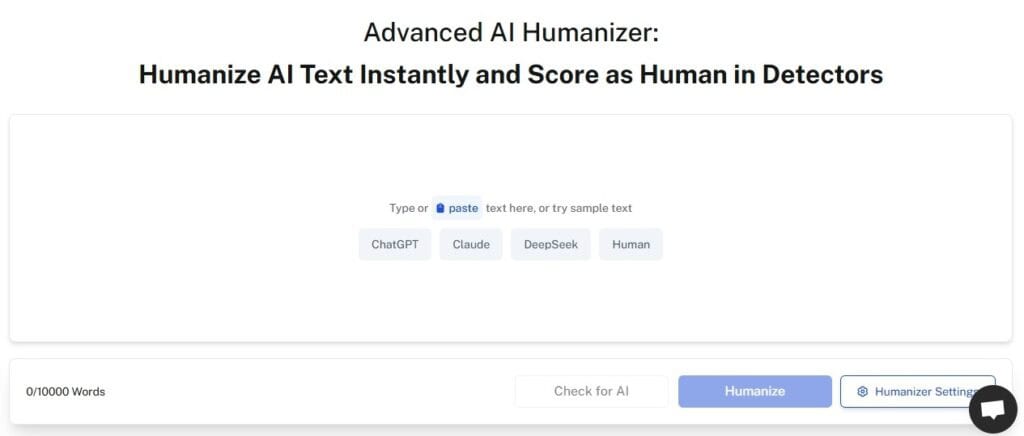
- AI Humanizer: This is the core tool for anyone wondering how to avoid AI detection. It doesn’t just “scramble” words; it rewrites the content to increase perplexity and burstiness, ensuring the final output holds up against even the most stringent modern detectors. Try our AI Humanizer directly if you have a draft that needs work right now.
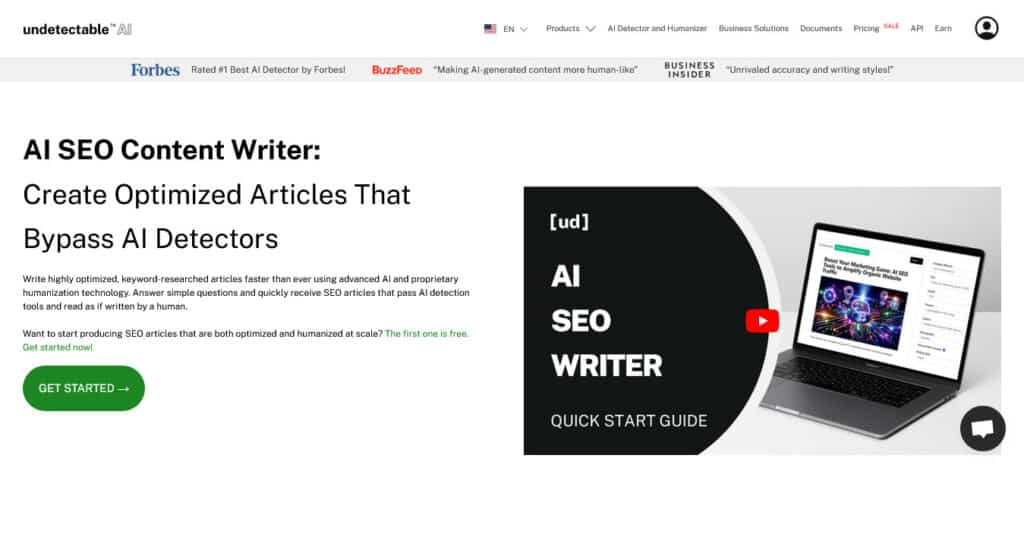
- AI SEO Inhaltsverfasser: This tool is built to produce high-quality, long-form content that’s natively designed to pass as human. It integrates current search engine guidelines to ensure your work is optimized for both robots and real people. Explore our AI SEO Inhaltsverfasser if you’re producing content at scale.
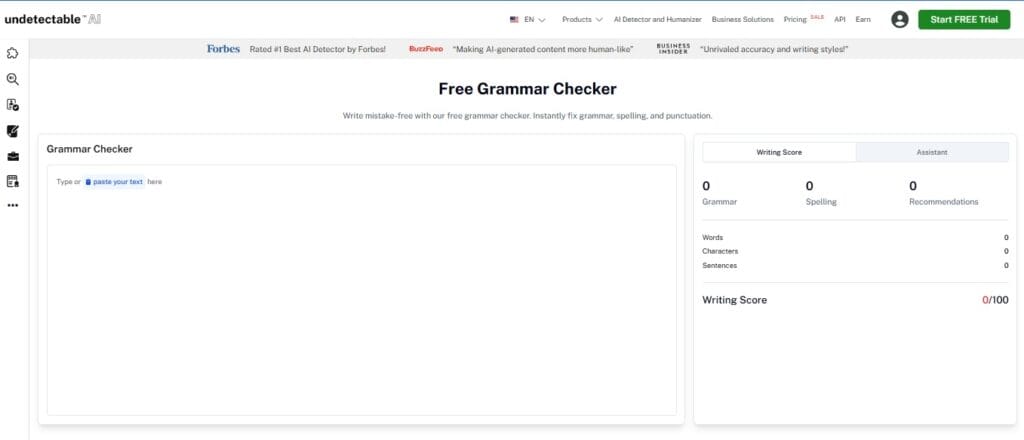
- Grammar Checker: Use this as your final quality-control layer. It ensures that while you’re “humanizing” the text, you aren’t sacrificing the professional polish and technical accuracy required for authoritative writing.
Starten Sie mit unserem AI Detector und Humanizer im Widget unten!
FAQs
Kann Google AI-Inhalte in meinem Blog erkennen?
Yes, Google has some of the most advanced detection technology in the world. However, their official stance is that they don’t penalize content solely for being AI-generated. They only penalize content that is spammy, unhelpful, or lacks first-hand expertise.
Gibt es eine kostenlose Möglichkeit, die KI-Erkennung zu vermeiden?
Manuelles Editieren ist die effektivste kostenlose Methode. Durch Umschreiben der Einleitung, Hinzufügen persönlicher Geschichten und manuelles Variieren der Satzlängen können Sie eine KI-Bewertung deutlich senken, ohne einen Cent auszugeben.
Was ist ein “guter” AI-Erkennungswert?
There’s no universally “safe” number, but most professionals aim for a score under 20%. If your score is 0%, it can actually look suspicious to some professors, since it suggests you didn’t use any modern writing tools at all.
Can AI detection affect my job, not just my grades?
Yes. More employers are running written work, from reports to applications, through detection tools, especially in industries where original analysis is part of the job.
A flagged report can affect trust with a manager or client even outside a formal disciplinary process, which is why keeping a record of your drafting process matters at work too, not just in school.
Do AI detectors get better over time, or is this a losing battle?
Both are true at once. Detectors keep improving, but so do the language models and humanization techniques writers use. Treat detection as an ongoing standard to write well against, not a puzzle you solve once and forget.
Eine bessere Herangehensweise: Qualität statt Verstecken
At the end of the day, the goal shouldn’t just be to “hide” the AI. The goal should be to produce the best possible content for your audience.
If you spend all your time trying to beat an algorithm, you might lose sight of the people you’re actually writing for.
The most successful writers today are the ones who treat AI as a collaborative partner.
They use it to generate ideas and handle the bulk of the drafting, but then they step in to add the human soul, the humor, the doubt, the specific examples, and the unique voice that no computer can replicate.
Wenn Sie sich auf Qualität, Transparenz und Wertigkeit konzentrieren, wird “Entdeckung” zu einer kleinen Hürde und nicht zu einer Bedrohung für die Karriere. Nutzen Sie die Technologie, um Ihre Fähigkeiten zu erweitern, und nicht, um einen Mangel an ihnen zu verbergen.
Create content that truly connects, and refine it with Nicht nachweisbare AI um sicherzustellen, dass es natürlich, authentisch und menschlich klingt.