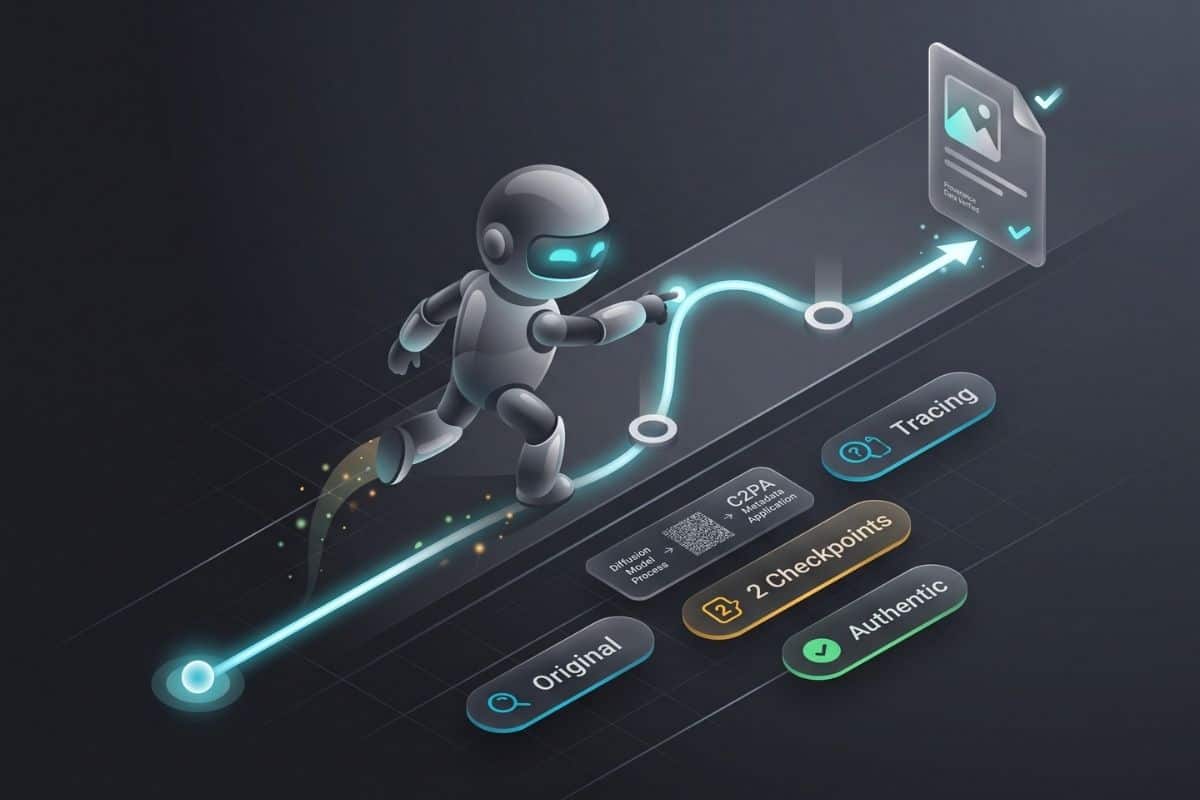
AI image generation has come a long way from the novelty days of DALL·E’s 2021 launch, when people were happy just typing “cat astronaut” and watching something strange appear on screen. Today the technology sits inside marketing departments, game studios, and ecommerce catalogs, doing real production work every day.
So what is AI image generation, exactly? In plain terms, it’s a machine learning process that turns a text prompt into a brand-new image. The model starts with random noise and gradually refines it into a picture that matches your description. No paintbrush, no camera, and no existing photo involved.
The scale is hard to overstate. More than 150 million people now use AI image generators every month, producing roughly 80 million images a day, according to 2026 industry estimates, with the market valued somewhere between $9 billion and $15 billion depending on how it’s measured.
That’s a long way from the early days when DALL·E mini (later renamed Craiyon) went viral purely as a meme generator.
This guide breaks down how AI image generation actually works: the training process, the diffusion technique behind most modern tools, the current model landscape, how to write prompts that get results, what the law actually says about who owns an AI image, and how to tell whether a picture was made by a machine or a person.
Let’s dive in.
Key Takeaways
- AI image generators don’t copy or collage existing photos. They build new images pixel by pixel using a technique called diffusion, learned from billions of image-text pairs.
- Diffusion models have overtaken GANs (Generative Adversarial Networks) as the dominant architecture behind tools like Midjourney, GPT Image 2, and Stable Diffusion.
- The US Copyright Office and the Supreme Court have confirmed that purely AI-generated images cannot be copyrighted. Only substantial human editing and creative control changes that.
- Spotting AI images in 2026 depends more on metadata standards like C2PA and dedicated detection tools than on “weird hands,” since current models handle anatomy far better than they used to.
- Detection tools such as Undetectable AI’s AI Image Detector and Deepfake Detection can catch AI fingerprints that are invisible to the naked eye.
What Is AI Image Generation?
AI image generation is the process of using artificial intelligence models to create original visuals from a text prompt.
You type a short description into an AI image generator, and a model trained on an enormous dataset of images produces a picture in seconds. If you’ve ever wondered how to generate AI images, the process on your end is simple: describe what you want, and the model translates your words into a visual.
There’s no paintbrush and no camera involved. The model has been trained on huge volumes of photos, paintings, and digital art, and it uses that training to produce something new based on your instructions. That “new” can be anything a human mind can picture, real or invented.


Never Worry About AI Detecting Your Texts Again. Undetectable AI Can Help You:
- Make your AI assisted writing appear human-like.
- Bypass all major AI detection tools with just one click.
- Use AI safely and confidently in school and work.
Ask for “a cyberpunk city at sunset,” and the AI generates an image that never existed before. It isn’t pulling up a stock photo or copying another artist’s work. A picture AI generator works by interpreting your prompt and combining learned visual patterns into an original composition rather than reproducing something that already exists.
Results still vary in quality. Sometimes they’re stunning. Sometimes they’re hilariously off. Ever asked an AI to generate human hands? That used to be a reliable way to spot a fake, though newer models have closed most of that gap. Complex scenes with lots of object interaction can still confuse a model and produce the occasional visual glitch.
The technology moved fast once it left the lab. When DALL·E opened up to the public in 2021, adoption took off almost overnight.
By late 2022, over 1.5 million users were creating two million images per day using DALL·E on its mini version alone. That number looks almost quaint now. In 2026, over 150 million people use AI image generators monthly, and the field has split into a crowded field of specialized tools, each one better suited to a different job.
We’ll get into exactly who’s leading that field a bit further down.
How AI Uses Machine Learning to Create Images
The main player behind AI image generation is machine learning, or ML for short.
Machine learning is a computing framework that lets algorithms learn patterns, recognize relationships, and generate new data without much direct human intervention. Thanks to training on massive datasets, ML models learn what objects, colors, and textures should look like largely on their own.
There are two main techniques used to train these models:
- Supervised learning: The AI is shown images paired with their descriptions, which helps it associate words with visual elements.
- Unsupervised learning: The AI learns by analyzing patterns in massive datasets without human-labeled instructions, making sense of visual information on its own.
On a technical level, neural networks are the underlying technology. These are computer models that loosely mimic the human brain, processing information in layers to build up an understanding of what’s actually in an image.
That’s the broad picture. Next, the step-by-step process of how AI image generation actually works in practice.
How AI Image Generation Works (Step-by-Step)
The actual process isn’t as simple as pressing a button and watching magic happen. Behind every AI-generated image is a carefully structured pipeline.
Here’s an eagle-eye view of it.
1. Training on Massive Image Datasets
Before an AI model can generate images, it first needs to see a lot of them, often millions or billions, scraped from the internet. These images are paired with text descriptions that help the model understand how words relate to visual elements.
When it sees “a fluffy golden retriever lying in the sun,” it learns that “fluffy” refers to texture, “golden” refers to color, and “lying in the sun” affects lighting and shadow.
This phase matters enormously, because a model is only as good as its training data. If the dataset is unbalanced, say, weighted toward Western-style art or biased depictions of certain professions, the model’s outputs will reflect those biases.
That’s why researchers continually fine-tune datasets for diversity and fairness, to prevent situations like AI defaulting to middle-aged white men whenever it’s asked to generate “a CEO.”
2. Using Neural Networks to Recognize Features
Once the model has ingested a mountain of images, it starts processing patterns using neural networks. Since memorizing specific images isn’t practical, the model breaks them down into numerical values, spotting trends and assigning probabilities to relationships.
It learns that guitars are usually associated with hands, that cats tend to have whiskers, and that sunlight casts soft shadows. Ask it for “a flamingo wearing a top hat and sunglasses, dancing on a beach at sunset, rendered in a watercolor painting style,” and it won’t find an existing image to copy.
Instead, it pieces together an original image from concepts it already understands: flamingo, top hat, sunglasses, beach, sunset, watercolor.
3. Generating Images Using AI Models
At this stage, the model is ready to create images, but it doesn’t paint them stroke by stroke like a human artist. Most modern tools use a process called diffusion, where the AI learns to “recover” images from visual noise.
Here’s how it works:
- Researchers add layers of random noise (think static on an old TV screen) to images during training.
- The model learns to recognize the obscured image beneath that noise.
- It then reverses the process, gradually removing noise until it recovers a clear, detailed image.
Eventually the model gets so good at this that it no longer needs an original image at all. When you enter a text prompt, it starts from pure noise and refines it pixel by pixel until an entirely new image emerges.
4. Refining Outputs Through Iterative Training
AI-generated images can be jaw-droppingly realistic, but the process still isn’t perfect. Sometimes a model generates something that looks almost right, then you notice a bizarre extra limb or a melted-looking face.
For diffusion models specifically, that refinement doesn’t come from two networks fighting each other. That’s a GAN technique, and it’s a separate story, covered in the next section. Instead, a diffusion model trains across millions of denoising steps, learning to predict and remove noise a little more accurately each time.
Researchers also run human feedback loops, showing the model examples of successful and failed outputs so it learns which visual patterns actually satisfy a prompt.
With each round of training, models get sharper at handling reflections, fabric textures, and yes, human hands that don’t look like they belong to an eldritch horror.
Diffusion vs GANs: Why Diffusion Won
For a few years, GANs (Generative Adversarial Networks) and diffusion models competed for the top spot in AI image generation. Today, almost every major tool, from Midjourney to GPT Image 2 to Stable Diffusion, runs on diffusion.
Here’s why.
A GAN works through two competing neural networks:
- A generator, which creates new images
- A discriminator, which tries to tell if those images are real or fake
The generator gets better at fooling the discriminator, and the discriminator gets better at spotting fakes. This adversarial back-and-forth pushes the generator to produce increasingly convincing images.
[Suggested visual: side-by-side diagram comparing GAN architecture (generator vs. discriminator loop) with diffusion architecture (noise-to-image denoising steps).]
GANs are fast once trained and can produce sharp, high-resolution images. But they’re notoriously unstable to train. They’re prone to “mode collapse,” where the generator finds a handful of outputs that reliably fool the discriminator and just keeps producing variations of those, sacrificing diversity for reliability.
Diffusion models take a different approach entirely, gradually adding noise to training images and learning to reverse that process step by step, as covered above.
That step-by-step refinement is slower to run, but it’s far more stable to train and produces more diverse, more controllable results.
It also scales better with larger datasets and bigger models, which is exactly what the last few years of AI image generation have rewarded.
That combination, stability, diversity, and controllability, is why diffusion became the default architecture. GANs haven’t disappeared entirely; they still show up in some upscaling and real-time applications where speed matters more than flexibility. But for general-purpose image generation, diffusion won.
Types of AI Image Generation Models
Under the hood, AI image generators rely on a handful of core model types.
Generative Adversarial Networks (GANs): Two neural networks, a generator and a discriminator, compete against each other until the generator produces images realistic enough to fool the discriminator. Still used for certain photorealistic and upscaling tasks.
Diffusion models: Generate images by gradually adding noise to data, then learning to reverse that process. Starting from random noise, the model refines the image step by step, guided by a text prompt. This is the dominant approach behind most tools in 2026.
Variational Autoencoders (VAEs): Encode images into a compressed latent space, then decode them back into images. By sampling from that latent space, VAEs generate new images that resemble the training data. Often used for tasks that need controlled, structured output.
Neural Style Transfer (NST): Takes two existing images, one for content and one for style, and blends them. NST uses deep neural networks to isolate and combine textures, colors, and patterns, producing outputs that mimic the style of a particular artwork or aesthetic.
The Current Model Landscape
The AI image generation field looks nothing like it did even eighteen months ago. Craiyon, once a household name, is now a novelty.
Here’s what’s actually being used in production in 2026.
| Model | Best For | Free Tier | Starting Price |
|---|---|---|---|
| Midjourney V8.1 | Artistic, stylized visuals, brand imagery | No | From $10/month |
| GPT Image 2 (OpenAI) | Prompt accuracy, text rendering, editing | Yes, rate-limited | From $20/month or pay-per-token API |
| Nano Banana Pro (Google) | Photorealism, high-fidelity editing, world knowledge | Yes | From roughly $0.02–$0.15 per image (API) |
| FLUX.2 (Black Forest Labs) | Photorealism, self-hosted or API workflows | Open weights available | From roughly $0.03 per image (API) |
| Ideogram 4.0 | Logos, posters, readable text in images | Yes, limited daily | From $7/month |
| Adobe Firefly | Commercially indemnified, licensed-data assets | Yes, limited credits | From roughly $10/month |
| Stable Diffusion 3.5 | Open-source, self-hosted, fully customizable | Unlimited, local | Free (compute costs only) |
No single tool wins across the board. Professionals commonly combine two or three: one for concept generation, one for photorealistic detail, and one for finishing touches like upscaling or text overlay.
(Pricing and rankings shift quickly in this category; treat this table as a snapshot and plan to revisit it every few months.)
How to Write a Prompt That Works
The single biggest factor separating a forgettable AI image from a genuinely usable one isn’t the model, it’s the prompt. A few structural habits make a measurable difference.
Subject
Lead with the main subject, stated clearly and specifically. “A woman” produces a generic result. “A woman in her 60s with silver hair, wearing a wool coat” gives the model something concrete to work from.
Style
Name the visual style you want: photorealistic, watercolor, 3D render, flat vector illustration, film noir. Without this, most models default to a kind of generic digital-art look.
Composition
Describe framing and camera angle: close-up, wide shot, bird’s-eye view, rule-of-thirds. This matters more than most people expect, since it controls how much of the scene the model actually renders in detail.
Lighting
Lighting cues (golden hour, harsh studio light, soft overcast, neon glow) do more to sell realism than almost any other prompt element. It’s one of the fastest ways to shift a flat image into something that looks intentional.
Negative Prompts
Many tools let you specify what to exclude: blurry, extra fingers, watermark, text. Negative prompts won’t fix every flaw, but they cut down on obvious artifacts, especially in tools that still struggle with hands or backgrounds.
Aspect Ratio
Set this deliberately based on where the image will actually live: square for social feeds, 16:9 for banners and video thumbnails, 9:16 for Stories and Reels. Getting this wrong means cropping later and losing composition control.
Seeds
A seed is the starting noise pattern the model uses. Locking a seed lets you keep the same base composition while tweaking other prompt details, which is genuinely useful when you’re trying to iterate on one specific concept rather than generate something entirely new each time.
Applications of AI Image Generation
What once required hours of manual design work can now be done in minutes with the right AI content creation tools.
Advertising creatives: Brands use AI image generators to produce ad graphics, product renders, and campaign visuals at a fraction of the cost and turnaround time of traditional design methods.
Art: Artists and designers use AI to generate new styles, remix existing aesthetics, and explore visual concepts they might not have arrived at on their own.
Blog and social media visuals: Bloggers no longer have to hunt for stock photos or settle for generic graphics. They can generate custom images that actually match their content’s theme.
Game development and virtual worlds: Studios use AI to generate textures, character concepts, and, increasingly, entire environment mockups during pre-production.
Ecommerce product photography: Fashion and product brands now generate on-model imagery and varied backgrounds without a full photo shoot, a shift that’s driven measurable gains in conversion rate for some retailers.
Copyright and AI Images
This is where a lot of businesses get nervous, and reasonably so. The legal picture has actually settled quite a bit in 2026, even if it’s not the answer everyone wants.
Purely AI-generated images cannot be copyrighted in the US. This was confirmed decisively in March 2026, when the Supreme Court declined to hear Thaler v. Perlmutter, leaving in place the Copyright Office’s position that copyright requires human authorship.
Type a prompt, accept the output as-is, and that image has no copyright protection. Anyone can legally reproduce, remix, or sell it, and you have no legal grounds to stop them.
That principle was reinforced earlier by the Zarya of the Dawn case, where the Copyright Office allowed an artist to retain copyright over the text and page layout of a graphic novel she created with Midjourney, but not over the AI-generated images themselves, since she hadn’t exercised enough creative control over those specific outputs.
AI-assisted work is a different story. If you substantially edit an AI-generated image, make deliberate compositional choices, or combine AI output with your own original elements, that human contribution can be copyrightable.
A prompt alone, no matter how detailed, doesn’t meet that bar. Keeping your drafts, edits, and decision notes is a practical way to document that contribution if it ever matters.
Training data is a separate, unresolved fight. Whether AI companies were allowed to train their models on copyrighted images and text in the first place is still being litigated across multiple cases, including disputes involving Getty Images and Stability AI.
That question hasn’t been settled the way the authorship question has, so expect more movement here.
For business use, the practical takeaway is simple: if you need genuine legal ownership over an image, plan on meaningful human editing, not just a well-written prompt, and consider tools like Adobe Firefly that are trained on licensed data if indemnification matters to your use case.
AI Video Generation
AI image generation was really just the first act. The same diffusion techniques that turn noise into a single picture now extend across time, generating coherent motion frame by frame, and AI video has become the fastest-growing corner of the generative AI space.
The landscape shifted hard in 2026. OpenAI shut down Sora’s web app and API after it reportedly cost far more to run than it earned in revenue.
In its place, tools like Google’s Veo 3.1, Runway’s Gen-4.5, and Kling 3.0 have become the default picks, each with a different strength: Veo for cinematic, audio-synced clips, Runway for editing control and production workflows, Kling for cost-effective iteration at volume.
For anyone already using AI images in marketing or content workflows, video is the natural next step, and it raises the same authenticity questions image generation does, just with higher stakes given how convincing synthetic video has become.
Spotting AI Images in 2026
Spotting the difference between human-made and AI-created visuals used to come down to counting fingers. That advice is mostly outdated now. Current-generation models render hands, eyes, and complex textures well enough that the old tells rarely work. Here’s what actually holds up.
Check for Content Credentials (C2PA)
The most reliable modern signal isn’t visual, it’s embedded metadata. C2PA (Coalition for Content Provenance and Authenticity) is a standard that major platforms, including OpenAI, Adobe, and camera manufacturers, now use to attach a cryptographically signed record to an image, showing what tool created or edited it.
You can check for this using a free verifier like the one at contentcredentials.org, or a browser extension that reads it automatically. It’s not foolproof (the metadata can be stripped), but when it’s present and intact, it’s a strong signal.
Look for Lighting and Reflection Inconsistencies
AI still struggles more with physics than with anatomy. Reflections in mirrors or windows might not match the actual scene, and shadows can fall in directions that don’t make sense given the visible light source. If something about the lighting feels “off,” it’s worth a second look.
Run a Reverse Image Search
If you suspect an image might be AI-generated, try a reverse image search through Google. AI-generated images typically don’t have an origin elsewhere on the web, unlike stock photos or user-generated content. If an image doesn’t turn up anywhere else, that’s a signal, though not proof on its own.
Use a Dedicated AI Detection Tool
Manual methods only go so far, and plenty of finer details simply aren’t visible to the human eye. That’s where dedicated detectors come in.
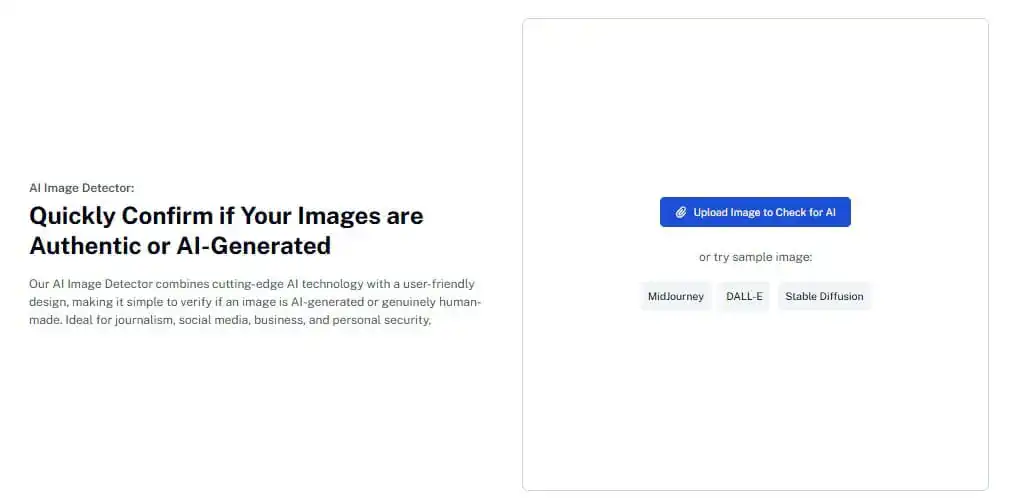
Our Undetectable AI’s AI Image Detector analyzes an image using machine learning to catch AI fingerprints that aren’t visible on the surface. Just upload the picture, and the detector does the rest.
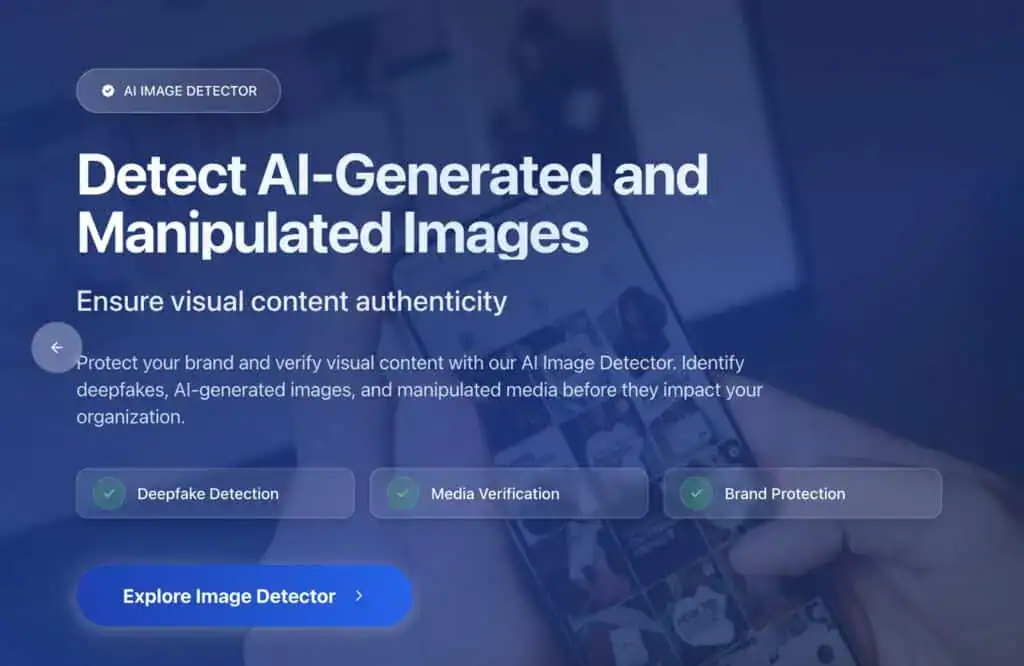
TruthScan’s AI Image Detector works similarly, scanning pixels, textures, and metadata layers to flag subtle signs of AI manipulation that even trained eyes tend to miss.
Detecting Subtle AI Markers with Deepfake Detection
For visuals that look almost too real, especially ones involving people, Undetectable AI’s DeepFake Detection takes verification a step further. It’s built to catch irregular lighting, unnatural facial blending, and pixel-level distortions that are effectively invisible to the naked eye.
Upload an image or video and it returns an authenticity score along with a visual heatmap showing where manipulation likely occurred. Pairing it with the AI Image Detector covers both surface-level and deep structural checks, which is about as thorough as manual verification gets.
Ethics and the Artist Debate
The technical story of AI image generation is only half the picture. The other half is a genuinely unresolved argument about fairness to the people whose work trained these systems in the first place.
Artists’ core objection is straightforward: most major image models were trained on billions of images scraped from the internet, much of it copyrighted work, without the original creators’ consent or compensation.
Some artists have found their own distinctive styles replicable by name in a prompt, which raises uncomfortable questions about whether a personal visual signature, built over a career, can just be absorbed and reproduced by a tool overnight.
On the other side, AI companies and many users argue that these tools have genuinely democratized visual creation, letting people without design training or budget produce professional-looking work, and that human artists have always learned by studying and referencing the work of others.
There’s no fully settled answer here, legally or ethically, and reasonable people land in different places. A few developments are worth knowing about either way: some artists now use protective tools like Glaze or Nightshade to subtly alter their work in ways meant to disrupt AI training without changing how it looks to a human viewer.
Several platforms have also introduced “do not train” opt-out settings, though enforcement and adoption are inconsistent. None of this fully resolves the underlying tension, but it’s the direction the conversation is moving.
Frequently Asked Questions
What is AI image generation?
It’s the process of using a trained machine learning model to create an original image from a text prompt, without using a camera, existing photo, or manual drawing.
How does AI actually create an image from text?
Most modern tools use diffusion: the model starts with random visual noise and gradually removes it in steps, guided by your prompt, until a coherent image emerges.
Are AI-generated images copies of existing photos?
No. The model learns visual patterns and relationships during training, then combines them into something new. It isn’t copying or collaging specific source images.
Can I copyright an image I made with AI?
Not if it’s purely AI-generated from a prompt. You can potentially copyright the parts you substantially and creatively edited yourself.
Is Midjourney or GPT Image 2 better?
Neither is universally “better.” Midjourney tends to win on artistic style, while GPT Image 2 leads on prompt accuracy and text rendering. Most professionals use more than one tool depending on the job.
What’s the difference between a GAN and a diffusion model?
A GAN uses two competing networks (a generator and a discriminator) to improve image quality. A diffusion model learns to reverse a noise-adding process step by step. Diffusion is more stable to train and now dominates the field.
Why do AI images still sometimes look wrong?
Complex scenes with multiple interacting objects, unusual physics, or fine detail (like hands used to be) can still confuse a model, though this has improved significantly since 2023.
How can I tell if an image was made by AI?
Check for C2PA content credentials, look for lighting or reflection inconsistencies, run a reverse image search, and use a dedicated AI image detector for anything metadata alone can’t confirm.
Is it legal to use AI-generated images commercially?
Generally yes, but ownership can be limited since purely AI-generated images aren’t copyrightable. If you need exclusive rights, plan on meaningful human editing or use a tool trained on licensed data.
What is C2PA and why does it matter?
It’s a technical standard that embeds a signed record in an image showing what tool created or edited it. Major platforms are adopting it as the primary way to disclose AI involvement.
Is AI video generation the same technology as AI image generation?
It’s built on the same diffusion principles, extended across time to generate coherent motion, though video models add significant complexity around consistency and audio sync.
Do artists get compensated when AI is trained on their work?
Not typically, and that’s the center of the ongoing ethical and legal debate. Some platforms now offer opt-out settings, though adoption varies widely.
Conclusion
AI image generation is no longer a futuristic concept. It’s here, it’s evolving fast, and it’s become a genuine part of how digital content gets made, from ad creatives to game assets to the model landscape covered above.
Understanding how it actually works, diffusion, training data, and the legal lines around ownership, gives you a real edge, whether that’s in a job market or just navigating what you see online.
Just as important is the ability to tell AI visuals apart from human-made ones, especially as deepfakes and synthetic media keep bypassing AI content detection methods that used to work reliably. That skill matters for spotting AI clues in your own images as much as it does for verifying someone else’s.
Ready to check a visual before you publish it? Try Undetectable AI’s free AI Image Detector and Deepfake Detection tools and get your answer in seconds.