
Ever find yourself drowning in a sea of words, struggling to get your point across? You’re not alone.
Many writers, from business folks to budding novelists, grapple with sentences that seem to go on forever. But here’s the thing: shorter sentences pack a punch.
Nuestro cerebro anhela la sencillez. Queremos ideas servidas en trozos del tamaño de un bocado, no una ensalada interminable de palabras.
Now, you might be wondering, “What’s the magic number?” Well, here’s a shocker: aim for an average of 14 to 18 words per sentence.
Yep, you read that right. It’s way shorter than what most of us are used to writing.
But don’t panic! We’re not asking you to write like a first-grader. The key is variety.
Mix in some longer sentences (20 or even 30 words) and super-short ones (even just one or two words). It’s all about balance.
In this guide, we’ll walk you through 10 easy and effective steps to trim the fat from your sentences. And remember, the Impacto de la IA en el empleo prácticas de escritura es significativo, así que quédese por aquí.
We’ve got a secret tool that’ll make this whole process a breeze. Ready to revolutionize your writing?
Siga leyendo.
Principales conclusiones
-
Las frases más cortas (14-18 palabras) mejoran la claridad, el compromiso y la legibilidad de los escritos.
-
Utilice técnicas como la supresión de redundancias, los verbos fuertes y la voz activa para recortar las frases con eficacia.
-
Evite las explicaciones excesivas y las palabras de relleno: la claridad importa más que el número de palabras.
-
Herramienta de parafraseo de IA indetectable refina las frases largas, manteniendo la escritura concisa y natural.
-
Utiliza la IA indetectable de forma responsable para mejorar la claridad y mantener tu auténtica voz al escribir.
Técnicas para acortar una frase
Como escribió William Strunk Jr. en Los elementos de estilo"Omite las palabras innecesarias".
Let’s dive into ten powerful techniques that will help you trim your sentences and boost your writing impact.
1. Eliminar palabras redundantes
La redundancia es enemiga de la escritura concisa.
No vuelvas a preocuparte de que la IA detecte tus textos. Undetectable AI puede ayudarle:
- Haz que aparezca tu escritura asistida por IA de aspecto humano.
- Bypass las principales herramientas de detección de IA con un solo clic.
- Utilice AI de forma segura y con confianza en la escuela y el trabajo.
A menudo utilizamos varias palabras para expresar una idea que podría transmitirse con menos. Por ejemplo:
- “At this point in time” becomes simply “now”
- “Due to the fact that” can be replaced with “because”
- “In spite of the fact that” turns into “although”
Revisa tu redacción y subraya las frases con palabras.
A continuación, desafíese a expresar la misma idea con menos palabras. Haz una lista de las redundancias más comunes y esfuérzate por evitarlas.
2. Utilice verbos fuertes en lugar de frases verbales
Los verbos fuertes y concretos pueden sustituir a las frases verbales con muchas palabras. Esto no sólo acorta la frase, sino que la hace más dinámica. Por ejemplo:
- “Make a decision” becomes “decide”
- “Give consideration to” turns into “consider”
- “Come to the conclusion” simplifies to “conclude”
Por ejemplo: Before: “The committee will make a decision on the proposal next week.” After: “The committee will decide on the proposal next week.”
Create a “strong verb” word bank. Whenever you catch yourself using a verb phrase, consult your word bank for a more powerful, concise alternative.
3. Evitar adjetivos y adverbios innecesarios
Aunque las palabras descriptivas pueden dar color a la redacción, su uso excesivo puede dar lugar a frases abultadas.
Mark Twain once advised, “When you catch an adjective, kill it.” While we don’t need to be quite so drastic, use adjectives and adverbs sparingly.
Instead of “The very large, enormous elephant walked slowly and ponderously,” try “The elephant lumbered.”
Subraye todos los adjetivos y adverbios de un párrafo. A continuación, elimine la mitad de ellos. ¿Cambia significativamente el significado? Si no es así, elimínalos.
4. Sustituir la voz pasiva por la voz activa
La voz activa suele utilizar menos palabras que la pasiva y crea frases más directas y atractivas. Por ejemplo:
- Pasivo: “The ball was thrown by John.”
- Activa: “John threw the ball.”
Look for sentences containing “was” or “were” followed by a past participle (e.g., “was thrown,” “were decided”). These are often in passive voice.
Según la APALos escritores deben seleccionar cuidadosamente los tiempos verbales y la voz, reescribiendo las frases pasivas para colocar el sujeto activo al principio de la frase.
5. Combinar frases cortas
Aunque en general queremos frases más cortas, combinarlas a veces puede reducir el número de palabras y mejorar la legibilidad. Busque oportunidades para unir ideas relacionadas:
- Antes: “I like apples. They are sweet. They are also nutritious.”
- Después: “I like apples because they’re sweet and nutritious.”
Identifique las frases que tengan menos de diez palabras. ¿Puede alguna de ellas combinarse con frases adyacentes sin perder claridad?
6. Recortar palabras de relleno
Filler words like “really,” “very,” “just,” and “actually” often add little meaning to a sentence. Eliminating these can tighten your writing significantly.
Como dijo George Orwell, "Si es posible eliminar una palabra, elimínela siempre."
- Antes: “The meeting was actually very interesting and really informative.”
- Después: “The meeting was interesting and informative.”
Use your word processor’s “Find” function to search for common filler words in your document. Challenge yourself to remove them without changing the sentence’s meaning.
7. Sea específico y directo
El lenguaje impreciso suele requerir más palabras para transmitir el significado. Si se es concreto y directo, se pueden acortar las frases.
Por ejemplo:
- Vago: “The thing over there that we talked about yesterday needs to be taken care of soon.”
- Específicos: “Please fix the leaky faucet today.”
Always highlight any instances of “thing,” “stuff,” or “it” in your writing. Replace these with more specific nouns to tighten your sentences.
8. Utilizar contracciones
In less formal writing, contractions can help shorten sentences and create a more conversational tone. “It is” becomes “it’s,” “does not” turns into “doesn’t,” and so on.
- Antes: “I do not think that it is necessary to attend the meeting.”
- Después: “I don’t think it’s necessary to attend the meeting.”
Lee lo que has escrito en voz alta. ¿Dónde contraes las palabras de forma natural al hablar? Considera la posibilidad de hacer las mismas contracciones en tus escritos para que fluyan con más naturalidad.
9. Evitar la sobreexplicación
Trust your readers’ intelligence. You don’t need to explain every detail, especially if it’s common knowledge or can be inferred from context.
En Asociación Internacional de Lenguaje Sencillo sugiere que la sobreexplicación es una de las principales razones de una escritura larga y poco clara.
After writing a draft, ask yourself for each sentence: “Is this information necessary for my reader to understand my main point?” If not, consider removing it.
10. Eliminar frases preposicionales
Las frases preposicionales pueden sustituirse a menudo por construcciones más sencillas. Por ejemplo:
- “The opinion of the expert” becomes “The expert’s opinion”
- “The lighting in the office” turns into “The office lighting”
Rodea con un círculo todas las preposiciones de un párrafo (de, en, sobre, en, etc.). Comprueba si puedes reformular la frase para eliminar algunas de ellas sin cambiar el significado.
Un estudio del Grupo Nielsen Norman descubrió que las frases más cortas y claras aumentan significativamente la legibilidad y la participación.
Remember, the goal isn’t to make every sentence as short as possible, but to achieve an average length of 14-18 words. This creates a rhythm in your writing that keeps readers engaged.
As you practice these techniques, you’ll find your writing becoming clearer and more impactful. But don’t just take our word for it.
Un estudio del Universidad de Cambridge descubrió que los escritores que acortaban activamente sus frases lograban una mayor claridad y una mejora general de la calidad de la escritura.
Ejercicio práctico
Para poner en práctica estas técnicas, prueba este ejercicio:
- Take a paragraph from something you’ve written recently.
- Cuenta las palabras de cada frase y calcula la media.
- Aplique las técnicas anteriores para acortar sus frases.
- Recalcule la longitud media de sus frases.
- Compara el antes y el después. ¿Cuál se lee mejor?
Consejos adicionales para acortar frases
Recuerde que el arte de escribir de forma concisa no consiste en despojar a su obra de personalidad o profundidad.
It’s about communicating your ideas more effectively.
- Utiliza viñetas o listas numeradas para la información secuencial. Rompe el texto y acorta las frases de forma natural.
- Aproveche los espacios en blanco. Los párrafos cortos intimidan menos y son más fáciles de leer, sobre todo en plataformas digitales.
- Lee lo que escribes en voz alta. Si te quedas sin aliento, probablemente tus frases son demasiado largas.
- Utiliza herramientas como Hemingway Editor o Grammarly, que pueden resaltar las frases demasiado complejas.
- Practica, practica, practica. Como cualquier otra habilidad, el acortamiento de frases mejora con un esfuerzo constante.
As you master these techniques, you’ll find that your writing becomes clearer, more engaging, and more impactful.
Mastering the art of sentence shortening takes time and practice. But with these ten techniques in your toolkit, you’re on your way to more effective writing.
In the next section, we’ll introduce you to a secret weapon to make this process even easier.
Permanezca atento.
Bonus: Shorten Sentences with Undetectable AI’s Paraphrasing tool
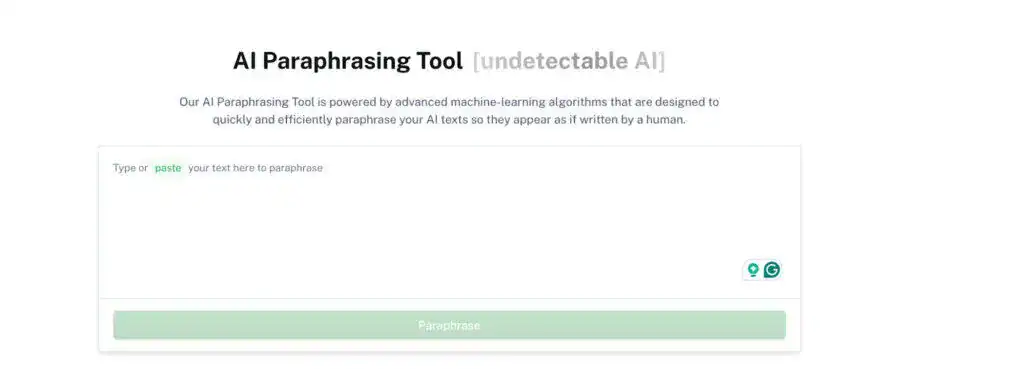
While mastering the art of sentence shortening is crucial for any writer, sometimes we all need a little help. That’s where Undetectable AI’s Herramienta de parafraseo es muy útil.
Esta innovadora herramienta ayuda a los escritores a perfeccionar su trabajo sin sustituir el proceso creativo.
Undetectable AI’s Paraphrase tool is particularly useful for professionals and content creators when combined with other herramientas gratuitas de escritura de IA.
Los profesionales del marketing que elaboran descripciones de productos o publicaciones en redes sociales pueden utilizar esta herramienta para asegurarse de que su mensaje es conciso e impactante.
Los blogueros pueden encontrarlo útil para reformular ideas complejas para un público más amplio.
Incluso los periodistas pueden beneficiarse de esta herramienta cuando necesitan resumir rápidamente citas o declaraciones extensas sin perder el sentido original.
It’s important to use Undetectable AI’s Paraphrasing tool as a writing aid, not a substitute for original thought.
The tool works best when you’ve already put your ideas down and want to refine your expression. Here’s how to use it effectively:
- Escribe tu primer borrador con naturalidad, concentrándote en sacar tus ideas.
- Utiliza el Parafraseador para sugerir fórmulas alternativas para las frases más largas.
- Revise las sugerencias de forma crítica, asegurándose de que mantienen el significado y el tono que usted pretende.
- Use the tool’s output to inspire rewrites rather than accept them verbatim.
- Corrige y edita siempre manualmente tu trabajo final.
Recuerda que el objetivo es mejorar tu redacción, no generar contenidos desde cero.
Undetectable AI’s Paraphrasing tool is a powerful tool when used responsibly and ethically, helping you communicate more effectively while maintaining the integrity of your own voice and ideas.
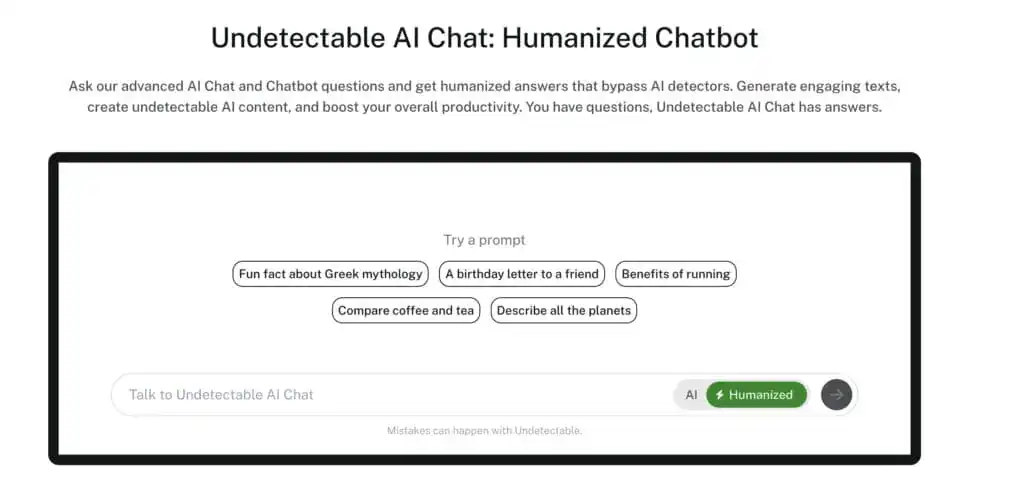
Furthermore, Undetectable AI’s AI Chat is an excellent resource to help you interactively refine and shorten sentences during your final review.
Te permite experimentar con diferentes ritmos sintácticos, al tiempo que garantiza que tu mensaje mantenga un toque cálido y humano.
Conclusión
Dominar el arte de acortar frases es un viaje que puede mejorar significativamente su escritura.
You can create clearer, more engaging, and more impactful content by eliminating redundant words and leveraging tools like Undetectable AI’s Paraphrasing tool.
Remember, the goal isn’t to strip your writing of personality or depth. Rather, it’s about communicating your ideas more effectively.
Las frases cortas son contundentes, hacen que su texto sea más accesible y su mensaje más fácil de recordar.
As you practice these techniques, you’ll likely find your writing process more efficient.
You’ll naturally spot opportunities for concision, leading to cleaner first drafts and less intensive editing processes.
However, it’s crucial to maintain a balance. While we aim for an average sentence length of 14-18 words, don’t be afraid to mix in longer sentences when needed.
La variedad en la estructura de las frases crea ritmo en la escritura y mantiene el interés de los lectores.
Por último, ten siempre presente a tu público. El nivel de concisión apropiado para un tuit puede no serlo para un artículo académico.
Adapt these techniques to fit your context and your readers’ needs.
With practice and persistence, you’ll find your writing becoming sharper, clearer, and more powerful. So go forth and write – concisely!
Para saber más consejos de redacciónVisite IA indetectable hoy.