
Ever find yourself drowning in a sea of words, struggling to get your point across? You’re not alone.
Many writers, from business folks to budding novelists, grapple with sentences that seem to go on forever. But here’s the thing: shorter sentences pack a punch.
Il nostro cervello desidera la semplicità. Vogliamo che le idee ci vengano servite in bocconi, non in un'infinita insalata di parole.
Now, you might be wondering, “What’s the magic number?” Well, here’s a shocker: aim for an average of 14 to 18 words per sentence.
Yep, you read that right. It’s way shorter than what most of us are used to writing.
But don’t panic! We’re not asking you to write like a first-grader. The key is variety.
Mix in some longer sentences (20 or even 30 words) and super-short ones (even just one or two words). It’s all about balance.
In this guide, we’ll walk you through 10 easy and effective steps to trim the fat from your sentences. And remember, the Impatto dell'IA sul lavoro Le pratiche di scrittura sono significative, quindi restate nei paraggi.
We’ve got a secret tool that’ll make this whole process a breeze. Ready to revolutionize your writing?
Continuate a leggere!
Punti di forza
-
Frasi più brevi (14-18 parole) migliorano la chiarezza, il coinvolgimento e la leggibilità della scrittura.
-
Usate tecniche come la riduzione delle ridondanze, i verbi forti e la voce attiva per tagliare le frasi in modo efficace.
-
Evitate le spiegazioni eccessive e le parole riempitive: la chiarezza conta più del numero di parole.
-
Lo strumento di parafrasi di Undetectable AI affina le frasi lunghe, mantenendo la scrittura concisa e naturale.
-
Utilizzate l'IA non rilevabile in modo responsabile per migliorare la chiarezza e mantenere la vostra voce autentica.
Tecniche per abbreviare una frase
Come scrisse notoriamente William Strunk Jr. in Gli elementi di stile, "Omettere le parole superflue".
Let’s dive into ten powerful techniques that will help you trim your sentences and boost your writing impact.
1. Eliminare le parole ridondanti
La ridondanza è nemica della scrittura concisa.
Non preoccupatevi più che l'intelligenza artificiale rilevi i vostri messaggi. Undetectable AI Può aiutarvi:
- Fate apparire la vostra scrittura assistita dall'intelligenza artificiale simile all'uomo.
- Bypass tutti i principali strumenti di rilevamento dell'intelligenza artificiale con un solo clic.
- Utilizzo AI in modo sicuro e con fiducia a scuola e al lavoro.
Spesso usiamo più parole per esprimere un'idea che potrebbe essere trasmessa con meno parole. Ad esempio:
- “At this point in time” becomes simply “now”
- “Due to the fact that” can be replaced with “because”
- “In spite of the fact that” turns into “although”
Rivedete la vostra scrittura ed evidenziate le frasi troppo lunghe.
Poi, sfidatevi a esprimere la stessa idea con meno parole. Tenete un elenco delle ridondanze più comuni e lavorate consapevolmente per evitarle.
2. Usare verbi forti invece di frasi verbali
I verbi forti e specifici possono sostituire le frasi verbose. Questo non solo accorcia la frase, ma la rende anche più dinamica. Per esempio:
- “Make a decision” becomes “decide”
- “Give consideration to” turns into “consider”
- “Come to the conclusion” simplifies to “conclude”
Esempio: Before: “The committee will make a decision on the proposal next week.” After: “The committee will decide on the proposal next week.”
Create a “strong verb” word bank. Whenever you catch yourself using a verb phrase, consult your word bank for a more powerful, concise alternative.
3. Evitare gli aggettivi e gli avverbi non necessari
Sebbene le parole descrittive possano aggiungere colore alla scrittura, un loro uso eccessivo può portare a frasi gonfie.
Mark Twain once advised, “When you catch an adjective, kill it.” While we don’t need to be quite so drastic, use adjectives and adverbs sparingly.
Instead of “The very large, enormous elephant walked slowly and ponderously,” try “The elephant lumbered.”
Evidenziate tutti gli aggettivi e gli avverbi di un paragrafo. Poi, eliminatene la metà. Il significato cambia in modo significativo? Se no, lasciateli fuori.
4. Sostituire la voce passiva con la voce attiva
La voce attiva di solito usa meno parole della voce passiva e crea frasi più dirette e coinvolgenti. Per esempio:
- Passivo: “The ball was thrown by John.”
- Attivo: “John threw the ball.”
Look for sentences containing “was” or “were” followed by a past participle (e.g., “was thrown,” “were decided”). These are often in passive voice.
Secondo l'APAGli scrittori devono scegliere con cura i tempi e la voce dei verbi, riscrivendo le frasi passive per collocare il soggetto attivo all'inizio della frase.
5. Combinare frasi brevi
Anche se vogliamo frasi più brevi in generale, combinarle può talvolta ridurre il numero di parole e migliorare la leggibilità. Cercate di unire idee correlate:
- Prima: “I like apples. They are sweet. They are also nutritious.”
- Dopo: “I like apples because they’re sweet and nutritious.”
Individuate le frasi più brevi di dieci parole. Una di queste può essere combinata con frasi adiacenti senza perdere chiarezza?
6. Ritagliare le parole di riempimento
Filler words like “really,” “very,” “just,” and “actually” often add little meaning to a sentence. Eliminating these can tighten your writing significantly.
Come disse George Orwell, "Se è possibile tagliare una parola, tagliatela sempre."
- Prima: “The meeting was actually very interesting and really informative.”
- Dopo: “The meeting was interesting and informative.”
Use your word processor’s “Find” function to search for common filler words in your document. Challenge yourself to remove them without changing the sentence’s meaning.
7. Essere specifici e diretti
Un linguaggio vago spesso richiede più parole per trasmettere il significato. Se si è specifici e diretti, spesso si possono accorciare le frasi.
Per esempio:
- Vago: “The thing over there that we talked about yesterday needs to be taken care of soon.”
- Specifico: “Please fix the leaky faucet today.”
Always highlight any instances of “thing,” “stuff,” or “it” in your writing. Replace these with more specific nouns to tighten your sentences.
8. Utilizzare le contrazioni
In less formal writing, contractions can help shorten sentences and create a more conversational tone. “It is” becomes “it’s,” “does not” turns into “doesn’t,” and so on.
- Prima: “I do not think that it is necessary to attend the meeting.”
- Dopo: “I don’t think it’s necessary to attend the meeting.”
Leggete la vostra scrittura ad alta voce. Dove si contraggono naturalmente le parole quando si parla? Prendete in considerazione l'idea di fare queste stesse contrazioni nella vostra scrittura per ottenere un flusso più naturale.
9. Evitare di spiegare troppo
Trust your readers’ intelligence. You don’t need to explain every detail, especially if it’s common knowledge or can be inferred from context.
Il Associazione internazionale del linguaggio semplice suggerisce che l'eccesso di spiegazioni è una delle ragioni principali di una scrittura lunga e poco chiara.
After writing a draft, ask yourself for each sentence: “Is this information necessary for my reader to understand my main point?” If not, consider removing it.
10. Eliminare le frasi preposizionali
Le frasi preposizionali possono spesso essere sostituite con costruzioni più semplici. Ad esempio:
- “The opinion of the expert” becomes “The expert’s opinion”
- “The lighting in the office” turns into “The office lighting”
Cerchiate tutte le preposizioni in un paragrafo (of, in, on, at, ecc.). Verificate se potete riformulare la frase per eliminare alcune di esse senza cambiare il significato.
Uno studio del Gruppo Nielsen Norman ha scoperto che frasi più brevi e chiare aumentano significativamente la leggibilità e il coinvolgimento.
Remember, the goal isn’t to make every sentence as short as possible, but to achieve an average length of 14-18 words. This creates a rhythm in your writing that keeps readers engaged.
As you practice these techniques, you’ll find your writing becoming clearer and more impactful. But don’t just take our word for it.
Uno studio del Università di Cambridge ha rilevato che gli scrittori che accorciano attivamente le frasi ottengono una maggiore chiarezza e un miglioramento generale della qualità della scrittura.
Esercizio pratico
Per mettere in pratica queste tecniche, provate questo esercizio:
- Take a paragraph from something you’ve written recently.
- Contate le parole in ogni frase e calcolate la media.
- Applicate le tecniche sopra descritte per abbreviare le vostre frasi.
- Ricalcolate la lunghezza media delle frasi.
- Confrontate le versioni prima e dopo. Quale si legge meglio?
Ulteriori suggerimenti per accorciare le frasi
Ricordate che l'arte di scrivere in modo conciso non significa privare il vostro lavoro di personalità o profondità.
It’s about communicating your ideas more effectively.
- Utilizzate punti elenco o elenchi numerati per le informazioni sequenziali. Spezzano il testo e accorciano naturalmente le frasi.
- Abbracciate lo spazio bianco. I paragrafi brevi sono meno intimidatori e più facili da leggere, soprattutto sulle piattaforme digitali.
- Leggete la vostra scrittura ad alta voce. Se vi manca il fiato, probabilmente le frasi sono troppo lunghe.
- Utilizzate strumenti come Hemingway Editor o Grammarly, che possono evidenziare le frasi troppo complesse.
- Pratica, pratica, pratica. Come ogni abilità, l'abbreviazione delle frasi migliora con uno sforzo costante.
As you master these techniques, you’ll find that your writing becomes clearer, more engaging, and more impactful.
Mastering the art of sentence shortening takes time and practice. But with these ten techniques in your toolkit, you’re on your way to more effective writing.
In the next section, we’ll introduce you to a secret weapon to make this process even easier.
Restate sintonizzati!
Bonus: Shorten Sentences with Undetectable AI’s Paraphrasing tool
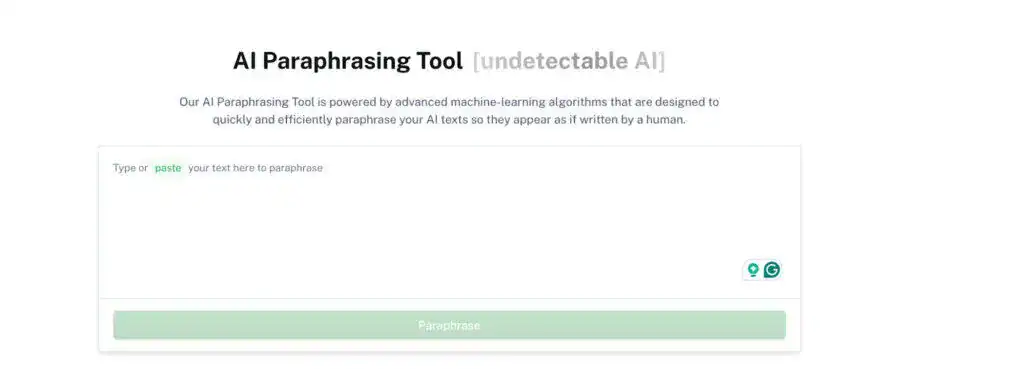
While mastering the art of sentence shortening is crucial for any writer, sometimes we all need a little help. That’s where Undetectable AI’s Strumento di parafrasi è utile.
Questo strumento innovativo aiuta gli scrittori a perfezionare il proprio lavoro senza sostituirsi al processo creativo.
Undetectable AI’s Paraphrase tool is particularly useful for professionals and content creators when combined with other strumenti di scrittura AI gratuiti.
Gli esperti di marketing che preparano descrizioni di prodotti o post sui social media possono utilizzare questo strumento per garantire che il loro messaggio sia conciso e d'impatto.
I blogger potrebbero trovarlo utile per riformulare idee complesse per un pubblico più ampio.
Anche i giornalisti possono trarre vantaggio da questo strumento quando devono riassumere rapidamente citazioni o dichiarazioni lunghe senza perdere il significato originale.
It’s important to use Undetectable AI’s Paraphrasing tool as a writing aid, not a substitute for original thought.
The tool works best when you’ve already put your ideas down and want to refine your expression. Here’s how to use it effectively:
- Scrivete la prima bozza in modo naturale, concentrandovi sulle vostre idee.
- Usate il Parafrasatore per suggerire frasi alternative per le frasi più lunghe.
- Rivedete i suggerimenti in modo critico, assicurandovi che mantengano il significato e il tono che desiderate.
- Use the tool’s output to inspire rewrites rather than accept them verbatim.
- Correggete e modificate sempre manualmente il vostro lavoro finale.
Ricordate che l'obiettivo è migliorare la vostra scrittura, non generare contenuti da zero.
Undetectable AI’s Paraphrasing tool is a powerful tool when used responsibly and ethically, helping you communicate more effectively while maintaining the integrity of your own voice and ideas.
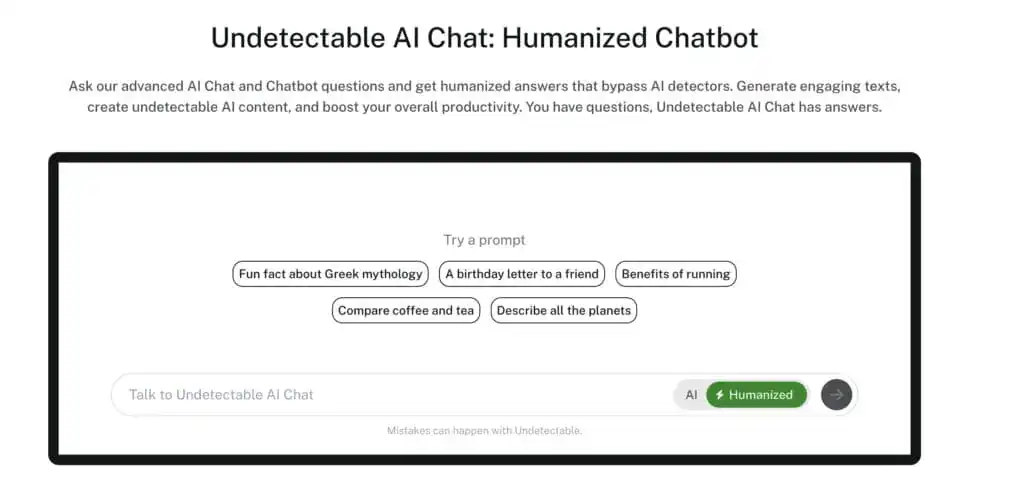
Furthermore, Undetectable AI’s AI Chat is an excellent resource to help you interactively refine and shorten sentences during your final review.
Ti permette di sperimentare diversi ritmi di frase, assicurando al contempo che il tuo messaggio mantenga un tocco caloroso e umano.
Conclusione
Padroneggiare l'arte di abbreviare le frasi è un viaggio che può migliorare notevolmente la vostra scrittura.
You can create clearer, more engaging, and more impactful content by eliminating redundant words and leveraging tools like Undetectable AI’s Paraphrasing tool.
Remember, the goal isn’t to strip your writing of personality or depth. Rather, it’s about communicating your ideas more effectively.
Le frasi brevi hanno un impatto notevole, rendendo la scrittura più accessibile e il messaggio più memorabile.
As you practice these techniques, you’ll likely find your writing process more efficient.
You’ll naturally spot opportunities for concision, leading to cleaner first drafts and less intensive editing processes.
However, it’s crucial to maintain a balance. While we aim for an average sentence length of 14-18 words, don’t be afraid to mix in longer sentences when needed.
La varietà nella struttura delle frasi crea ritmo nella scrittura, mantenendo il lettore impegnato.
Infine, tenete sempre presente il vostro pubblico. Il livello di concisione appropriato per un tweet potrebbe non essere adatto a un documento accademico.
Adapt these techniques to fit your context and your readers’ needs.
With practice and persistence, you’ll find your writing becoming sharper, clearer, and more powerful. So go forth and write – concisely!
Per saperne di più consigli per il copywriting, visitare AI non rilevabile oggi.