
When Kendrick Lamar said, “I was in a dark room, loud tunes, looking to make a vow soon,” It felt right and sounded good even without a traditional rhyme scheme.
É assim que se apresenta a assonância. É um dos recursos sonoros mais utilizados por artistas, poetas e escritores.
Não estamos dizendo que Kendrick Lamar está fazendo exatamente o que Emily Dickinson ou Edgar Allan Poe fizeram no século XIX.
No entanto, a técnica tem séculos de existência e, quando um escritor ou rapper habilidoso a utiliza, ainda soa atual.
Dickinson usou a assonância para fazer com que suas obras parecessem segredos sussurrados. Poe queria criar uma sensação de pavor.
Enquanto isso, Kendrick Lamar e outros artistas modernos usaram isso para fazer você sentir o peso de cada sílaba.
O traço comum? A assonância faz com que a linguagem fique gravada.
Cria ritmo sem depender de rimas perfeitas. Faz com que a prosa pareça poética e a poesia pareça viva.
Whether you’re writing a novel, crafting lyrics, or simply trying to make your sentences sound more effective, assonance gives you a tool that’s been working for thousands of years.
Principais conclusões
-
Assonância é a repetição de sons vocálicos em palavras próximas, criando ritmo e clima sem exigir rima.
-
Os escritores utilizam a assonância para melhorar o fluxo, enfatizar temas e tornar a linguagem mais memorável.
-
You’ll find assonance everywhere, including poetry, song lyrics, speeches, and literary prose
-
Diferentes sons vocálicos criam efeitos diferentes — as vogais longas diminuem o ritmo, as vogais curtas aceleram-no.
-
Identificar assonância significa ouvir sons vocálicos repetidos em sílabas tônicas, não apenas qualquer repetição vocálica.
O que é assonância?
A assonância é uma dessas coisas. artifícios literários that works best when you don’t notice it consciously.
Ela opera abaixo da superfície do significado, no reino do som e do sentimento. Quando bem feita, a assonância faz com que sua escrita pareça intencional, sem chamar atenção para si mesma.
As the poet Dylan Thomas once said, “These poems, with all their crudities, doubts, and confusions, are written for the love of Man and in praise of God, and I’d be a damn fool if they weren’t.”


Nunca mais se preocupe com a detecção de seus textos pela IA. Undetectable AI Pode lhe ajudar:
- Faça sua escrita assistida por IA aparecer semelhante ao humano.
- Bypass todas as principais ferramentas de detecção de IA com apenas um clique.
- Uso IA com segurança e com confiança na escola e no trabalho.
Thomas era um mestre em dispositivos de som, e seu trabalho demonstra como a assonância pode elevar a linguagem da mera comunicação ao canto propriamente dito.
Definição de assonância
Assonância é a repetição de sons vocálicos em palavras próximas, normalmente dentro de uma linha ou passagem.
Unlike alliteration, the keyword here is vowel sounds, not vowel letters or consonants. We’re talking about how words sound when spoken, not how they look on the page.
For example, “fleet feet sweep by sleeping geeks” uses the long “e” sound repeatedly.
The words don’t rhyme in the traditional sense, but they create a sonic pattern that unifies the phrase.
Assonance differs from rhyme because the consonant sounds don’t have to match. It differs from alliteration because you’re repeating vowel sounds, not consonant sounds.
Pense nisso como um meio-termo entre os dois, criando uma forma mais sutil de repetição que funciona particularmente bem na escrita moderna.
Exemplos de assonância
Let’s look at some clear examples so you can see how this works in practice.
- Da poesia: “Hear the mellow wedding bells” (Edgar Allan Poe, “The Bells”). The repeated “e” sound in “hear,” “mellow,” and “wedding” creates a soft, harmonious feeling that matches the content perfectly.
- Da letra da música: “I’m beginning to feel like a Rap God” (Eminem, “Rap God”). The short “i” sound in “beginning” and “feel” followed by the long “e” in “feel” and “god” creates a rhythmic pattern that drives the line forward.
- Da prosa: “It was the best of times, it was the worst of times” (Charles Dickens, A Tale of Two Cities). The repeated “i” sound in “times” appears twice, bookending the famous phrase and giving it symmetry.
- Da literatura moderna: “The rain in Spain stays mainly in the plain” (My Fair Lady). This one’s almost too obvious, but it demonstrates how assonance can be playful and memorable. The long “a” sound dominates the entire sentence.
- Do hip-hop: “Dead in the middle of Little Italy, little did we know that we riddled some middlemen who didn’t do diddly” (Big Pun, “Twinz”). The repeated short “i” sound creates a machine-gun effect that mirrors the content of the lyric about shooting.
Observe como cada exemplo usa a repetição de vogais de maneira diferente. Alguns soam suaves e melódicos, enquanto outros soam agudos e agressivos.
The vowel sound you choose matters just as much as the fact that you’re repeating it.
Por que os escritores usam assonância

Assonance isn’t just a fancy trick for English teachers to point out in classic literature. It serves real purposes in writing, and understanding those purposes helps you use it intentionally.
Primeiro, a assonância cria musicalidade sem as restrições da rima. A rima perfeita pode parecer forçada ou infantil em determinados contextos.
A assonância proporciona essa coesão sonora sem fazer com que seu trabalho pareça uma canção infantil. É por isso que os poetas contemporâneos a apreciam, pois desejam a musicalidade sem o peso adicional.
Em segundo lugar, a assonância ajuda a enfatizar ideias-chave.
Quando você repete um som vocálico em torno de palavras importantes, essas palavras começam a parecer conectadas.
The sound pattern tells the reader’s brain, “These concepts belong together.” Look at how Martin Luther King Jr. usou assonância em seus discursos.
The repeated sounds weren’t accidents but strategic choices that made his words more powerful and more memorable.
Em terceiro lugar, a assonância controla o ritmo. Os sons vocálicos longos diminuem a velocidade dos leitores. Os sons vocálicos curtos aumentam a velocidade.
If you want a passage to feel contemplative, load it with words that use long “o” or “oo” sounds. If you want urgency, use short “i” or “e” sounds. The vowels literally change how fast people read.
Em quarto lugar, a assonância torna a escrita mais memorável. Nossos cérebros são máquinas de reconhecimento de padrões.
Quando encontramos sons repetidos, lembramo-nos deles mais facilmente. É por isso que os slogans publicitários utilizam frequentemente a assonância.
“Red Bull gives you wings” works partly because of that repeated short “i” sound. It sticks.
Por fim, a assonância cria coesão em obras mais longas. Quando você estabelece certos padrões vocálicos no início de uma peça e depois os repete mais tarde, cria uma sensação de unidade.
The sounds become motifs, just like repeated images or themes. Readers might not consciously notice, but they’ll feel that your work holds together.
Tipos comuns de assonância
Embora a assonância se refira tecnicamente a qualquer repetição de sons vocálicos, certos padrões aparecem com mais frequência do que outros.
Compreender esses tipos comuns ajuda você a identificar a assonância na prática e a utilizá-la em seus próprios textos.
- Assonância de vogais longas uses sounds like “a” in “day,” “e” in “see,” “i” in “fly,” “o” in “go,” or “oo” in “moon.” These tend to create a slower, more contemplative feeling. They elongate words and make readers linger. You’ll see this type in romantic poetry and descriptive prose.
- Assonância de vogais curtas uses sounds like “a” in “cat,” “e” in “bet,” “i” in “sit,” “o” in “hot,” or “u” in “cup.” These create a quicker, punchier rhythm. They’re perfect for action scenes, comedy, or any writing that needs energy and momentum.
- Assonância ditongada uses vowel sounds that glide from one sound to another, like “oi” in “coin” or “ou” in “loud.” These are less common but can create interesting effects when used deliberately. They tend to feel more dramatic or emphatic.
- Assonância adjacente places the repeated vowel sounds in consecutive or very close words. This creates the strongest effect because the repetition is immediate and obvious. “Go slow over the road” uses adjacent assonance with the long “o” sound.
- Assonância distante spreads the repeated vowel sounds across a longer passage, with several words in between each repetition. This creates a more subtle effect, like an echo that keeps returning. It’s harder to execute well, but it can unify an entire paragraph or stanza.
Cada tipo serve a diferentes propósitos. O segredo é combinar o tipo com a sua intenção. Se você quer sutileza, opte pelo distante. Se você quer impacto, opte pelo adjacente.
Se você quer contemplação, vá em frente. Se você quer energia, vá em frente.
Assonância na poesia, prosa e letras de músicas
Assonance adapts to whatever form you’re writing. It works differently in poetry than in prose, and differently still in song lyrics.
Compreender essas diferenças ajuda você a usar a assonância de maneira adequada para o seu meio de comunicação.
- Na Poesia: A poesia é onde a assonância se sente mais à vontade. Muitos tipos de poesia use it to create internal rhyme schemes that don’t rely on end rhymes. Free verse poets especially love assonance because it gives them structure without forcing them into traditional rhyme patterns.
Take Sylvia Plath’s “Daddy”: “You do not do, you do not do.” The repeated “oo” sound creates an almost childish singsong quality that contrasts with the dark content.
- Em prosa: Os escritores de prosa usam a assonância com mais moderação, mas ela aparece nas melhores obras de ficção literária. Cormac McCarthy usa a assonância em todos os seus romances para criar uma qualidade bíblica e encantatória. Toni Morrison usa-a para tornar sua prosa lírica, sem cair no excesso de floreios.
Na prosa, a assonância aparece frequentemente em diálogos ou em passagens descritivas particularmente importantes.
You’re not going to load every sentence with repeated vowel sounds. That would feel exhausting. But when you want a moment to resonate, assonance helps.
- Nas letras das músicas: As letras das músicas talvez sejam onde a assonância funciona melhor. Os letristas precisam que suas palavras fluam com a melodia, e a assonância cria esse fluxo. Ela ajuda as sílabas a se encaixarem no ritmo e torna as frases mais fáceis de cantar.
Kendrick Lamar, como mencionado anteriormente, é um mestre nisso. Mas Taylor Swift também o é, usando assonância para tornar seus refrões mais cativantes.
Listen to “Shake It Off” and count how many times vowel sounds repeat within lines. It’s not accidental. It’s craftsmanship.
Os artistas de hip-hop podem ser considerados os mestres modernos da assonância.
They’re working in a tradition that values internal rhyme and complex sound patterns. MF DOOM, Nas, and Lauryn Hill all use assonance as a fundamental tool, not just an occasional flourish.
Como a assonância afeta o tom e o fluxo
The vowel sounds you repeat don’t just create rhythm but actively change how your writing feels.
Vogais diferentes carregam pesos emocionais diferentes.
If you’re experimenting with how vowel sounds shift mood and pacing, tools like Undetectable AI’s Writing Style Replicator let you test variations quickly.
Você pode tentar a mesma frase com diferentes padrões vocálicos e ver qual deles cria o efeito desejado.

Long “o” sounds tend to feel somber or contemplative.
Think “slow motion over the ocean.” There’s a heaviness there, a weight. Short “i” sounds feel quick and light. Think “little skipping children.” The rhythm speeds up naturally.
Long “a” sounds can feel either elegant or plaintive depending on context. “The gray rain came to stay” feels melancholic.
“The great day finally came” feels triumphant. Same vowel sound, different emotional registers.
“Oo” sounds feel smooth and flowing. They’re perfect for describing movement or creating a sense of continuity. “The moon moved through the gloom” feels liquid, almost like the words themselves are gliding.
Short “u” sounds feel blunt and definitive. “The judge’s judgment was just” has a finality to it. Those short “u” sounds don’t leave room for argument.
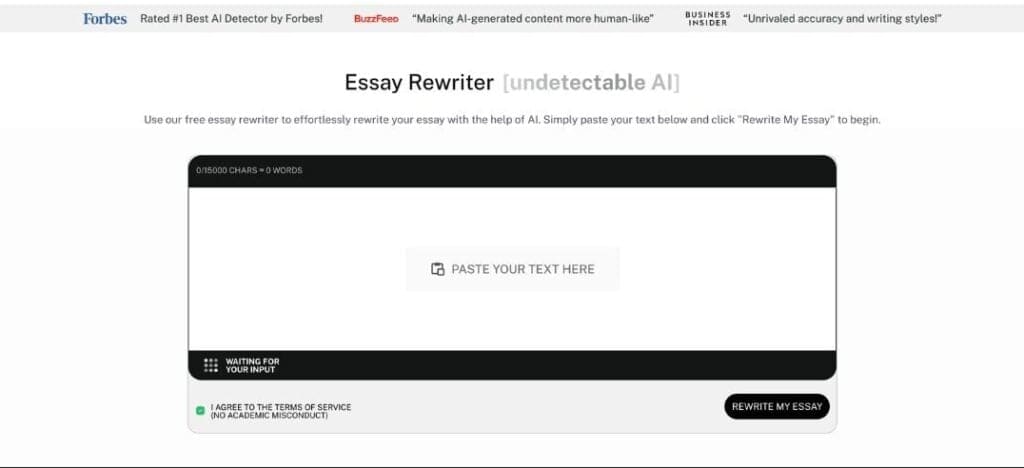
For a deeper analysis of how assonance affects rhythm (whether it creates softness, builds tension, or generates speed), Undetectable AI’s AI Essay Writer can provide short commentary that breaks down these effects in your specific passages.
The key is being intentional. Don’t just repeat vowel sounds randomly.
Choose the sounds that support what you’re trying to convey.
If you’re writing a tense action scene, load it with short, sharp vowels. If you’re writing a love scene, use longer, softer vowels. Let the sounds reinforce the content.
Como identificar assonância em uma passagem
Spotting assonance takes practice. Your ear needs training to pick up vowel patterns while you’re reading.
Here’s how to develop that skill.
- Leia em voz alta. This is non-negotiable. Assonance lives in sound, not in visual patterns. You might miss it completely if you’re just reading with your eyes. When you read aloud, repeated vowel sounds become immediately obvious.
- Concentre-se nas sílabas tônicas. Not every vowel repetition counts as assonance. You’re looking for repeated sounds in syllables that receive emphasis. The unstressed vowels in “about” and “around” don’t really create assonance, but the stressed vowels in “sound” and “ground” do.
- Marque os sons, não as letras. Remember that assonance is about sound, not spelling. “Great” and “break” use the same vowel sound even though they’re spelled differently. “Cough” and “through” use different vowel sounds even though they both have “ough.”
- Procure padrões em passagens importantes. Os escritores tendem a usar a assonância em momentos importantes, como cenas culminantes, diálogos importantes e descrições essenciais. Se uma passagem parecer particularmente lírica ou memorável, comece a procurar sons vocálicos repetidos.
- Cuidado com os falsos positivos. Students often confuse assonance with rhyme or alliteration. Assonance specifically means repeated vowel sounds with different consonants around them. If the entire word ending matches, that’s rhyme. If the consonants repeat, that’s alliteration.
If you’re analyzing a text and want to flag overly repetitive or mechanical sound patterns, Undetectable AI’s Detector de IA pode ser útil.
It identifies patterns that might be assonance or might just be awkward repetition. This is especially useful when you’re learning to distinguish intentional assonance from accidental repetition.

When you’re writing your own assonance, and it feels forced or clunky, Undetectable AI’s Humanizador de IA pode suavizar exemplos embaraçosos.
O objetivo é fazer com que a repetição das vogais pareça natural, em vez de mecânica.
O humanizador ajuda você a encontrar o ponto ideal em que a assonância melhora sua escrita sem sobrecarregá-la.
Clique para usar nosso Detector de IA e Humanizador no widget abaixo!
Você sentiu essa linha por um motivo
A assonância é uma das ferramentas que distingue uma escrita competente de uma escrita que ressoa.
Ele funciona em segundo plano, criando música e significado sem chamar atenção para si mesmo.
De Kendrick Lamar a Emily Dickinson, grandes escritores têm usado a assonância para tornar suas palavras mais memoráveis, mais musicais e mais eficazes.
The beauty of assonance is that it’s accessible. You don’t need special software or advanced degrees.
Você só precisa prestar atenção ao som das palavras quando as coloca juntas.
Escolha uma frase importante do seu projeto atual e tente carregá-la com um som vocálico repetido.
Observe como isso altera o ritmo e a sensação, e depois aplique essa técnica aos parágrafos principais. Com o tempo, o uso da assonância se tornará algo natural.
You’ll find yourself choosing words partly for their sonic qualities, not just their meanings.
Pronto para levar sua escrita para o próximo nível? A IA indetectável oferece ferramentas que ajudam você a analisar, refinar e aperfeiçoar o uso de recursos literários, como a assonância.
Whether you’re working on poetry, prose, or song lyrics, our platform helps you craft language that sounds as good as it reads.
Tente Undetectable AI hoje mesmo e descubra como padrões sonoros sutis podem transformar sua escrita.