
Todos hemos tenido esa sensación de hundimiento después de pulsar el botón "enviar" en un correo electrónico a tu jefe e inmediatamente ver un error gramatical.
O publicar un saludo largo y enternecedor a tu mejor amigo en Instagram, y cuestionarte si es "afecto" o "efecto".
Es un sentimiento universal. Al fin y al cabo, una buena gramática mantiene el rumbo de tus pensamientos y los transmite de la forma que pretendes.
La mala gramática, por el contrario, distrae al público de lo que realmente quiere decir. Por eso los escritores trabajan con correctores y editores.
The good news is that improving your grammar doesn’t require memorizing dusty textbooks or sitting through boring lectures.
It’s a skill you can develop with the right strategies and tools.
Esta guía le ayudará a identificar sus puntos débiles y a dominar conceptos gramaticales avanzados.
You’ll learn practical techniques that actually work, plus how to use herramientas modernas de IA como ChatGPT y Undetectable AI para subir el nivel de tu juego de escritura.
Principales conclusiones
-
You can’t fix grammar issues you don’t notice. Learn to spot common mistakes.
-
Leer escritos de calidad y escribir uno mismo con regularidad son las dos formas más eficaces de mejorar.
-
ChatGPT can check your grammar, but tools like Undetectable AI’s Grammar Checker go further by making corrections sound naturally human.
-
Una gramática perfecta no significa nada si su escritura es confusa. Da siempre prioridad a que te entiendan.
-
If English isn’t your first language, you’ll benefit from tools that help with natural phrasing, not just technical correctness.
Señales de que necesita mejorar su gramática
How do you know if your grammar needs work? Sometimes it’s obvious. Other times, not so much.
- La gente malinterpreta lo que escribes. Si tienes que aclarar constantemente lo que quieres decir en correos electrónicos o mensajes, la gramática puede ser la culpable. Modificadores mal colocadosLas referencias a pronombres poco claros o una puntuación incorrecta pueden cambiar por completo lo que quieres decir.
- Evitas escribir ciertas cosas. Do you shy away from writing professional emails or important documents? That’s often a sign you’re not confident in your grammar skills. You might use simpler sentences than you’d like, just to play it safe.
- Tu escritura suena entrecortada o torpe. Good grammar keeps your writing flowing, while bad grammar creates speed bumps. If your sentences feel disconnected or your paragraphs don’t flow smoothly, grammar issues might be breaking up your natural voice.
- Te cuestionas constantemente. Spending 10 minutes deciding between “who” and “whom” is exhausting. If you’re always doubting your grammar choices, you need a stronger foundation.
- Los comentarios profesionales mencionan la gramática. When teachers, editors, or colleagues point out grammar problems, listen. They’re seeing patterns you might miss.
- Tu corrector ortográfico siempre está enfadado. Those red and blue squiggles are trying to tell you something. If your documents look like a Christmas tree of corrections, it’s time to address the underlying issues.
Here’s the thing about unclear or grammatically messy text: it’s fixable.
No vuelvas a preocuparte de que la IA detecte tus textos. Undetectable AI puede ayudarle:
- Haz que aparezca tu escritura asistida por IA de aspecto humano.
- Bypass las principales herramientas de detección de IA con un solo clic.
- Utilice AI de forma segura y con confianza en la escuela y el trabajo.
When your writing feels muddled, tools like Undetectable AI’s AI Paragraph Generator can rewrite your text in grammatically correct form while keeping your intended meaning.
It’s especially helpful when you know what you want to say but can’t quite figure out how to structure it properly.
Cómo mejorar la gramática paso a paso
Mejorar su gramática requiere un enfoque sistemático. Here’s how to do it without getting overwhelmed.
Paso 1: Identifique sus puntos débiles específicos. Don’t try to fix everything at once.
Empieza por averiguar con qué tienes más dificultades. ¿Concordancia sujeto-verbo? ¿Los empalmes de coma? ¿Las oraciones atropelladas? Lleva un registro de los errores que cometes repetidamente.
Estos patrones le indicarán dónde concentrar su energía.
Paso 2: Aprende un concepto cada vez. Elige una sola regla gramatical y domínala antes de seguir adelante. Dedica una semana a estudiar el uso de las comas, por ejemplo.
A continuación, pasa al punto y coma. Este enfoque selectivo funciona mejor que intentar absorberlo todo simultáneamente.
Paso 3: Leer de forma activa y analítica. Reading improves grammar, but only if you pay attention. When you encounter a well-written sentence, pause. Notice how it’s constructed.
¿Por qué ha utilizado el autor una coma? ¿Cómo evitó la repetición? La lectura activa te ayuda a interiorizar la gramática.
Paso 4: Escribe todos los días. There’s no substitute for practice. Practice mejora su escritura. Anotaciones en tu diario, comentarios en Reddit, publicaciones en Medium, correos electrónicos a ti mismo.
Cuanto más se escribe, más se automatizan las reglas gramaticales en lugar de ser algo en lo que hay que pensar conscientemente.
Paso 5: Recibe comentarios sobre tu escrito. You can’t see all your own mistakes. Share your writing with others, or use AI tools to catch errors.
ChatGPT can spot grammar issues, but knowing there’s a mistake isn’t always enough. You need to understand why it’s wrong and how to fix it naturally.
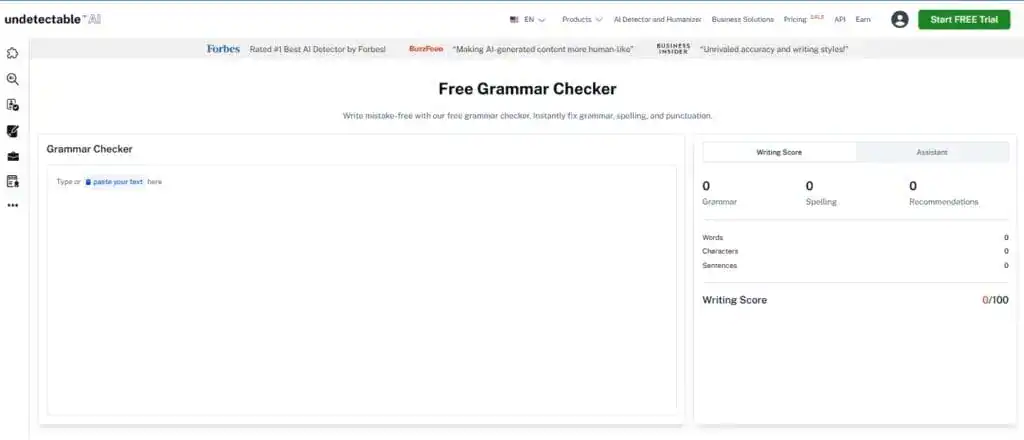
This is where Undetectable AI’s Grammar Checker becomes valuable. It doesn’t just identify grammar problems.
It humanizes the corrections, showing you how to fix issues while maintaining natural flow. The corrections don’t sound robotic or overly formal.
Suenan como algo que escribiría una persona real.
Paso 6: Revisar y corregir sistemáticamente. Nunca confíes en tu primer borrador. Deja de escribir durante un tiempo y vuelve a hacerlo con otros ojos. Léelo también en voz alta.
La gramática incómoda suele revelarse cuando la oyes.
Paso 7: Estudiar la gramática en su contexto, no de forma aislada. Las reglas gramaticales tienen más sentido cuando las ves en frases reales.
Don’t just memorize that a comma goes before a coordinating conjunction in a compound sentence.
Encuentra ejemplos de ello en los artículos que más te gusten leer. El contexto refuerza la comprensión.
Paso 8: Cree su propia hoja de referencia. A medida que vayas aprendiendo reglas, escríbelas con tus propias palabras. Incluye ejemplos que signifiquen algo para ti.
This personalized cheat sheet will become your go-to resource when you’re unsure.
Consejos gramaticales para mejorar la escritura
Beyond following the rules, certain strategies can accelerate your grammar improvement, whether you’re a beginner or an advanced writer.
- Lee tus escritos al revés. Empieza por la última frase y sigue por la primera. Esto engaña a tu cerebro para que vea errores you’d otherwise skip over. You’re not caught up in the meaning, so grammar mistakes become more visible.
- Utiliza la función de búsqueda para encontrar tus puntos débiles. If you know you overuse certain words or mess up specific constructions, use Find (Ctrl+F) to locate them in your document. Search for “however” if you know you misuse it. Search for “their/there/they’re” if those trip you up.
- Preste atención a sus instintos de coma. La mayoría de los hablantes nativos de inglés tienen una buena intuición para las comas. Si crees que una frase necesita una coma en algún sitio, probablemente sea así. Confía en tu instinto y compruébalo con las reglas.
- Aprender la diferencia entre la gramática hablada y la escrita. Casual speech breaks grammar rules constantly. That’s fine for texting friends. But formal writing requires different standards. Understanding when to switch between these modes is important.
- Stop using words you don’t fully understand. A thesaurus isn’t always your friend. Using “utilize” instead of “use” doesn’t make you sound smarter if you use it incorrectly.
- Estudiar la combinación de frases. Toma dos frases sencillas y combínalas de múltiples maneras. Así aprenderás cómo distintas estructuras gramaticales crean efectos diferentes.
- Fíjate en lo que suena mal. Tu oído para el lenguaje es mejor de lo que crees. Si algo te suena raro cuando lo lees en voz alta, investiga por qué. Esa incomodidad suele ser señal de un problema gramatical.
- Aprende de tus errores sin avergonzarte. Everyone makes grammar mistakes. The difference between good writers and struggling writers isn’t that good writers are perfect. It’s that they learn from their errors and don’t repeat them endlessly.
Errores gramaticales comunes y cómo corregirlos

Let’s tackle the grammar mistakes that trip up almost everyone, regardless of skill level.
- Empalmes de coma: Es cuando se unen dos cláusulas independientes con una coma.
Wrong: “I love grammar, it’s so useful.”
Right: “I love grammar. It’s so useful.”
En este caso, utilice un punto y coma o añada una conjunción.
- Its vs. It’s: “It’s” means “it is” or “it has.” “Its” shows possession. Think of it like “his” or “hers,” which also don’t have apostrophes. If you can’t substitute “it is,” use “its.”
- Concordancia sujeto-verbo: The subject and verb must agree in number. “The team are winning” feels wrong because “team” is singular. “The team is winning” works. Collective nouns trip people up here.
- Modificadores colgantes: “Walking to the store, the rain started pouring from the sky.” This implies that the rain was walking to the store. Fix: “Walking to the store, I got caught in the pouring rain.”
- Afecto frente a efecto: “Affect” is usually a verb (to influence). “Effect” is usually a noun (a result). The weather affects my mood. The effect is that I feel gloomy. There are exceptions, but this rule applies 95% of the time.
- Menos frente a menos: “Fewer” is for countable things. “Less” is for amounts. Fewer cookies, less sugar. If you can count it, use fewer.
- Quién contra quién: “Who” is the subject. “Whom” is the object. If you can substitute “he,” use “who.” If you need “him,” use “whom.” “Whom” is dying in casual English. When in doubt, restructure the sentence.
- Frases seguidas: Encadenar demasiadas cláusulas sin la puntuación adecuada crea confusión, así que divídelas. Más corto suele ser más claro.
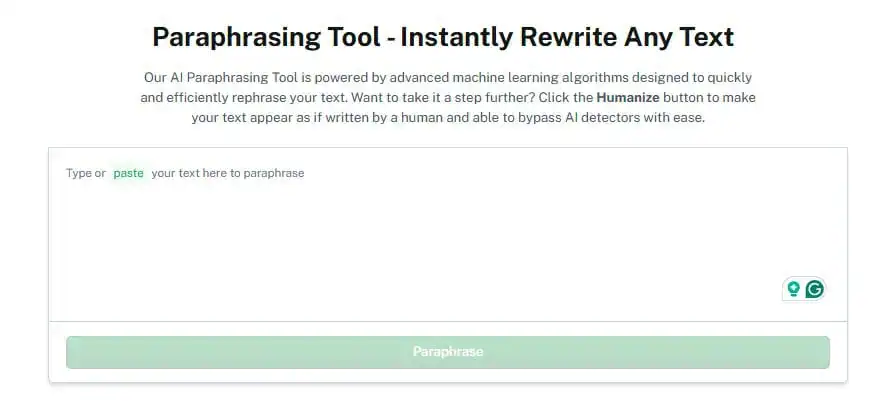
When you’re dealing with multiple grammar issues in a piece of writing, fixing them one by one gets tedious. Sometimes your text needs a complete refresh.
IA indetectable Parafraseador AI lo hace con elegancia. Corrige los errores gramaticales manteniendo intacto el significado principal.
The result reads naturally because it doesn’t just correct errors mechanically. It rewrites for flow and clarity.
Cómo mejorar la gramática para estudiantes de ESL/EFL
Learning English when it’s not your native language presents unique challenges.
Las normas parecen a menudo arbitrarias. Los hablantes nativos las infringen constantemente. Nada tiene sentido.
Here’s what actually helps:
- Sumérjase en un inglés natural. Watch shows without subtitles. Listen to podcasts. Read blogs and books. Your brain needs massive exposure to natural English patterns. Grammar rules make more sense when you’ve already internalized how things should sound.
- Céntrese primero en los errores de alta frecuencia. ESL learners often struggle with articles (a, an, the), prepositions (in, on, at), and verb tenses. Master these before worrying about obscure rules you’ll rarely use.
- Practica el pensamiento en inglés. When you constantly translate from your native language, you import grammar structures that don’t work in English. Try to think directly in English, even if it’s simple thoughts at first.
- Aprenda frases sueltas, no sólo palabras sueltas. Instead of learning “depend” as a standalone word, learn “depend on.” English is full of these collocations, and knowing them prevents grammar mistakes.
- Encuentre un compañero de intercambio lingüístico. Talking with native speakers forces you to use grammar in real time. You’ll make mistakes, but you’ll also get immediate feedback on what sounds natural.
- Study grammar explicitly, but don’t let it paralyze you. Yes, learn the rules. But don’t let perfectionism stop you from communicating. Making mistakes is part of the process.
Utiliza tecnología diseñada para tus necesidades. Los correctores gramaticales estándar suelen pasar por alto el problemas específicos a los que se enfrentan los estudiantes de ESL.
They flag errors but don’t explain why something sounds unnatural to a native speaker.
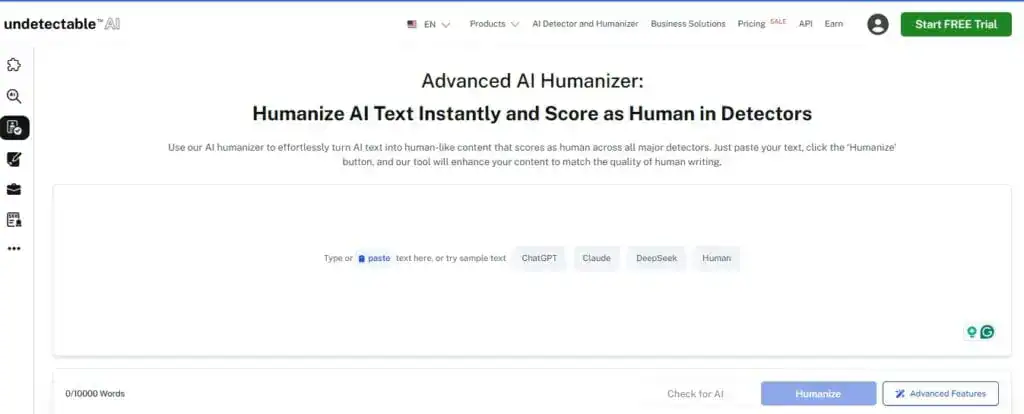
IA indetectable Humanizador AI es esencial para los alumnos de ESL.
Cuando corrija su gramática, necesita que los resultados suenen auténticamente humanos, no como una traducción o como alguien que está aprendiendo inglés.
El AI Humanizer garantiza que sus frases corregidas fluyan con naturalidad. Salva la distancia entre un inglés técnicamente correcto y un inglés que suene realmente nativo.
La herramienta detecta sutiles antinaturalidades que los correctores gramaticales habituales pasan por alto, como frases incómodas, expresiones poco idiomáticas o construcciones gramaticalmente correctas pero que ningún hablante nativo utilizaría realmente.
Utilice la AI Checker revisar la escritura asistida por IA para comprobar la coherencia y fluidez gramaticales.
Evalúa si el texto suena escrito de forma natural o demasiado estructurado por máquina, ayudándole a identificar problemas sutiles de redacción y fluidez irregular de las frases antes de publicar o enviar su trabajo.
Otra herramienta útil para los alumnos es Undetectable AI’s AI Paragraph Generator and Writer.
Te permite reescribir y pulir párrafos de práctica mientras te centras en la gramática, la fluidez de las frases y la estructura.
Puedes introducir tu propio texto o indicaciones para ver cómo se ve la gramática correcta en todo su contexto, lo que facilita la interiorización de la redacción natural y la mejora de la precisión de la escritura con el tiempo.
Pruebe nuestro Detector y Humanizador de IA con el widget que aparece a continuación.
Porque el corrector ortográfico no puede salvar tu alma
Improving your grammar isn’t about achieving perfection. It’s about gaining confidence and clarity in your communication.
Cuando tu gramática es sólida, todos los correos electrónicos, documentos y mensajes que escribes son más eficaces.
If you’re spotting grammar mistakes after you hit send, you’re already developing awareness.
If you’re reading this article, you’re taking action.
Siga sistemáticamente los pasos de esta guía. Concéntrese en un área débil cada vez. Practica todos los días, aunque sólo sean quince minutos.
Lee activamente, prestando atención a cómo construyen sus frases los escritores expertos.
And leverage the tools available to you. ChatGPT can check your grammar when you ask “how to use ChatGPT to check grammar” and paste in your text.
Pero herramientas como Undetectable AI’s suite of features llevarlo más lejos. El corrector gramatical le ayuda a entender las correcciones.
El Parafraseador AI corrige múltiples problemas manteniendo tu voz. El AI Humanizer garantiza que todo suene natural, no robótico.
La gramática es una habilidad, no un talento. Y las habilidades pueden aprenderse.