
Tutti noi abbiamo provato quella sensazione di sconforto dopo aver premuto il tasto "invia" di un'e-mail al proprio capo e aver visto subito un errore di grammatica.
Oppure postare su Instagram un lungo e commovente saluto alla vostra migliore amica e chiedersi se si tratti di "effetto" o di "effetto".
È un sentimento universale. Dopotutto, una buona grammatica mantiene i pensieri in carreggiata e li trasmette nel modo in cui si intende.
Una cattiva grammatica, invece, distrae il pubblico da ciò che si voleva effettivamente dire. Ecco perché gli scrittori lavorano con correttori di bozze e redattori.
The good news is that improving your grammar doesn’t require memorizing dusty textbooks or sitting through boring lectures.
It’s a skill you can develop with the right strategies and tools.
Questa guida vi aiuterà a individuare i vostri punti deboli e a padroneggiare concetti grammaticali avanzati.
You’ll learn practical techniques that actually work, plus how to use moderni strumenti di IA come ChatGPT e Undetectable AI per migliorare il vostro gioco di scrittura.
Punti di forza
-
You can’t fix grammar issues you don’t notice. Learn to spot common mistakes.
-
Leggere scritti di qualità e scrivere regolarmente sono i due modi più efficaci per migliorare.
-
ChatGPT can check your grammar, but tools like Undetectable AI’s Grammar Checker go further by making corrections sound naturally human.
-
Una grammatica perfetta non significa nulla se la vostra scrittura è confusa. Date sempre la priorità alla comprensione.
-
If English isn’t your first language, you’ll benefit from tools that help with natural phrasing, not just technical correctness.
Segni che è necessario migliorare la grammatica
How do you know if your grammar needs work? Sometimes it’s obvious. Other times, not so much.
- Le persone fraintendono la vostra scrittura. Se dovete continuamente chiarire cosa intendete dire nelle e-mail o nei messaggi, il colpevole potrebbe essere la grammatica. Modificatori fuori postoI riferimenti ai pronomi non chiari o la punteggiatura errata possono cambiare completamente il significato del testo.
- Si evita di scrivere certe cose. Do you shy away from writing professional emails or important documents? That’s often a sign you’re not confident in your grammar skills. You might use simpler sentences than you’d like, just to play it safe.
- La vostra scrittura sembra frammentaria o goffa. Good grammar keeps your writing flowing, while bad grammar creates speed bumps. If your sentences feel disconnected or your paragraphs don’t flow smoothly, grammar issues might be breaking up your natural voice.
- Si dubita costantemente di se stessi. Spending 10 minutes deciding between “who” and “whom” is exhausting. If you’re always doubting your grammar choices, you need a stronger foundation.
- Il feedback professionale menziona la grammatica. When teachers, editors, or colleagues point out grammar problems, listen. They’re seeing patterns you might miss.
- Il vostro correttore ortografico è sempre arrabbiato. Those red and blue squiggles are trying to tell you something. If your documents look like a Christmas tree of corrections, it’s time to address the underlying issues.
Here’s the thing about unclear or grammatically messy text: it’s fixable.
Non preoccupatevi più che l'intelligenza artificiale rilevi i vostri messaggi. Undetectable AI Può aiutarvi:
- Fate apparire la vostra scrittura assistita dall'intelligenza artificiale simile all'uomo.
- Bypass tutti i principali strumenti di rilevamento dell'intelligenza artificiale con un solo clic.
- Utilizzo AI in modo sicuro e con fiducia a scuola e al lavoro.
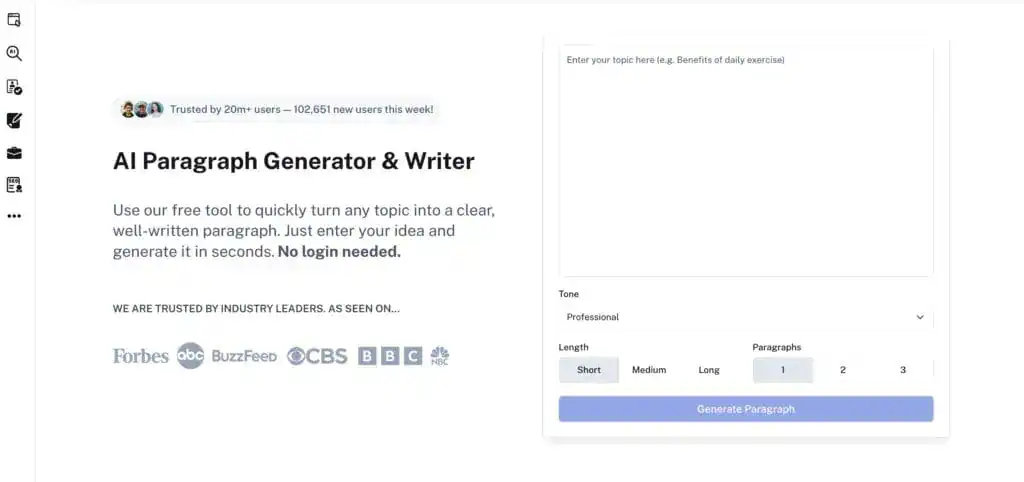
When your writing feels muddled, tools like Undetectable AI’s AI Paragraph Generator can rewrite your text in grammatically correct form while keeping your intended meaning.
It’s especially helpful when you know what you want to say but can’t quite figure out how to structure it properly.
Come migliorare la grammatica passo dopo passo
Migliorare la grammatica richiede un approccio sistematico. Here’s how to do it without getting overwhelmed.
Fase 1: identificare i punti deboli specifici. Don’t try to fix everything at once.
Iniziate a capire con cosa avete più difficoltà. Accordo soggetto-verbo? Le interruzioni di virgola? Frasi inconcludenti? Tenete un registro degli errori che commettete ripetutamente.
Questi schemi vi diranno dove concentrare le vostre energie.
Fase 2: imparare un concetto alla volta. Scegliete una singola regola grammaticale e imparatela prima di andare avanti. Dedicate una settimana all'uso della virgola, per esempio.
Poi passate ai punti e virgola. Questo approccio mirato funziona meglio del tentativo di assorbire tutto contemporaneamente.
Fase 3: leggere in modo attivo e analitico. Reading improves grammar, but only if you pay attention. When you encounter a well-written sentence, pause. Notice how it’s constructed.
Perché l'autore ha usato una virgola? Come hanno evitato le ripetizioni? La lettura attiva aiuta a interiorizzare la grammatica.
Fase 4: scrivere ogni giorno. There’s no substitute for practice. Practice migliora la scrittura. Voci di diario, commenti su Reddit, post su Medium, e-mail a se stessi.
Più si scrive, più le regole grammaticali diventano automatiche invece di essere pensate consapevolmente.
Fase 5: ottenere un feedback sulla propria scrittura. You can’t see all your own mistakes. Share your writing with others, or use AI tools to catch errors.
ChatGPT can spot grammar issues, but knowing there’s a mistake isn’t always enough. You need to understand why it’s wrong and how to fix it naturally.
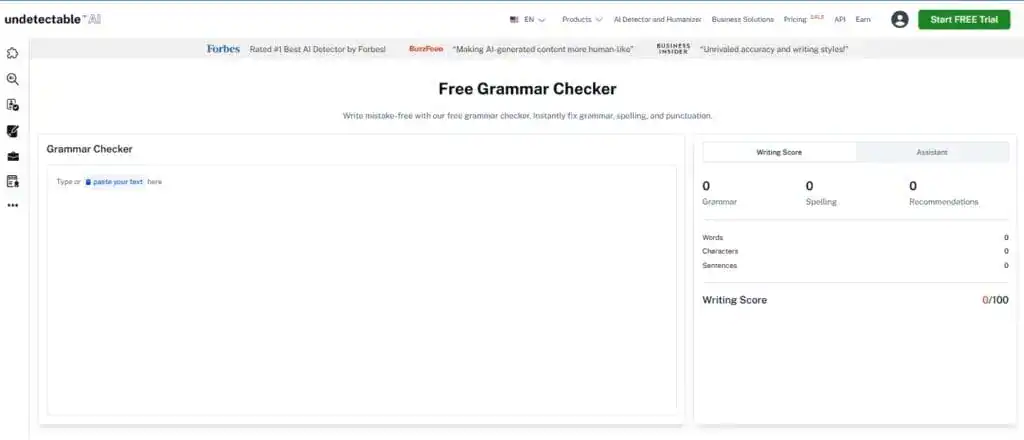
This is where Undetectable AI’s Grammar Checker becomes valuable. It doesn’t just identify grammar problems.
It humanizes the corrections, showing you how to fix issues while maintaining natural flow. The corrections don’t sound robotic or overly formal.
Sembrano qualcosa che una persona reale scriverebbe davvero.
Fase 6: revisione e controllo sistematico. Non fidatevi mai della vostra prima bozza. Mettete da parte la vostra scrittura per un po', poi tornate con occhi nuovi. Leggete anche ad alta voce.
La grammatica imbarazzante di solito si rivela quando la si ascolta.
Fase 7: studiare la grammatica nel contesto, non isolatamente. Le regole grammaticali hanno più senso quando le si vede in frasi reali.
Don’t just memorize that a comma goes before a coordinating conjunction in a compound sentence.
Trovate esempi di questo tipo negli articoli che vi piace leggere. Il contesto rafforza la comprensione.
Fase 8: Creare il proprio foglio di riferimento. Man mano che imparate le regole, scrivetele con parole vostre. Includete esempi che abbiano un significato per voi.
This personalized cheat sheet will become your go-to resource when you’re unsure.
Suggerimenti grammaticali per migliorare la scrittura
Beyond following the rules, certain strategies can accelerate your grammar improvement, whether you’re a beginner or an advanced writer.
- Leggete la vostra scrittura al contrario. Iniziate dall'ultima frase e lavorate sulla prima. Questo inganna il cervello nel vedere gli errori you’d otherwise skip over. You’re not caught up in the meaning, so grammar mistakes become more visible.
- Utilizzate la funzione di ricerca per trovare i vostri punti deboli. If you know you overuse certain words or mess up specific constructions, use Find (Ctrl+F) to locate them in your document. Search for “however” if you know you misuse it. Search for “their/there/they’re” if those trip you up.
- Prestate attenzione alla vostra virgola istintiva. La maggior parte dei madrelingua inglesi ha un discreto intuito per le virgole. Se vi sembra che una frase abbia bisogno di una virgola da qualche parte, probabilmente è così. Fidatevi di quell'istinto, poi verificatelo in base alle regole.
- Imparare la differenza tra grammatica parlata e scritta. Casual speech breaks grammar rules constantly. That’s fine for texting friends. But formal writing requires different standards. Understanding when to switch between these modes is important.
- Stop using words you don’t fully understand. A thesaurus isn’t always your friend. Using “utilize” instead of “use” doesn’t make you sound smarter if you use it incorrectly.
- Studiare la combinazione di frasi. Prendete due frasi semplici e combinatele in vari modi. Questo insegna come strutture grammaticali diverse creino effetti diversi.
- Notate cosa suona male. Il vostro orecchio per il linguaggio è migliore di quanto pensiate. Se qualcosa suona male quando lo leggete ad alta voce, indagate sul perché. Questo disagio spesso segnala un problema grammaticale.
- Imparate dai vostri errori senza vergognarvi. Everyone makes grammar mistakes. The difference between good writers and struggling writers isn’t that good writers are perfect. It’s that they learn from their errors and don’t repeat them endlessly.
Errori grammaticali comuni e come risolverli

Let’s tackle the grammar mistakes that trip up almost everyone, regardless of skill level.
- Giunture di virgole: Si tratta di unire due clausole indipendenti con una virgola.
Wrong: “I love grammar, it’s so useful.”
Right: “I love grammar. It’s so useful.”
In questo caso, utilizzare un punto e virgola o aggiungere una congiunzione.
- Its vs. It’s: “It’s” means “it is” or “it has.” “Its” shows possession. Think of it like “his” or “hers,” which also don’t have apostrophes. If you can’t substitute “it is,” use “its.”
- Accordo soggetto-verbo: The subject and verb must agree in number. “The team are winning” feels wrong because “team” is singular. “The team is winning” works. Collective nouns trip people up here.
- Modificatori penzolanti: “Walking to the store, the rain started pouring from the sky.” This implies that the rain was walking to the store. Fix: “Walking to the store, I got caught in the pouring rain.”
- Affetto vs. Effetto: “Affect” is usually a verb (to influence). “Effect” is usually a noun (a result). The weather affects my mood. The effect is that I feel gloomy. There are exceptions, but this rule applies 95% of the time.
- Meno contro meno: “Fewer” is for countable things. “Less” is for amounts. Fewer cookies, less sugar. If you can count it, use fewer.
- Chi contro chi: “Who” is the subject. “Whom” is the object. If you can substitute “he,” use “who.” If you need “him,” use “whom.” “Whom” is dying in casual English. When in doubt, restructure the sentence.
- Frasi di senso compiuto: L'accostamento di troppe clausole senza una corretta punteggiatura crea confusione, quindi è bene spezzarle. La brevità è spesso più chiara.
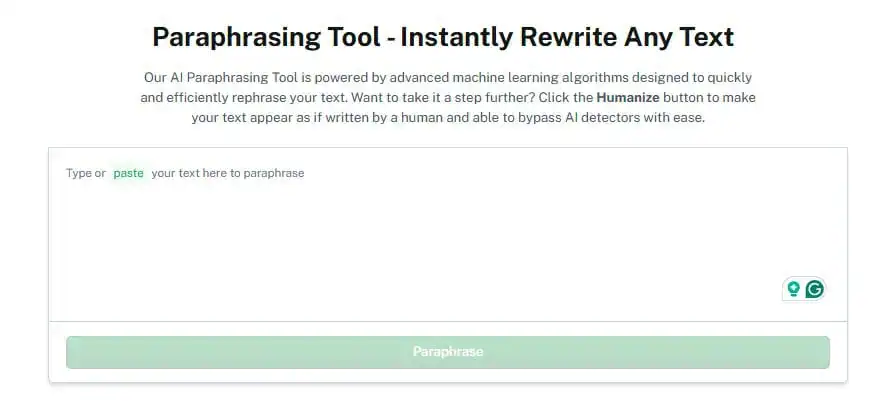
When you’re dealing with multiple grammar issues in a piece of writing, fixing them one by one gets tedious. Sometimes your text needs a complete refresh.
IA non rilevabili Parafrasatore AI gestisce questo aspetto in modo elegante. Corregge gli errori grammaticali mantenendo intatto il significato principale.
The result reads naturally because it doesn’t just correct errors mechanically. It rewrites for flow and clarity.
Come migliorare la grammatica per gli studenti ESL/EFL
Learning English when it’s not your native language presents unique challenges.
Le regole sembrano spesso arbitrarie. I madrelingua le infrangono continuamente. Nulla ha senso.
Here’s what actually helps:
- Immergetevi nell'inglese naturale. Watch shows without subtitles. Listen to podcasts. Read blogs and books. Your brain needs massive exposure to natural English patterns. Grammar rules make more sense when you’ve already internalized how things should sound.
- Concentratevi innanzitutto sugli errori ad alta frequenza. ESL learners often struggle with articles (a, an, the), prepositions (in, on, at), and verb tenses. Master these before worrying about obscure rules you’ll rarely use.
- Esercitarsi a pensare in inglese. When you constantly translate from your native language, you import grammar structures that don’t work in English. Try to think directly in English, even if it’s simple thoughts at first.
- Imparate pezzi di frase, non solo singole parole. Instead of learning “depend” as a standalone word, learn “depend on.” English is full of these collocations, and knowing them prevents grammar mistakes.
- Trovate un partner per lo scambio linguistico. Talking with native speakers forces you to use grammar in real time. You’ll make mistakes, but you’ll also get immediate feedback on what sounds natural.
- Study grammar explicitly, but don’t let it paralyze you. Yes, learn the rules. But don’t let perfectionism stop you from communicating. Making mistakes is part of the process.
Utilizzate la tecnologia progettata per le vostre esigenze. I controllori grammaticali standard spesso non notano la problemi specifici degli studenti ESL.
They flag errors but don’t explain why something sounds unnatural to a native speaker.
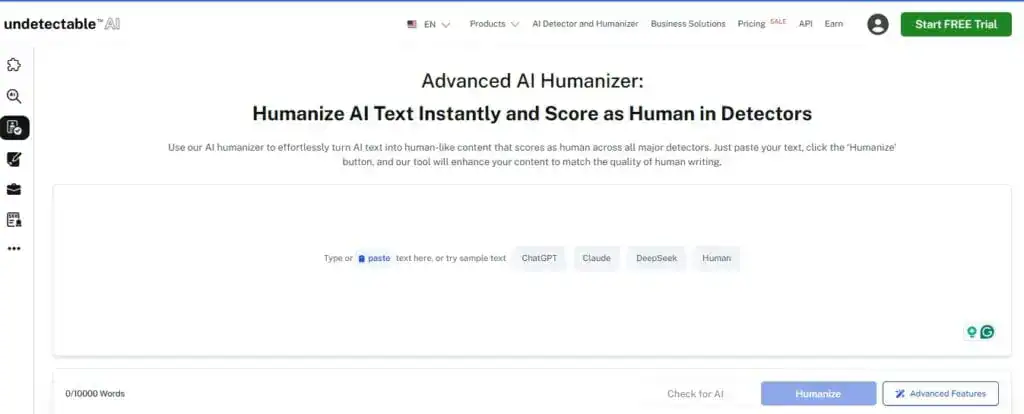
IA non rilevabili Umanizzatore AI è essenziale per gli studenti ESL.
Quando si corregge la grammatica, è necessario che i risultati suonino autenticamente umani, non come una traduzione o come qualcuno che sta imparando l'inglese.
L'AI Humanizer assicura che le frasi corrette fluiscano in modo naturale. Colma il divario tra l'inglese tecnicamente corretto e l'inglese che sembra effettivamente madrelingua.
Lo strumento individua le sottili innaturalità che sfuggono ai controllori grammaticali standard, come ad esempio frasi goffe, espressioni non convenzionali o costruzioni grammaticalmente corrette ma che nessun madrelingua userebbe.
Utilizzare il Controllore AI per verificare la coerenza grammaticale e la fluidità della scrittura assistita dall'IA.
Valuta se il testo sembra scritto in modo naturale o se è eccessivamente strutturato, aiutandovi a identificare i problemi di fraseggio e il flusso irregolare delle frasi prima di pubblicare o inviare il vostro lavoro.
Un altro strumento utile per gli studenti è Undetectable AI’s AI Paragraph Generator and Writer.
Permette di riscrivere e perfezionare i paragrafi di esercitazione, concentrandosi sulla grammatica, sul flusso delle frasi e sulla struttura.
È possibile inserire il proprio testo o i propri suggerimenti per vedere come appare la grammatica corretta in un contesto completo, rendendo più facile l'interiorizzazione del fraseggio naturale e migliorando l'accuratezza della scrittura nel tempo.
Testate il nostro AI Detector e Humanizer con il widget qui sotto!
Perché il controllo ortografico non può salvarvi l'anima
Improving your grammar isn’t about achieving perfection. It’s about gaining confidence and clarity in your communication.
Quando la grammatica è solida, ogni e-mail, documento e post che scrivete diventa più efficace.
If you’re spotting grammar mistakes after you hit send, you’re already developing awareness.
If you’re reading this article, you’re taking action.
Utilizzate i passi di questa guida in modo sistematico. Concentratevi su un'area debole alla volta. Esercitatevi quotidianamente, anche solo per quindici minuti.
Leggete attivamente, prestando attenzione a come gli scrittori esperti costruiscono le loro frasi.
And leverage the tools available to you. ChatGPT can check your grammar when you ask “how to use ChatGPT to check grammar” and paste in your text.
Ma strumenti come Undetectable AI’s suite of features andare oltre. Il controllo grammaticale aiuta a comprendere le correzioni.
L'AI Paraphraser risolve diversi problemi mantenendo la voce. L'AI Humanizer assicura che tutto suoni naturale, non robotico.
La grammatica è un'abilità, non un talento. E le abilità si possono imparare.