Learning how to avoid AI detection has become one of the most searched questions among writers, students, and marketers since language models made it possible to draft content in minutes instead of hours.
That shift changed how the internet gets written. As websites and schools caught on to the trend, detection tools followed close behind, and they were quickly adopted by everyone from Google SEO specialists to university administrators.
The technology behind these scanners is sophisticated, but avoiding detection is absolutely possible if you know the right techniques. The secret is making sure your content is properly humanized and polished before it ever hits a scanner.
Plongeons dans le vif du sujet.
Principaux enseignements
- AI detection is probabilistic, meaning it calculates the likelihood of machine origin rather than offering definitive proof of “guilt.”
- L'humanisation est le principal moyen de défense, car elle vous oblige à briser les schémas symétriques et les choix de mots prévisibles que les machines adoptent par défaut.
- Detectors are not applied evenly. Non-native English writers and formal, careful writers are flagged far more often, so a high score is never proof on its own.
- Google privilégie la valeur par rapport à l'origine, en se concentrant sur le contenu utile qui offre une expertise de première main, que l'IA ait ou non participé à sa rédaction.
- Ethics remain the central pillar, since bypassing detection for academic dishonesty carries real risk, while doing so for creative efficiency is widely accepted.
- L'écriture hybride est la norme, combinant la vitesse de l'IA avec les anecdotes spécifiques et la profondeur émotionnelle que seul un être humain peut fournir.
- Tools like Undetectable AI pair detection and humanization in a single workflow, so you can spot the exact passages a scanner would flag and fix them before you publish, rather than guessing at what to change.
Qu'est-ce que la détection de l'IA ?
La détection de l'IA consiste à analyser un bloc de texte afin de déterminer la probabilité qu'il ait été créé par un algorithme plutôt que par une personne.
It’s important to remember that these tools are not “reading” the content for meaning. They are performing a statistical analysis.
They look for specific “fingerprints” left behind by large language models, such as uniform sentence structures and a lack of creative vocabulary.
Ne vous inquiétez plus jamais de la détection de vos messages par l'IA. Undetectable AI peut vous aider :
- Faites apparaître votre écriture assistée par l'IA à l'image de l'homme.
- By-pass tous les principaux outils de détection de l'IA en un seul clic.
- Utilisation AI en toute sécurité et en toute confiance à l'école et au travail.
When you receive an AI detection score, it’s often misunderstood. A score of 70% does not mean that 70% of the words are AI-generated.
Instead, it indicates that the detector is 70% confident the entire passage was produced by a machine. Because these tools rely on math rather than intuition, they are notorious for false positives, flagging human-written work simply because it is clear, formal, or structured logically.
Pourquoi les gens veulent éviter la détection de l'IA en premier lieu
The desire to bypass these filters usually stems from a need to protect one’s reputation or search engine rankings.
For students, the motivation is often survival. Universities have integrated detection into platforms like Turnitin, et le fait d'être signalé peut conduire à des sanctions académiques sévères ou à l'expulsion.
Even if a student used AI only for minor brainstorming, a high detection score can trigger a grueling investigation. It’s part of why so many students now look into which AI tools are actually safe to use for schoolwork before they ever open a blank document.
Pour les professionnels, l'objectif est souvent de maintenir la confiance. Les créateurs de contenu et les blogueurs s'inquiètent du fait que si leur travail est signalé, cela pourrait avoir un impact négatif sur l'autorité de leur marque ou entraîner une baisse de l'engagement de la part d'un public sceptique.
While the technology is a tool for efficiency, no one wants their readers to feel like they’re being served “recycled data.” Avoiding detection is about proving that a human was still the primary architect of the message.
Comment les outils de détection de l'IA fonctionnent-ils réellement ?
Pour battre le système, vous devez comprendre comment il “pense”. Les détecteurs d'IA utilisent trois paramètres principaux pour évaluer votre travail.
Reconnaissance des formes et prévisibilité
Les modèles d'IA sont conçus pour choisir le mot le plus probable d'un point de vue statistique après le précédent. Cela confère au texte une “fluidité” très rare dans l'écriture humaine.
Les détecteurs recherchent ce manque de “friction”. Si chaque mot est le choix le plus sûr et le plus attendu, la probabilité d'une origine IA monte en flèche.
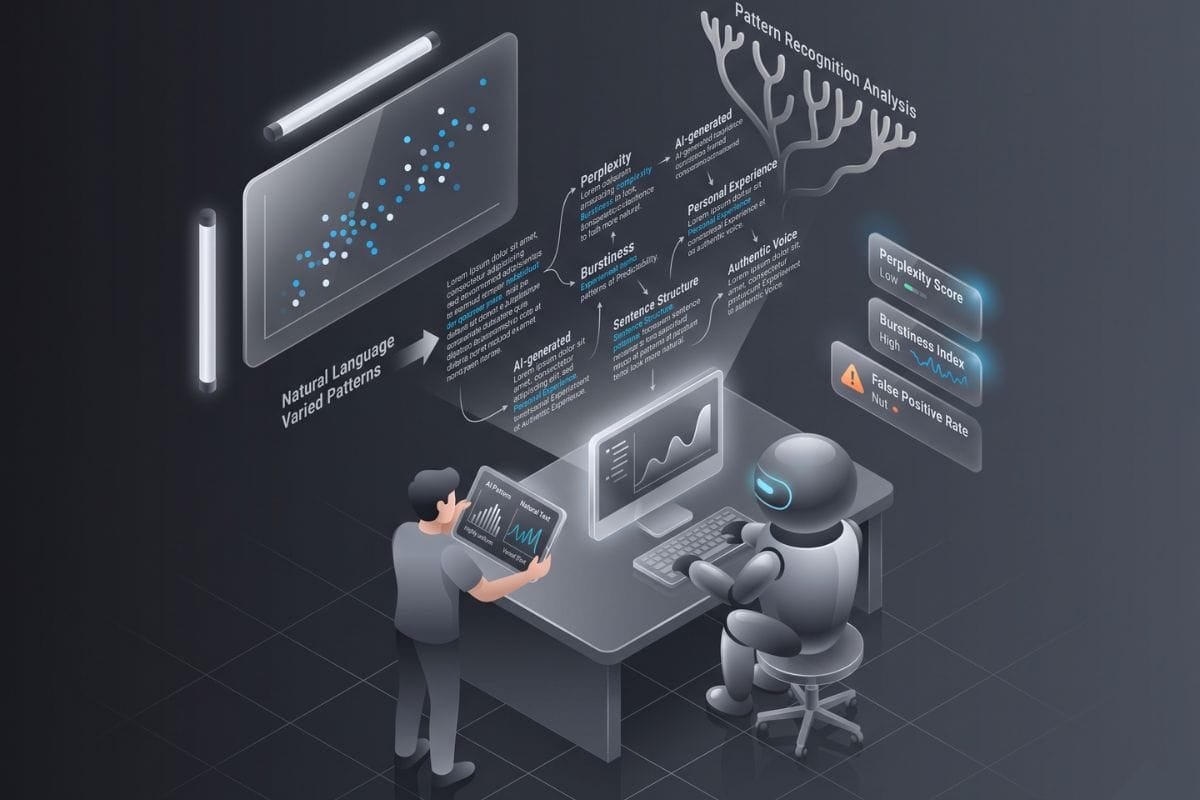
La perplexité et l'éclatement expliqués simplement
“Perplexity” refers to the complexity of the text. If a detector finds the writing too simple and easy to predict, it labels it as low perplexity, which reads as AI-generated. “Burstiness” refers to the variation in sentence length and structure.
Humans tend to write in “bursts,” a long, descriptive sentence followed by a short, punchy one. AI tends to be very symmetrical, using medium-length sentences throughout the entire piece.
Pourquoi la détection n'est pas 100% précise
Étant donné que ces outils font essentiellement des suppositions éclairées, ils ont du mal à s'adapter à des écrits humains de haute qualité qui sont très formels.
Recherche de APSense has even shown that AI detectors often discriminate against non-native English speakers, dont les écrits structurés et soigneusement formulés reflètent souvent la “faible perplexité” des textes générés par les machines.

The Fairness Problem: Why AI Detectors Don’t Treat All Writers Equally
This bias against certain writers is worth its own conversation, because it changes how much weight you should actually give a detection score.
The Non-Native Writer Penalty
Detectors were trained mostly on native-English writing samples, so any writing style that leans on simpler sentence structure, common vocabulary, or textbook grammar tends to look “too clean” to the algorithm.
That’s exactly how many non-native speakers write, since they often learned formal, rule-based English rather than the loose, idiomatic version native speakers grew up with. The irony is that the more careful and grammatically correct someone’s English is, the more likely a detector is to mistake it for machine output.
Independent research on detector false-positive rates has found the gap is not small. Some studies put the false-flag rate for non-native writers several times higher than for native speakers on the exact same task, which is a serious problem when a single score can affect a grade, a byline, or a job.
Undetectable AI has run its own AI detector tests and studies that dig into exactly how much these results can vary between platforms, and why relying on one single tool is risky.
What to Do If You’ve Been Falsely Flagged
If your original, human-written work gets flagged, don’t panic and don’t assume the score is the final word.
Keep your draft history, outlines, and research notes as proof of your process. Run the text through more than one detector before drawing any conclusions, since results vary widely between platforms.
And if you’re in an academic or professional setting, ask the reviewer what evidence beyond the score is being used to make a decision.
Est-il vraiment possible d'éviter la détection de l'IA ?
The short answer is yes, but it isn’t always as simple as clicking a “scramble” button. The battle between writers and detectors has become a sophisticated, constantly shifting game of cat and mouse.
The Reality Behind “Undetectable” Claims
Many tools claim to make text 100% undetectable, but the reality is that detection technology evolves constantly.
Avoiding detection is not about finding a magic cloaking device. It’s about editing the text so it no longer follows machine-like patterns. True “undetectability” comes from a mix of software refinement and human intuition.
Pourquoi aucun outil ne garantit la détection 0%
Because different detectors, like GPTZero, Winston, or Originality.ai, use different algorithms, a piece of text might pass one and fail another. A “0% AI” score is often an unrealistic goal.
The objective is usually to keep the probability low enough, typically under 20%, that it doesn’t trigger a manual review or a red flag.
Le risque de faux positifs
You must be prepared for the fact that even perfectly human content can be flagged. This is why it’s vital to keep your research notes and version history.
If you’re ever accused of using AI, being able to show the “evolution” of your draft, how you moved from an outline to a finished piece, is your best defense against a faulty algorithm.
Ce qui rend le contenu généré par l'IA facile à détecter
L'IA a des “indices”, tout comme un joueur de poker. L'un des principaux indices est le manque de détails spécifiques et concrets. L'IA s'exprime souvent par de grandes généralités, offrant une sagesse de type “fortune cookie” sans les exemples spécifiques et vécus qui caractérisent l'expertise humaine.
Another giveaway is the “over-polished” nature of the text. It rarely contains the idiosyncratic metaphors or conversational slang that humans use to add color to their thoughts.
AI-generated content often lacks a strong personal voice, too. It tends to stay neutral and safe, avoiding controversial takes or deeply emotional storytelling.
If an article feels like it could have been written by anyone for any audience, it’s a prime candidate for a high detection score. This is a big reason why what actually counts as AI-generated content matters so much for anyone trying to keep their work sounding like their own.
Des moyens intelligents pour rendre l'écriture assistée par l'IA plus naturelle
La meilleure défense est une bonne attaque. En modifiant de manière proactive la structure de vos tirages d'IA, vous pouvez réduire de manière significative les risques d'être signalé.
The more creativity and original content you can add to enhance the AI-written text, the less likely it is to be flagged as AI content, and Undetectable AI’s own breakdown of practical ways to make AI writing sound undetectable covers several techniques worth testing on your own drafts.
| Technique | Comment cela fonctionne-t-il ? | Pourquoi il contourne les détecteurs |
| Insérer des anecdotes personnelles | Ajoutez une anecdote tirée de votre vie ou de votre carrière. | L'IA n'a pas de “vie” dans laquelle puiser ; les histoires uniques brisent les schémas. |
| Varier le rythme des phrases | Utiliser des phrases très courtes et très longues dans le même paragraphe. | Cela augmente l“”éclat", qui est un marqueur humain clé. |
| Utiliser des synonymes rares | Remplacer les mots “courants” par des mots plus précis et moins “probables”. | Cela augmente la “perplexité” et perturbe les modèles statistiques. |
| Ajouter des imperfections “humaines | Utilisez un langage familier ou une transition légèrement informelle. | L'IA est trop “parfaite” ; les petits choix stylistiques prouvent l'intention humaine. |
Ajouter un point de vue personnel et des exemples spécifiques
Aussi intelligente que soit l'IA, elle a tendance à ne pas mentionner les détails spécifiques. Lors de la rédaction de votre contenu, ajoutez autant de détails et d'exemples que possible.
These human nuances are what distinguish your content as not being written by AI. If you can mention a specific event from your own week, you’ve already moved beyond the reach of most basic scanners.
Varier la longueur des phrases et le ton
L'IA aime le “juste milieu”. Elle écrit des phrases qui comptent presque toujours entre 15 et 25 mots. Pour remédier à ce problème, écrivez intentionnellement une phrase de quatre mots.
Elle est suivie d'une phrase de 40 mots qui utilise plusieurs virgules et un point-virgule. Cela crée le “chaos rythmique” que les détecteurs associent à la pensée humaine.
Modifier pour plus de clarté, et pas seulement pour plus de complexité
Don’t just use a thesaurus to make things harder to read. Edit to ensure the message is clear and punchy. Sometimes, making a sentence more conversational, rather than more formal, is the fastest way to drop an AI score.
Google’s primary concern is that content is written for people, not for engines, so a “people-first” edit naturally helps avoid detection.
AI Detection Is Now a Workplace Issue, Not Just a Classroom One
For a long time, AI detection felt like a school problem. That’s no longer true. It has quietly become a professional one, and the stakes can be even higher.
What Happens When Professional Work Gets Flagged
Several well-known consulting and advisory firms have already had reports and client deliverables flagged by AI detectors, with one report carrying a high probability of being entirely machine-written, a finding later verified by outside investigation.
The fallout wasn’t just embarrassing. It damaged client trust and raised hard questions about whether the underlying research had even been checked.
The same forces are pushing into everyday workplaces too, where employers are increasingly relying on AI checks during hiring and performance reviews, adding real pressure to prove that written work reflects genuine skill rather than a polished but shallow AI fluency that employees project to avoid looking obsolete.
Protecting Your Professional Reputation
The fix isn’t to hide your process. It’s to be deliberate about it.
Keep drafts and source material for anything high-stakes, the same way you would for an academic paper.
Use AI for research, outlines, and first drafts, then rewrite the sections that carry your expertise in your own voice. And if your organization has a policy on AI-assisted work, follow it and disclose your process rather than getting caught off guard later.
IA indétectables Vérificateur de plagiat AI is worth a look if your work regularly gets checked before it goes out the door, since it catches both AI-pattern issues and copied content in one pass.
Considérations éthiques : Faut-il essayer d'éviter la détection de l'IA ?

C'est ici que la discussion devient une question d'intégrité personnelle et professionnelle. Les outils existent, mais la manière dont vous les utilisez définit votre réputation.
If you’re using an Outil de paraphrase AI to refine your thoughts and improve clarity, you’re leveraging technology for professional growth.
However, if you’re using it to hide the fact that you haven’t done the required work, you’re entering a moral gray area.
- Intégrité académique : For students, the risks are immense. Bypassing detection to submit an assignment you didn’t write is a violation of trust that can have lifelong consequences. It’s always better to use AI as a tutor or research assistant rather than a replacement writer, and understanding how professors actually spot AI-written work can help you see where the real line sits.
- La transparence dans les écrits professionnels : If you’re a freelancer, check your contracts. Some clients allow AI-assisted work, while others strictly forbid it. Being transparent about your process is often better than trying to hide it and getting caught later.
- Utilisation responsable des outils d'intelligence artificielle : AI should be the “starting block,” not the “finish line.” The most ethical way to use these tools is to let them handle the repetitive tasks, like outlining or summarizing, while you handle the high-level analysis and emotional connection.
Does Avoiding AI Detection Help or Hurt Your Search Rankings?
This is one of the most common points of confusion for anyone publishing online, so it’s worth separating the myth from what’s actually documented.
What Google Has Actually Said
Google has stated plainly, in its own guidance on generative AI content, that using AI to write is not against its guidelines on its own. What matters is whether the finished page is genuinely useful, accurate, and written with real expertise behind it.
In other words, there’s no secret ranking penalty tied to an AI detection score. Google isn’t running your published pages through a detector and docking points for a percentage.
The Real Ranking Risk Isn’t Detection, It’s Quality
The actual risk comes from publishing thin, generic, mass-produced pages that don’t add anything a reader couldn’t already find elsewhere, regardless of whether a human or a machine typed them.
That’s why humanizing your content is worth doing for its own sake, not just to dodge a scanner. Writing that includes real examples, a clear point of view, and specific detail tends to rank well because it’s genuinely useful, and it also happens to read as more human. The two goals point in the same direction.
Comment l'IA indétectable peut aider à améliorer l'écriture humaine
Si vous souhaitez exploiter la puissance de l'IA sans risquer d'être repéré, vous avez besoin d'un flux de travail qui donne la priorité à la production humanisée.
L'IA indétectable est conçue pour servir de pont, en faisant passer vos projets de “robotique” à “relatable” en un seul clic.
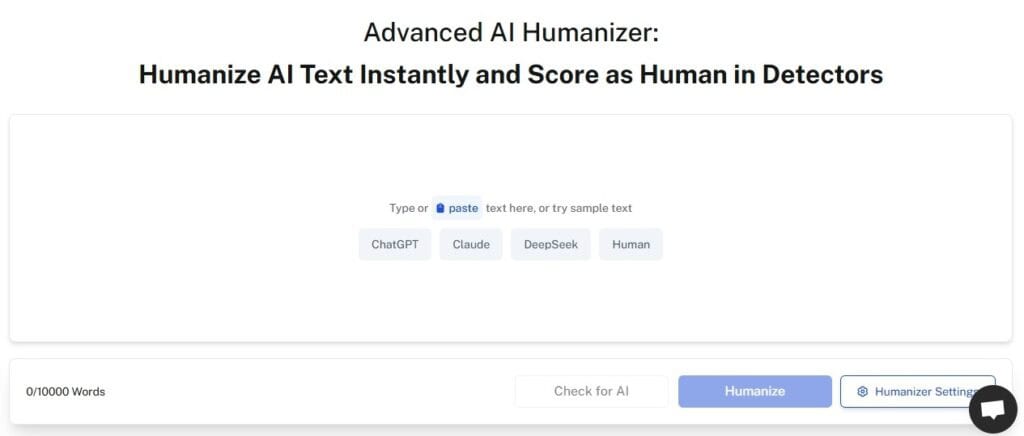
- AI Humanizer: This is the core tool for anyone wondering how to avoid AI detection. It doesn’t just “scramble” words; it rewrites the content to increase perplexity and burstiness, ensuring the final output holds up against even the most stringent modern detectors. Try our AI Humanizer directly if you have a draft that needs work right now.
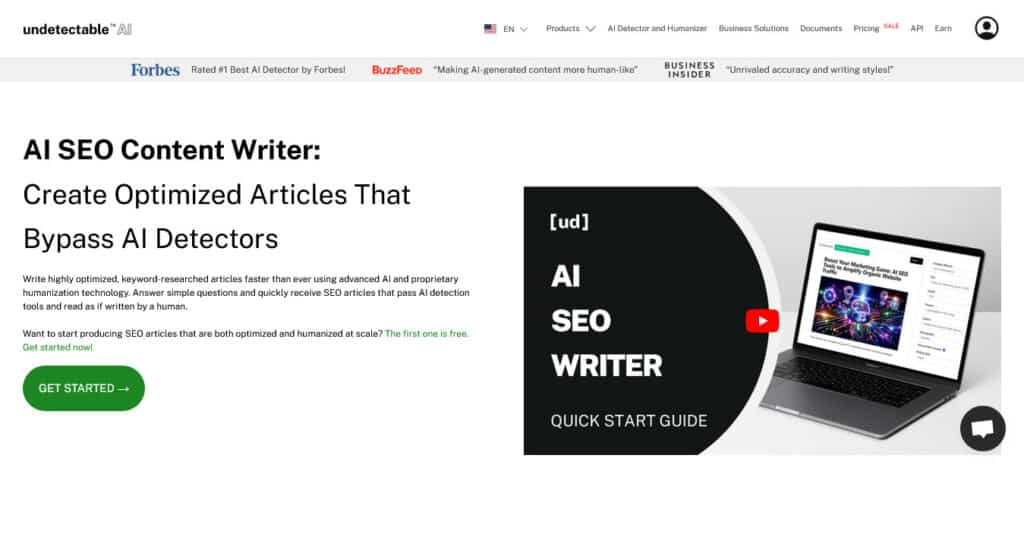
- Rédacteur de contenu AI SEO: This tool is built to produce high-quality, long-form content that’s natively designed to pass as human. It integrates current search engine guidelines to ensure your work is optimized for both robots and real people. Explore our Rédacteur de contenu AI SEO if you’re producing content at scale.
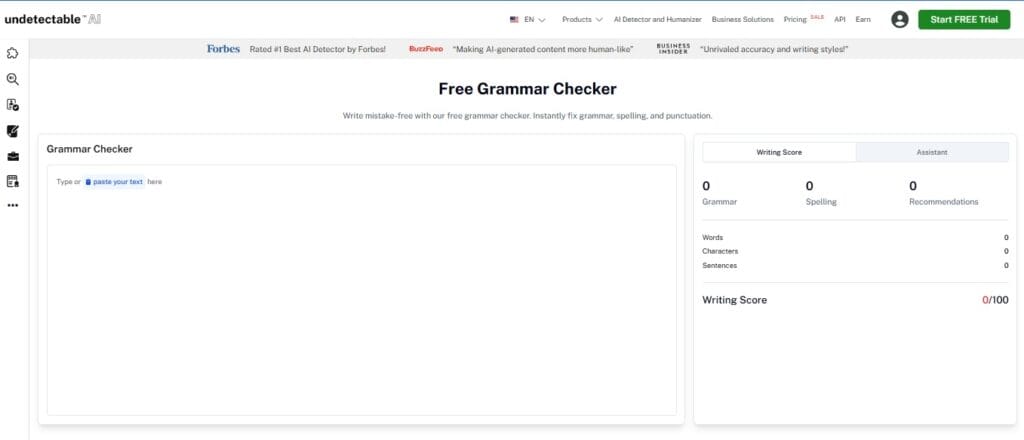
- Grammar Checker: Use this as your final quality-control layer. It ensures that while you’re “humanizing” the text, you aren’t sacrificing the professional polish and technical accuracy required for authoritative writing.
Commencez à utiliser notre AI Detector et Humanizer dans le widget ci-dessous !
FAQ
Google peut-il détecter du contenu AI sur mon blog ?
Yes, Google has some of the most advanced detection technology in the world. However, their official stance is that they don’t penalize content solely for being AI-generated. They only penalize content that is spammy, unhelpful, or lacks first-hand expertise.
Existe-t-il un moyen gratuit d'éviter la détection de l'IA ?
L'édition manuelle est la méthode gratuite la plus efficace. En réécrivant l'introduction, en ajoutant des anecdotes personnelles et en variant manuellement la longueur des phrases, vous pouvez réduire considérablement la note de l'IA sans dépenser un centime.
Qu'est-ce qu'un “bon” score de détection de l'IA ?
There’s no universally “safe” number, but most professionals aim for a score under 20%. If your score is 0%, it can actually look suspicious to some professors, since it suggests you didn’t use any modern writing tools at all.
Can AI detection affect my job, not just my grades?
Yes. More employers are running written work, from reports to applications, through detection tools, especially in industries where original analysis is part of the job.
A flagged report can affect trust with a manager or client even outside a formal disciplinary process, which is why keeping a record of your drafting process matters at work too, not just in school.
Do AI detectors get better over time, or is this a losing battle?
Both are true at once. Detectors keep improving, but so do the language models and humanization techniques writers use. Treat detection as an ongoing standard to write well against, not a puzzle you solve once and forget.
Une meilleure approche : Privilégier la qualité plutôt que la dissimulation
At the end of the day, the goal shouldn’t just be to “hide” the AI. The goal should be to produce the best possible content for your audience.
If you spend all your time trying to beat an algorithm, you might lose sight of the people you’re actually writing for.
The most successful writers today are the ones who treat AI as a collaborative partner.
They use it to generate ideas and handle the bulk of the drafting, but then they step in to add the human soul, the humor, the doubt, the specific examples, and the unique voice that no computer can replicate.
Lorsque vous vous concentrez sur la qualité, la transparence et la valeur, la “détection” devient un obstacle mineur plutôt qu'une menace qui met fin à votre carrière. Utilisez la technologie pour amplifier vos compétences, et non pour en dissimuler l'absence.
Create content that truly connects, and refine it with IA indétectable pour s'assurer que le son est naturel, authentique et humain.