“We shall fight on the beaches, we shall fight on the landing grounds, we shall fight in the fields and in the streets, we shall fight in the hills; we shall never surrender.”
Read that again. Don’t you feel like grabbing a helmet and charging into battle for your own cause?
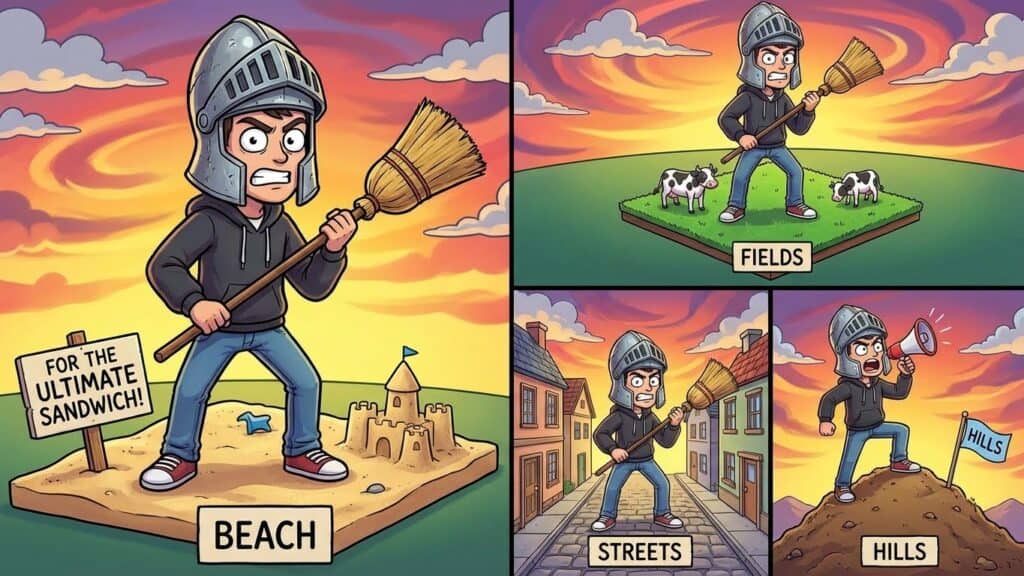
That’s anaphora.
It’s a clever trick where the same word or phrase is used at the start of several sentences or clauses to make everything sound urgent, dramatic, or downright inspiring.
This technique appears in many forms across music, literature, speeches, and even everyday writing.
And today, in this blog, we’re going to cover everything you need to know about anaphora.
We’ll see anaphora meaning, examples, and the clever ways writers and speakers use it.
We’ll also learn about the different anaphora types, how to spot it, and even some AI tools that can help you write them like a pro.
Let’s dive in.
Key Takeaways
- Anaphora meaning: A rhetorical device that repeats words or phrases at the beginning of consecutive sentences to create emphasis and rhythm.
- Anaphora is found in famous speeches, literature, music, and film to build emotional impact.
- Most effective anaphora uses three repetitions which is enough to create pattern and rhythm without becoming tedious.
- Repetition helps audiences process ideas faster by establishing familiar patterns that anchor attention
- Anaphora works best when you vary the endings while keeping the opening anchor phrase consistent.
What Is Anaphora?
Anaphora is a writing and speech technique where the same word or phrase is repeated at the beginning of multiple sentences or clauses.
Writers and speakers use anaphora to emphasize an idea, create rhythm, and make words more emotional and memorable
- Anaphora Definition
To define anaphora, we have to look at its origins. The word anaphora (pronounced uh-naf-er-uh) comes from the Ancient Greek word anaphorá (ἀναφορά). It is made from two parts:


Never Worry About AI Detecting Your Texts Again. Undetectable AI Can Help You:
- Make your AI assisted writing appear human-like.
- Bypass all major AI detection tools with just one click.
- Use AI safely and confidently in school and work.
- ana → meaning back, again, or upward
- pherein → meaning to carry
So, the anaphora meaning is literally “a carrying back.” Let’s look at anaphora definition now:
“Anaphora is a technique where a word or phrase is repeatedly “carried back” to the beginning of sentences or clauses to keep the reader focused on one central idea.”
Think of it like this:
- Not a straight line ➝ moving forward once
- More like a tightening coil 🌀 ➝ coming back again and again
Each repetition adds more pressure, more emotion, and more impact. Now that the anaphora definition is clear, let’s look at some examples of anaphora.
- Anaphora Examples
Here, we’ve grouped the anaphora examples into three categories:
| Category | Author / Speaker | Example | How Anaphora Works |
| Literature | Charles Dickens — A Tale of Two Cities | “It was the best of times, it was the worst of times…” | Repeating “It was the” shows two opposite ideas side by side and helps readers feel the tension of the time. |
| J.D. Salinger — The Catcher in the Rye | “It rained on his lousy tombstone… It rained all over the place.” | Repeating “It rained” makes the mood feel sad, slow, and depressing. | |
| Famous Speech | Winston Churchill — We Shall Fight on the Beaches | “We shall fight on the beaches, we shall fight on the landing grounds…” | Repeating “We shall fight” shows strong determination and keeps the audience motivated. |
| Anaphora for Defeat | Chief Joseph — Surrender Speech | “I am tired of fighting… It is cold… The little children are freezing…” | The repeated short lines sound tired and broken, showing pain and exhaustion. |
Why Writers Use Anaphora
Writers use anaphora because it makes language easier to understand, harder to forget, and stronger emotionally.
Here are the top five reasons why anaphora makes writing powerful:
- It Makes Ideas Easier to Process
The human brain looks for patterns to save effort. Anaphora gives the brain exactly that. When the opening structure repeats, the brain stops re-analyzing grammar and focuses only on meaning.
Example:
I have a dream that one day…
I have a dream that my children…
I have a dream that freedom will…
- The phrase “I have a dream” becomes familiar. The listener no longer struggles with sentence structure and absorbs the message faster.
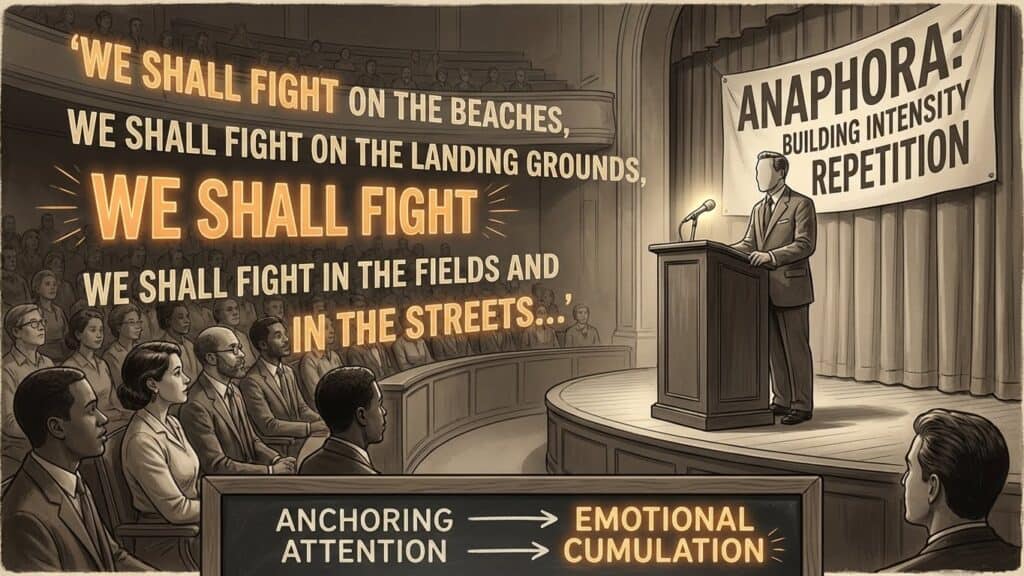
- It Anchors Attention in Long or Emotional Writing
Anaphora acts like a mental checkpoint. Each repetition pulls the reader back in.
Example: Winston Churchill
We shall fight on the beaches,
we shall fight on the landing grounds,
we shall fight in the fields and in the streets…
- The repeated phrase “we shall fight” keeps the audience emotionally locked, even as the locations change.
3. It Makes Messages Feel More Convincing
Repeated structures feel stable and confident. Familiarity builds trust.
Example:
This is the moment we waited for.
This is the moment history will remember.
This is the moment change begins.
- Even without new facts, repetition makes the message feel solid and believable.
If you’re writing an essay and want your work to have rhythm, and to stay in your teacher’s mind, you can use anaphora. But you don’t need to overthink it.
Simply go to this tool and pour in your idea.
The AI Essay Writer will help you create a strong essay that shows how repeated openings build emphasis, rhythm, and emotional momentum.
Types Of Anaphora In Writing And Speech
Understanding how to define anaphora also means recognizing its different types.
Here’s a breakdown of the top five types of repetitions commonly used in writings and speeches:
| Type | Definition | Reference | Example |
| Standard / Classic | Repeating a word or phrase at the start of sentences to emphasize and create rhythm. | Edgar Allan Poe, The Raven | “And the silken sad uncertain rustling of each purple curtain… And the lamplight faintly flickered across the floor…” |
| Barack Obama, 2008 Speech | “We will build a future that is green, we will build a future that is just, we will build a future that is ours.” | ||
| Cumulative / Progressive | Repetition that builds up intensity or emotion. | Ray Bradbury, Fahrenheit 451 | “He ran, he ran faster, he ran faster still…” |
| Franklin D. Roosevelt, First Inaugural Address | “Let us strive to conquer fear, let us rise above fear, let us act despite fear.” | ||
| Contrasts / Opposites | Repeating a phrase while showing opposite ideas. | Charlotte Brontë, Jane Eyre | “I am no bird; and no net ensnares me: I am a free human being with an independent will.” |
| Langston Hughes, Let America Be America Again | “Let America be the dream the dreamers dreamed—Let it be the pioneer on the plain…” | ||
| Emotional / Oratory | Repetition to make the audience feel strong emotions. | Malala Yousafzai, UN Speech | “We want education for our daughters, we want education for our sons, we want education for all children.” |
| Shakespeare, Macbeth | “Tomorrow, and tomorrow, and tomorrow…” | ||
| Character Voice / Dialogue | Repetition in speech to show personality or mood. | Suzanne Collins, The Hunger Games | “I volunteer! I volunteer as tribute!” |
| The Dark Knight (Joker) | “Introduce a little anarchy. Upset the established order. Introduce chaos.” |
Where Anaphora Shows Up Most Often
After exploring various anaphora examples, you might wonder where this technique appears in everyday life. Anaphora can be used anywhere from casual conversation to movies and speeches.
But commonly, it appears in these four main places:
- Musical Anaphora
Hooks, choruses, and repeated lines use anaphora to create rhythm, reinforce meaning, and intensify emotion.
Examples:
| Reference | Example |
| Kendrick Lamar — Swimming Pools (Drank) | “Pour up, drank, head shot, drank. / Sit down, drank, stand up, drank. / Pass out, drank, wake up, drank.” |
| Taylor Swift — Getaway Car | “I was dying in a getaway car / I was flying in a getaway car.” |
- Cinematic Monologues
Screenwriters use anaphora to show obsession, intelligence, or intensity in a character.
Examples:
| Reference | Example |
| Good Will Hunting (1997) — The Park Bench Scene | “If I asked you about art, you’d probably give me the skinny on every art book ever written… If I asked you about women, you’d probably give me a syllabus… If I ask you about war…” |
| The Wolf of Wall Street (2013) | “Was it legal? Absolutely not. Was it moral? Absolutely not.” |
- Anaphora in the Courtroom
Lawyers use anaphora to persuade juries, emphasizing doubt or certainty.
Example:
- “Where was the evidence? There was no DNA. Where was the evidence? There was no weapon. Where was the evidence? There was only hearsay.”
- Writing & Literature
Writers use anaphora to create rhythm, emphasize themes, or make ideas memorable.
Examples:
| Reference | Example |
| George Orwell, 1984 | “War is peace. Freedom is slavery. Ignorance is strength.” |
| Elizabeth Barrett Browning, Sonnets from the Portuguese | “How do I love thee? Let me count the ways. I love thee to the depth… I love thee to the breadth… I love thee to the height…” |
| J.K. Rowling, Harry Potter | “I must not tell lies. I must not tell lies. I must not tell lies.” |
How To Use Anaphora Effectively
Anaphora is a powerful tool, but like any tool, it works best when used with intention. Done well, it engages your audience. Done poorly, it can feel forced or repetitive.
Here’s how to use it effectively:
- Start Simple and Identify Your Anchor
Choose a word or phrase that will serve as your “anchor.” This is the repeated starter that your audience will latch onto.
Example:
- “I will fight for justice. I will fight for equality. I will fight for peace.”
Here, “I will fight” is the anchor.
- Vary the Ending
Repetition works best when each line adds something new. Avoid repeating the entire sentence; repeat only the starter and vary the rest.
Example:
- “We seek freedom in our homes. We seek freedom in our schools. We seek freedom in our hearts.”
The repeated “We seek freedom” builds momentum, while the endings create new meaning each time.
- Formula for Writing Anaphora
When you define anaphora in practical terms, here’s a simple formula you can follow:
[Anchor Phrase + Variable Ending = Effective Anaphora]
- Anchor Phrase → what you want to emphasize
- Variable Ending → new detail, action, or emotion each time
Example Formula Applied:
- Anchor: “Rise with…”
- Variable Endings: courage, hope, love
- Result: “Rise with courage. Rise with hope. Rise with love.”
- Use Tone and Rhythm to Reinforce Emotion
Part of understanding anaphora meaning is recognizing its musical quality. Adjust your sentence length, punctuation, and rhythm to match the mood:
- Short, punchy lines → urgency or anger.
- Longer, flowing lines → calm, reflective, or lyrical.
Example:
- “Rise with courage. Rise with hope. Rise with love.”
- Leverage Tools for Natural Repetition
Modern AI can help you experiment and polish your anaphora without overthinking:
- Writing Style Replicator: Test different repeated starters and tones. See how your anchor phrase works with multiple variations before committing.
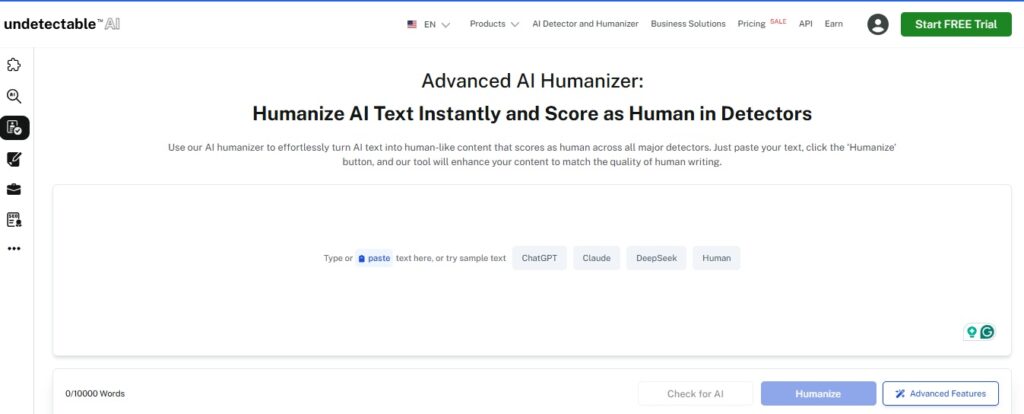
- AI Humanizer: Smooth out repetition so it feels natural, conversational, and emotionally resonant, not robotic or forced.
Pour your idea into the tool, play with the repeated phrase, and let it suggest variations that keep rhythm, emphasis, and clarity intact.
How To Identify Anaphora In A Passage
Spotting anaphora isn’t hard once you know what is anaphora and what to look for.
Whether you’re analyzing literature for class or studying anaphora examples in speeches, look for these three factors:
- The Rule of Three (Tricolon)
The most effective anaphora usually comes in threes.
- Two repetitions might be a coincidence or a comparison.
- Three repetitions creates a complete thought, rhythm, and pattern. This is your sweet spot.
- Four or more repetitions are over-the-top and tedious (unless somebody is giving a speech like MLK or Churchill).
Example:
- Abraham Lincoln, Gettysburg Address: “We cannot dedicate, we cannot consecrate, we cannot hallow this ground.”
- Variation and Disruption
Usually, skilled writers break the pattern slightly to create emphasis or highlight the climax.
Example:
- “I analyzed video games. I analyzed magazines. I even analyzed recipes.”
- Avoid “Clunky” Mistakes
Not every repetition follows the true anaphora definition. Amateur writers often confuse redundancy with effective repetition.
Bad Repetition: “He went to the store. He bought milk. He went home.”
(This is just repetitive)
Good Anaphora: “He went to the store for purpose. He went to the store for escape. He went to the store to find himself.”
(The repeated phrase evolves in meaning and creates rhythm.)
Checklist to Spot Anaphora
- ✅ Is a word or phrase repeated at the start of clauses or sentences?
- ✅ Are there three or more repetitions forming a pattern?
- ✅ Does the repetition build meaning, emotion, or rhythm?
- ✅ Is there slight variation in the repeated line to keep it interesting?
- ✅ Does it feel intentional rather than just repetitive?
Start refining your text with our AI Detector and Humanizer below!
Conclusion
The truth is, you’ve probably used anaphora without even realizing it.
Think about the last time you were passionate about something.
You could be explaining why your favorite team should win, convincing a friend to watch a show, or arguing for a change at work.
You might have started a few sentences the same way:
“This team has heart. This team has strategy. This team has what it takes to win.”
That’s anaphora. It’s one of the oldest and most effective ways humans communicate, and your brain naturally reaches for it.
Now that you know what is anaphora, you can use it on purpose. You’ll notice your writing flows naturally. Your words will have rhythm. Your ideas will stick.
And if all these techniques feel a bit much, don’t worry, Undetectable AI has your back.
This tool helps you clean up your writing, make your repetitions feel natural, and use anaphora without it sounding forced.
It checks your text for rhythm, shows you where your patterns work (or don’t), and gives tips to make everything flow smoothly.
Go ahead, write something people will remember.