
Long before writing, speeches, or stories even existed, humans survived by thinking in opposites: safe or dangerous, friend or enemy, light or dark.
Our ancestors who could distinguish between threat and safety lived long enough to pass on their genes.
This binary thinking became hardwired into our brains over millions of years, so our brains still react powerfully to contrast today.
We’ve given this contrast a name: antithesis.
When you hear or read antithesis, your brain’s hippocampus (the memory center) creates a “distinctive encoding.”
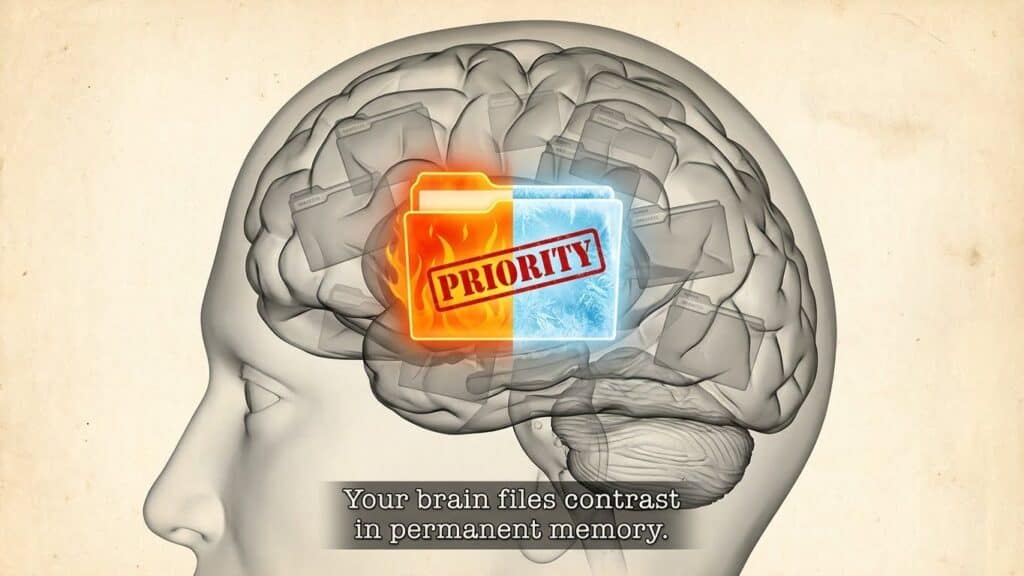
Two opposite ideas create tension, and that tension forces your brain to slow down and process both sides at once.
Because your brain works harder, it remembers more.
Psychologists call this the Von Restorff Effect.
It means that things that stand out are remembered much better than things that don’t. Contrast makes ideas stand out, so your brain highlights them and holds onto them.
Today, we’ll explore what antithesis is with clear antithesis examples,and discover why writers and speakers use this technique.
We’ll look at thesis antithesis synthesis, examine common patterns of antithesis examples figures of speech, learn how to spot antithesis in what you read, and master how to write it yourself.
Let’s dive in.
Key Takeaways
- Antithesis is a rhetorical device that places two opposite ideas in parallel structure to create memorable, impactful statements.
- The antithesis definition comes from Greek: “anti” (against) + “tithenai” (to place), meaning to position contrasting ideas together.
- Famous antithesis examples include “To be or not to be” (Shakespeare), “Best of times, worst of times” (Dickens), and JFK’s “Ask not what your country can do for you.”
- Thesis antithesis synthesis is a dialectical method where an idea (thesis) meets its opposite (antithesis) and creates something new (synthesis).
- Writing effective antithesis involves three steps: identify the contrast, establish relatedness, and balance the syntax for maximum impact.
- Antithesis examples figures of speech appear everywhere from literature and political speeches to advertising slogans and everyday expressions.
What Is Antithesis?
Understanding the antithesis meaning starts with understanding how our brains work.
Humans naturally think in opposites, like:
- Safe vs. dangerous,
- Light vs. dark,
- Self vs. other
Antithesis uses this by presenting two opposing ideas in a structured, parallel way, which makes them easier to remember and more impactful.


Never Worry About AI Detecting Your Texts Again. Undetectable AI Can Help You:
- Make your AI assisted writing appear human-like.
- Bypass all major AI detection tools with just one click.
- Use AI safely and confidently in school and work.
- Antithesis Definition
The word antithesis comes from two Greek words:
- anti = against
- tithenai = to place
So, the antithesis definition literally means placing two opposite ideas together in a parallel structure. Examples:
- I can resist anything except temptation.
- Pleasure’s a sin, and sometimes sin’s a pleasure.
These are classic antithesis examples figures of speech where contrasting ideas create memorable statements.
- Antithesis Examples
Antithesis is everywhere. Let’s look at some powerful antithesis examples from literature, pop culture, and advertising slogans.
Antithesis in Literature
- Charles Dickens – A Tale of Two Cities
“It was the best of times, it was the worst of times, it was the age of wisdom, it was the age of foolishness…”
- John Milton – Paradise Lost
“Better to reign in Hell, than serve in Heaven.”
- William Shakespeare – Hamlet
“To be, or not to be…”
Antithesis in Pop Culture
- Taylor Swift – The Evolution of Color
“I once believed love would be black and white / But it’s golden.”
- Kendrick Lamar – The Blacker the Berry
“I’m the biggest hypocrite of 2015 / Once I finish this, witnesses will convey just what I mean…”
- The Dark Knight – Harvey Dent
“You either die a hero or you live long enough to see yourself become the villain.”
Antithesis in Advertising Slogans
- Persil
“Tough on stains, gentle on skin”
- 7Up
“The Un-Cola”
- M&M’s
“Melts in Your Mouth, Not in Your Hands”
These advertising antithesis examples show how brands use contrast to make their messages stick.

If you want to create a hook that is just as memorable, try using our Undetectable AI’s Slogan Generator.
It is an essential tool for developing a powerful antithesis that highlights exactly how your product differs from the competition.
By inputting your brand’s dual benefits, the tool can help you find that perfect linguistic balance that makes your message feel both authoritative and inevitable.
Why Writers Use Antithesis
Antithesis makes our ideas memorable, persuasive, and impactful. Here’s why:
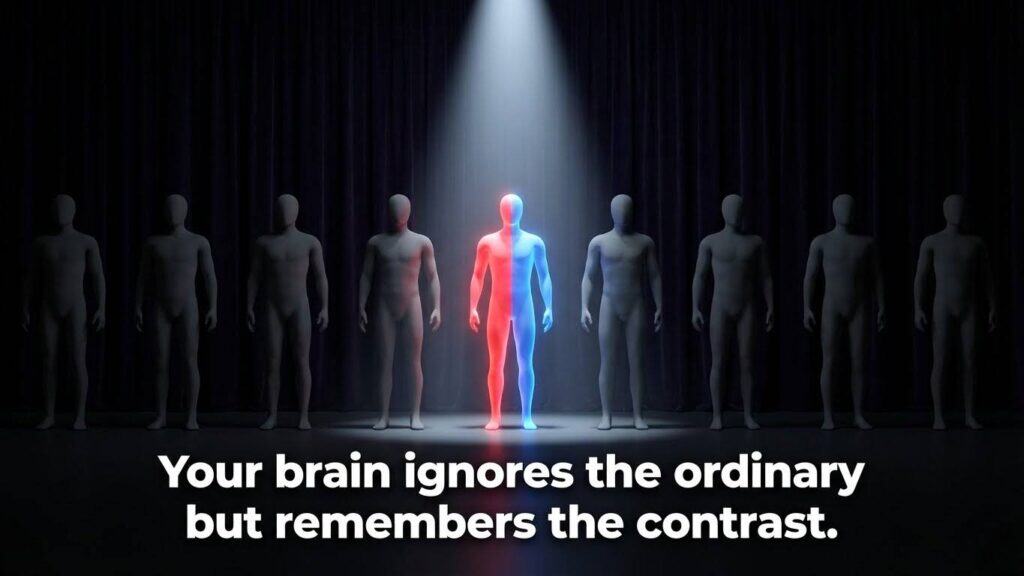
- The Von Restorff Effect (Isolation Effect)
When something stands out in a group, we remember it better. Antithesis artificially creates this effect in writing.
Example
- With Antithesis: “Freedom is precious; oppression is unbearable.”
- Without Antithesis: “Freedom is good. Oppression is bad.”
(Feels flat, ordinary, and easily forgettable).
- Cognitive Fluency and Truthiness
Our brains love patterns. They process repeated structures faster and feel that the statement is “true.”
Example
- With Antithesis: “To err is human; to forgive, divine.”
- Without Antithesis: “Making mistakes is normal. Forgiving people is good.” (Lacks rhythm and feels less convincing).
- Establishing Authority
Antithesis gives the impression the speaker has considered all sides and made a definitive judgment.
Example
- With Antithesis: Neil Armstrong: “One small step for man, one giant leap for mankind.”
- Without Antithesis: “I’m taking a small step, but it’s important for everyone.” (Sounds casual and lacks gravitas).
- Emotional Rhythm
Antithesis examples figures of speech create a musical cadence that makes language feel alive and emphasizes emotion.
Example
- With Antithesis: Winston Churchill: “We shall fight on the beaches, we shall fight on the landing grounds, we shall fight in the fields and in the streets…”
- Without Antithesis: “We will fight everywhere we can.”
(Feels generic, without emotional punch).
Common Patterns of Antithesis
Antithesis is versatile. It comes in different forms, each creating a unique rhetorical effect.
Here are the most common patterns:
| Pattern | How It Works | Example | Why It’s Used |
| Simple Binary | Not [X], but [Y] | “I seek not to ruin, but to save.” | Makes contrast clear and easy to remember. |
| Double Antithesis (Chiasmus / Antimetabole) | A-B, B-A | JFK: “Ask not what your country can do for you—ask what you can do for your country.” | Creates a mirrored effect that feels strong and convincing. |
| Hegelian Dialectic | Idea → Opposite → Combined | Story: Act I – hero’s normal lifeAct II – hero faces challengeAct III – hero comes back changed | Shows conflict and resolution; makes stories satisfying and meaningful. |
The thesis antithesis synthesis concept comes from Hegelian dialectic, where an idea (thesis) meets its opposite (antithesis) and combines into something new (synthesis).
This pattern appears everywhere from philosophy to storytelling.
Antithesis in Literature, Speeches, and Everyday Language
Let’s explore how antithesis examples appear in literature, political speeches, and everyday expressions, and why it works so well.
- Literature
In literature, antithesis helps convey conflict, emotion, and inner struggle.
| Author / Book | Example | Why It Works |
| Mary Shelley, Frankenstein | “I ought to be thy Adam, but I am rather the fallen angel.” | Shows the creature comparing himself to good (Adam) and bad (fallen angel). Makes us feel his inner struggle. |
| F. Scott Fitzgerald, The Great Gatsby | “So we beat on, boats against the current, borne back ceaselessly into the past.” | Shows life’s push and pull—moving forward but held back. Makes the reader feel the tension and struggle. |
- Political Speeches
Politicians often use it to contrast action with inaction, freedom with fear, or responsibility with control.
| Speaker | Example | Why It Works |
| John F. Kennedy | “Let us never negotiate out of fear. But let us never fear to negotiate.” | Flips fear and action. Parallel structure makes it punchy and easy to remember. |
| Ronald Reagan | “Government’s first duty is to protect the people, not run their lives.” | Simple contrast: protect vs. control. The audience immediately gets the message. |
- Everyday language
Even in casual conversations, we use antithesis examples without realizing it:
- “Better late than never.” → Shows a choice between timeliness and action, memorable because of the short, punchy contrast.
- “More haste, less speed.” → Contrasts rushing vs. carefulness; feels true because your brain recognizes the tension.
- “Birds of a feather flock together, opposites attract.” → Highlights the paradox of human relationships with contrasting outcomes.
- “No pain, no gain.” → Simple, motivational antithesis. The first part warns, the second inspires action.
How to Write Antithesis in Your Own Sentences
Writing antithesis isn’t that difficult if your core idea is clear. Once you understand the antithesis meaning and have seen enough antithesis examples, you can create your own.
Basically, it’s a 3-step process:
Step 1: Identify the Contrast
First, you need a clear topic.
For example, if your topic is “Social Media and Modern Relationships” and you want to write an antithesis in the introduction section, look at what’s being discussed before and after.
3 Examples of Contrasts:
- Social Media Connection vs. Real-Life Isolation → We’re more connected online but more alone in person.
- Public Display vs. Private Reality → Relationships look perfect on Instagram but struggle behind closed doors.
- Instant Communication vs. Shallow Understanding → We can message instantly but rarely understand deeply.
Step 2: Identify the Relatedness
Now make those contrasts relatable. Here you connect both opposing ideas in a meaningful way, this is key to creating effective antithesis examples figures of speech.
Same 3 Examples with Relatedness:
- Social Media Connection vs. Real-Life Isolation → “Social media connects us to thousands; yet it isolates us from the one sitting beside us.”
- Public Display vs. Private Reality → “We share our happiest moments online, but we hide our deepest struggles offline.”
- Instant Communication vs. Shallow Understanding → “We text in seconds, but we fail to listen for minutes.”
Step 3: Balance the Syntax
What you’ve created is a bit plain and boring. Now you need to balance the syntax, it could be nouns, verbs, or any rhetorical pattern.
Examples:
- Draft: “Social media connects us to thousands; yet it isolates us from the one sitting beside us.”
Refined: “Social media multiplies our contacts; loneliness multiplies our distance.”
- Draft: “We share our happiest moments online, but we hide our deepest struggles offline.”
Refined: “Online, we curate joy; offline, we conceal pain.”
- Draft: “We text in seconds, but we fail to listen for minutes.”
Refined: “We reply in seconds; we understand in never.”
You don’t need to spend too much time and energy doing all this manually because AI tools can help you create powerful antithesis examples really well.
Especially when you want to polish your antithesis.
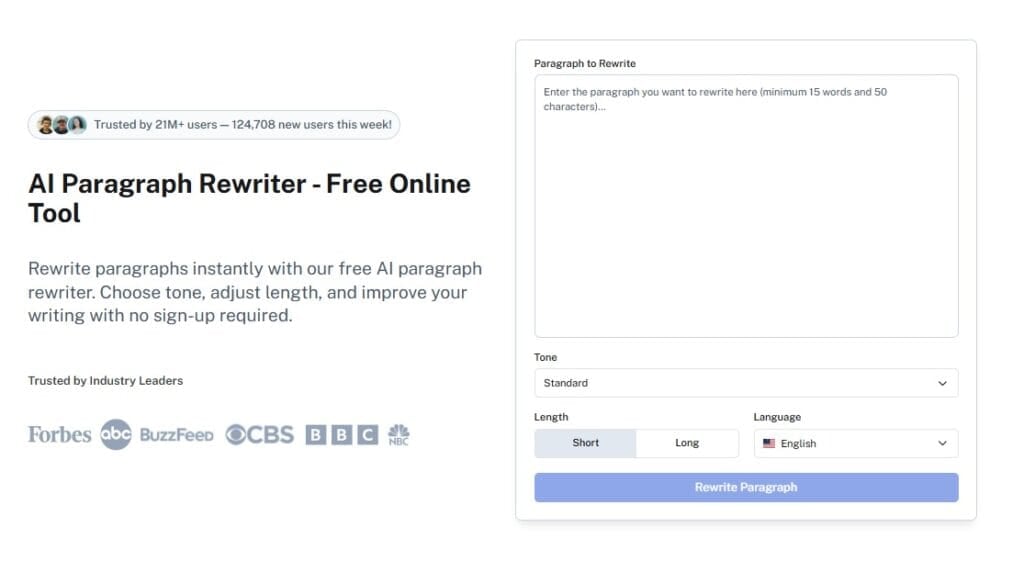
- Paragraph Rewriter
Original: “Social media makes us connected to many people but at the same time we feel really lonely in our real relationships.”
→ The problem is that it lacks punch and parallelism. There’s contrast but no impact.
Paragraph Rewriter: “Social media broadens our network; yet it narrows our intimacy.”
→ AI identifies contrasts, removes filler words, and strengthens sentence structure. It creates balanced syntax which is essential for effective antithesis examples figures of speech.
- AI Humanizer
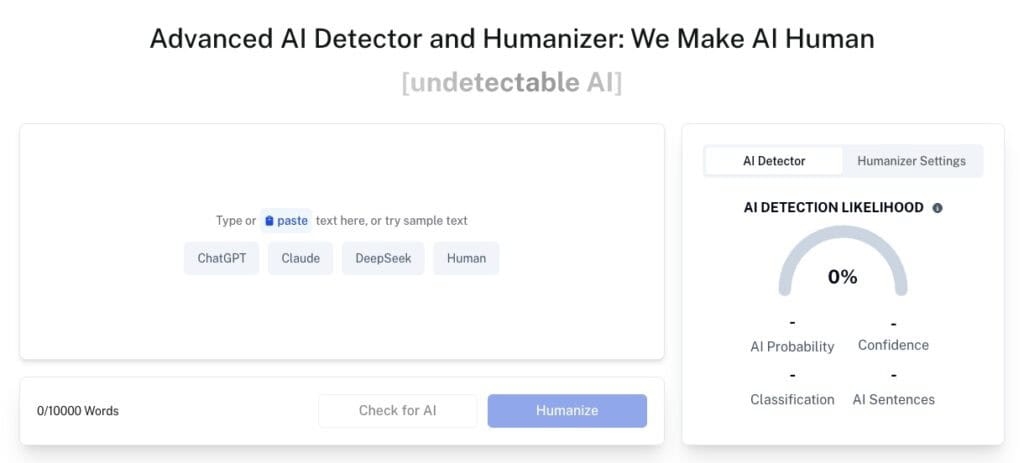
Perfectly structured sentences can sometimes sound robotic or trigger AI detectors.
AI Humanizer adjusts rhythm, sentence length, and vocabulary so your antithesis feels conversational while keeping its rhetorical punch.
Example
- Before: “Digital platforms facilitate connection; physical presence fosters belonging.”
- After: “We connect through screens; we belong through presence.”
The humanizer makes the sentence more casual and relatable so readers connect better with your antithesis examples.
Quick Checklist for Writing Effective Antithesis
- Identify the two opposing ideas clearly.
- Make both sides syntactically balanced.
- Keep sentences concise; avoid filler words.
- Use rhythm and parallel structure for impact.
- Read aloud to ensure natural flow.
- Consider AI tools for refining tone and structure.
How to Spot Antithesis While Reading
To recognize antithesis examples in texts, you need to develop a kind of “rhetorical vision,” seeing the underlying structure.
Here’s how:
- The Pivot Search
Look for words that act as a hinge between contrasting ideas.
- Most common pivot: “but”
- Other clues: semicolons (;) often separate balanced, contrasting clauses.
Example:
- “We observe today not a victory of party but a celebration of freedom.” (JFK)
- Pivot: not… but → shows contrast
- The Antonym Scan
Check for words or ideas that belong to opposite categories. This is often semantic contrast. Look for pairs like:
- Light vs. Dark
- Life vs. Death
- Success vs. Failure
- Good vs. Evil
Opposing ideas signal the presence of antithesis, especially when the sentence structure mirrors each other.
- The Rhythm Check
Read the sentence aloud. Antithesis often has a musical or rhythmic flow.
- If it has a predictable, balanced beat (like da-DA-da-da, da-DA-da-da)
- And the meaning contrasts across the beat → it’s likely antithesis
Example:
- “Victory of party” vs. “Celebration of freedom”
- Structure: Noun-Prep-Noun → parallel, but meaning opposes → antithesis confirmed.
Check your content using our AI Detector and Humanizer below!
Conclusion
Antithesis is simple, but it’s powerful. And that power starts with contrast.
At its core, antithesis places two opposite ideas side by side in a balanced structure. That contrast makes language sharper, clearer, and easier to remember.
The reason it works isn’t literary, it’s biological. The human brain is built to notice contrast. Light and dark. Safe and dangerous. Win and lose.
When writing mirrors this natural way of thinking, the brain pays attention and stores the message. That’s why antithesis feels true, even before we analyze it.
Antithesis also goes beyond single sentences.
Through the thesis antithesis synthesis pattern, opposing ideas collide and resolve into something stronger.
Writing your own antithesis follows one clear process:
- Identify a real contrast
- Show how the two sides relate
- Balance the structure so both sides feel equal
Once you understand this, the technique becomes natural. Tools like Undetectable AI rewriters can help polish structure and rhythm, but the power always comes from the contrast itself.