Imagine there’s a fancy, expensive Victorian chair…
It’s covered in soft red velvet and looks like it belongs in a royal palace.
Now, imagine taking a sharp knife and ripping that beautiful fabric right off.
Sounds destructive, doesn’t it?
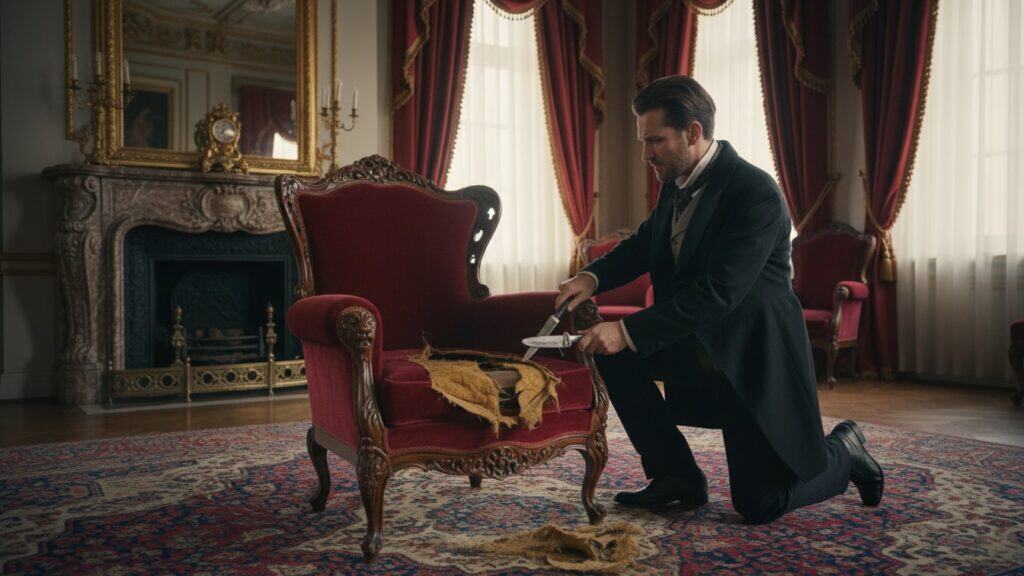
But a few centuries ago, this was the only way to check if a chair was strong.
They used to peel back the fancy brass tacks upholstery and see if the wood underneath was solid or rotten.
That old habit gave us one of the most popular sayings in the English language.
But do you know what the brass tacks meaning is today?
It isn’t about furniture anymore.
It means cutting out the “fluff,” like polite small talk, to get to the real truth hiding underneath.
In this blog, that is exactly what we are going to do.
We’ll look at brass tacks’ meanings, check out some examples, fix common mistakes, and learn the best tips on how to use them.
Let’s dive in.
Key Takeaways
- Get down to brass tacks means focusing on essential, practical details and cutting out unnecessary talk.
- The brass tacks meaning comes from 19th-century American usage, including trade counters and brass tacks upholstery.
- The get down to brass tacks meaning signifies a shift from ideas to action, especially in business settings.
- A common mistake is writing “brass tax,” which is incorrect and changes the meaning.
- Correct use of idioms like this shows human fluency, especially important in AI-generated content.
Understanding Brass Tacks
The English language loves a good metaphor.
A metaphor is when we borrow terms from physical objects (like tools or fabrics) to describe abstract situations.
“Brass tacks” is one of these metaphors.


Never Worry About AI Detecting Your Texts Again. Undetectable AI Can Help You:
- Make your AI assisted writing appear human-like.
- Bypass all major AI detection tools with just one click.
- Use AI safely and confidently in school and work.
But why brass? And why tacks?
To understand the brass tacks meaning, we have to travel back to the 19th century.
High-quality furniture was often elaborate and heavy.
A chair would be covered in thick padding, expensive velvet, and decorative trim to look impressive.
But if a craftsman needed to fix a wobbly leg or check if the frame was rot-free, they had to peel back all that brass tacks upholstery until they reached the “brass tacks.”
This is the actual fasteners holding the structure together.
So getting down to the brass tacks means stripping away the surface layers to reach the core reality.
With that in mind, let’s get down to brass tacks and uncover its meaning:
Meaning explained
At its core, get down to brass tacks meaning revolves around durability and necessity.
- Brass: A strong metal that lasts and doesn’t rust easily. It’s known for holding up over time.
- Tacks: Small nails used to fasten fabric to wood. They may look minor, but without them, everything falls apart.
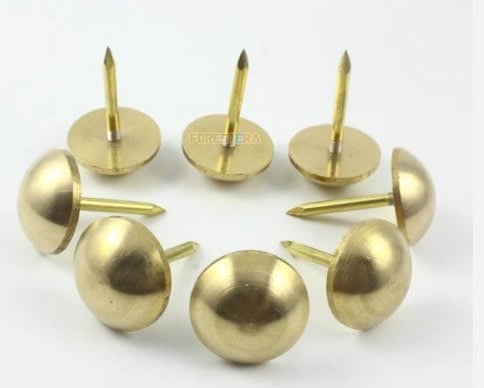
So when someone says “get down to brass tacks,” they’re talking about removing the extra layers and checking what’s holding things together. It’s a push to stop explaining everything.
And because brass doesn’t wear away easily, asking for the brass tacks means asking for facts that won’t change.
Now, let’s see some examples of this metaphor.
Brass Tacks: Everyday Examples
This phrase is used in gritty dramas, political thrillers, and advertisements that want to project a sense of toughness, seriousness, and reliability.
Examples:
- Courtroom: “Save the speeches for the jury, Mike. Let’s get down to brass tacks. You know your client is guilty, and I know you want a plea deal. How much time is he willing to serve?”
- Advertisement: “You don’t need heated seats. You don’t need a sunroof. You need a truck that hauls. Let’s get down to brass tacks. The new Heavy-Duty series: All torque, zero toys.”
- Politics: “We need to look past the headlines and get down to brass tacks: How do we create jobs for the middle class right now?”
When to Use Brass Tacks
Timing is everything. You can’t just walk into a meeting, and immediately say, “Let’s get down to brass tacks.”
Wait until you are about 20% into the conversation. Build rapport, then pivot to business.
So, when do you drop the line?
Use it when the conversation is stuck in a loop, specifically in situations like these:
- You have spent 40 minutes arguing over the shade of blue for a logo. The meeting is going nowhere.
- The client keeps asking about features but refuses to talk about the budget. You need to force a decision.
- You have 10 minutes left in the meeting and haven’t assigned tasks yet.
But keep in mind that not everyone likes rushing to the bottom line.
| Context | Cultures | Verdict | Why? |
| Low Context | USA, Germany, Scandinavia | Green Light | They value speed. Being direct is seen as professional. |
| High Context | Japan, Arab World, LatAm | Red Light | Relationships come first. Rushing to facts feels rude and transactional. |
Where creating and writing content has become incredibly easy, it has become robotic as well.
If you ask a basic AI to write a business email, it will likely give you something sterile. It lacks that natural human tendency to mix short, punchy sentences with longer, descriptive ones.
This is where Undetectable AI’s AI Humanizer comes into play. This tool helps in:
- Creating natural, conversational content that feels human.
- Maintaining strong flow and pacing, knowing when to explain and when to be direct.
- Helping your writing stand out from generic AI content by removing fluff and adding clarity.
Common Mistakes with Brass Tacks
Here are the four most common ways people mess up this idiom:
- Writing “Brass Tax”
This is the most common error. People often write, “Let’s get down to brass tax.” It’s a slip of the ear.
- The word “tax” is associated with money, government, and serious business (like “death and taxes”).
So, in a listener’s mind, “getting down to brass tax” sounds like getting down to the financial penalty or the hard cost.
- Confusing It With “Brass Tacts”
Some people mistakenly write “Brass Tacts.”
- They confuse it with the word “tact” (meaning diplomacy or sensitivity).
This is ironic because the get down to brass tacks meaning usually involves abandoning tact to be blunt.
Brass is hard, while tact is soft. Avoid this spelling.
- Dropping The Word “Down”
This idiom relies on specific movement. You can’t just get to the tacks.
- Incorrect: Let’s get to brass tacks.
- Correct: Let’s get down to brass tacks.
Remember the brass tacks upholstery metaphor? You have to dig down beneath the upholstery to find the nails. The word “down” implies that depth and excavation.
- Using It Too Often
Like any powerful spice, this idiom ruins the dish if you use too much of it.
- The Mistake: Using it in every single meeting or email. “Okay team, brass tacks time!”
It turns into annoying corporate jargon. If you say it too often, employees will tune you out. Save it for the moments when you need to pivot to something serious.
Tips for Using Brass Tacks Effectively
Here are four ways to use this idiom effectively:
Tip 1: Use It to Pivot the Conversation
Use the phrase when you want to shift from general talk to specifics.
How to do it:
Briefly wrap up the discussion, then say:
“Now, let’s get down to brass tacks.”
Pause. Then state the key fact, number, or decision. It signals a mental reset. People stop listening casually and start paying attention.
Tip 2: Use It to Introduce Important Details
In emails or reports, “brass tacks” works well as a lead-in to facts.
Example:
“We’ve talked through the ideas. Getting down to brass tacks, here’s what we need:”
– Budget
– Timeline
– Resources
It tells the reader: this part matters more than everything above it.
Tip 3: Use It to Deliver Hard Truths
When you need to say something uncomfortable, think back to the brass tacks upholstery metaphor. Strip away the soft padding.
Instead of sounding personal or critical, it shifts focus to reality (costs, limits, or constraints).
It removes emotion from the message and centers the discussion on facts.
Tip 4: Don’t Confuse It with “Nuts and Bolts”
Each phrase has a different job. Understanding the specific get down to brass tacks meaning prevents confusion.
- Use “brass tacks” for realities: money, deadlines, outcomes
- Use “nuts and bolts” for mechanics: process, steps, execution
Used together, they create clarity instead of confusion.
Let’s look at how we can use AI to refine your usage of this idiom.
We fed the following prompt into Undetectable AI’s AI Chat:

Here is the output it generated…
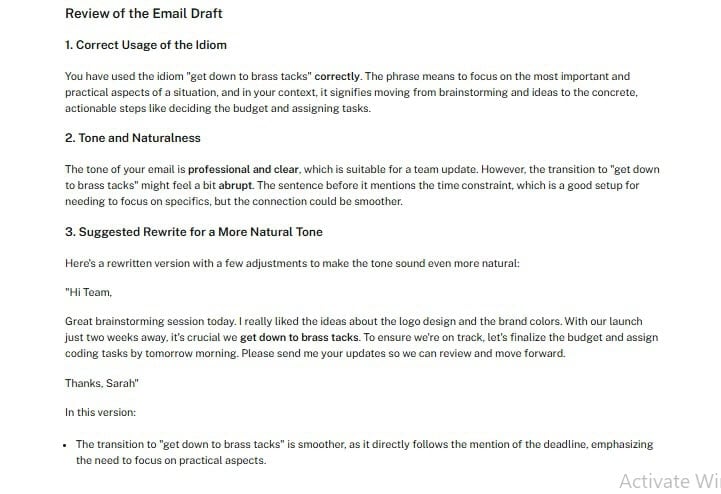
The AI Chatbot version works better because:
- It shifts to “get down to brass tacks” flows naturally right after mentioning the deadline.
- In original content, the phrase “To ensure we’re on track” softens the request so the demand for updates doesn’t feel abrupt or bossy.
Use our AI Detector and Humanizer right in the widget below!
Final Thoughts
So, we have finally peeled back the layers of this phrase.
Throughout this blog, we’ve learned that brass tacks’ meaning isn’t just about old furniture.
It’s about stopping the fluff and talking about the real facts.
Whether you are trying to fix a messy group project or just want to sound smarter in your writing, this idiom can help you.
But be careful! If you say it too soon, you might sound rude. Timing is super important.
And please, never spell it “tax.” That is just embarrassing.
Now, go out there, skip the boring stuff, and get straight to the point.
Make every sentence clear, natural, and human-sounding with Undetectable AI.