We all had those words we learned when we were younger, ones we immediately overused because they sounded clever.
For many of us, “cliché” was one of them. It felt sophisticated, like a fancy French word we could casually drop into conversation.
That impulse actually has a psychological backing, and it’s called cognitive reinforcement.
We fall in love with these new concepts and repeat them because they feel rewarding. But that’s not our main topic today, at least not directly.
We’re here to talk “clichés” themselves. They’re the literary equivalent of a stock image: easy to find and always available, but guaranteed to blend into the background.
In this article, we’ll go into why expressions and ideas that are so helpful and impactful can often go from meaningful to eye-roll-inducing.
This guide breaks down everything you need to know about clichés, including what they are, why they matter, and how to kick them out of your writing and find replacements.
Key Takeaways
- Clichés are overused phrases, ideas, or story elements that lose impact through repetition.
- They make writing feel predictable and can signal laziness.
- Not all clichés are phrases; plot points, character types, and visual descriptions can be clichéd too.
- Writers avoid clichés to keep readers engaged and showcase originality.
- Fresh language helps your writing stand out.
- You can revise clichés by questioning them, adding specific details, or using tools like Undetectable AI to make phrasing more natural and compelling.
What Is a Cliché?
A cliché is any expression, idea, or element in writing that’s been used so many times it’s lost its punch.
It’s the phrase that makes readers roll their eyes because they saw it coming from a mile away.
The word itself comes from French printing terminology. It literally referred to the sound a printing plate made when creating duplicate copies.


Never Worry About AI Detecting Your Texts Again. Undetectable AI Can Help You:
- Make your AI assisted writing appear human-like.
- Bypass all major AI detection tools with just one click.
- Use AI safely and confidently in school and work.
Pretty fitting, right? A cliché is basically a copy of a copy of a copy.
What Does Cliché Mean?
At its core, a cliché means predictability.
It’s the writing equivalent of a jump scare in a horror movie.
Sure, it might work the first time. But after you’ve seen it in fifty other films, you’re just sitting there waiting for it to happen.
Clichés happen because they worked once. Someone wrote “quiet as a mouse,” and it painted a perfect picture. Then everyone else borrowed it. And borrowed it again.
Eventually, the phrase became white noise.
The tricky part? What counts as a cliché changes over time. “Gaslight” used to be a fresh way to describe manipulation.
Now “gaslighting” is so overused that using it feels, well, clichéd, and has even lost its meaning on many occasions.
Context matters too. A cliché in literary fiction might fly in casual conversation.
Your English professor may flag “thinking outside the box,” but your friend won’t bat an eye when you say it over coffee.
Cliché Examples
Let’s look at some classics:
- Common phrase clichés: “Only time will tell,” “actions speak louder than words,” “it is what it is,” “at the end of the day,” “avoid it like the plague.”
- Story clichés: The chosen one narrative, love triangles, the mentor who dies to motivate the hero, the misunderstanding that could be cleared up with one conversation.
- Character clichés: The manic pixie dream girl, the brooding bad boy with a secret heart of gold, the wise old sage, the quirky best friend who exists only to give advice.
- Description clichés: “Her eyes were like oceans,” “time stood still,” “butterflies in my stomach,” “crystal clear.”
Notice how your brain probably checked out while reading those? That’s the problem. Clichés don’t register anymore. They’re verbal filler.
The Different Types of Clichés

Clichés aren’t just about overused phrases. They show up in every corner of storytelling.
Plot and Story Clichés
These are the plot beats you’ve seen a thousand times. The protagonist who discovers they’re actually special.
The romantic leads who hate each other at first. The villain who explains their evil plan instead of just doing it.
Story clichés feel tired because they follow predictable patterns.
Your reader knows exactly what’s coming next, which kills tension and suspense.
Some other common ones include the pretend relationship that turns into a real one, the chosen one prophecy, the “it was all a dream” ending, and the misunderstood villain with a tragic backstory.
These aren’t necessarily bad stories. But if you’re not adding something new to the formula, readers will check out.
Character Clichés
Stock characters are the placeholder templates of fiction. They’re recognizable, sure. But they’re not exactly memorable.
The rebellious teenager who hates their parents but learns to appreciate them.
The career woman who needs to learn how to relax and fall in love. The nerd who gets a makeover and becomes popular.
Character clichés happen when you lean on stereotypes instead of creating actual people. Real humans are contradictory and weird. They don’t fit neatly into boxes.
If your character could be described in three words and everyone would know exactly who they are, you might have a cliché on your hands.
Phrase and Expression Clichés
Generic phrases are probably what you think of first when you hear “cliché.” These are overused sayings that pop up in everything from essays to emails.
“In today’s society,” “since the dawn of time,” “needless to say,” “last but not least,” “when all is said and done.”
These phrases are verbal autopilot. Your brain reaches for them because they’re easy. But they make your writing sound generic and forgettable. And the worst part?
Once you start paying attention, you notice them everywhere. It’s like when you buy a new car and suddenly every third person is driving the same model.
Visual and Symbolic Clichés
Some clichés are visual. The single tear rolling down a cheek. The slow-motion hair flip. The rain during a sad scene.
The protagonist staring at themselves in the mirror and having an identity crisis.
Symbolic clichés include roses for love, storms for inner turmoil, spring for new beginnings, and darkness representing evil.
These became clichéd because they worked. Rain does set a mood. However, when every sad scene features rain, it loses its meaning.
Why Writers Try to Avoid Clichés
When you use a cliché, you’re basically telling your reader that you couldn’t be bothered to come up with something original.
You grabbed the first thing that came to mind and called it a day.
Clichés also make writing boring. Readers want to be surprised. They want fresh perspectives and unexpected turns of phrase.
If they can predict every sentence, why keep reading?
Your voice gets lost in clichés, too. Everyone uses “think outside the box.”
Nobody uses your specific way of describing creative thinking. When you avoid clichés, your actual personality comes through.
Plus, clichés often don’t say what you actually mean. “At the end of the day” is supposed to mean “ultimately,” but it’s such a nothing phrase that it could mean anything. Or nothing.
Teachers and editors turn their noses up at clichés because they signal surface-level thinking. Using them suggests that you haven’t explored your ideas thoroughly enough.
When a Cliché Can Still Be Useful
That’s not to say clichés should be banned from your vocabulary forever. Sometimes a cliché works wonders.
If you’re writing dialogue and your character would naturally use clichés, go for it.
Real people say “it is what it is” all the time. Using it in speech can make characters feel authentic.
You can also subvert clichés for effect. Set up the expectation, then flip it. Your chosen one character could reject their destiny. Your brooding bad boy could stay bad.
Sometimes you’re writing something quick and informal where nobody expects literary genius. A work email. A text. A social media caption. Clichés are fine there.
The key is being intentional. Use a cliché because it serves a purpose, not because you couldn’t think of anything else.
How to Spot a Cliché in Your Own Writing
The most challenging aspect of avoiding clichés is recognizing them in the first place.
They’re so embedded in how we think and talk that they slip in unnoticed.
Here’s a test: if you’ve heard the exact phrase before, it’s probably a cliché. “Bated breath?” Cliché.
You’ve never heard anyone say they’re waiting with “suspended breath” or “held breath,” have you? That’s because everyone uses the same phrase.
Read your work out loud. Clichés often jump out when you hear them spoken. Your ear catches what your eye misses.
Another trick: if you can finish the phrase automatically, it’s clichéd. “Quiet as a ___.” See? Your brain filled in “mouse” without thinking.
Look for phrases that feel generic or interchangeable. If the sentence could appear in anyone’s essay about anything, it’s probably clichéd.
Pay special attention to your first drafts. When you’re writing fast, your brain grabs the easiest available phrases.
That’s when clichés sneak in.
Techniques for Rewriting or Refreshing a Cliché
So you’ve found a cliché in your writing.
Now what?
- Figure out what you’re actually trying to say: “Time will tell” means you don’t know what will happen yet. Can you say that more specifically? “We’ll know more after the election results come in.” Much better.
- Get concrete: Instead of “busy as a bee,” describe the actual busy-ness. What does the person look like when they’re rushing around?
- Try the opposite: If everyone describes love as butterflies, what else could it be? Vertigo? A slow burn? An itch you can’t scratch?
- Use unexpected comparisons: Don’t reach for the first metaphor that comes to mind. Push for the third or fourth one instead.
You can also use tools to help refresh your language. Undetectable AI’s Paragraph Rewriter is built specifically for this.
Drop in your clichéd sentence, and it’ll give you fresh alternatives that sound natural and human. It’s like having an editor who catches all those autopilot phrases you missed.
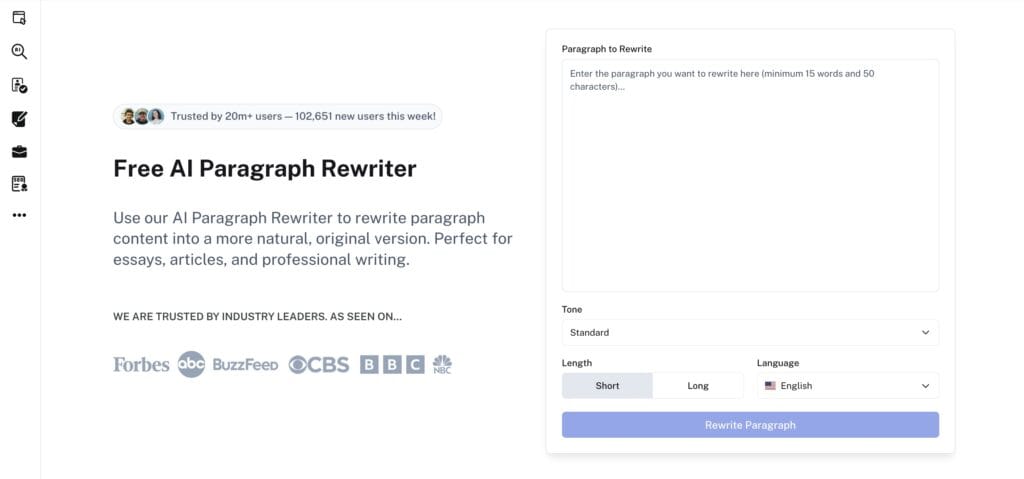
The rewriter doesn’t just swap words around randomly. It actually transforms the structure and phrasing while keeping your meaning intact.
It’s super useful when you’re stuck and can’t think of another way to say something.
How to Keep Your Writing Original and Engaging
Avoiding clichés is only part of making your writing stand out. You also need to develop your own voice and style.
- Read widely. The more you read, the more you internalize different ways of expressing ideas. You build a bigger vocabulary of possibilities.
- Write badly first. Don’t self-edit as you draft. Get the ideas down, clichés and all. You can fix them later. Trying to write perfectly on the first try kills creativity.
- Question everything. When you write a sentence, ask: Have I seen this exact phrasing before? If yes, can I say it differently?
- Be specific. Generic language breeds clichés. The more precise and detailed you get, the more original your writing becomes.
Tools can help here, too. Undetectable AI’s AI Humanizer is designed to take generic or robotic-sounding text and make it feel more natural and expressive.
It catches those moments where your writing sounds like everyone else’s and adds personality.
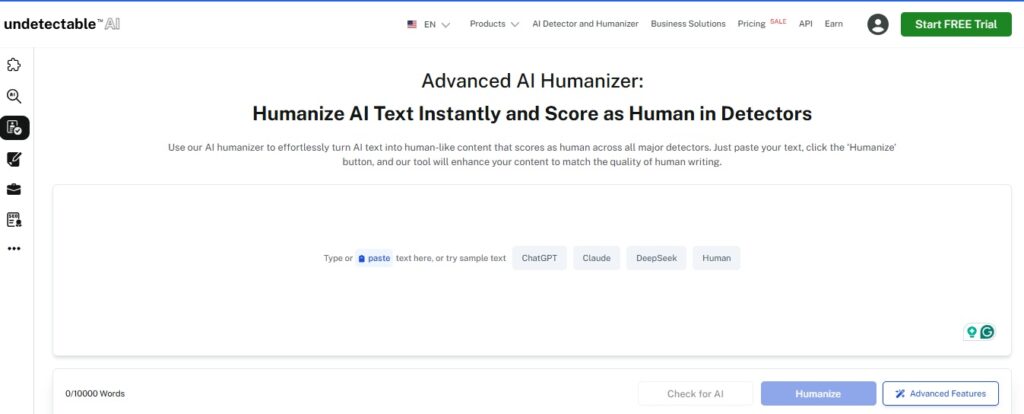
The Humanizer is especially useful if you’re working with AI-generated drafts. Those often lean heavily on clichés and safe phrasing.
Running them through the Humanizer strips out the generic stuff and makes the writing feel more authentic.
If you’re starting from scratch, Undetectable AI’s AI Essay Writer can help generate fresh takes on ideas without falling into obvious clichés.
It’s trained to avoid the most common overused phrases and instead offer more creative alternatives.
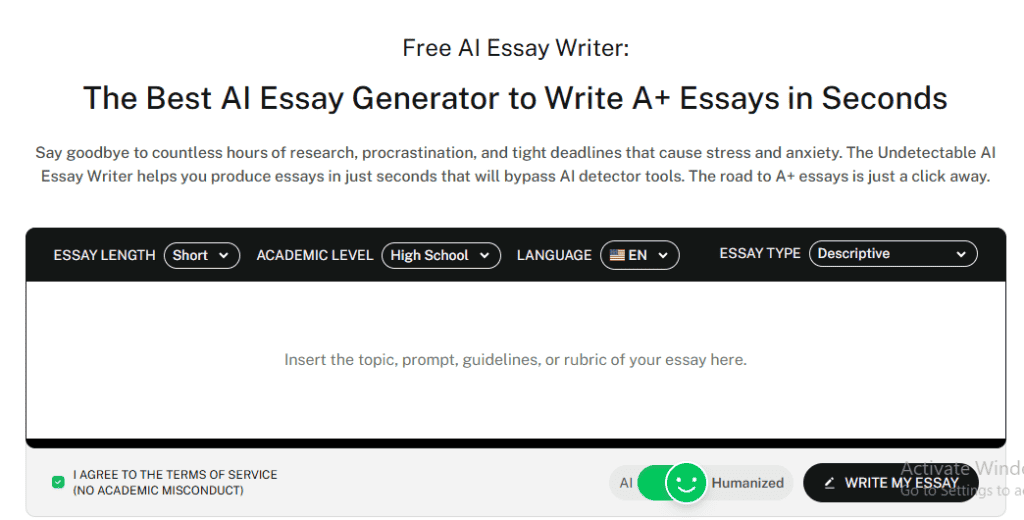
The Essay Writer is particularly helpful when you’re stuck on how to approach a topic.
It can show you angles you hadn’t considered, which naturally leads to more original expression.
See how our AI Detector and Humanizer works in the widget below!
In Conclusion (A Phrase My Professor Would Dock Points For)
Clichés are everywhere. In your writing, your speech, your thinking. They’re comfortable and familiar, which is exactly why they’re dangerous.
Good writing surprises readers. It shows them something they haven’t seen before or says something familiar in an unexpected way.
Clichés do the opposite. They confirm what readers already know and expect.
Your writing voice is what makes you stand out from everyone else typing away.
Clichés muddy that voice as they make you sound like everyone else.
So push yourself. Question those easy phrases. Dig deeper for better words. And your readers will notice the difference.
If you need help catching those sneaky clichés or refreshing tired phrasing, tools like Undetectable AI can speed up the process.
They won’t write for you, but they’ll help you sound like yourself, just better.
Ready to kick clichés to the curb? Start by reading through your last piece of writing. How many can you spot? More importantly, how many can you replace with something fresh?
Try Undetectable AI today and transform your writing from predictable to powerful. Because at the end of the day… just kidding—no cliché endings here.