
Ensayos universitarios son algunas de las tareas más difíciles que realizarás, no porque no tengas ideas listas para poner en práctica, sino porque se espera que desarrolles un solo pensamiento en mil palabras.
Así que empiezas a cambiar “usar” por “utilizar” y, antes de que te des cuenta, estás sustituyendo “porque” por “debido al hecho de que”.”
¡Enhorabuena! Acabas de descubrir la circunlocución, que no es palabrería, sino el antiguo arte de escribir algo de la forma más larga posible (aceptable para un profesor universitario).
Sin embargo, a diferencia de “rellenar”, la circunlocución no es solo algo que hacen los estudiantes cuando se esfuerzan por añadir más palabras.
También es un recurso retórico intencionado que muchos escritores y políticos utilizan con bastante frecuencia.
Sometimes it’s intentional and clever. Other times, it’s accidental and makes your writing sound like a Terms and Conditions agreement.
This guide will help you understand what circumlocution actually is, when it’s useful, and how to avoid accidentally turning your prose into a bureaucratic nightmare.
Principales conclusiones
-
La circunlocución consiste en utilizar más palabras de las necesarias para expresar una idea.
-
Puede ser un recurso literario intencionado o un defecto involuntario de la escritura.
-
Es habitual en el lenguaje cotidiano cuando olvidamos palabras o intentamos ser educados.
-
Es útil para la escritura creativa, la diplomacia y el énfasis.
-
Es problemático cuando hace que la redacción resulte poco clara o pretenciosa.
-
Herramientas como los detectores de IA pueden ayudar a identificar frases demasiado complejas.
¿Qué es la circunlocución?
La circunlocución puede servir para diversos fines, además de añadir palabras adicionales.
Definición de circunlocución
La circunlocución es el uso de muchas palabras cuando bastarían pocas.
It’s talking around a point instead of getting straight to it. The word itself comes from Latín: “circum” (around) and “locutio” (speech).
No vuelvas a preocuparte de que la IA detecte tus textos. Undetectable AI puede ayudarle:
- Haz que aparezca tu escritura asistida por IA de aspecto humano.
- Bypass las principales herramientas de detección de IA con un solo clic.
- Utilice AI de forma segura y con confianza en la escuela y el trabajo.
So, quite literally, it means “talking around.”
Think of it like taking the scenic route when you could’ve just driven straight down Main Street.
Sometimes the scenic route is beautiful and worth it, while other times you’re just wasting gas.
En retórica y escritura, la circunlocución puede ser intencional o accidental.
Intentional circumlocution serves a purpose: maybe you’re being tactful, creating a specific mood, or emphasizing something through elaboration. Accidental circumlocution just makes your writing bloated.
Ejemplos de circunlocución
Let’s look at some real examples to see how this works in practice.
Ejemplo 1: El estiramiento del recuento de palabras
- Circunlocución: “In today’s modern society, we find ourselves in a position where we must consider the fact that…”
- Directo: “Today, we must consider that…”
Ejemplo 2: Lenguaje corporativo
- Circunlocución: “We are currently experiencing a temporary suspension of normal operational activities.”
- Directo: “We’re closed right now.”
Ejemplo 3: Circunlocución eufemística
- Circunlocución: “He’s been let go as part of a workforce optimization initiative.”
- Directo: “He was fired.”
Ejemplo 4: Circunlocución literaria (intencional)
- Circunlocución: “The bright celestial body which illuminates our days and warms our planet.”
- Directo: “The sun.”
Notice how the former example actually sounds kind of nice? That’s because it’s using circumlocution as a stylistic choice.
The others just sound like someone’s trying too hard.
Por qué la gente utiliza circunloquios

Las personas utilizan circunloquios por diversas razones, y no todas ellas son negativas.
Understanding the motivation helps you decide when it’s appropriate.
- Cortesía y tacto: Sometimes being direct is rude. “Your idea won’t work” is less tactful than “I wonder if we might consider some alternative approaches.” The second version is circumlocution, but it’s also just… nicer.
- Énfasis y dramatismoLos escritores utilizan circunloquios para ralentizar a los lectores y llamar su atención. Cuando Shakespeare escribe “the undiscovered country from whose bourn no traveler returns” instead of just “death,” he’s creating atmosphere.
- Olvidar palabras: This one’s relatable. Ever called something “that round thing you use to eat soup” because your brain blanked on the word “spoon?” That’s circumlocution born from necessity.
- Sonar inteligente: This is the dangerous one. People often think that more words equals more intelligence. It typically doesn’t. Your college professor can smell those attempts from a mile away.
- Evitar la responsabilidad: Politicians and corporations love this one. “Mistakes were made” is a circumlocution that avoids saying “I made a mistake.”
- Creando humor: Comedians use absurdly roundabout descriptions all the time. It’s funny to call a cat “a small, fluffy, judgmental mammal that occasionally tolerates your presence.”
Cómo aparece la circunlocución en el lenguaje cotidiano
Probablemente utilices circunloquios todos los días sin darte cuenta.
Here’s where it commonly appears:
- When You Can’t Remember a Word: “Can you hand me that thing that… you know… the thing that makes the bread brown and hot?” You mean the toaster. Your brain knows you mean the toaster. But in the moment, “thing that makes bread brown and hot” is all you’ve got.
- En situaciones incómodas: “I was wondering if perhaps you might possibly consider the option of maybe turning down the volume just a little bit?” Translation: “Please turn that down.”
- Cuando se dan malas noticias: Nobody says “Your dog died.” They say, “I’m so sorry, but Fluffy has passed away,” or “is no longer with us,” or “crossed the rainbow bridge.” These are all circumlocutions that soften reality.
- En el servicio de atención al cliente: “I’m afraid that item is currently unavailable” sounds better than “We don’t have it.” It means the same thing, but the roundabout version feels more professional.
- Cuando se presume (pero se intenta no hacerlo): “I was fortunate enough to receive recognition for my modest contributions to the project,” beats “I won an award,” but just barely. This is circumlocution disguised as humility.
Lo importante es comprender que, a menudo, el uso de circunloquios cotidianos es totalmente aceptable.
We’re social creatures, and sometimes taking the long way around makes communication smoother.
Tipos de circunlocución
Circumlocution isn’t one-size-fits-all.
Existen diferentes variedades, y reconocerlas te ayuda a utilizar este dispositivo de forma más eficaz.
- Circunlocución eufemística: This is when you use roundabout language to avoid saying something uncomfortable. “Passed away” instead of “died.” “Let go” instead of “fired.” “Pre-owned” instead of “used.” These are all euphemisms achieved through circumlocution.
- Perifrasis: This is the fancy term for describing something by its characteristics instead of using its name. “The Bard of Avon” for Shakespeare. “The Big Apple” for New York. “The beautiful game” for soccer. It adds color to your writing.
- Pleonasmo: Se trata de una circunlocución redundante, en la que decir lo mismo dos veces with different words. “Free gift.” “Past history.” “Future plans.” “End result.” Each of these could lose a word without losing meaning.
- Verborrea: This is just straight-up wordiness. Unnecessary filler that doesn’t add meaning or style. “At this point in time” instead of “now.” “In spite of the fact that” instead of “although.” This is the type you want to avoid.
- Tautología: Similar to pleonasm, but more to do with logic. It’s saying the same thing in different words within the same statement. “It is what it is” is a tautology. So is “either it will rain or it won’t rain.” Technically true, but completely unhelpful.
La circunlocución en la literatura y la narración
Writers use circumlocution deliberately all the time, and when done well, it’s actually pretty great.
- Creando ambiente: Gothic writers love circumlocution. Instead of saying “the house was scary,” they’ll spend a paragraph describing “the looming edifice with its darkened windows that seemed to watch like malevolent eyes.” That’s circumlocution at its finest.
- Voz del personaje: Some characters talk in circles. It reveals personality. A nervous character might say, “Well, I mean, I was thinking that maybe, if you’re not busy, we could possibly…” instead of just asking someone out. That circumlocution says something about who they are.
- Poesía y kennings: Old English poetry used kennings, which are basically poetic circumlocutions. “Whale-road” for ocean. “Sky-candle” for sun. “Battle-sweat” for blood. These create imagery while being technically roundabout.
- Misterio y revelación: Sometimes authors use circumlocution to delay revealing information. They’ll describe something in a roundabout way to build suspense before finally naming it, keeping readers engaged.
- Sátira y comentario social: Writers use excessive circumlocution to mock bureaucratic language or pretentious speech. George Orwell did this brilliantly in his essay “La política y el idioma inglés."
The common thread? In literature, circumlocution serves the story. It’s not accidental wordiness but a choice that enhances meaning, mood, or character.
Cómo identificar la circunlocución en una oración
Detectar circunloquios es más fácil una vez que sabes qué buscar.
Estos son los signos reveladores:
- Frases innecesariamente complejas: If you can replace a phrase with a single word without losing meaning, that’s probably circumlocution. “At this point in time” becomes “now.” “Due to the fact that” becomes “because.”
- Sobrecarga de voz pasiva: “It has been decided that changes will be made” is both passive and circumlocutionary. “We decided to make changes” is cleaner.
- Modificadores redundantes: “Past experience,” “future plans,” “completely unanimous,” and “end result” all contain unnecessary words. The modifier doesn’t add information.
- Nominalizaciones: Esto es cuando conviertes un verbo simple en un frase nominal. “Make a decision” instead of “decide.” “Give consideration to” instead of “consider.” “Reach a conclusion” instead of “conclude.”
- Apilamiento de idiomas de cobertura: One hedge is fine. Multiple hedges become circumlocution. “I think that it might possibly be the case that perhaps we should consider maybe changing this,” is hedging taken too far.
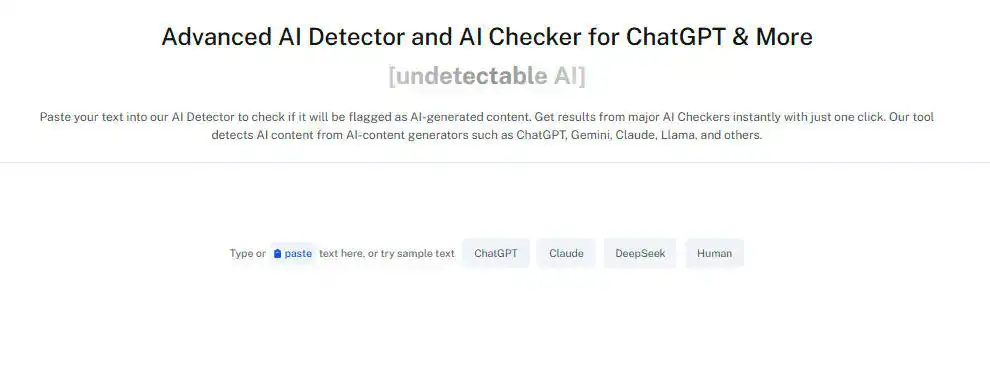
Here’s where AI tools can help. Undetectable AI’s Detector de IA está diseñado para señalar frases demasiado mecánicas o innecesariamente complejas.
While it’s primarily used to identify AI-generated text, it’s also surprisingly good at catching accidental circumlocution.
La herramienta resalta las secciones en las que tu escritura es demasiado formulista o artificialmente compleja, lo que a menudo se solapa con patrones circunloquiales.
Si tu detector señala una sección, pregúntate: ¿Estoy realmente comunicando algo aquí, o solo rellenando espacio? ¿Podría ser más sencillo? ¿La complejidad tiene algún propósito?
Errores comunes que cometen los estudiantes
Todos los que aprenden a escribir cometen estos errores de circunlocución. Reconocerlos es el primer paso para corregirlos.
- Confundir la longitud con la calidad: New writers often think that more words equal better writing. They’ll write “utilize” instead of “use” and feel sophisticated. They’re wrong. Good writing is clear writing.
- Explicar en exceso conceptos sencillos: You don’t need to say “the activity of running, which involves moving your legs rapidly in a forward motion.” Just say “running.” Your readers know what running is.
- Abuso del tesauro: Using a thesaurus is fine. Using it to replace every simple word with a complex synonym creates unnatural circumlocution. Nobody “perambulates” to the store. They walk.
- Relleno para el recuento de palabras: We get it. The essay needs to be 2,000 words, and you’ve got 1,600. But padding with circumlocution makes your writing worse, not longer. Añadir contenido real en su lugar.
- Imitando mal la escritura académicaLa redacción académica utiliza estructuras más complejas, pero una buena redacción académica sigue siendo precisa. Una mala redacción académica no es más que una circunlocución disfrazada de lenguaje académico.
- Olvidarse de su público: Sometimes circumlocution is appropriate for your audience. Sometimes it’s not. Writing a children’s book? Keep it simple. Writing legal documents? Some circumlocution is actually expected. Know your context.
- No leer en voz alta: Circumlocution sounds even worse when you read it aloud. Your ear catches what your eye misses. If you stumble reading your own sentence, it’s probably too convoluted.
Cómo utilizar la circunlocución de forma intencionada en tus escritos
Okay, so we’ve established that circumlocution isn’t always a bad thing.
Here’s how to use it intentionally and effectively.
- Para el desarrollo del carácter: Give your verbose characters appropriately roundabout dialogue. A pretentious academic might say “I find myself unable to concur with your assessment” instead of “I disagree.” That’s characterization.
- Crear ritmo: A veces, la versión más larga suena mejor. La poesía y la prosa literaria suelen dar prioridad al sonido sobre la brevedad. Si la circunlocución crea el ritmo que deseas, consérvala.
- Para el impacto emocional: Delaying the point can build tension. Horror writers do this constantly. They’ll describe something scary in elaborate, long-winded terms before revealing what it actually is.
- En diálogo por el realismo: People don’t always speak efficiently. We ramble. We hedge. We talk around things. Realistic dialogue includes some circumlocution.
- Enfatizar mediante la repetición: Saying something in multiple ways can bring home its importance. Political speeches use this technique. “We shall fight on the beaches, we shall fight on the landing grounds, we shall fight in the fields…” You get it.
- Cuando hay que ser diplomático: Professional and formal contexts often require diplomatic language. “We’re pursuing other candidates” is more tactful than “You didn’t get the job.”
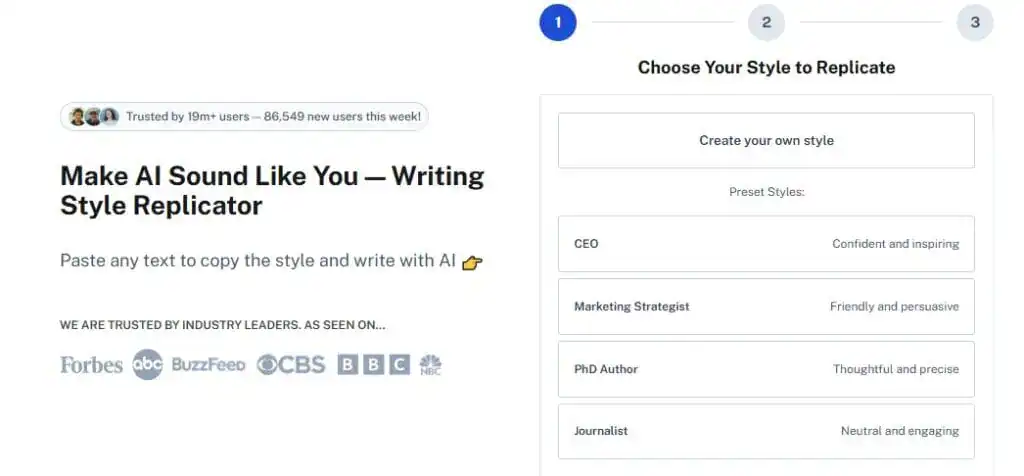
Tools can help you experiment here. Undetectable AI’s Writing Style Replicator lets you try different approaches to the same sentence.
Puedes comparar una versión directa con una más elaborada y circunloquial, y ver cuál se adapta mejor a tus necesidades.
Quizás la redacción indirecta realmente añade elegancia. O quizás solo suena pretenciosa. La herramienta te ayuda a comparar opciones.
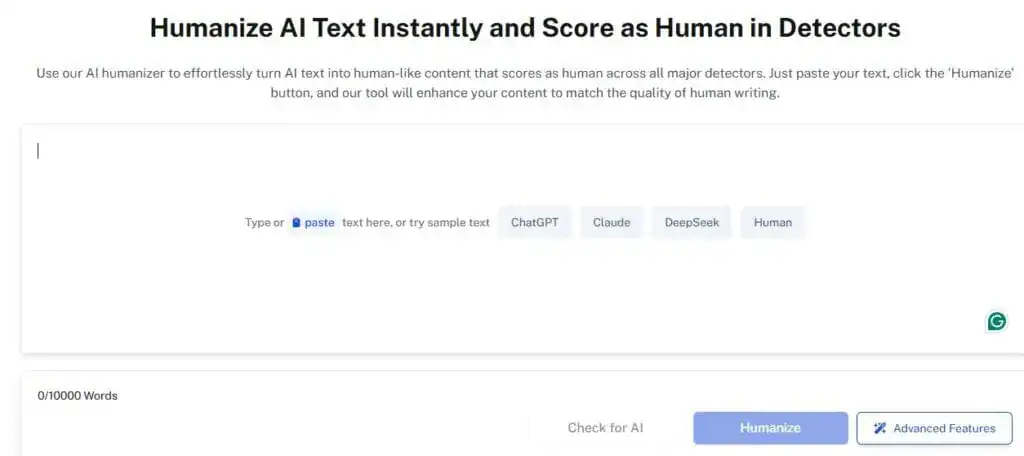
Once you’ve drafted with intentional circumlocution, Undetectable AI’s Humanizador AI se vuelve invaluable.
Refina tu escritura para evitar circunloquios incómodos o forzados, al tiempo que conserva los casos intencionados.
The humanizer distinguishes between “elaborately descriptive” and “unnecessarily wordy,” helping you strike the right balance.
It’s particularly good at identifying parts where circumlocution feels robotic rather than natural.
La clave está en ser deliberado. Piensa si algo te sirve para tu propósito o si simplemente estás evitando ir al grano.
Pruebe nuestro Detector de IA y Humanizador a continuación.
No más vibraciones verbosas
Circumlocution gets a bad rap, but it’s not inherently evil.
Like most writing techniques, it’s all about context and intention.
Alargar tu ensayo para alcanzar un número determinado de palabras, utilizar jerga corporativa que oscurece el significado o abusar del diccionario de sinónimos son ejemplos de circunloquios inadecuados.
La circunlocución reflexiva es diferente. Añade personalidad a los personajes, crea atmósfera en las descripciones y permite ser diplomático cuando la franqueza resultaría cruel.
Las circunlocuciones útiles benefician al lector. Las circunlocuciones inútiles solo benefician al recuento de palabras.
If you’re serious about improving your writing and learning to use techniques like circumlocution effectively, IA indetectable ofrece un conjunto completo de herramientas para ayudar.
El detector de IA identifica frases complejas, el replicador de estilo de escritura te permite experimentar con diferentes enfoques y el humanizador de IA refina todo para convertirlo en una prosa natural y atractiva.
Whether you’re working on an essay, a story, or professional content, these tools help you make intentional choices rather than accidental mistakes.
Now go forth and be deliberately wordy when it serves you. And delightfully concise when it doesn’t.