
Hochschulaufsätze gehören zu den schwierigsten Aufgaben, die Sie zu bewältigen haben – nicht weil Ihnen keine Ideen zur Verfügung stehen, sondern weil von Ihnen erwartet wird, einen einzigen Gedanken in tausend Worte zu fassen.
Also fängst du an, “verwenden” durch “nutzen” zu ersetzen, und ehe du dich versiehst, ersetzt du “weil” durch “aufgrund der Tatsache, dass”.”
Herzlichen Glückwunsch! Sie haben gerade die Kunst der Umschreibung entdeckt, nicht bloßes Geschwafel, sondern die alte Kunst, etwas auf die längste (für Hochschulprofessoren akzeptable) Weise zu schreiben.
Im Gegensatz zum “Aufschnüren” ist Umschreiben jedoch nicht nur etwas, was Schüler tun, wenn sie verzweifelt versuchen, mehr Wörter hinzuzufügen.
Es ist auch ein bewusstes rhetorisches Mittel, das viele Schriftsteller und Politiker häufig einsetzen.
Sometimes it’s intentional and clever. Other times, it’s accidental and makes your writing sound like a Terms and Conditions agreement.
This guide will help you understand what circumlocution actually is, when it’s useful, and how to avoid accidentally turning your prose into a bureaucratic nightmare.
Wichtigste Erkenntnisse
-
Umschreibung bedeutet, mehr Wörter als nötig zu verwenden, um eine Idee auszudrücken.
-
Es kann sich um ein bewusst eingesetztes literarisches Stilmittel oder um einen unbeabsichtigten Schreibfehler handeln.
-
Es kommt im Alltag häufig vor, dass wir Wörter vergessen oder versuchen, höflich zu sein.
-
Es ist nützlich für kreatives Schreiben, Diplomatie und Betonung.
-
Es ist problematisch, wenn es das Schreiben unklar oder prätentiös macht.
-
Tools wie KI-Detektoren können dabei helfen, übermäßig komplexe Formulierungen zu identifizieren.
Was ist Umschreibung?
Umschreibungen können über das Hinzufügen zusätzlicher Wörter hinaus verschiedenen Zwecken dienen.
Umschreibung Definition
Umschreibung ist die Verwendung vieler Wörter, wo weniger ausreichen würden.
It’s talking around a point instead of getting straight to it. The word itself comes from Lateinisch: “circum” (around) and “locutio” (speech).
Machen Sie sich nie wieder Sorgen, dass KI Ihre Texte erkennt. Undetectable AI Kann Ihnen helfen:
- Lassen Sie Ihr AI-unterstütztes Schreiben erscheinen menschenähnlich.
- Bypass alle wichtigen KI-Erkennungstools mit nur einem Klick.
- Verwenden Sie AI sicher und zuversichtlich in Schule und Beruf.
So, quite literally, it means “talking around.”
Think of it like taking the scenic route when you could’ve just driven straight down Main Street.
Sometimes the scenic route is beautiful and worth it, while other times you’re just wasting gas.
In der Rhetorik und im Schreiben kann eine Umschreibung sein absichtlich oder versehentlich.
Intentional circumlocution serves a purpose: maybe you’re being tactful, creating a specific mood, or emphasizing something through elaboration. Accidental circumlocution just makes your writing bloated.
Beispiele für Umschreibungen
Let’s look at some real examples to see how this works in practice.
Beispiel 1: Die Wortzahl-Strecke
- Umschreibung: “In today’s modern society, we find ourselves in a position where we must consider the fact that…”
- Direkt: “Today, we must consider that…”
Beispiel 2: Unternehmenssprache
- Umschreibung: “We are currently experiencing a temporary suspension of normal operational activities.”
- Direkt: “We’re closed right now.”
Beispiel 3: Euphemistische Umschreibung
- Umschreibung: “He’s been let go as part of a workforce optimization initiative.”
- Direkt: “He was fired.”
Beispiel 4: Literarische Umschreibung (absichtlich)
- Umschreibung: “The bright celestial body which illuminates our days and warms our planet.”
- Direkt: “The sun.”
Notice how the former example actually sounds kind of nice? That’s because it’s using circumlocution as a stylistic choice.
The others just sound like someone’s trying too hard.
Warum Menschen Umschreibungen verwenden

Menschen verwenden Umschreibungen aus verschiedenen Gründen, und nicht alle davon sind negativ.
Understanding the motivation helps you decide when it’s appropriate.
- Höflichkeit und Taktgefühl: Sometimes being direct is rude. “Your idea won’t work” is less tactful than “I wonder if we might consider some alternative approaches.” The second version is circumlocution, but it’s also just… nicer.
- Betonung und DramatikAutoren verwenden Umschreibungen, um Leser zu verlangsamen und ihre Aufmerksamkeit zu erregen. Wenn Shakespeare schreibt “the undiscovered country from whose bourn no traveler returns” instead of just “death,” he’s creating atmosphere.
- Wörter vergessen: This one’s relatable. Ever called something “that round thing you use to eat soup” because your brain blanked on the word “spoon?” That’s circumlocution born from necessity.
- Klingt intelligent: This is the dangerous one. People often think that more words equals more intelligence. It typically doesn’t. Your college professor can smell those attempts from a mile away.
- Verantwortung vermeiden: Politicians and corporations love this one. “Mistakes were made” is a circumlocution that avoids saying “I made a mistake.”
- Humor schaffen: Comedians use absurdly roundabout descriptions all the time. It’s funny to call a cat “a small, fluffy, judgmental mammal that occasionally tolerates your presence.”
Wie Umschreibungen in der Alltagssprache vorkommen
Wahrscheinlich verwenden Sie jeden Tag Umschreibungen, ohne sich dessen bewusst zu sein.
Here’s where it commonly appears:
- When You Can’t Remember a Word: “Can you hand me that thing that… you know… the thing that makes the bread brown and hot?” You mean the toaster. Your brain knows you mean the toaster. But in the moment, “thing that makes bread brown and hot” is all you’ve got.
- In unangenehmen Situationen: “I was wondering if perhaps you might possibly consider the option of maybe turning down the volume just a little bit?” Translation: “Please turn that down.”
- Wenn man schlechte Nachrichten überbringt: Nobody says “Your dog died.” They say, “I’m so sorry, but Fluffy has passed away,” or “is no longer with us,” or “crossed the rainbow bridge.” These are all circumlocutions that soften reality.
- Im Kundenservice: “I’m afraid that item is currently unavailable” sounds better than “We don’t have it.” It means the same thing, but the roundabout version feels more professional.
- Wenn man prahlt (aber versucht, es nicht zu tun): “I was fortunate enough to receive recognition for my modest contributions to the project,” beats “I won an award,” but just barely. This is circumlocution disguised as humility.
Das Wichtigste ist zu verstehen, dass es oft völlig in Ordnung ist, alltägliche Umschreibungen zu verwenden.
We’re social creatures, and sometimes taking the long way around makes communication smoother.
Arten der Umschreibung
Circumlocution isn’t one-size-fits-all.
Es gibt verschiedene Varianten, und wenn Sie diese kennen, können Sie dieses Gerät effektiver nutzen.
- Euphemistische Umschreibung: This is when you use roundabout language to avoid saying something uncomfortable. “Passed away” instead of “died.” “Let go” instead of “fired.” “Pre-owned” instead of “used.” These are all euphemisms achieved through circumlocution.
- Umschreibung: This is the fancy term for describing something by its characteristics instead of using its name. “The Bard of Avon” for Shakespeare. “The Big Apple” for New York. “The beautiful game” for soccer. It adds color to your writing.
- PleonasmusDies ist eine überflüssige Umschreibung, bei der Sie dasselbe zweimal sagen with different words. “Free gift.” “Past history.” “Future plans.” “End result.” Each of these could lose a word without losing meaning.
- Wortwahl: This is just straight-up wordiness. Unnecessary filler that doesn’t add meaning or style. “At this point in time” instead of “now.” “In spite of the fact that” instead of “although.” This is the type you want to avoid.
- Tautologie: Similar to pleonasm, but more to do with logic. It’s saying the same thing in different words within the same statement. “It is what it is” is a tautology. So is “either it will rain or it won’t rain.” Technically true, but completely unhelpful.
Umschreibungen in Literatur und Erzählkunst
Writers use circumlocution deliberately all the time, and when done well, it’s actually pretty great.
- Atmosphäre schaffen: Gothic writers love circumlocution. Instead of saying “the house was scary,” they’ll spend a paragraph describing “the looming edifice with its darkened windows that seemed to watch like malevolent eyes.” That’s circumlocution at its finest.
- Charakterstimme: Some characters talk in circles. It reveals personality. A nervous character might say, “Well, I mean, I was thinking that maybe, if you’re not busy, we could possibly…” instead of just asking someone out. That circumlocution says something about who they are.
- Poesie und Kennings: Old English poetry used kennings, which are basically poetic circumlocutions. “Whale-road” for ocean. “Sky-candle” for sun. “Battle-sweat” for blood. These create imagery while being technically roundabout.
- Geheimnis und Offenbarung: Sometimes authors use circumlocution to delay revealing information. They’ll describe something in a roundabout way to build suspense before finally naming it, keeping readers engaged.
- Satire und Sozialkritik: Writers use excessive circumlocution to mock bureaucratic language or pretentious speech. George Orwell did this brilliantly in his essay “Politik und die englische Sprache."
The common thread? In literature, circumlocution serves the story. It’s not accidental wordiness but a choice that enhances meaning, mood, or character.
Wie man Umschreibungen in einem Satz erkennt
Umschreibungen zu erkennen ist einfacher, wenn man weiß, worauf man achten muss.
Hier sind die verräterischen Anzeichen:
- Unnötig komplexe Formulierungen: If you can replace a phrase with a single word without losing meaning, that’s probably circumlocution. “At this point in time” becomes “now.” “Due to the fact that” becomes “because.”
- Passivkonstruktionen-Überlastung: “It has been decided that changes will be made” is both passive and circumlocutionary. “We decided to make changes” is cleaner.
- Redundante Modifikatoren: “Past experience,” “future plans,” “completely unanimous,” and “end result” all contain unnecessary words. The modifier doesn’t add information.
- Nominalisierungen: Das ist der Fall, wenn Sie ein einfaches Verb in ein Substantivsatz. “Make a decision” instead of “decide.” “Give consideration to” instead of “consider.” “Reach a conclusion” instead of “conclude.”
- Hedging-Sprachstapel: One hedge is fine. Multiple hedges become circumlocution. “I think that it might possibly be the case that perhaps we should consider maybe changing this,” is hedging taken too far.
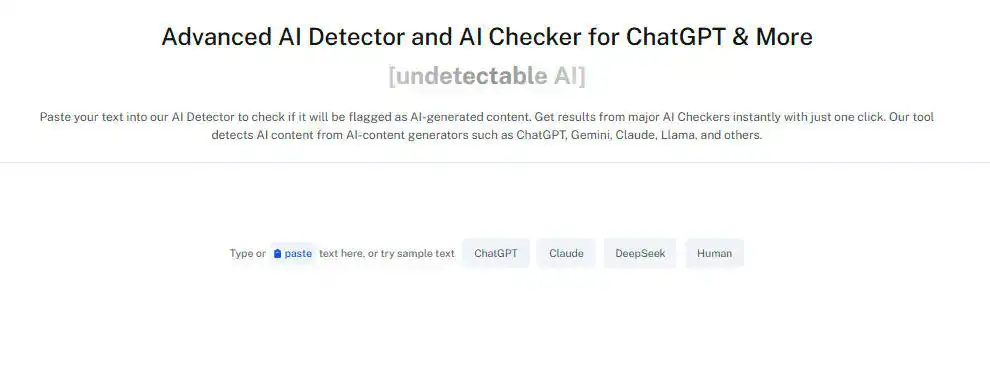
Here’s where AI tools can help. Undetectable AI’s AI-Detektor dient dazu, übermäßig mechanische oder unnötig komplexe Formulierungen zu kennzeichnen.
While it’s primarily used to identify AI-generated text, it’s also surprisingly good at catching accidental circumlocution.
Das Tool hebt Abschnitte hervor, in denen Ihr Text zu formelhaft oder künstlich komplex ist, was häufig mit umständlichen Formulierungen einhergeht.
Wenn Ihr Detektor einen Abschnitt markiert, fragen Sie sich: Kommuniziere ich hier tatsächlich oder fülle ich nur Platz? Könnte dies einfacher sein? Dient die Komplexität einem Zweck?
Häufige Fehler, die Lernende machen
Jeder, der das Schreiben lernt, macht diese Umschreibungsfehler. Sie zu erkennen ist der erste Schritt, um sie zu beheben.
- Länge mit Qualität verwechseln: New writers often think that more words equal better writing. They’ll write “utilize” instead of “use” and feel sophisticated. They’re wrong. Good writing is clear writing.
- Einfache Konzepte übermäßig erklären: You don’t need to say “the activity of running, which involves moving your legs rapidly in a forward motion.” Just say “running.” Your readers know what running is.
- Thesaurus-Missbrauch: Using a thesaurus is fine. Using it to replace every simple word with a complex synonym creates unnatural circumlocution. Nobody “perambulates” to the store. They walk.
- Auffüllung für Wortanzahl: We get it. The essay needs to be 2,000 words, and you’ve got 1,600. But padding with circumlocution makes your writing worse, not longer. Tatsächlichen Inhalt hinzufügen stattdessen.
- Akademisches Schreiben schlecht imitieren: Akademisches Schreiben verwendet komplexere Strukturen, aber gutes akademisches Schreiben ist dennoch präzise. Schlechtes akademisches Schreiben ist nur Umschweife, die in wissenschaftliche Kleidung gehüllt sind.
- Ihr Publikum vergessen: Sometimes circumlocution is appropriate for your audience. Sometimes it’s not. Writing a children’s book? Keep it simple. Writing legal documents? Some circumlocution is actually expected. Know your context.
- Nicht vorlesen: Circumlocution sounds even worse when you read it aloud. Your ear catches what your eye misses. If you stumble reading your own sentence, it’s probably too convoluted.
Wie Sie Umschreibungen gezielt in Ihren Texten einsetzen können
Okay, so we’ve established that circumlocution isn’t always a bad thing.
Here’s how to use it intentionally and effectively.
- Zur Charakterentwicklung: Give your verbose characters appropriately roundabout dialogue. A pretentious academic might say “I find myself unable to concur with your assessment” instead of “I disagree.” That’s characterization.
- Rhythmus schaffenManchmal klingt die längere Version besser. In der Poesie und literarischen Prosa wird oft der Klang gegenüber der Kürze bevorzugt. Wenn die Umschreibung den gewünschten Rhythmus erzeugt, behalten Sie sie bei.
- Für emotionale Wirkung: Delaying the point can build tension. Horror writers do this constantly. They’ll describe something scary in elaborate, long-winded terms before revealing what it actually is.
- Im Dialog für Realismus: People don’t always speak efficiently. We ramble. We hedge. We talk around things. Realistic dialogue includes some circumlocution.
- Durch Wiederholung betonen: Saying something in multiple ways can bring home its importance. Political speeches use this technique. “We shall fight on the beaches, we shall fight on the landing grounds, we shall fight in the fields…” You get it.
- Wenn man taktvoll ist: Professional and formal contexts often require diplomatic language. “We’re pursuing other candidates” is more tactful than “You didn’t get the job.”
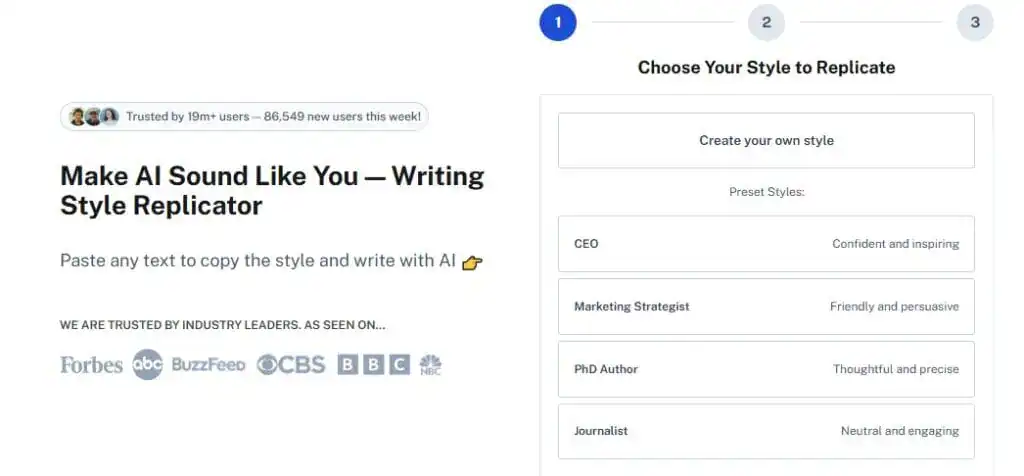
Tools can help you experiment here. Undetectable AI’s Writing Style Replicator lets you try different approaches to the same sentence.
Sie können eine direkte Version mit einer ausführlicheren, umschreibenden Version vergleichen und herausfinden, welche Ihrem Zweck besser dient.
Vielleicht verleiht die umständliche Formulierung tatsächlich Eleganz. Oder vielleicht klingt sie einfach nur prätentiös. Das Tool hilft Ihnen dabei, Optionen zu vergleichen.
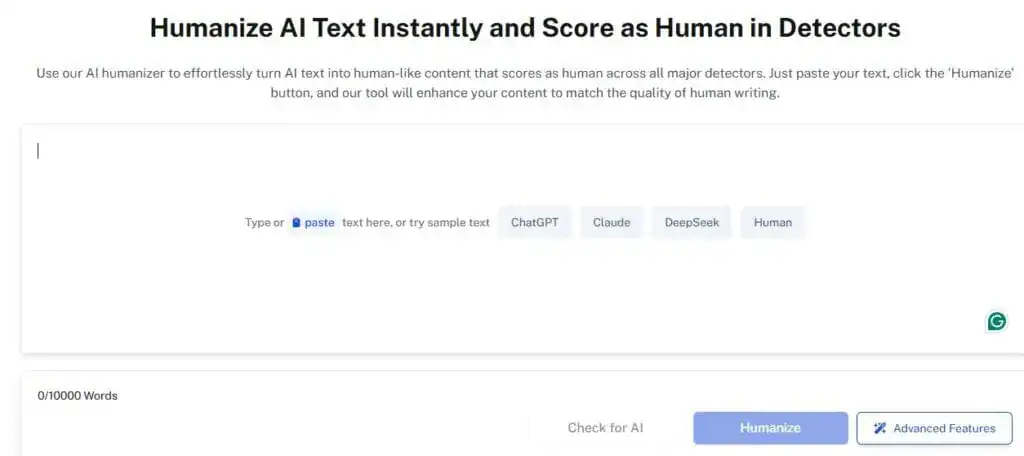
Once you’ve drafted with intentional circumlocution, Undetectable AI’s AI Humanizer wird unschätzbar wertvoll.
Es verfeinert Ihren Schreibstil, um umständliche oder erzwungene Umschreibungen zu vermeiden, während die beabsichtigten Fälle beibehalten werden.
The humanizer distinguishes between “elaborately descriptive” and “unnecessarily wordy,” helping you strike the right balance.
It’s particularly good at identifying parts where circumlocution feels robotic rather than natural.
Der Schlüssel liegt darin, bewusst zu handeln. Überlegen Sie, ob etwas Ihrem Zweck dient oder ob Sie nur vermeiden, auf den Punkt zu kommen.
Probieren Sie unseren AI-Detektor und Humanizer gleich unten aus!
Keine ausschweifenden Vibes mehr
Circumlocution gets a bad rap, but it’s not inherently evil.
Like most writing techniques, it’s all about context and intention.
Das Aufpolstern Ihres Aufsatzes, um eine bestimmte Wortzahl zu erreichen, Unternehmensjargon, der die Bedeutung verschleiert, oder der übermäßige Gebrauch eines Synonymwörterbuchs sind alles Beispiele für schlechte Umschreibungen.
Durchdachte Umschreibungen sind etwas anderes. Sie verleihen Figuren Persönlichkeit, schaffen Atmosphäre in Beschreibungen und ermöglichen es Ihnen, taktvoll zu sein, wenn Direktheit grausam wäre.
Nützliche Umschreibungen dienen Ihren Lesern. Nutzlose Umschreibungen dienen Ihrer Wortzahl.
If you’re serious about improving your writing and learning to use techniques like circumlocution effectively, Nicht nachweisbare AI bietet eine vollständige Palette an Hilfsmitteln.
Der KI-Detektor erkennt komplexe Formulierungen, mit dem Schreibstil-Replikator können Sie mit verschiedenen Ansätzen experimentieren, und der KI-Humanizer verfeinert alles zu einer natürlichen, ansprechenden Prosa.
Whether you’re working on an essay, a story, or professional content, these tools help you make intentional choices rather than accidental mistakes.
Now go forth and be deliberately wordy when it serves you. And delightfully concise when it doesn’t.