La lengua inglesa puede resultar confusa, incluso para los escritores profesionales y los expertos en idiomas.
Existen tantas reglas que aprender y peculiaridades gramaticales que lleva tiempo comprender. Y una pregunta habitual es si la ortografía se considera parte de la ecuación.
Aunque están relacionados, constituyen aspectos diferentes del lenguaje.
Hoy analizaremos la diferencia entre ortografía y gramática.
Le explicaremos por qué son como dos gemelos inseparables y le mostraremos cómo mejorar en ambos.
Whether you’re writing an essay, drafting an email, or just trying to sound more professional online, understanding this distinction will help.
TL;DR
La ortografía es técnicamente no forma parte de la gramática. La gramática se ocupa de cómo se combinan las palabras en las frases (estructura, reglas, relaciones). La ortografía se centra en cómo se escriben las palabras.
Pero se solapan tanto en la práctica que la mayoría de la gente las trata como una gran categoría.
Ambas cosas son importantes para escribir con claridad, y herramientas como los correctores gramaticales automáticos pueden ayudarte a detectar errores en ambas áreas.
No vuelvas a preocuparte de que la IA detecte tus textos. Undetectable AI puede ayudarle:
- Haz que aparezca tu escritura asistida por IA de aspecto humano.
- Bypass las principales herramientas de detección de IA con un solo clic.
- Utilice AI de forma segura y con confianza en la escuela y el trabajo.
Principales conclusiones
-
La ortografía y la gramática son sistemas separados: la gramática rige la estructura, mientras que la ortografía se centra en la formación de las palabras.
-
Ambos son esenciales para la claridad, la profesionalidad y la comunicación eficaz por escrito.
-
Corrector gramatical de IA indetectable soluciona problemas gramaticales, ortográficos y de estilo de una sola vez.
-
Combínalo con Generador de párrafos AI estudiar ejemplos de redacción pulidos y bien estructurados.
¿Qué es la gramática? (Definición sencilla)
La gramática es el sistema de reglas que rige cómo se combinan las palabras para crear significado.
It’s about sentence structure, not the spelling of individual words.
La gramática es la arquitectura del lenguaje. Te dice:
- Dónde van las palabras en una frase
- Cómo cambian de forma las palabras para indicar tiempo, número o posesión
- Qué palabras conectan con qué otras palabras
- Cómo estructurar preguntas, órdenes y afirmaciones
For example, “She go to school yesterday” is a grammatical error. The word “go” is spelled correctly, but it’s the wrong form. It should be “went” because we’re talking about the past.
La gramática abarca aspectos como:
- Tiempos verbales (run, ran, running)
- Concordancia sujeto-verbo (ella camina, ellos caminan)
- Uso de pronombres (yo frente a mí, quién frente a quién)
- Estructura de las frases (fragmentos, puntos y aparte)
- Colocación de signos de puntuación
The key thing to remember about grammar? It’s about relationships between words. Not the words themselves.
¿Qué es la ortografía? (Definición sencilla)
Spelling is the correct arrangement of letters within a word. That’s it. It’s about getting the word itself right, and not about how it fits into a sentence.
La ortografía inglesa es notoriamente difícil porque tomamos prestadas palabras de muchas otras lenguasfrancés, latín, griego y alemán.
Each language comes with its own spelling patterns, and we just kept them all, which is why “knife” has a silent K and “pneumonia” starts with a P that no one pronounces.
La ortografía implica:
- Saber qué letras van donde en una palabra
- Comprensión de patrones comunes (i antes de e, excepto después de c-en la mayoría de los casos)
- Memorizar excepciones (porque el inglés tiene un millón de ellas)
- Reconocer los homófonos (palabras que suenan igual pero se escriben distinto).
A spelling error looks like this: “I recieved your email.” The word should be “received.” The sentence structure is fine.
La gramática está bien. Pero esa palabra está mal escrita.
Here’s what makes spelling tricky: you can spell a word correctly and still use the wrong word.
“Their” is spelled correctly. “There” is spelled correctly. “They’re” is spelled correctly. But if you write “Their going to the store,” you’ve made a word choice error, not a spelling error.
La ortografía en sí es perfecta.
Aquí es donde las cosas se ponen turbias.
¿La ortografía forma parte de la gramática? La respuesta directa
No, la ortografía no forma parte de la gramática.
Grammar is a structural system. Spelling is a writing convention. They’re different branches of language mechanics.
But here’s why everyone gets confused: they both fall under the umbrella of “correctness” in writing.
When your writing has errors, most people don’t stop to categorize them.
Sólo saben que algo va mal.
Plus, some errors involve both grammar and spelling at the same time. If you write “I seen him yesterday,” is that a grammar error or a spelling error? It’s grammar.
You used the wrong form of the verb. But if you write “I runned yesterday,” that’s still grammar (wrong past tense form), even though “runned” isn’t a real word.
Los lingüistas académicos tratan ortografía y gramática como sistemas separados.
But in everyday life? Most writing tools, teachers, and style guides lump them together under “writing mechanics” or “language correctness.”
So while they’re technically different, treating them as separate issues doesn’t always help when you’re trying to improve your writing.
Cómo se relacionan la gramática y la ortografía
Even though they’re separate, grammar and spelling interact constantly.
Consider contractions. “It’s” versus “its” is technically a grammar issue (one is a contraction of “it is,” the other is possessive).
But it looks like a spelling issue because the words are so similar. Same with “you’re” and “your” or “they’re,” “their,” and “there.”
Homófonos create another overlap. “Affect” and “effect” are both spelled correctly as individual words.
Pero utilizar la incorrecta en una frase es un error gramatical (parte de la oración incorrecta) que parece una confusión ortográfica.
Verbo forms create overlap too. “Lead” (present tense) and “led” (past tense) are different spellings y diferentes formas gramaticales.
If you write “She lead the team last year,” you’ve made both a spelling error (should be “led”) and a grammar error (wrong tense).
Precisamente por eso son tan útiles las herramientas que comprueban ambas cosas a la vez.
When you’re writing, you’re not stopping to categorize every mistake. You just want to know what’s wrong and how to fix it.
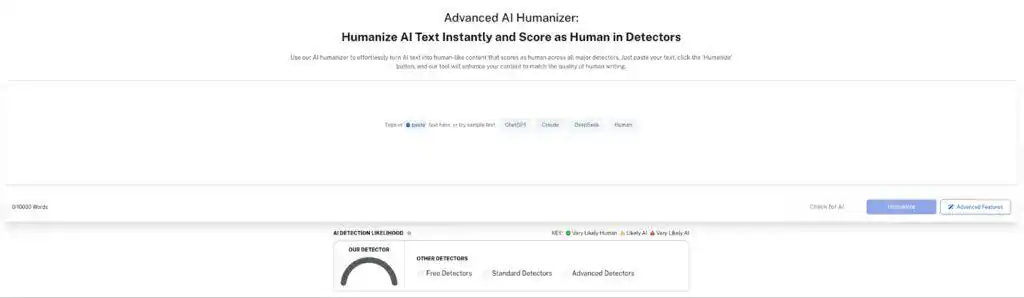
If you’re using AI to help with your writing, make sure the output sounds natural and human.
After running grammar and spelling corrections, use Undetectable AI’s Humanizador AI to ensure your text doesn’t sound robotic or over-polished.
A veces, las herramientas de IA hacen que la escritura sea técnicamente correcta pero extrañamente formal. Humanizar la salida mantiene tu voz intacta.
Spelling vs. Grammar vs. Mechanics: What’s the Difference?

If spelling isn’t grammar, and grammar isn’t spelling, where does everything else fit in?
Entre en la mecánica. Es el término general que engloba todos los aspectos técnicos de la escritura:
- Gramática: Cómo se combinan las palabras (sintaxis, formas verbales, estructura de las frases)
- Ortografía: Cómo se escriben las palabras (disposición de las letras, formas correctas de las palabras)
- Puntuación: Dónde van las comas, los puntos y otros signos de puntuación
- Capitalización: Cuándo utilizar letras mayúsculas
- Uso: Elegir la palabra adecuada al contexto (formal frente a informal, afecto frente a efecto)
La mecánica es toda la caja de herramientas. La gramática y la ortografía son solo dos herramientas dentro de ella.
Most writing guides and teachers use “grammar” as shorthand for all mechanics.
It’s easier to say “check your grammar” than “check your grammar, spelling, punctuation, capitalization, and usage.”
But technically, they’re all different.
When you’re working on your writing, it helps to know which area you struggle with most. Some people have perfect grammar but could work on their spelling.
Otros lo escriben todo correctamente, pero confunden constantemente los tiempos verbales. Una vez que sepas cuáles son tus puntos débiles, podrás centrar tus esfuerzos en mejorar.
Errores gramaticales comunes que a menudo se confunden con faltas de ortografía
Algunos errores son los siguientes faltas de ortografía sino que en realidad son problemas gramaticales.
He aquí los más comunes:
- Its vs. It’s: “Its” is possessive. “It’s” is a contraction of “it is.”
Incorrect: “The dog wagged it’s tail.”
Correct: “The dog wagged its tail.”
- Your vs. You’re: “Your” is possessive. “You’re” is a contraction of “you are.”
Incorrect: “Your going to love this.”
Correct: “You’re going to love this.”
- Their vs. There vs. They’re: “Their” is possessive. “There” indicates location. “They’re” is a contraction of “they are.”
Incorrect: “Their going over there with they’re friends.”
Correct: “They’re going over there with their friends.”
- Entonces vs. Entonces: “Then” relates to time. “Than” is for comparisons.
Incorrect: “I’d rather stay home then go out.”
Correct: “I’d rather stay home than go out.”
- Perder vs. Soltar: “Lose” means to misplace or not win. “Loose” means not tight.
Incorrect: “Don’t loose your keys.”
Correct: “Don’t lose your keys.”
- Afecto frente a efecto: “Affect” is usually a verb. “Effect” is usually a noun.
Incorrect: “That will effect the outcome.”
Correct: “That will affect the outcome.”
Parecen errores ortográficos porque ambas versiones de la palabra están escritas correctamente. Pero elegir la incorrecta es un error gramatical.
You’re using the wrong part of speech or the wrong word form for the context.
Spell-check doesn’t catch these errors. As far as spell-check knows, “your” is spelled perfectly.
It has no idea you meant to write “you’re.”
Por qué ambos se enseñan juntos en las escuelas
Ever wonder why English class covers both grammar and spelling? It’s not because they’re the same thing.
It’s because you need both to write clearly.
Las escuelas los enseñan juntos por razones prácticas:
- Ambos afectan a la legibilidad. La mala ortografía dificulta la comprensión de lo escrito. La mala gramática dificulta la comprensión. Ambas crean confusión.
- They’re both about conventions. La lengua tiene reglas ortográficas y estructurales consensuadas. Para comunicarse con eficacia hay que conocer ambos conjuntos de reglas.
- They’re corrected at the same time. When a teacher grades your paper, they’re not making two separate passes (one for spelling, one for grammar). They’re catching everything in one read.
- Mejoran juntos. Leer más ayuda a tu ortografía. También mejora la gramática. La práctica de la escritura mejora ambas habilidades, que se refuerzan mutuamente.
- They’re both tested. Standardized tests, college entrance exams, and professional writing assessments check for both. You can’t ignore one and focus on the other.
En general, a nadie le importa si tu error está relacionado con la ortografía o la gramática. Sólo saben que tu escrito tiene errores. Y los errores dañan tu credibilidad.
That’s why improving both matters. A perfectly spelled email with terrible grammar still looks unprofessional.
Una redacción gramaticalmente perfecta y llena de faltas de ortografía sigue perdiendo puntos.
Cómo mejorar la gramática y la ortografía
Getting better at grammar and spelling doesn’t mean memorizing rule books.
Significa crear hábitos que hagan automática la escritura correcta.
- Lee constantemente. This is the number one way to improve both. When you read, you expose yourself to correct spelling and grammar patterns repeatedly. Your brain starts recognizing what “looks right” without you consciously thinking about rules.
- Escribe con regularidad. You can’t improve without practice. Write anything. Emails, journal entries, social media posts, blog drafts. The more you write, the more you’ll catch your own patterns of mistakes.
- Utilice los correctores gramaticales de forma estratégica. Tools catch errors you miss. But don’t just click “accept all.” Read each suggestion and understand por qué it’s wrong. That’s how you learn.
- Mantenga una lista personal de errores. Fíjate en los errores que cometes repetidamente. Escríbelos. Practica las versiones correctas. Con el tiempo, la forma correcta se vuelve automática.
- Aprende los homófonos. Make flashcards for your problem pairs. Their/there/they’re. Your/you’re. Its/it’s. Practice until you don’t have to think about it.
- Diga frases en voz alta. Los errores gramaticales suelen sonar mal aunque en la página parezcan correctos. Leer en voz alta ayuda a detectarlos.
- Descomponer frases complejas. If a sentence feels wrong but you can’t figure out why, break it into shorter sentences. Then rebuild it correctly.
- Estudia patrones, no reglas. Instead of memorizing “i before e except after c,” read enough words with “ie” and “ei” that you recognize the pattern naturally. Note that there are muchos excepciones, incluidas la ciencia, la antigüedad y las especies.
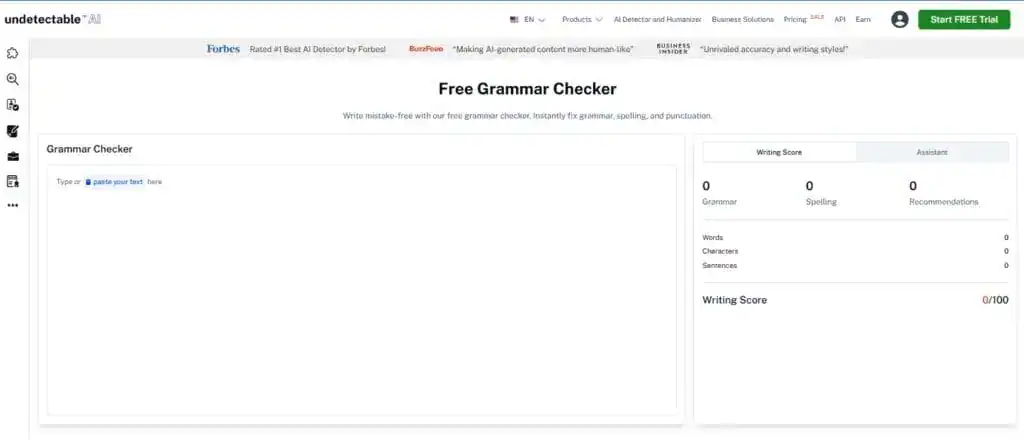
For serious writing projects, consider using Undetectable AI’s AI Grammar Checker to catch mistakes you might miss.
The tool spots grammar, spelling, punctuation, and style issues in one pass. It’s like having an editor review your work before you finish up.
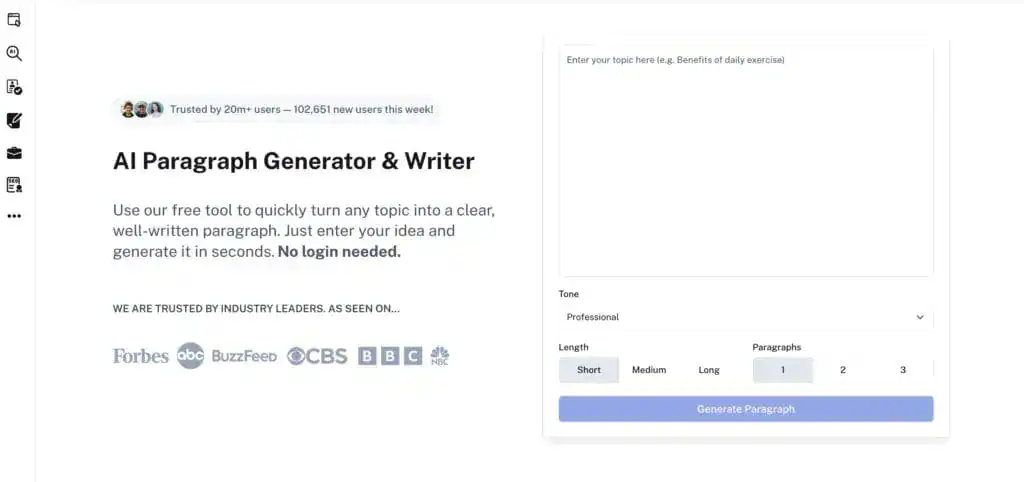
Pair it with the AI Paragraph Generator if you want to see correctly written examples. Sometimes the best way to learn is by studying well-crafted sentences and paragraphs.
Genera muestras, analízalas y practica recreando esa estructura en tu propia escritura.
The key is consistency. Checking your work once in a while won’t help much. But if you make editing part of your writing process every single time, you’ll improve fast.
Utilice la AI Checker para analizar tu escrito en busca de incoherencias gramaticales y ortográficas, sobre todo si has recurrido a la IA para que te ayude a redactarlo.
Busca frases sutiles generadas por la IA, estructuras incómodas y formas de palabras mal colocadas que los correctores ortográficos normales pasan por alto, lo que ayuda a que su texto sea claro, natural y suene humano.
Pruebe nuestro Detector de IA y Humanizador en el widget siguiente.
Gramática y ortografía entran en un bar...
¿La ortografía forma parte de la gramática? Técnicamente, no. La gramática abarca la estructura de las frases y las relaciones entre las palabras, mientras que la ortografía se ocupa de la formación individual de las palabras.
They’re separate systems with separate rules.
But in practical terms? They work together so closely that separating them doesn’t help most writers.
Ambos afectan a la claridad. Ambas afectan a la profesionalidad. Ambos requieren atención si quieres que tu escrito se tome en serio.
The good news is you don’t need to be perfect.
Sólo tienes que ser consciente de tus puntos débiles y disponer de herramientas para detectar los errores antes de que tus escritos se hagan públicos.
Utiliza herramientas como IA indetectable.
Lee tu trabajo en voz alta. Practica los errores que cometes con más frecuencia. Y recuerda que incluso los escritores profesionales cometen errores en los primeros borradores.
La diferencia es que ellos los atrapan antes de que nadie más los vea.
Céntrate en la mejora, no en la perfección. Cada escrito que editas con cuidado es una práctica. Y la práctica se hace permanente.