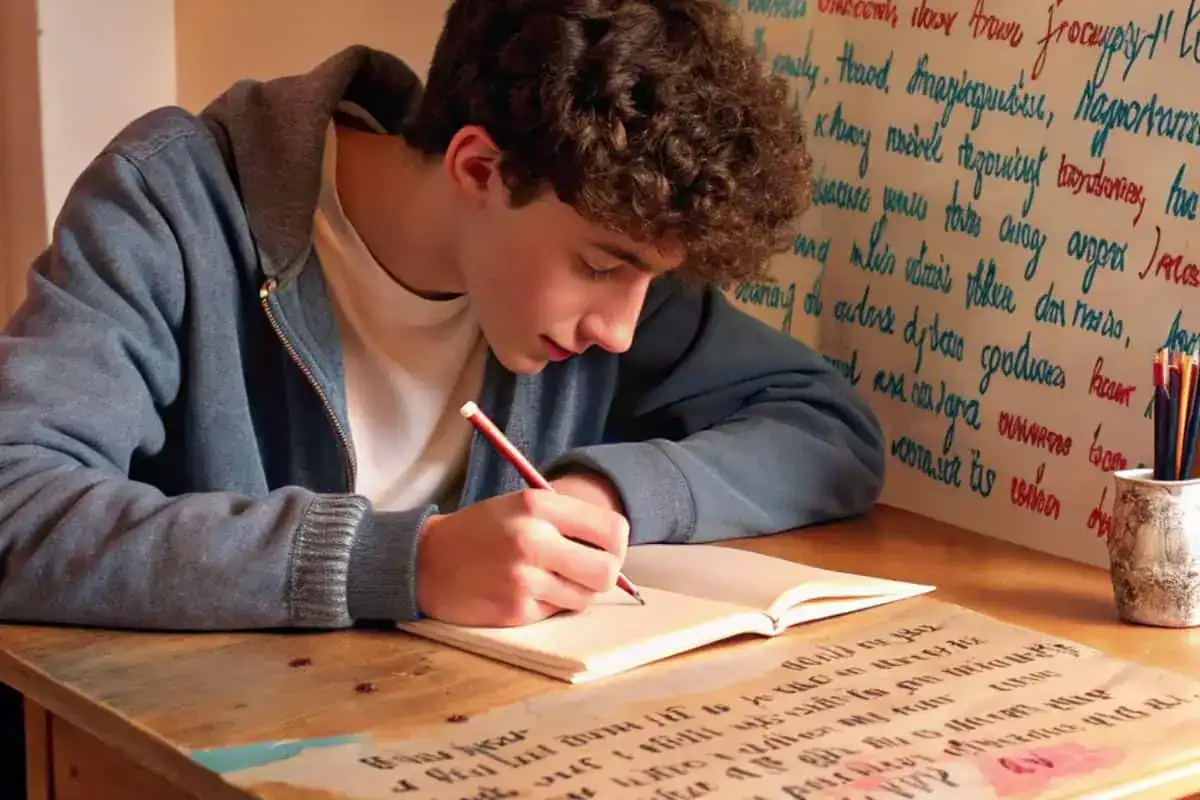
La lingua inglese può confondere anche gli scrittori professionisti e gli esperti di lingue.
Ci sono tante regole da imparare e le stranezze grammaticali che richiedono tempo per essere comprese. Una domanda comune è se l'ortografia sia considerata parte dell'equazione.
Pur essendo collegati, costituiscono aspetti diversi del linguaggio.
Oggi analizzeremo la differenza tra ortografia e grammatica.
Vi spiegheremo perché sono due gemelli inseparabili e vi mostreremo come migliorare in entrambi.
Whether you’re writing an essay, drafting an email, or just trying to sound more professional online, understanding this distinction will help.
TL;DR
L'ortografia è non fa tecnicamente parte della grammatica. La grammatica si occupa di come le parole lavorano insieme nelle frasi (struttura, regole, relazioni). L'ortografia si concentra su come vengono scritte le singole parole.
Ma nella pratica si sovrappongono talmente tanto che la maggior parte delle persone le considera come un'unica grande categoria.
Entrambi sono importanti per una scrittura chiara e strumenti come i controllori grammaticali AI possono aiutarvi a individuare gli errori in entrambe le aree.
Non preoccupatevi più che l'intelligenza artificiale rilevi i vostri messaggi. Undetectable AI Può aiutarvi:
- Fate apparire la vostra scrittura assistita dall'intelligenza artificiale simile all'uomo.
- Bypass tutti i principali strumenti di rilevamento dell'intelligenza artificiale con un solo clic.
- Utilizzo AI in modo sicuro e con fiducia a scuola e al lavoro.
Punti di forza
-
L'ortografia e la grammatica sono sistemi separati: la grammatica regola la struttura, mentre l'ortografia si concentra sulla formazione delle parole.
-
Entrambi sono essenziali per la chiarezza, la professionalità e l'efficacia della comunicazione scritta.
-
Il controllore grammaticale dell'intelligenza artificiale non individuabile cattura i problemi di grammatica, ortografia e stile in un solo passaggio.
-
Abbinatelo a Generatore di paragrafi AI per studiare esempi di scrittura lucida e ben strutturata.
Cos'è la grammatica (definizione semplice)
La grammatica è il sistema di regole che governa il modo in cui le parole si combinano per creare un significato.
It’s about sentence structure, not the spelling of individual words.
Pensate alla grammatica come all'architettura del linguaggio. Vi dice:
- Dove vanno le parole in una frase
- Come le parole cambiano forma per indicare il tempo, il numero o il possesso.
- Quali parole si collegano a quali altre parole
- Come strutturare domande, comandi e affermazioni
For example, “She go to school yesterday” is a grammatical error. The word “go” is spelled correctly, but it’s the wrong form. It should be “went” because we’re talking about the past.
La grammatica copre aspetti quali:
- Tempi verbali (correre, correre, correre)
- Accordo soggetto-verbo (lei cammina, loro camminano)
- Uso dei pronomi (io contro me, chi contro chi)
- Struttura della frase (frammenti, frasi di senso compiuto)
- Posizionamento della punteggiatura
The key thing to remember about grammar? It’s about relationships between words. Not the words themselves.
Cos'è l'ortografia (definizione semplice)
Spelling is the correct arrangement of letters within a word. That’s it. It’s about getting the word itself right, and not about how it fits into a sentence.
L'ortografia inglese è notoriamente difficile perché abbiamo preso in prestito parole da molte altre lingue, tra cui il francese, il latino, il greco e il tedesco.
Each language comes with its own spelling patterns, and we just kept them all, which is why “knife” has a silent K and “pneumonia” starts with a P that no one pronounces.
L'ortografia comporta:
- Sapere quali lettere vanno dove in una parola
- Comprendere gli schemi comuni (i prima di e, tranne che dopo la c, per la maggior parte)
- Memorizzazione delle eccezioni (perché l'inglese ne ha un milione)
- Riconoscere gli omofoni (parole che hanno lo stesso suono ma sono scritte in modo diverso).
A spelling error looks like this: “I recieved your email.” The word should be “received.” The sentence structure is fine.
La grammatica va bene. Ma quella parola è scritta male.
Here’s what makes spelling tricky: you can spell a word correctly and still use the wrong word.
“Their” is spelled correctly. “There” is spelled correctly. “They’re” is spelled correctly. But if you write “Their going to the store,” you’ve made a word choice error, not a spelling error.
L'ortografia è perfetta.
È qui che le cose si fanno torbide.
L'ortografia fa parte della grammatica? La risposta diretta
No, l'ortografia non fa parte della grammatica.
Grammar is a structural system. Spelling is a writing convention. They’re different branches of language mechanics.
But here’s why everyone gets confused: they both fall under the umbrella of “correctness” in writing.
When your writing has errors, most people don’t stop to categorize them.
Sanno solo che qualcosa non va.
Plus, some errors involve both grammar and spelling at the same time. If you write “I seen him yesterday,” is that a grammar error or a spelling error? It’s grammar.
You used the wrong form of the verb. But if you write “I runned yesterday,” that’s still grammar (wrong past tense form), even though “runned” isn’t a real word.
I linguisti accademici trattano ortografia e grammatica come sistemi separati.
But in everyday life? Most writing tools, teachers, and style guides lump them together under “writing mechanics” or “language correctness.”
So while they’re technically different, treating them as separate issues doesn’t always help when you’re trying to improve your writing.
Come sono collegate la grammatica e l'ortografia
Even though they’re separate, grammar and spelling interact constantly.
Consider contractions. “It’s” versus “its” is technically a grammar issue (one is a contraction of “it is,” the other is possessive).
But it looks like a spelling issue because the words are so similar. Same with “you’re” and “your” or “they’re,” “their,” and “there.”
Omofoni create another overlap. “Affect” and “effect” are both spelled correctly as individual words.
Ma usare quello sbagliato in una frase è un errore grammaticale (parte sbagliata del discorso) che assomiglia a un errore di ortografia.
Verbo forms create overlap too. “Lead” (present tense) and “led” (past tense) are different spellings e forme grammaticali diverse.
If you write “She lead the team last year,” you’ve made both a spelling error (should be “led”) and a grammar error (wrong tense).
Proprio per questo sono molto utili gli strumenti che controllano entrambe le cose contemporaneamente.
When you’re writing, you’re not stopping to categorize every mistake. You just want to know what’s wrong and how to fix it.
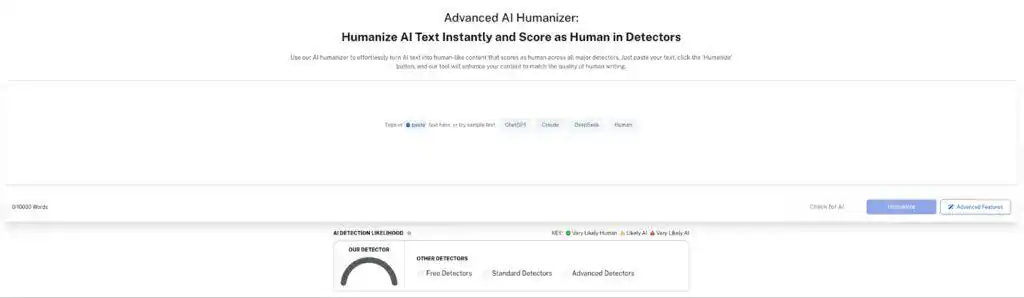
If you’re using AI to help with your writing, make sure the output sounds natural and human.
After running grammar and spelling corrections, use Undetectable AI’s Umanizzatore AI to ensure your text doesn’t sound robotic or over-polished.
A volte gli strumenti di intelligenza artificiale rendono la scrittura tecnicamente corretta ma stranamente formale. L'umanizzazione dell'output mantiene intatta la vostra voce.
Spelling vs. Grammar vs. Mechanics: What’s the Difference?

If spelling isn’t grammar, and grammar isn’t spelling, where does everything else fit in?
La meccanica. È il termine ombrello che copre tutti gli aspetti tecnici della scrittura:
- Grammatica: Come le parole lavorano insieme (sintassi, forme verbali, struttura della frase)
- Ortografia: Come si scrivono le singole parole (disposizione delle lettere, forme corrette delle parole)
- Punteggiatura: Dove vanno le virgole, i punti e gli altri segni di punteggiatura
- Capitalizzazione: Quando usare le lettere in maiuscolo
- Utilizzo: Scegliere la parola giusta per il contesto (formale vs. informale, affetto vs. effetto)
La meccanica è l'intera cassetta degli attrezzi. La grammatica e l'ortografia sono solo due strumenti al suo interno.
Most writing guides and teachers use “grammar” as shorthand for all mechanics.
It’s easier to say “check your grammar” than “check your grammar, spelling, punctuation, capitalization, and usage.”
But technically, they’re all different.
When you’re working on your writing, it helps to know which area you struggle with most. Some people have perfect grammar but could work on their spelling.
Altri scrivono tutto correttamente ma confondono continuamente i tempi dei verbi. Una volta capito dove sono i vostri punti deboli, potrete concentrare i vostri sforzi di miglioramento.
Errori grammaticali comuni spesso scambiati per errori di ortografia
Alcuni errori si presentano come errori di ortografia ma in realtà sono problemi grammaticali.
Ecco i più comuni:
- Its vs. It’s: “Its” is possessive. “It’s” is a contraction of “it is.”
Incorrect: “The dog wagged it’s tail.”
Correct: “The dog wagged its tail.”
- Your vs. You’re: “Your” is possessive. “You’re” is a contraction of “you are.”
Incorrect: “Your going to love this.”
Correct: “You’re going to love this.”
- Their vs. There vs. They’re: “Their” is possessive. “There” indicates location. “They’re” is a contraction of “they are.”
Incorrect: “Their going over there with they’re friends.”
Correct: “They’re going over there with their friends.”
- Allora vs. Allora: “Then” relates to time. “Than” is for comparisons.
Incorrect: “I’d rather stay home then go out.”
Correct: “I’d rather stay home than go out.”
- Perdere contro perdere: “Lose” means to misplace or not win. “Loose” means not tight.
Incorrect: “Don’t loose your keys.”
Correct: “Don’t lose your keys.”
- Affetto vs. Effetto: “Affect” is usually a verb. “Effect” is usually a noun.
Incorrect: “That will effect the outcome.”
Correct: “That will affect the outcome.”
Questi sembrano errori di ortografia perché entrambe le versioni della parola sono scritte correttamente. Ma scegliere quella sbagliata è un errore grammaticale.
You’re using the wrong part of speech or the wrong word form for the context.
Spell-check doesn’t catch these errors. As far as spell-check knows, “your” is spelled perfectly.
It has no idea you meant to write “you’re.”
Perché le due cose vengono insegnate insieme nelle scuole
Ever wonder why English class covers both grammar and spelling? It’s not because they’re the same thing.
It’s because you need both to write clearly.
Le scuole li insegnano insieme per motivi pratici:
- Entrambi influiscono sulla leggibilità. Una cattiva ortografia rende la scrittura difficile da capire. Una cattiva grammatica rende la scrittura difficile da seguire. Entrambe creano confusione.
- They’re both about conventions. La lingua ha regole concordate per l'ortografia e la struttura. Per comunicare in modo efficace è necessario conoscere entrambe le regole.
- They’re corrected at the same time. When a teacher grades your paper, they’re not making two separate passes (one for spelling, one for grammar). They’re catching everything in one read.
- Migliorano insieme. Leggere di più aiuta l'ortografia. Aiuta anche la grammatica. La pratica della scrittura migliora entrambe e queste abilità si rafforzano a vicenda.
- They’re both tested. Standardized tests, college entrance exams, and professional writing assessments check for both. You can’t ignore one and focus on the other.
Nella maggior parte dei casi, a nessuno importa se l'errore è di ortografia o di grammatica. Sanno solo che la vostra scrittura presenta degli errori. E gli errori danneggiano la vostra credibilità.
That’s why improving both matters. A perfectly spelled email with terrible grammar still looks unprofessional.
Un saggio grammaticalmente perfetto e pieno di errori ortografici perde comunque punti.
Come migliorare la grammatica e l'ortografia
Getting better at grammar and spelling doesn’t mean memorizing rule books.
Significa costruire abitudini che rendano automatica la scrittura corretta.
- Leggete costantemente. This is the number one way to improve both. When you read, you expose yourself to correct spelling and grammar patterns repeatedly. Your brain starts recognizing what “looks right” without you consciously thinking about rules.
- Scrivere regolarmente. You can’t improve without practice. Write anything. Emails, journal entries, social media posts, blog drafts. The more you write, the more you’ll catch your own patterns of mistakes.
- Usate i correttori grammaticali in modo strategico. Tools catch errors you miss. But don’t just click “accept all.” Read each suggestion and understand perché it’s wrong. That’s how you learn.
- Tenere un elenco personale degli errori. Notate quali errori commettete ripetutamente. Scriveteli. Esercitatevi con le versioni corrette. Alla fine il modo corretto diventerà automatico.
- Imparare gli omofoni. Make flashcards for your problem pairs. Their/there/they’re. Your/you’re. Its/it’s. Practice until you don’t have to think about it.
- Pronunciare le frasi ad alta voce. Gli errori grammaticali spesso suonano male anche quando sembrano corretti sulla pagina. La lettura ad alta voce aiuta a individuarli.
- Scomporre frasi complesse. If a sentence feels wrong but you can’t figure out why, break it into shorter sentences. Then rebuild it correctly.
- Studiate i modelli, non le regole. Instead of memorizing “i before e except after c,” read enough words with “ie” and “ei” that you recognize the pattern naturally. Note that there are molti eccezioni, tra cui scienza, antichità e specie.
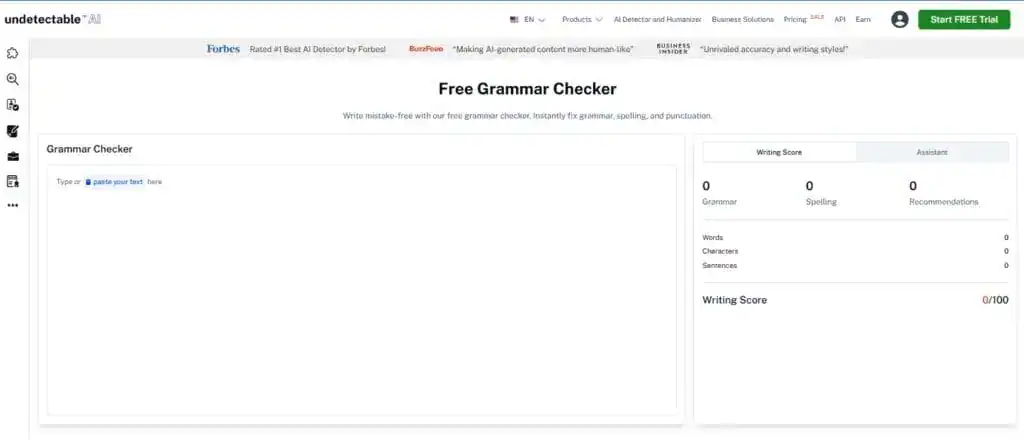
For serious writing projects, consider using Undetectable AI’s AI Grammar Checker to catch mistakes you might miss.
The tool spots grammar, spelling, punctuation, and style issues in one pass. It’s like having an editor review your work before you finish up.
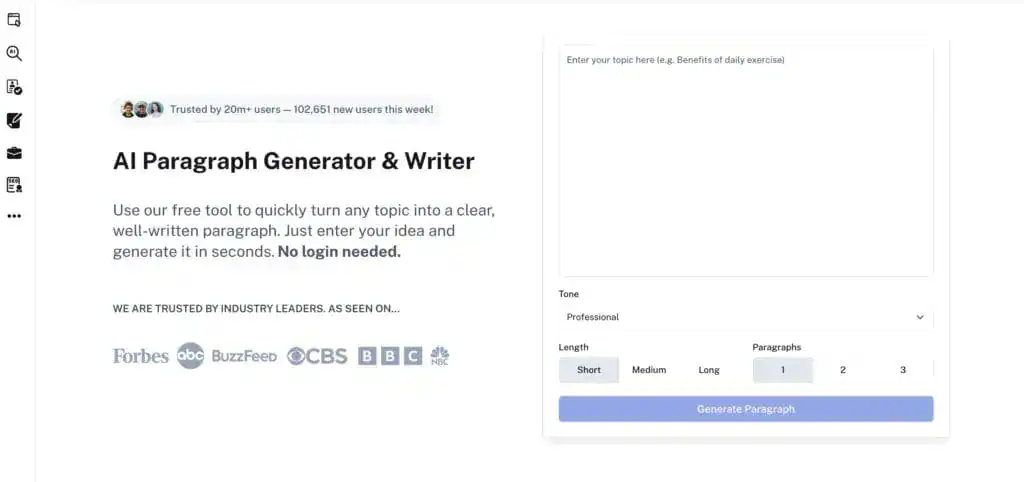
Pair it with the AI Paragraph Generator if you want to see correctly written examples. Sometimes the best way to learn is by studying well-crafted sentences and paragraphs.
Generate degli esempi, analizzateli e fate pratica per ricreare quella struttura nella vostra scrittura.
The key is consistency. Checking your work once in a while won’t help much. But if you make editing part of your writing process every single time, you’ll improve fast.
Utilizzare il Controllore AI per analizzare i vostri scritti alla ricerca di incongruenze grammaticali e ortografiche, soprattutto se avete usato l'intelligenza artificiale per aiutarvi a redigerli.
Esamina i sottili fraseggi generati dall'intelligenza artificiale, le strutture scomode e le forme di parole sbagliate che i normali correttori ortografici non rilevano, aiutando il testo a rimanere chiaro, naturale e dal suono umano.
Provate il nostro AI Detector e Humanizer nel widget qui sotto!
Grammatica e ortografia entrano in un bar...
Quindi, l'ortografia fa parte della grammatica? Tecnicamente, no. La grammatica riguarda la struttura della frase e le relazioni tra le parole, mentre l'ortografia riguarda la formazione delle singole parole.
They’re separate systems with separate rules.
But in practical terms? They work together so closely that separating them doesn’t help most writers.
Entrambi influiscono sulla chiarezza. Entrambi incidono sulla professionalità. Entrambi richiedono attenzione se si vuole che la propria scrittura venga presa sul serio.
The good news is you don’t need to be perfect.
È sufficiente essere consapevoli dei propri punti deboli e disporre di strumenti per individuare gli errori prima che i propri scritti vengano resi pubblici.
Utilizzare strumenti come AI non rilevabile.
Leggete il vostro lavoro ad alta voce. Esercitatevi sugli errori che commettete più spesso. E ricordate che anche gli scrittori professionisti commettono errori nelle prime bozze.
La differenza è che loro li catturano prima che gli altri li vedano.
Concentratevi sul miglioramento, non sulla perfezione. Ogni scritto che modificate con cura è una pratica. E la pratica rende permanenti.