
You have probably typed out the word flavor, and you are like, wait, there should be a ‘u’ in there, right? You are not alone. Most people second-guess themselves when it comes to certain spellings.
The flavor or flavour debate is one of those tiny spellings that trips people, especially if you are writing for an international audience.
No matter the spelling you choose, you are correct. The only difference depends on where you are in the world. Flavour is the British spelling, and flavor is the American English spelling.
Let’s dive in.
Key Takeaways
- Flavor is the American spelling
- Flavour is the British spelling
- It is important to choose only one spelling and stick to it
What’s the Difference Between Flavour vs Flavor?
So, the question that many people ask is ‘is it flavor or flavour?’ Well, the answer is based on your location or the person to whom you are writing.
The reason behind this is that both spellings explain the same thing, that is, the taste of food, drink, or even an abstract concept like the flavor or flavour of a conversation.
Flavour or flavor works as a noun and a verb. As a verb, “flavour/flavor” can be used in various tenses, such as present, past, and present continuous.


Never Worry About AI Detecting Your Texts Again. Undetectable AI Can Help You:
- Make your AI assisted writing appear human-like.
- Bypass all major AI detection tools with just one click.
- Use AI safely and confidently in school and work.
No matter how you spell it, the flavour or flavor meaning does not change. It is purely a spelling difference fueled by history.
When the British arrived in America in the 16th and 17th centuries, they came along with their language.
Then, spelling was not standardized. That is, America used the British style of spelling words.
However, as things changed, American English evolved, and certain changes were made to certain spellings, and this took the efforts of a man called Noah Webster.
Webster created the first American dictionary, and he intentionally removed the letter ‘u’ from words like colour, honour, and flavour.
You could say, indeed, that Noah Webster is the reason why Americans write “flavor”, while Britons, Australians, and Canadians, or, in short, all the Commonwealth countries, write “Flavour”.
When you think about it, it may seem like the difference is a way of showing cultural independence.
Again, to the question ‘is it flavour or flavor?’ Here is a short answer: There is no difference in their meaning, only spelling.
“Flavor” is used in the United States and “Flavour” is used in the UK, Canada, Australia, and most Commonwealth countries
Both spellings refer to the taste of something or the quality of something that is unique. They both can be used to refer to the personality of an individual or ice cream. E.g., Barbara is a sweet person, or I like vanilla ice cream.
When to Use Flavour
Flavour should be the best option when writing in British English or when writing to an audience that follows British Spelling rules, such as:
- People in the UK
- Brands or publications with non-US international markets
- Content for government bodies or institutions in Commonwealth countries
Just by the way, if you find yourself in India and you are thinking ‘is it flavour or flavor in India?” The right answer is flavour. India follows British conventions.
So if you are writing product labels, menus, or articles for an Indian audience, go with flavour.
When to Use Flavor
Like flavour is to Britain, so is flavor to America. So the best time to use flavor is when you are working on:
- Publication in or aimed at US audiences.
- American magazines, news sources, and websites.
- United States-based brands, food companies, and product descriptions
- APA or Chicago style academic writing.
As an example, when you are constructing a website on behalf of a restaurant in the US or when you are writing a copy on behalf of an American food brand, flavor is what you turn to.
Common Examples of Flavour vs Flavor
The following are examples of flavour vs flavor in various parts of speech:
| Flavour | Flavor |
| My mum added more spices to flavour the soup | My mum added more spices to flavour the soup |
| To add flavour to your soup, you can add a slice of lemon or mint leaves | To add flavour to your soup, you can add a slice of lemon or mint leaves |
| She flavours her meals generously | She flavours her meals generously |
| I love vanilla-flavoured ice cream | I love vanilla-flavored ice cream |
| The red velvet cake needs more flavouring | The red velvet cake needs more flavoring |
| Fresh spices add more flavour | Fresh spices add more flavor |
| Dark chocolate has a good flavour | Dark chocolate has a good flavor |
| Flavour or no flavour i am not changing the recipe | Flavor or no flavor i am not changing the recipe |
| There is a flavour of cinnamon | There is a flavor of cinnamon |
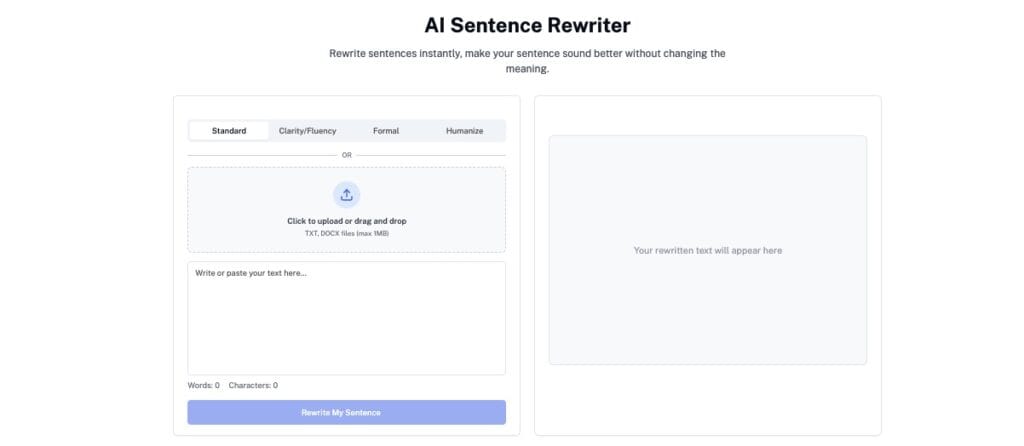
Sometimes writing long and complex sentences can make it harder to spot the spelling differences. That is where tools like the Undetectable AI’s Sentence Rewriter come in.
With our tool, it is easier to break down long example sentences to simpler, punchier ones that are easy to follow.
You can also use the Undetectable AI’s Prompt Generator to create prompts for AI chat to generate more examples if you are not satisfied with the examples above.
Our prompt generator will help you create prompts based on context scenarios or quizzes to practice flavour vs flavor.

Flavour vs Flavor in Food and Culture
One place you will find the most use of flavour/flavor is in food and culture. This is because everyone eats food and loves food with a lot of flavour/flavor.
Flavour is largely used in restaurant menus, spice packaging, and food blogs in British and Commonwealth food culture recipes.
With the right spelling, you are demonstrating to your client that you are not only familiar with the proper grammar but also with their cultural background. It may not appear that this additional effort is a big thing, but it could be what keeps your job.
While the British food culture prefers flavour, the US prefers flavor. You will find it in brand names like the rapper flavor, Flavortown, and on every Doritos bag you have ever seen.
Flavour/flavor is also tied to culture. It represents regional identities through specific herbs, spices, and a combination of seasonings. They bring back nostalgia and memories.
It is the reason why when individuals relocate to foreign countries, the flavor of home is among the first things that they miss because it reminds them of their childhood and family.
In the case that you are writing a blog on how flavour/flavor is a big part of culture, and it seems like your words are not coming out as you would like, you can use the Undetectable AI’s Paraphrasing tool to rephrase your sentences.
Our paraphrasing tool gives you readable and naturally written results in seconds.
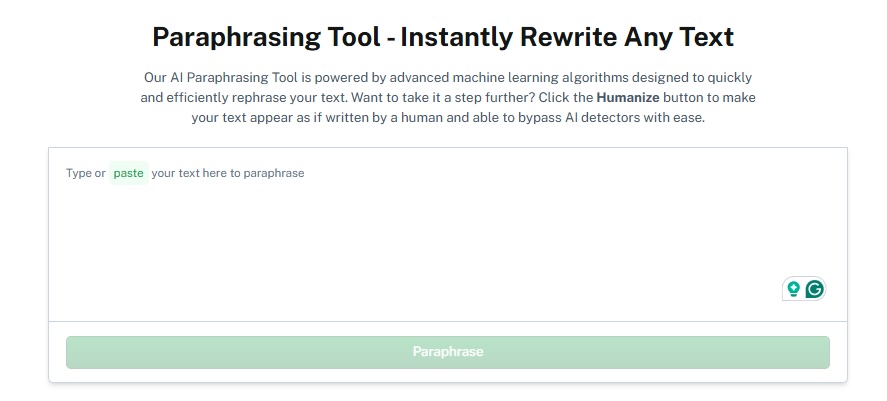
After using our Paraphrasing tool and you feel like the results do not feel as smooth and human-written as you would like, you can also use our Undetectable AI Humanizer.
Our humanizer can be used to make examples relatable and interesting.

Common Mistakes to Avoid
The following are mistakes to avoid in the use of flavour or flavor:
- Different Spelling in the Same Document: This is the most common mistake when writing. So try to stick to one spelling throughout. There is no need to start with flavour and end with flavor. It is sloppy and inconsistent.
- Assuming that the American spelling is The Standard: Yes American English has more global reach, but it is not the Universal standard. There is no spelling that is better than the other. It does not matter if you choose to use or leave out ‘u.’
- Incorrect Autocorrect Setting: Having an incorrect autocorrect setting is another thing that may mess with your spelling abilities. Assuming that your device is configured to American English, then it will automatically change flavour to flavor. So just to be safe, always double-check your language setting to avoid clicking ignore on the right spelling.
- Forgetting Related Words: Most people make the mistake of forgetting other variations of flavour/flavor. So if you use ‘flavour’ for instance, you also have to use the same thing when spelling ‘flavouring,’ ‘flavourful,’ ‘flavoured.’ You always have to stay consistent if you are using any other variation within the word family.
- Not Paying Attention to Style Guides: Style guides are there so that you can ensure that you do not make mistakes. Unless you adhere to the necessary style guide, you may find yourself using the British spelling in American publications or vice versa.
Tips for Consistency
The following are some of the ideas on how to be consistent with spelling flavour or flavor:
- Adjust Your Spell Checker to the Correct Country: Spell checkers are known to contribute to spelling errors, and this normally occurs when the spell checker is configured to check a language other than the one you are working with. Adjust your checker to the correct dialect prior to commencing the writing. Ensure that you set the checker to American English when the content is US, British English when the content is UK/India/Australia.
- Know Your Audience: You need to know who you are addressing. They should determine your spelling. Remove the letter that needs to be removed and add the letter that works with your audience. Although you may not be the most confident about it, a quick Google search should take you through it.
- Be Consistent: It is always important to ensure that you use a single spelling. There is no need to switch spellings midway, except your work requires it.
- Adhere to a Publication Style Guide: A publication style guide is required to be used in order to ensure uniformity. As an example, the style guide for the New York Times in America will make you spell flavor, whereas that of the Guardian will make you spell flavour. In cases where you are not provided with the guide, you can always create one, and it will be based on the audience.
- Consider the Worldwide Audience: It may be difficult to decide what spelling to use to write to a worldwide audience. It is, however, better to select a spelling and stick to it.
- Match Your Other Spelling Choices: If you are using flavor, which is American, you should also use other American English variations like color or chili. When you are also using Flavour, you should use British English variations like colour or Chilli.
- Do a Final Find and Replace Check: Before you submit that document, ensure that you have used the right spelling throughout. You have to search for both spellings to make sure only your preferred spelling shows up.
- Trust that You Can Make the Right Decision: It might be hard, but you need to stop second guessing your work. You can always be lost along the way, and in that case, just select one spelling or do your research as well.
- Proofread with an Artificial Intelligence Editing Tool: AI editing tools will assist you in proofreading your work and fishing out spelling mistakes you may have missed. The only thing one needs to do is to make sure the AI tool is configured to either American or British English.
Run your text through our AI Detector and Humanizer in the widget below!
Final Thoughts
This Flavour vs flavor debate is one of those that appear to be tricky, but as long as you know the reasoning behind it, then you are fine.
Always remember that it is flavor in the US and flavour everywhere else. It has the same meaning, same pronunciation, the only slight difference is the ‘u.’
It does not matter what spelling you use; all you need to do is know your audience and be consistent with it. Now, it’s time to choose your spelling, use your spell checker, and write about something tasty.
Keep your spelling consistent and your writing natural every time with Undetectable AI.