
Myth: A great business name needs to describe what you do.
Reality:
Apple doesn’t describe computers.
Amazon doesn’t describe e-commerce.
Nike doesn’t describe shoes.
Three of the most valuable brands in history are named after a fruit, a river, and a goddess.
Descriptive names are forgettable. Distinctive names are remembered.
And the difference between the two is what this blog is about.
If you’re trying to figure out how to name a business that stands out, you’re in the right place.
In this blog, we’ll learn how to create a business name that gets remembered, how to trademark a business name, and how to check if a business name is taken.
Let’s dive in.
Key Takeaways
- How to name a business that stands out. Aim for 1–2 syllables, easy spelling, and clear imagery.
- To create a business name that’s original, study your top 5 competitors’ names, find the pattern, then do something different.
- Always check if a business name is taken across four channels before committing: USPTO trademark database, your state business registry, .com domain availability, and social media handles.
- Don’t chase perfection. Even Google and Instagram started with different names. Pick a good one and focus on building the product.
What are Business Names
A business name is the public identity of a company.
When learning how to name a business, understand that it’s the name customers see, remember, and associate with your products or services.
It’s the name customers see, remember, and associate with your products or services.


Never Worry About AI Detecting Your Texts Again. Undetectable AI Can Help You:
- Make your AI assisted writing appear human-like.
- Bypass all major AI detection tools with just one click.
- Use AI safely and confidently in school and work.
This name might be your legal company name, a trade name (DBA), or simply the brand name used in marketing.
These three can be different.
For example,
A company may be legally registered as “Sunrise Holdings LLC”, operate publicly as “BrightBites”, and hold a trademark for the BrightBites brand.
Each name has a different purpose and carries different legal protections.
Legal Name → Registration and contracts
DBA or trade → Day-to-day business
Brand name → Customers recognize in marketing, advertising, and products
Famous Business Name Examples
Let’s look at well-known companies on how they created their business name.
- Google (Invented Word)
- Derived from “googol,” a math term for 1010010^{100}10100
- Spelling was changed to make it unique and brandable
- Reflects the huge amount of information the search engine organizes
- Amazon (Metaphor)
- Named after the Amazon River, the largest river in the world
- Chosen to refer to size, growth, and ambition
- Also appears early in alphabetical listings, which helped visibility
- Nike (Mythological)
- Named after the Greek goddess of victory
- Short, strong, and easy to pronounce worldwide
- Matches the brand’s focus on performance, sports, and winning
Choosing a Memorable Business Name
Can you remember the first coffee shop you ever visited? Or the first grocery store brand you recognized as a child? Maybe the first tech company whose product excited you.
Most people can.
It’s because a strong name can trigger an image, a feeling, or a sense of familiarity.
Think about names like McDonald’s, Coca-Cola, or Google.
None of them are technically perfect business names. But they are easy to remember, easy to say, and easy for the brain to store.
Research shows that people judge a brand quickly, and name plays a big role in that first impression.
This is the Von Restorff Effect. We remember things that stand out from everything around them. The best business names use this idea well. They feel just different enough that the brain notices them.
Making Names Unique and Catchy
- Combine words creatively
In this strategy, we combine two words in a way that they create a stronger meaning than either word alone.
Here’s the formula:
[Descriptor or Emotion Word] + [Industry or Function Word] = Branded Name
A strong compound name has two roles:
- Grounding word → explains the product, service, or audience
- Elevating word → adds emotion, scale, or aspiration
Examples
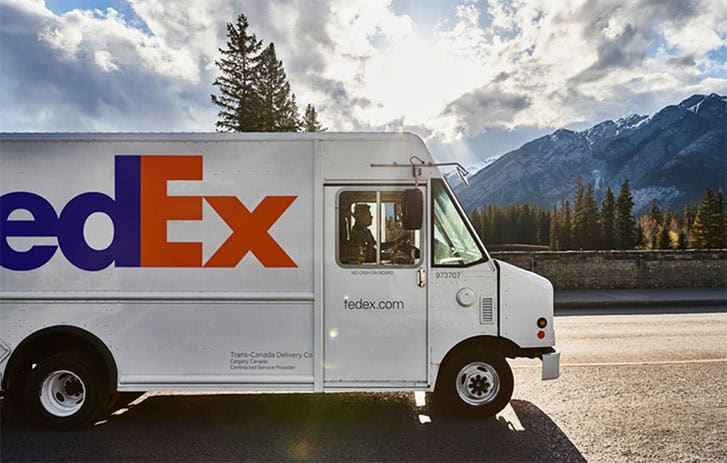
- FedEx
- Federal + Express
- Suggests speed, delivery, and reliability
- Snapchat
- Snap + Chat
- Implies quick photos and instant communication

- Burger King
- Burger + King
- Mix of product + status

Keep the business name short.
Research from psychologist George Miller shows that people can hold only about 5–9 items in short-term memory. Long names are harder to remember.
For that reason, most successful compound brand names stay 1–2 words, and ideally under 3 syllables.
- Add unique identifiers
If basic word combinations feel a bit too plain, you can add a unique twist. Here’s how different companies have tweaked their business names in small ways so the name feels fresh, distinctive, and easier to trademark.
- Creative spelling
Slightly change the spelling of common words.
Examples:
- Froot Loops — a twist on “fruit”
- Tumblr — shortened from “tumbler” for a modern feel
- Fiverr — based on “fiver,” but spelled differently to stand out
- Adding prefixes or suffixes
Attach small word endings or beginnings to create a modern and brand-ready name.
Examples:
- Spotify — “spot” + “ify,” suggesting discovering music
- Dropbox — “drop” + “box,” a simple idea for storing files
- Airbnb — “air” + “B&B,” referring to air mattresses and bed-and-breakfast stays
- Borrowing from other languages
Use foreign words because they are distinctive and global.
Examples:
- Volvo — Latin for “I roll,” fitting for a car company
- Zara — a stylish name with Spanish roots
- IKEA — built from the founder’s initials and his hometown
- Founder inspiration or backstory
Sometimes the business name comes from a place, story, or symbol that meant something to the founder.
Examples:
- Patagonia — inspired by the remote region known for adventure
- Reebok — named after an African gazelle
- Häagen-Dazs — a made-up name designed to sound European and premium
- Using color psychology
Colors trigger emotions, so some brands build their names around them.
Examples:
- Red Bull — energy, power, and excitement
- Blue Apron — trust and professionalism
- Green Mountain — nature, freshness, and sustainability
These small tweaks can make your business name distinct, brandable, and easy to remember.
- Stand out from competitors
The fastest way to name a forgettable business name is to look at your competitors and name yours something similar.
This is industry mimicry, and it actively works against you.
Here’s a concrete exercise:
Search your top 5 competitors and write down their names. Look for patterns:
- Are they all using the same suffix (-ly, -ify, -hub, -co)?
- Are they all using the same type of metaphor (animals, nature, tech terms)?
- Are they all formal and literal, or all casual and playful?
Now go the other direction.
If everyone in your industry is named something professional and corporate (“Summit Solutions”, “Apex Consulting”), a warm, human name like “Bloom” or “Kind” will stand out immediately.
If everyone is using nature metaphors, lean into precision and modernity.
Research on 108 business launches found that only 14% of companies used unique names or positioning, but they generated 38% of the total revenue impact and 61% of the total profit impact.
Optimizing Business Name for Online Presence
Before you can optimize for online presence, you need to check if your business name is taken because a name already claimed online is a name you can’t own in search results.

People discover brands while scrolling social feeds or watching short videos. In that environment, your business name should be search-friendly.
Here are some smarter ways to optimize your business name:
- Match the way people naturally search
Don’t optimize for technical terms, optimize for how real people talk. Someone is far more likely to search “eco wrap packaging” than “sustainable containment solutions.” Names that reflect everyday language perform better.
- Aim for low-competition name space
Search your potential name and look at the first page results. If the results are crowded with unrelated brands, news sites, or dictionary definitions, your brand will struggle to dominate search visibility.
- Design the name to become a search query
The strongest brand names eventually become their own keyword. Think about names like Shopify or Canva. When people search them, they’re looking specifically for the brand.
- Check phonetic clarity for voice search
Voice assistants rely heavily on pronunciation. If your name sounds like three other common words, search engines may misinterpret it. A name should be clear when spoken.
- Avoid names that trap you into a narrow niche
If the name is too specific (for example, NYCSoapCo), scaling later becomes harder. Choose something that leaves room for future product lines or markets.
Finding a strong name is only half the battle. The real growth happens when you build search-friendly content around that name.
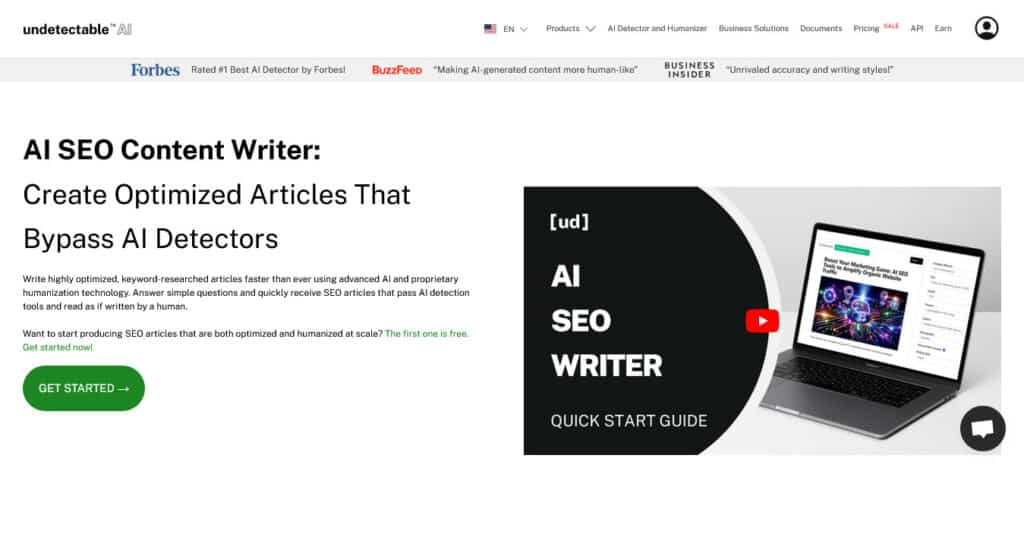
This is where Undetectable AI’s AI SEO Writer can help you.
Instead of producing generic SEO articles, it creates content that naturally integrates your brand name, product themes, and search intent.
For example, if your brand is AquaPure, the tool can generate articles, landing pages, and product descriptions that reinforce the brand while targeting relevant search terms.
The result is content that reads naturally for humans but still aligns with modern search algorithms.
Testing Name Ideas Before Launch
Before you finalize a business name about how to name a business, it’s important to make sure the name is available.
If you accidentally use a name that already belongs to another brand, you could face legal issues, trademark disputes, or even be forced to rebrand after you’ve already built recognition around it.
Here’s a simple process to check if a business name is taken before you commit:
Step 1: Search the trademark database
Start by checking the USPTO trademark database if you’re in the United States.
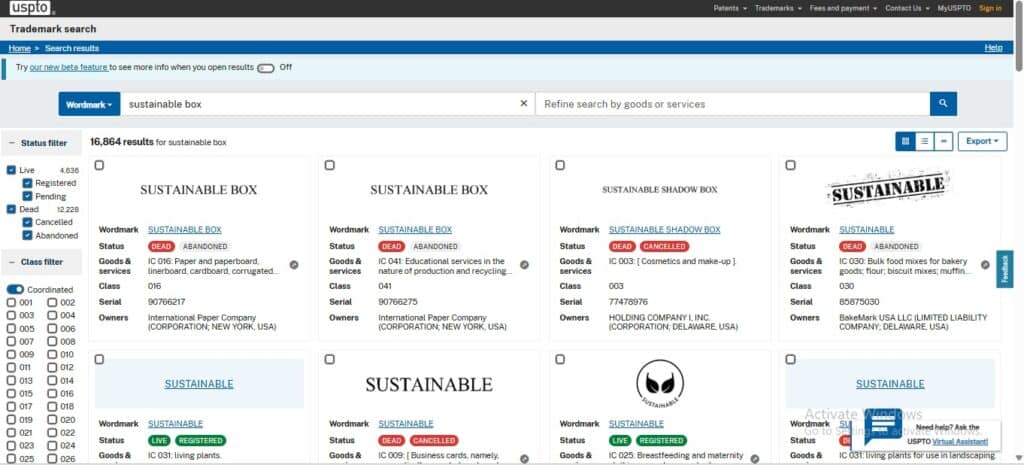
If you’re outside the U.S., search your country’s official trademark registry.
Look for exact matches and similar-sounding names in your industry.
For example, if you plan to use the name “BrightBloom Skincare,” you should also check variations like “Bright Bloom,” “BloomBright,” or “Bloom Skin.”
Even if a business operates in another state, a federal trademark can still prevent you from using the same name nationwide.
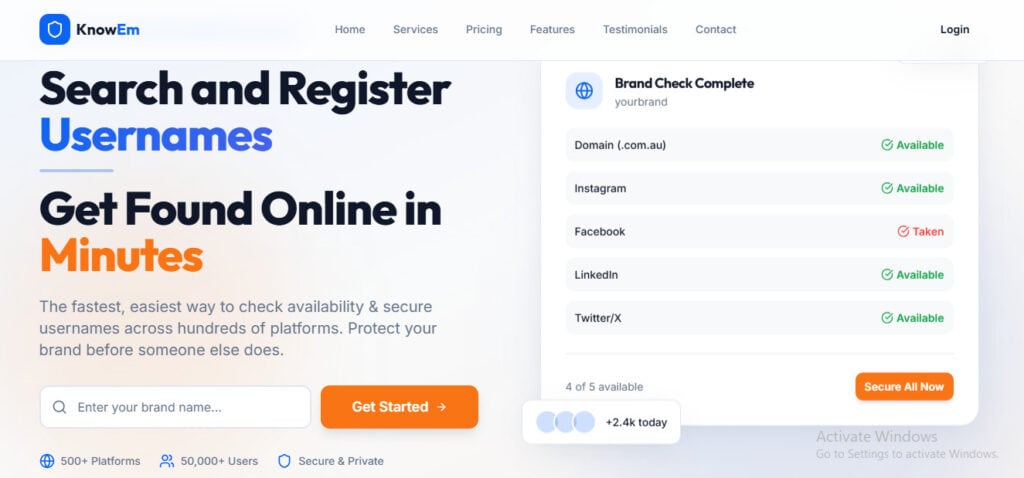
Step 2: Check social media handles
Your business name should ideally be available on major platforms such as Instagram, TikTok, LinkedIn, and X (Twitter).
Consistent handles help customers find your brand easily across platforms. Tools like Namechk or KnowEm help you to check multiple platforms at once, saving you time.
Step 3: Run a Google exact-match search
Next, search your potential name on Google using quotation marks, like this:
“BrightBloom Skincare”
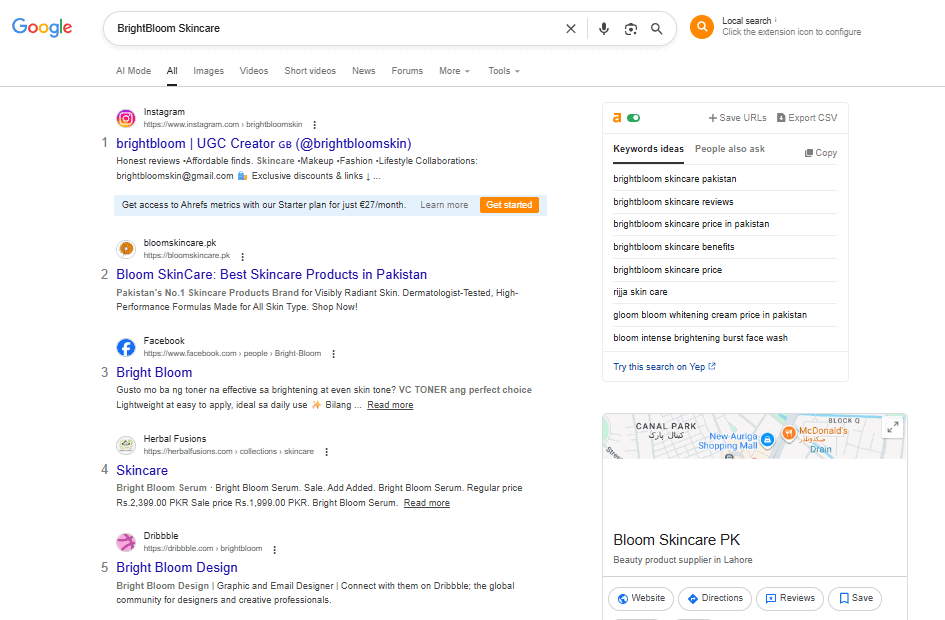
If a strong brand appears in the results, it could lead to customer confusion or tough SEO competition.
Once you confirm that your name is available, the next step is protecting it legally.
A trademark is a legal protection that gives you the exclusive right to use your brand name within your industry.
It prevents other businesses from using a similar name that could confuse customers.
Here’s how to trademark a business name:
When filing a trademark application, one of the most important steps is selecting the correct trademark class. Each class represents a different type of product or service.
Examples include:
| Class 9 | Software, mobile apps, digital tools |
| Class 42 | Technology services, AI platforms, SaaS products |
| Class 25 | Clothing and apparel |
| cLASS 35 | Marketing and business services |
Before you finalize your business name, try this simple test.
Tell your chosen name to five people who have never heard it before. After about 10 minutes, ask them two questions:
- Do you remember the name?
- Can you spell it correctly?
If most people remember the name and spell it without confusion, you likely have a strong and memorable brand name.
If they struggle to remember or spell it, the name might be too technical, complicated, or unnatural.
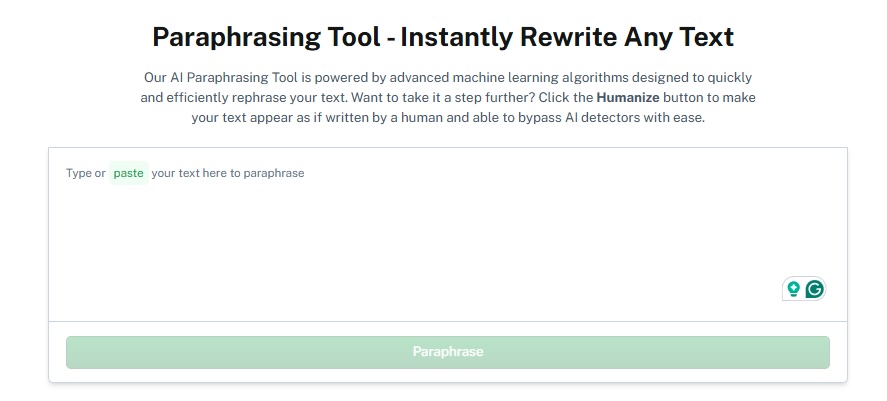
This is where you can use the Undetectable AI’s Paraphrasing Tool.
You can enter your business name ideas, taglines, or brand descriptions, and the tool rewrites them in a way that sounds more natural, clearer, and more appealing to real people.
Try it for your business name ideas.
How Undetectable AI Can Assist in Naming
Coming up with a good business name is rarely a one-step process.
Usually, it starts with:
- Brainstorming a lot of ideas,
- Narrowing them down,
- Testing whether they’re clear and memorable,
- Checking if they’re available online,
- Building a brand story around the name you choose
Undetectable AI offers a set of tools that can help at different stages of that journey.
- Undetectable AI’s Business Name Generator (When You Need Fresh Ideas)
The trick with creating a business name is to generate a large pool of options first and then start filtering.
The Undetectable AI Business Name Generator helps with that early stage by creating short, brandable name ideas based on your business description.
Here’s how it works:
- Enter a short description of your business (for example: “eco-friendly packaging startup”).
- The tool analyzes your industry, target audience, and tone.
- Within seconds, it produces a list of short, memorable names designed to feel natural and brand-ready.
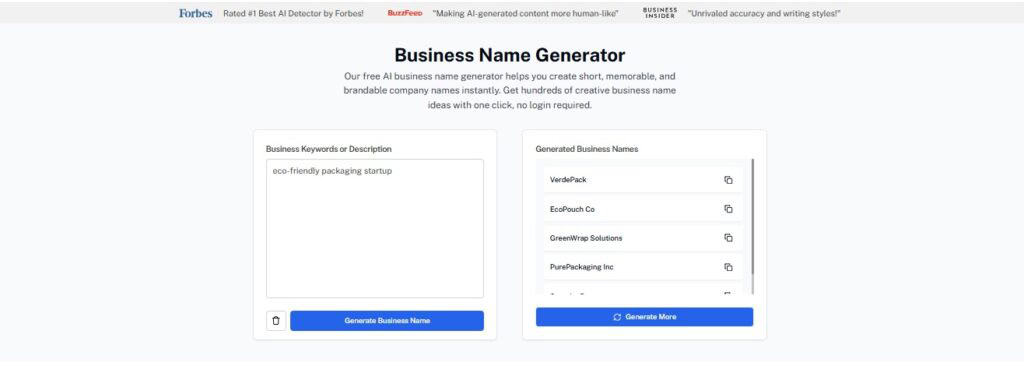
- It works across multiple industries such as tech, retail, health, food, and professional services.
- The tool is free to use and doesn’t require a login.
Try the tool here:
Undetectable AI Business Name Generator → https://undetectable.ai/business-name-generator
- Undetectable AI Humanizer (Making Your Brand Sound Like a Real Person)
Picking a name is only half the job. The way you talk about that name matters just as much.
Sometimes when founders use AI to write taglines or brand descriptions, the result sounds a bit stiff or overly technical.
The words may be correct, but they don’t feel like something a real brand would say.
That’s where the Undetectable AI’s AI Humanizer can help turn robotic-sounding text into language that feels more natural and conversational.
You can use it to:
- Smooth out your tagline
- Rewrite your “About Us” story
- Make sure your brand voice and business name work well together
Use our AI Detector and Humanizer right in the widget below!
Final Thoughts
Knowing how to name a business isn’t about waiting for the perfect name.
It’s about working through a proven process…
Understanding what makes names memorable, generating options at scale, making them unique, testing them with people, confirming they’re legally available, and protecting them once you’ve chosen.
Every step in this guide exists to save you from the costly mistake of falling in love with a name…
Only to discover it’s taken, untradeable, or impossible to find online.
Use Undetectable AI’s Business Name Generator to brainstorm, the Paraphrasing Tool to refine, the SEO Writer, and the Humanizer to make sure your brand voice sounds like a real person.
Your name is the first word of your brand’s story. Make sure it’s one worth remembering.
Start with Undetectable AI to generate, refine, and validate business names that are memorable, unique, and ready to grow with your brand.