
So you have written your essay and it is packed with ideas, arguments, and maybe even some fancy phrases. But now you are staring at the word count and realize you are way over the limit.
What do you do? That is where learning how to shorten an essay comes in handy. Writing is a process of refinement, and being able to trim the excess while keeping your strongest points intact is a mark of a great writer.
In this article, I will show you how it is done. You will explore seven highly effective ways and some tools that shorten your essay within minutes.
Here we go!
Key Takeaways
- Conciseness is a professional necessity because strict word counts force you to prioritize your strongest arguments and eliminate filler.
- Trimming starts with redundancy by identifying where you have said the same thing twice or used ten words when three would suffice.
- Structural cuts are for large overages as you may need to remove entire examples or minor supporting points if you are significantly over the limit.
- Active voice naturally reduces word count because it uses fewer words than passive voice while making your writing more direct and engaging.
- AI tools serve as efficient editors helping you identify wordy sections and suggesting tighter alternatives that preserve the soul of your work.
What is an essay?
An essay is a structured piece of writing that presents an argument, explores an idea, or analyzes a specific topic.
It typically consists of an introduction that houses the thesis statement, body paragraphs that provide evidence and analysis, and a conclusion that synthesizes the main points.
In academic settings, the essay is the primary tool for demonstrating critical thinking and communication skills. It requires a balance of research, logic, and personal voice to persuade or inform the reader.


Never Worry About AI Detecting Your Texts Again. Undetectable AI Can Help You:
- Make your AI assisted writing appear human-like.
- Bypass all major AI detection tools with just one click.
- Use AI safely and confidently in school and work.
Why Knowing How to Shorten an Essay Is an Important Writing Skill
When essays exceed word limits, it is usually a sign that the writer has lost focus or included too much “fluff.”
Learning how to trim your work is important because concise writing significantly improves readability and ensures your reader stays engaged with your core message.
In professional and academic environments, following instructions is just as important as the quality of the content.
Situations where shortening content becomes necessary often include grant applications, university submissions, and professional reports where space is a premium.
Mastering this skill allows you to communicate high impact ideas without wasting the reader’s time. Ultimately, a shorter, more focused essay often leaves a much stronger impression than a rambling one.
Common Reasons Essays Become Too Long
Before you can fix a word count issue, you need to understand where the “bloat” is coming from. Most writers fall into a few common traps that lead to an oversized draft.
- Repeating the Same Ideas in Different Ways: Many writers worry their point isn’t clear, so they restate it three times using slightly different vocabulary. This adds words without adding any new value.
- Adding Too Many Supporting Examples: While evidence is good, including four examples when one strong one would do can quickly sink your word count.
- Overexplaining Simple Concepts: If you are writing for an audience that already understands the basics of your topic, you don’t need to define every elementary term or concept.
- Including Unnecessary Background Information: Historical context is great, but if it takes up half of your essay before you get to the actual argument, it is likely too long.
How to Shorten an Essay: 7 Easy and Effective Steps

If you find yourself staring at a count that is hundreds of words over the limit, follow this step by step guide to bring it back under control.
Step 1: Identify the Main Argument
Go back to your thesis statement. Read every paragraph and ask yourself if it directly supports that central claim. If a paragraph is “interesting” but not “essential,” it is the first candidate for deletion.
Focus on the “need to have” content rather than the “nice to have” information.
Step 2: Remove Repetitive Sentences
Look for sentences that simply echo the one before them. Often, we write a “lead in” sentence and a “follow up” sentence that both say the same thing.
Choose the strongest version and delete the other. This is the fastest way to shave off words without losing any actual data.
Step 3: Cut Unnecessary Words and Phrases
Eliminate the small “filler” words that add weight to your sentences. Words like “basically,” “actually,” and “literally” can almost always be removed.
Similarly, phrases like “in the event that” can be shortened to “if,” and “due to the fact that” can become “because.”
Step 4: Combine Similar Sentences
If you have two short, choppy sentences that share a subject, merge them. For example, “The data was collected in June.
It showed a 10 percent increase” can become “June’s data showed a 10 percent increase.” This creates a better flow while reducing the word count.
Step 5: Simplify Overly Complex Explanations
Academic writers often think they need to use “ten dollar words” to sound smart. In reality, clear and simple language is more effective.
If you have spent three sentences explaining a concept that could be explained in one, rewrite it for clarity and brevity.
Step 6: Eliminate Weak Examples or Evidence
Quality over quantity is the rule here. If you have three pieces of evidence for a point but the third one is a bit of a stretch, cut it.
One strong piece of evidence is more persuasive than three pieces that vary in quality.
Step 7: Tighten Your Introduction and Conclusion
Introductions and conclusions are notorious for “rambling.” Check your intro to see if your “hook” is too long, and check your conclusion to ensure you aren’t introducing new ideas.
A conclusion should be a concise summary, not a second essay.
Examples of How to Shorten an Essay Without Losing Meaning
Applying these techniques is easier when you see them in action. Here are four common transformations that can save you dozens of words.
Example 1: Removing Redundant Phrases
- Wordy: “At this moment in time, it is essential that we consider the importance of clean water.” (16 words)
- Concise: “We must now consider the importance of clean water.” (9 words)
Example 2: Combining Two Sentences Into One
- Wordy: “The researchers conducted the study over six months. They found that the results were inconclusive.” (16 words)
- Concise: “The six month study yielded inconclusive results.” (7 words)
Example 3: Cutting Unnecessary Background Information
- Wordy: “The city was founded in 1850 by a group of settlers who were looking for gold. This history is important because it shaped the local economy.” (26 words)
- Concise: “The city’s gold mining origins shaped the local economy.” (9 words)
Example 4: Rewriting a Wordy Paragraph Into a Concise One
- Wordy: “There are many different types of people who believe that climate change is a very serious problem. They think that we need to take action right away in order to save the planet from future disasters that might happen if we do nothing.” (42 words)
- Concise: “Many people believe urgent action is required to prevent climate disasters caused by climate change.” (15 words)
Editing Techniques That Instantly Reduce Word Count
Sometimes you don’t need to cut ideas; you just need to cut the way you are phrasing them. These technical edits can shave off 5 to 10 percent of your word count instantly.
Replace Long Phrases With Shorter Alternatives
Swap out “bloated” academic phrases for direct ones. Use “to” instead of “in order to.” Use “now” instead of “at the present time.” Use “many” instead of “a significant number of.” These small changes add up quickly across a 2,000 word essay.
Remove Filler Words and Redundant Expressions
Watch out for “double words” like “added bonus” (a bonus is already added) or “future plans” (plans are always for the future). Removing these redundancies makes your writing tighter and more professional.
Use Active Voice Instead of Passive Voice
Passive voice often adds extra helping verbs and “by” phrases. “The ball was thrown by the boy” (7 words) becomes “The boy threw the ball” (5 words). In a long essay, switching to active voice can save hundreds of words while making your tone more authoritative.
Focus on Clear and Direct Sentences
Avoid “throat clearing” phrases at the start of sentences like “It is interesting to note that…” or “I would argue that…” Just state your point. The reader already knows you are the one arguing it.
Tools That Can Help You Shorten an Essay Faster
Editing manually is great, but technology can speed up the process by identifying wordy patterns you might have missed.
Readability and Editing Tools
Tools like the Hemingway Editor highlight complex sentences and unnecessary adverbs. They help you see where your writing is too dense and offer suggestions for simplifying your prose.
If your attempt to cut words has left your draft feeling disjointed, you can utilize the Undetectable AI’s Paraphrasing Tool to bridge the gaps between your main points while improving the overall flow.
Grammar and Style Checkers
Modern grammar checkers do more than just fix spelling. They often flag wordy phrases and suggest more concise alternatives.
For a final technical sweep, you can use the Undetectable AI’s Grammar Checker to perfect the tone and syntax of your email. This ensures that your request for a raise sounds authoritative and precise.
Word Count Analyzers
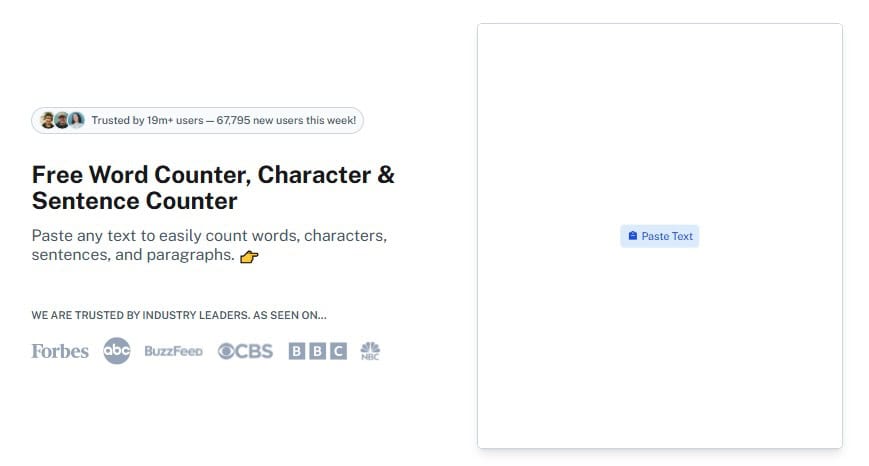
Always keep an eye on your limits. Using a specialized Undetectable AI’s Word Counter helps you stay aware of your progress as you edit.
It allows you to see exactly how much progress you are making in real time, which can be a great motivator when you have a large amount of text to cut.
AI Writing Assistants
An AI can act as a tireless editor. If you have a rambling paragraph, you can use the AI Paragraph Rewriter to generate a cleaner, tighter version of your argument.
This is perfect for moments when you have followed the manual steps but still need to shave off those final 100 words to meet a strict deadline.
How Undetectable AI Can Help Improve Essay Clarity
When you are deep in the editing process, it is easy to lose perspective. You might cut so much that your essay starts to feel like a collection of bullet points rather than a cohesive argument. This is where a high level AI assistant can save your draft.
Rewrite Sentences to Be More Concise
Undetectable AI can take your wordy, academic sentences and restructure them for maximum impact.
It looks for the “core” of your sentence and removes the unnecessary scaffolding around it, helping you hit your word count goals without sacrificing the quality of your ideas.
Remove Repetitive AI Patterns
If you have used AI to help generate your initial draft, it might be filled with predictable, “symmetrical” patterns that are easy for detectors to spot.
According to research on AI detection, search engines and academic institutions look for these robotic rhythms. Undetectable AI breaks those patterns, making your writing more natural.
Improve Flow Without Losing Meaning
The biggest risk of shortening an essay is losing the logical connection between paragraphs.
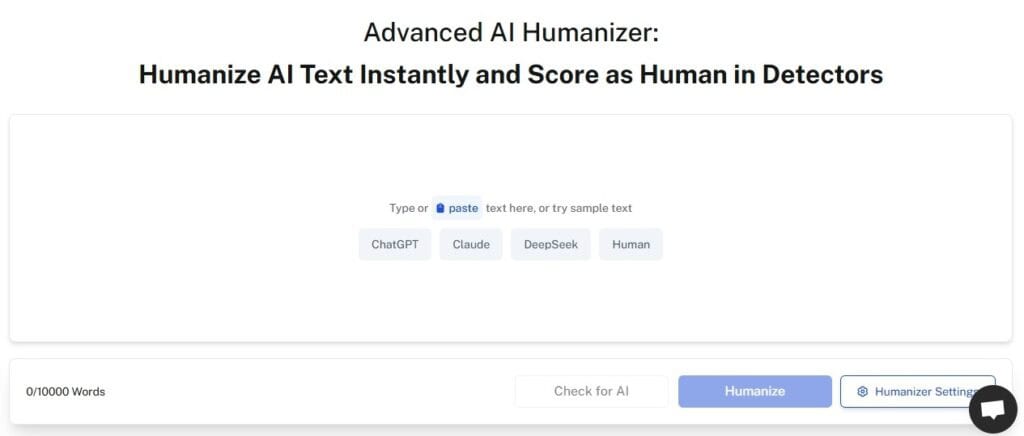
By using our AI Humanizer, you can ensure that your trimmed essay flows smoothly. It weaves your remaining points into a fluid narrative that sounds like it was written by a human expert, maintaining the “soul” of your argument even as you cut the word count.
Maintain a Natural Writing Style
The goal is to sound like a student or a professional, not a dictionary. Undetectable AI helps you maintain a consistent, natural voice throughout your essay.
It ensures that your vocabulary choices remain appropriate for your audience while keeping your prose lean and effective.
Mistakes to Avoid When Cutting Down an Essay
Shortening is an art, and if you chip away too much, you can ruin the “statue.” Avoid these common editing pitfalls.
- Removing Important Evidence: Never cut a piece of data just to save words. If the evidence is central to your argument, find a way to phrase it more concisely instead of deleting it.
- Cutting Too Much Context: If you remove the background information entirely, your reader will be lost. Ensure you still have the “who, what, when, where, and why” in your introduction.
- Losing Logical Flow Between Paragraphs: When you delete sentences, the transition between ideas can become jarring. Always reread the “join” between paragraphs to ensure they still connect logically.
- Overediting the Original Message: If you shorten a sentence so much that it no longer says what you meant it to say, you have gone too far. Accuracy is always more important than word count.
Start using our AI Detector and Humanizer in the widget below!
FAQs
Is it okay to use AI to shorten my essay?
Yes, as long as you use it as an editing assistant. Using AI to help you find concise ways to express your own ideas is a great way to learn better writing habits. Just ensure the final voice is still yours.
Can I shorten my essay by just changing the font or margins?
No. Academic institutions and professional bodies look at the word count, not the page count. Changing the “visuals” of the essay will not help you meet a strict word limit requirement.
What is the “10 percent rule” in essay writing?
Most professors allow for a 10 percent margin on either side of the word count. If your limit is 1,000 words, you can usually submit between 900 and 1,100 words without penalty. However, always check your specific guidelines first.
Conclusion
Learning how to shorten an essay is one of the most valuable skills you can develop as a writer. It forces you to look at your work with a critical eye, prioritizing clarity and impact over length and fluff.
By following a structured process—identifying your main argument, removing redundancies, and using strong verbs. You can transform a rambling draft into a punchy, persuasive piece of writing.
Remember that every word in your essay should have a job to do. If it isn’t helping your argument, it is getting in the way. With the right mix of manual editing and smart AI tools, you can meet any word count limit while making your voice stronger than ever.
Trimming your essay is not about losing your ideas; it is about making them clearer for the world to see.
Use Undetectable AI to quickly tighten your essays, remove unnecessary words, and keep every sentence clear, strong, and purposeful.