
Saggi universitari sono tra i compiti più difficili che dovrai svolgere, non perché non hai idee pronte, ma perché ci si aspetta che tu sviluppi un singolo pensiero in mille parole.
Quindi inizi a trasformare “usare” in “utilizzare” e prima che te ne accorga, stai sostituendo “perché” con “a causa del fatto che”.”
Congratulazioni! Hai appena scoperto la circonlocuzione, non una parola vuota, ma l'antica arte di scrivere qualcosa nel modo più lungo possibile (accettabile da un professore universitario).
Tuttavia, a differenza dell'uso eccessivo di aggettivi, la circonlocuzione non è solo qualcosa che gli studenti fanno quando cercano affannosamente di aggiungere più parole.
È anche un espediente retorico intenzionale che molti scrittori e politici utilizzano spesso.
Sometimes it’s intentional and clever. Other times, it’s accidental and makes your writing sound like a Terms and Conditions agreement.
This guide will help you understand what circumlocution actually is, when it’s useful, and how to avoid accidentally turning your prose into a bureaucratic nightmare.
Punti di forza
-
Circonlocuzione significa usare più parole del necessario per esprimere un'idea.
-
Può essere un espediente letterario intenzionale o un errore di scrittura involontario.
-
È normale nel linguaggio quotidiano quando dimentichiamo le parole o cerchiamo di essere educati.
-
È utile per la scrittura creativa, la diplomazia e l'enfasi.
-
È problematico quando rende la scrittura poco chiara o pretenziosa.
-
Strumenti come i rilevatori di IA possono aiutare a identificare frasi eccessivamente complesse.
Che cos'è la circonlocuzione?
La circonlocuzione può servire a vari scopi oltre ad aggiungere parole extra.
Definizione di circonlocuzione
La circonlocuzione è l'uso di molte parole quando ne basterebbero poche.
It’s talking around a point instead of getting straight to it. The word itself comes from Latino: “circum” (around) and “locutio” (speech).
Non preoccupatevi più che l'intelligenza artificiale rilevi i vostri messaggi. Undetectable AI Può aiutarvi:
- Fate apparire la vostra scrittura assistita dall'intelligenza artificiale simile all'uomo.
- Bypass tutti i principali strumenti di rilevamento dell'intelligenza artificiale con un solo clic.
- Utilizzo AI in modo sicuro e con fiducia a scuola e al lavoro.
So, quite literally, it means “talking around.”
Think of it like taking the scenic route when you could’ve just driven straight down Main Street.
Sometimes the scenic route is beautiful and worth it, while other times you’re just wasting gas.
Nella retorica e nella scrittura, la circonlocuzione può essere intenzionale o accidentale.
Intentional circumlocution serves a purpose: maybe you’re being tactful, creating a specific mood, or emphasizing something through elaboration. Accidental circumlocution just makes your writing bloated.
Esempi di circonlocuzione
Let’s look at some real examples to see how this works in practice.
Esempio 1: Il conteggio delle parole esteso
- Circonlocuzione: “In today’s modern society, we find ourselves in a position where we must consider the fact that…”
- Diretto: “Today, we must consider that…”
Esempio 2: Linguaggio aziendale
- Circonlocuzione: “We are currently experiencing a temporary suspension of normal operational activities.”
- Diretto: “We’re closed right now.”
Esempio 3: Circonlocuzione eufemistica
- Circonlocuzione: “He’s been let go as part of a workforce optimization initiative.”
- Diretto: “He was fired.”
Esempio 4: Circospizione letteraria (intenzionale)
- Circonlocuzione: “The bright celestial body which illuminates our days and warms our planet.”
- Diretto: “The sun.”
Notice how the former example actually sounds kind of nice? That’s because it’s using circumlocution as a stylistic choice.
The others just sound like someone’s trying too hard.
Perché le persone usano la circonlocuzione

Le persone usano la circonlocuzione per vari motivi, e non tutti sono negativi.
Understanding the motivation helps you decide when it’s appropriate.
- Cortesia e tatto: Sometimes being direct is rude. “Your idea won’t work” is less tactful than “I wonder if we might consider some alternative approaches.” The second version is circumlocution, but it’s also just… nicer.
- Enfasi e drammaticitàGli scrittori usano le circonlocuzioni per rallentare i lettori e attirare la loro attenzione. Quando Shakespeare scrive “the undiscovered country from whose bourn no traveler returns” instead of just “death,” he’s creating atmosphere.
- Dimenticare le parole: This one’s relatable. Ever called something “that round thing you use to eat soup” because your brain blanked on the word “spoon?” That’s circumlocution born from necessity.
- Sembrare intelligenti: This is the dangerous one. People often think that more words equals more intelligence. It typically doesn’t. Your college professor can smell those attempts from a mile away.
- Evitare le responsabilità: Politicians and corporations love this one. “Mistakes were made” is a circumlocution that avoids saying “I made a mistake.”
- Creare umorismo: Comedians use absurdly roundabout descriptions all the time. It’s funny to call a cat “a small, fluffy, judgmental mammal that occasionally tolerates your presence.”
Come la circonlocuzione si manifesta nel linguaggio quotidiano
Probabilmente usi la circonlocuzione ogni giorno senza rendertene conto.
Here’s where it commonly appears:
- When You Can’t Remember a Word: “Can you hand me that thing that… you know… the thing that makes the bread brown and hot?” You mean the toaster. Your brain knows you mean the toaster. But in the moment, “thing that makes bread brown and hot” is all you’ve got.
- In situazioni imbarazzanti: “I was wondering if perhaps you might possibly consider the option of maybe turning down the volume just a little bit?” Translation: “Please turn that down.”
- Quando si danno cattive notizie: Nobody says “Your dog died.” They say, “I’m so sorry, but Fluffy has passed away,” or “is no longer with us,” or “crossed the rainbow bridge.” These are all circumlocutions that soften reality.
- Nel servizio clienti: “I’m afraid that item is currently unavailable” sounds better than “We don’t have it.” It means the same thing, but the roundabout version feels more professional.
- Quando ci si vanta (ma si cerca di non farlo): “I was fortunate enough to receive recognition for my modest contributions to the project,” beats “I won an award,” but just barely. This is circumlocution disguised as humility.
La cosa fondamentale da capire è che spesso è perfettamente accettabile usare espressioni circostanziate nella vita quotidiana.
We’re social creatures, and sometimes taking the long way around makes communication smoother.
Tipi di circonlocuzione
Circumlocution isn’t one-size-fits-all.
Esistono diverse varietà e riconoscerle ti aiuta a utilizzare questo dispositivo in modo più efficace.
- Circospizione eufemistica: This is when you use roundabout language to avoid saying something uncomfortable. “Passed away” instead of “died.” “Let go” instead of “fired.” “Pre-owned” instead of “used.” These are all euphemisms achieved through circumlocution.
- Perifrasi: This is the fancy term for describing something by its characteristics instead of using its name. “The Bard of Avon” for Shakespeare. “The Big Apple” for New York. “The beautiful game” for soccer. It adds color to your writing.
- Pleonasmo: Si tratta di una circonlocuzione ridondante, in cui si dire la stessa cosa due volte with different words. “Free gift.” “Past history.” “Future plans.” “End result.” Each of these could lose a word without losing meaning.
- Verbiage: This is just straight-up wordiness. Unnecessary filler that doesn’t add meaning or style. “At this point in time” instead of “now.” “In spite of the fact that” instead of “although.” This is the type you want to avoid.
- Tautologia: Similar to pleonasm, but more to do with logic. It’s saying the same thing in different words within the same statement. “It is what it is” is a tautology. So is “either it will rain or it won’t rain.” Technically true, but completely unhelpful.
Circumlocuzione nella letteratura e nella narrazione
Writers use circumlocution deliberately all the time, and when done well, it’s actually pretty great.
- Creare atmosfera: Gothic writers love circumlocution. Instead of saying “the house was scary,” they’ll spend a paragraph describing “the looming edifice with its darkened windows that seemed to watch like malevolent eyes.” That’s circumlocution at its finest.
- Voce del personaggio: Some characters talk in circles. It reveals personality. A nervous character might say, “Well, I mean, I was thinking that maybe, if you’re not busy, we could possibly…” instead of just asking someone out. That circumlocution says something about who they are.
- Poesia e kenning: Old English poetry used kennings, which are basically poetic circumlocutions. “Whale-road” for ocean. “Sky-candle” for sun. “Battle-sweat” for blood. These create imagery while being technically roundabout.
- Mistero e rivelazione: Sometimes authors use circumlocution to delay revealing information. They’ll describe something in a roundabout way to build suspense before finally naming it, keeping readers engaged.
- Satira e commento sociale: Writers use excessive circumlocution to mock bureaucratic language or pretentious speech. George Orwell did this brilliantly in his essay “La politica e la lingua inglese."
The common thread? In literature, circumlocution serves the story. It’s not accidental wordiness but a choice that enhances meaning, mood, or character.
Come identificare la circonlocuzione in una frase
Individuare le circonlocuzioni è più facile una volta che sai cosa cercare.
Ecco i segnali rivelatori:
- Frasi inutilmente complesse: If you can replace a phrase with a single word without losing meaning, that’s probably circumlocution. “At this point in time” becomes “now.” “Due to the fact that” becomes “because.”
- Sovraccarico della voce passiva: “It has been decided that changes will be made” is both passive and circumlocutionary. “We decided to make changes” is cleaner.
- Modificatori ridondanti: “Past experience,” “future plans,” “completely unanimous,” and “end result” all contain unnecessary words. The modifier doesn’t add information.
- Nominalizzazioni: Questo è quando trasformi un verbo semplice in un sostantivo. “Make a decision” instead of “decide.” “Give consideration to” instead of “consider.” “Reach a conclusion” instead of “conclude.”
- Stack linguistici di copertura: One hedge is fine. Multiple hedges become circumlocution. “I think that it might possibly be the case that perhaps we should consider maybe changing this,” is hedging taken too far.
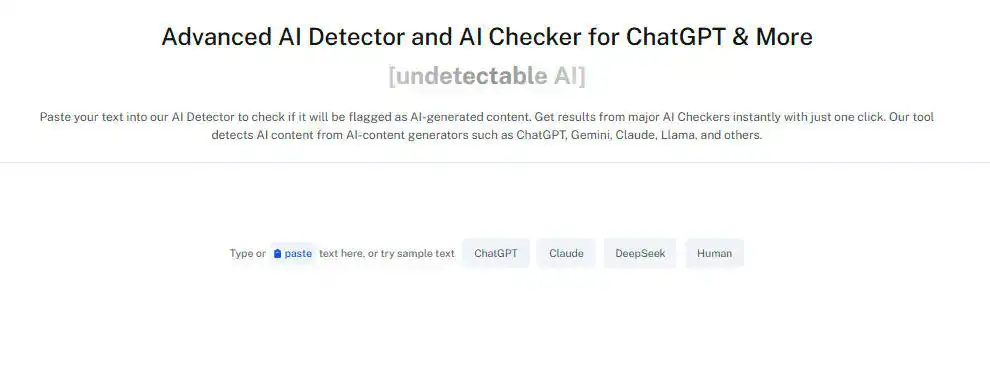
Here’s where AI tools can help. Undetectable AI’s Rivelatore AI è progettato per segnalare frasi eccessivamente meccaniche o inutilmente complesse.
While it’s primarily used to identify AI-generated text, it’s also surprisingly good at catching accidental circumlocution.
Lo strumento evidenzia le sezioni in cui la tua scrittura è troppo stereotipata o artificialmente complessa, che spesso si sovrappongono a schemi circonlocuzionali.
Se il tuo rilevatore segnala una sezione, chiediti: sto davvero comunicando qualcosa qui, o sto solo riempiendo spazio? Potrebbe essere più semplice? La complessità ha uno scopo?
Errori comuni commessi dagli studenti
Tutti coloro che imparano a scrivere commettono questi errori di circonlocuzione. Riconoscerli è il primo passo per correggerli.
- Confondere la lunghezza con la qualità: New writers often think that more words equal better writing. They’ll write “utilize” instead of “use” and feel sophisticated. They’re wrong. Good writing is clear writing.
- Spiegare eccessivamente concetti semplici: You don’t need to say “the activity of running, which involves moving your legs rapidly in a forward motion.” Just say “running.” Your readers know what running is.
- Abuso del thesaurus: Using a thesaurus is fine. Using it to replace every simple word with a complex synonym creates unnatural circumlocution. Nobody “perambulates” to the store. They walk.
- Riempimento per conteggio parole: We get it. The essay needs to be 2,000 words, and you’ve got 1,600. But padding with circumlocution makes your writing worse, not longer. Aggiungi contenuto effettivo invece.
- Imitare male la scrittura accademicaLa scrittura accademica utilizza strutture più complesse, ma una buona scrittura accademica è comunque precisa. Una cattiva scrittura accademica è solo un modo di dire travestito da linguaggio accademico.
- Dimenticare il proprio pubblico: Sometimes circumlocution is appropriate for your audience. Sometimes it’s not. Writing a children’s book? Keep it simple. Writing legal documents? Some circumlocution is actually expected. Know your context.
- Non leggere ad alta voce: Circumlocution sounds even worse when you read it aloud. Your ear catches what your eye misses. If you stumble reading your own sentence, it’s probably too convoluted.
Come usare la circonlocuzione in modo mirato nella scrittura
Okay, so we’ve established that circumlocution isn’t always a bad thing.
Here’s how to use it intentionally and effectively.
- Per lo sviluppo del personaggio: Give your verbose characters appropriately roundabout dialogue. A pretentious academic might say “I find myself unable to concur with your assessment” instead of “I disagree.” That’s characterization.
- Creare ritmoA volte la versione più lunga suona meglio. La poesia e la prosa letteraria spesso privilegiano il suono rispetto alla brevità. Se la circonlocuzione crea il ritmo che desideri, mantienila.
- Per un impatto emotivo: Delaying the point can build tension. Horror writers do this constantly. They’ll describe something scary in elaborate, long-winded terms before revealing what it actually is.
- In dialogo per il realismo: People don’t always speak efficiently. We ramble. We hedge. We talk around things. Realistic dialogue includes some circumlocution.
- Enfatizzare attraverso la ripetizione: Saying something in multiple ways can bring home its importance. Political speeches use this technique. “We shall fight on the beaches, we shall fight on the landing grounds, we shall fight in the fields…” You get it.
- Quando essere diplomatici: Professional and formal contexts often require diplomatic language. “We’re pursuing other candidates” is more tactful than “You didn’t get the job.”
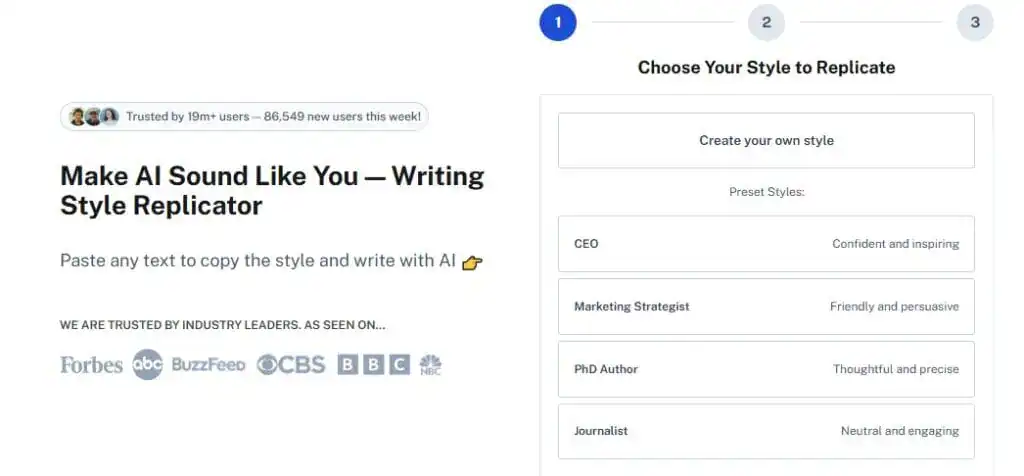
Tools can help you experiment here. Undetectable AI’s Writing Style Replicator lets you try different approaches to the same sentence.
È possibile confrontare una versione diretta con una versione più elaborata e circonlocutoria e vedere quale delle due soddisfa meglio il proprio scopo.
Forse la formulazione indiretta aggiunge davvero eleganza. O forse suona solo pretenziosa. Lo strumento ti aiuta a confrontare le opzioni.
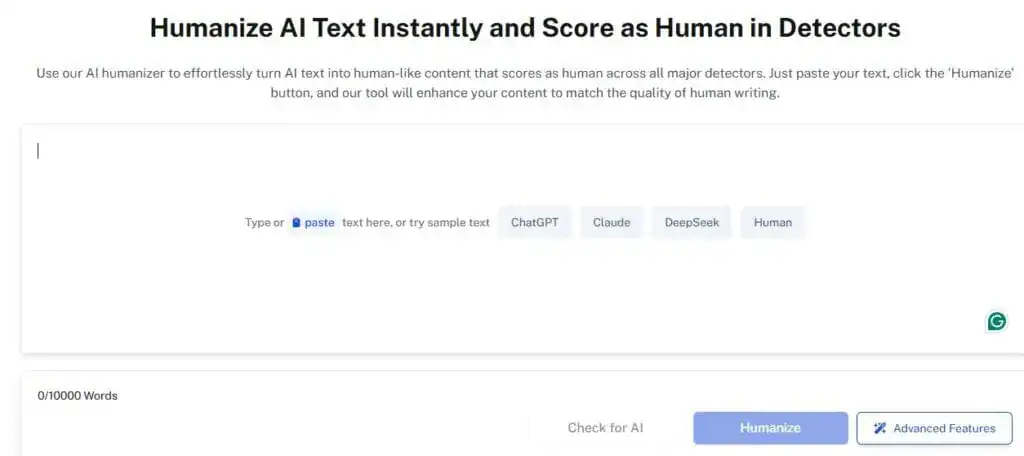
Once you’ve drafted with intentional circumlocution, Undetectable AI’s Umanizzatore AI diventa inestimabile.
Perfeziona la tua scrittura evitando circonlocuzioni imbarazzanti o forzate, pur conservando i casi intenzionali.
The humanizer distinguishes between “elaborately descriptive” and “unnecessarily wordy,” helping you strike the right balance.
It’s particularly good at identifying parts where circumlocution feels robotic rather than natural.
La chiave è essere determinati. Valuta se qualcosa è utile al tuo scopo o se stai semplicemente evitando di arrivare al punto.
Provate il nostro AI Detector e Humanizer proprio qui sotto!
Niente più vibrazioni verbose
Circumlocution gets a bad rap, but it’s not inherently evil.
Like most writing techniques, it’s all about context and intention.
Riempire il tuo saggio per raggiungere un certo numero di parole, usare un linguaggio aziendale che oscura il significato o abusare del thesaurus sono tutti esempi di cattiva circonlocuzione.
Una circonlocuzione ponderata è diversa. Aggiunge personalità ai personaggi, crea atmosfera nelle descrizioni e consente di essere diplomatici quando la franchezza sarebbe crudele.
Le circonlocuzioni utili servono al lettore. Le circonlocuzioni inutili servono solo ad aumentare il numero di parole.
If you’re serious about improving your writing and learning to use techniques like circumlocution effectively, AI non rilevabile offre una suite completa di strumenti utili.
Il rilevatore AI identifica le frasi complesse, il replicatore dello stile di scrittura consente di sperimentare approcci diversi e l'umanizzatore AI perfeziona il tutto trasformandolo in una prosa naturale e coinvolgente.
Whether you’re working on an essay, a story, or professional content, these tools help you make intentional choices rather than accidental mistakes.
Now go forth and be deliberately wordy when it serves you. And delightfully concise when it doesn’t.