
Vi ricordate quando la tecnologia d'avanguardia significava floppy disk e internet dial-up? Oggi abbiamo algoritmi avanzati di intelligenza artificiale in grado di elaborare enormi quantità di dati in pochi secondi.
I progressi dell'intelligenza artificiale hanno ridisegnato il modo in cui ci approcciamo alle informazioni, consentendoci di ottenere risposte istantanee e precise a quasi tutte le domande.
AI systems, while powerful, still rely on the precision of our inputs. Ask the wrong question or be too vague, and you might end up with confusing or irrelevant results.
The key to unlocking AI’s potential lies in knowing how to ask the right questions—questions that tap into its vast knowledge base and algorithms effectively.
In this guide, we’re diving deep into how to engage with AI like a pro.
Whether you’re tackling complex research or solving a technical issue, understanding how to frame your questions can make all the difference in getting optimal answers from AI.
Let’s jump in and explore the art of questioning AI.
Capire come l'intelligenza artificiale elabora le domande
First things first, let’s peek under the hood of AI and see what makes it tick when it comes to processing our questions.
Imagine AI as a super-smart (but very literal-minded) friend. It doesn’t benefit from context clues, body language, or shared experiences that we rely on in human conversations.
Instead, it’s working with pure language—the words you type in.
Non preoccupatevi più che l'intelligenza artificiale rilevi i vostri messaggi. Undetectable AI Può aiutarvi:
- Fate apparire la vostra scrittura assistita dall'intelligenza artificiale simile all'uomo.
- Bypass tutti i principali strumenti di rilevamento dell'intelligenza artificiale con un solo clic.
- Utilizzo AI in modo sicuro e con fiducia a scuola e al lavoro.
When you ask a question, AI doesn’t just look up the answer in some giant digital encyclopedia.
Analizza invece la vostra domanda, la scompone in componenti chiave e poi utilizza i suoi vasti dati di addestramento per generare una risposta that best fits what it thinks you’re asking.
It’s like if you asked your friend, “What’s the best way to make a sandwich?”.
Prima di rispondere, potrebbero considerare ciò che sanno sulle vostre preferenze alimentari, sulle vostre abilità culinarie e persino sul contenuto del vostro frigorifero.
AI, on the other hand, will look at the words “best,” “way,” “make,” and “sandwich,” and then generate an answer based on general information about sandwich-making techniques.
That’s why being clear and specific in your questions is so crucial. The more precise you are, the better AI can understand what you’re really asking and provide an accurate, helpful answer.
Modi efficaci per porre all'intelligenza artificiale la domanda giusta
Now that we know how AI thinks, let’s talk about how to speak its language. Don’t worry, you won’t need to learn binary code or anything like that.
It’s all about structuring your questions in a way that AI can easily understand and respond to, a.k.a, scrivere i migliori suggerimenti.
Domande di struttura per la chiarezza
Considerate la vostra domanda come un mini-saggio. Dovrebbe avere un inizio, una parte centrale e una fine ben definiti. Iniziate con l'argomento principale, aggiungete il contesto necessario e poi ponete la vostra domanda specifica.
For example, instead of asking, “What about climate change?” try something like:
“Regarding the issue of climate change, what are the three most significant impacts it’s expected to have on global agriculture in the next 50 years?”
See the difference? The second question gives AI a clear roadmap of what you’re looking for, making it much easier to provide a relevant and detailed answer.
Usate un linguaggio preciso per ottenere risultati migliori
Remember that literal-minded friend we talked about earlier? That’s your AI. It doesn’t understand nuance or implied meaning, so you need to be as precise as possible.
Instead of asking, “How do I fix my car?” try, “What are the step-by-step instructions for replacing the air filter in a 2015 Toyota Camry?”
Più siete specifici, più la risposta sarà specifica (e utile).
Domande su misura per soddisfare i risultati desiderati
Think about what kind of answer you’re looking for. Do you want a brief overview? A detailed explanation? A list of steps? A comparison?
- Se volete un elenco: “List five common causes of headaches.”
- Se volete un confronto: “Compare and contrast the benefits of yoga and weightlifting for overall fitness.”
- Se volete una spiegazione dettagliata: “Explain in detail how photosynthesis works in plants.”
By specifying the format you want, you’re more likely to get an answer that meets your needs.
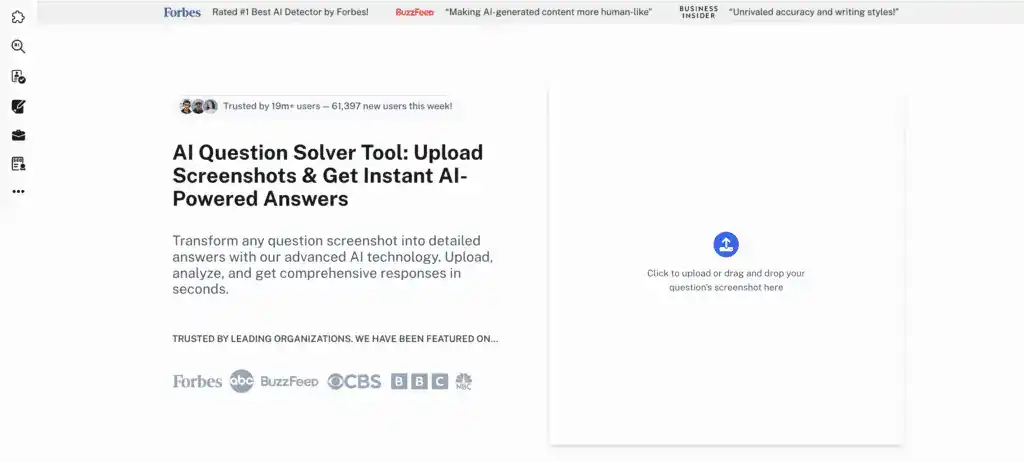
If you want instant, clear answers without wrestling with prompt structure, try using AI Question Solver.
È sufficiente inserire la domanda per ottenere una risposta diretta e accurata, senza bisogno di alcuna messa a punto.
Come porre domande all'intelligenza artificiale sui documenti caricati
Quando OpenAI ha introdotto per la prima volta la capacità di ChatGPT di accettare il caricamento di documenti, è stata una svolta epocale.
Improvvisamente, gli utenti potevano andare oltre le semplici domande e risposte e iniziare a interagire con interi file, sia per un'analisi dettagliata che per estrarre informazioni chiave.
Ora, supponiamo che abbiate sfruttato questa funzione e caricato un documento, sperando di ottenere risposte chiare. Qui le cose si fanno davvero interessanti!
Quando si pongono domande relative a un documento specifico, iniziare sempre facendo riferimento ad esso.
For example, try something like: “Based on the annual report I uploaded, what were the company’s top three revenue sources last year?”
If you need specific details, precision is your best friend. Frame your question to direct AI to a particular part of the document, such as: “In the executive summary of the uploaded business plan, what is the projected growth rate for the next five years?”
You can also ask AI to compare different sections of the document: “Compare the sales figures for Q1 and Q4 as presented in the financial statement I’ve uploaded.”
Always remember, AI can only interpret the information you’ve provided.
If the response seems off, double-check the document you’ve uploaded and ensure your question is clear and focused on relevant content.
Esempi di buone e cattive domande sull'intelligenza artificiale
Alright, let’s put all this into practice with some real-world examples. Think of this as a “What Not to Wear” for AI questions.
We’ll look at some fashion disasters (aka bad questions) and then give them a stylish makeover.
Cosa succede quando si fanno domande vaghe
Domanda cattiva: “Tell me about dogs.”
This question is as vague as they come. It’s like walking into a library and asking for “a book.” Where does the librarian even start?
When you ask AI a question this broad, you’re likely to get a generic, encyclopedic response that might touch on dog breeds, care, history, and behavior – but probably won’t give you any particularly useful or interesting information.
Trasformare le cattive domande in domande efficaci
Buona domanda: “What are the top 5 low-maintenance dog breeds for first-time owners living in apartments?”
Now we’re talking! This question gives AI a clear direction. It specifies:
- Il numero di articoli desiderati (i primi 5)
- Una caratteristica specifica (bassa manutenzione)
- Un gruppo specifico (primi proprietari)
- Una situazione abitativa particolare (appartamenti)
Con questo livello di dettaglio, l'IA può fornire una risposta molto più mirata e utile.
Let’s try another one:
Brutta domanda: “How do I lose weight?”
Again, this is too broad. Everyone’s weight loss journey is different, and there are countless approaches to losing weight.
Buona domanda: “Create a weekly meal plan and exercise routine for a 35-year-old office worker aiming to lose 20 pounds in 3 months through a combination of diet and cardio exercises.”
Questa domanda fornisce all'IA:
- L'obiettivo specifico (perdere 20 chili)
- Un orizzonte temporale (3 mesi)
- Informazioni personali rilevanti (impiegato di 35 anni)
- Il tipo di piano necessario (piano alimentare e routine di esercizi)
- Il metodo preferito (dieta ed esercizi cardio)
Grazie a queste informazioni, l'IA può generare una risposta molto più personalizzata e perseguibile.
Il ruolo del contesto nella domanda di IA

Il contesto è il re when it comes to getting the best out of AI. Think of it as giving AI the backstory it needs to understand where you’re coming from and what you really want to know.
For example, let’s say you’re planning a trip to Japan. Instead of asking, “What should I do in Japan?” try something like:
“I’m planning a 10-day trip to Japan in October. I’m interested in traditional culture, food, and nature, but I’m not into big crowds or nightlife. I’ll be starting in Tokyo and ending in Kyoto. What itinerary would you suggest?”
Questa domanda fornisce all'IA:
- La durata del viaggio
- Il periodo dell'anno
- I vostri interessi
- Cose da evitare
- I punti di partenza e di arrivo
In questo contesto, l'intelligenza artificiale può fornire una risposta molto più personalizzata e utile, suggerendo attività specifiche, destinazioni e persino consigli di viaggio che corrispondono alle tue preferenze.
Suggerimenti per evitare gli errori più comuni quando si chiede l'AI
Even with the best intentions, it’s easy to fall into some common pitfalls when asking AI questions.
Ecco alcuni consigli da tenere a mente:
- Evitare di porre più domande contemporaneamente. AI might focus on one and ignore the others. If you have multiple questions, it’s better to ask them separately.
- Don’t assume AI knows about current events or very recent developments. Its stored knowledge has a cutoff date, so for very recent information, it’s best to include the context in your question.
- Fate attenzione ai termini ambigui o alle espressioni idiomatiche. AI might misinterpret them. For example, instead of asking, “How can I break the ice at a party?” you might say, “What are some good conversation starters for a social gathering?”
- Don’t expect AI to have personal opinions or preferences. Instead of asking, “What’s the best movie of all time?” try, “What are some critically acclaimed movies from different decades?”
- Evitate di chiedere previsioni sul futuro. AI can provide information about trends or expert projections, but it can’t actually predict the future. Instead of “Who will win the next presidential election?” ask, “What factors typically influence presidential elections?”
Come perfezionare le risposte dell'IA per una maggiore accuratezza
Anche quando si pone una domanda pertinente, l'intelligenza artificiale potrebbe comunque fornire una risposta che appare vaga, incompleta o leggermente fuori luogo.
Per affinare la risposta è necessario sbloccare il pieno potenziale dell'IA, consentendoti di modellare il suo output in qualcosa di più preciso e utile.
Ecco alcuni semplici modi per farlo:
- Identifica ciò che manca e poni una domanda di approfondimento per chiarire la parte che desideri migliorare.
- Aggiungi ulteriori informazioni che l'IA non possedeva, come dettagli sul contesto, vincoli o il tuo obiettivo specifico.
- Chiedi di approfondire o ampliare l'argomento, ad esempio con frasi come “Fornisci altri esempi”, “Spiega passo dopo passo” o “Fornisci dati a sostegno”.”
- Richiedi un confronto se hai bisogno di mettere a confronto due opzioni o concetti.
- Chiedi una versione riformulata o semplificata se la risposta originale ti sembra troppo tecnica o prolissa.
- Esegui la risposta perfezionata tramite Undetectable AI per smussare le formulazioni robotiche e conferire alla risposta finale un flusso naturale, simile a quello umano.
Prendendoti un momento per perfezionare le risposte generate dall'IA, ti assicuri che le informazioni che ricevi siano più chiare, più accurate e realmente in linea con le tue esigenze.
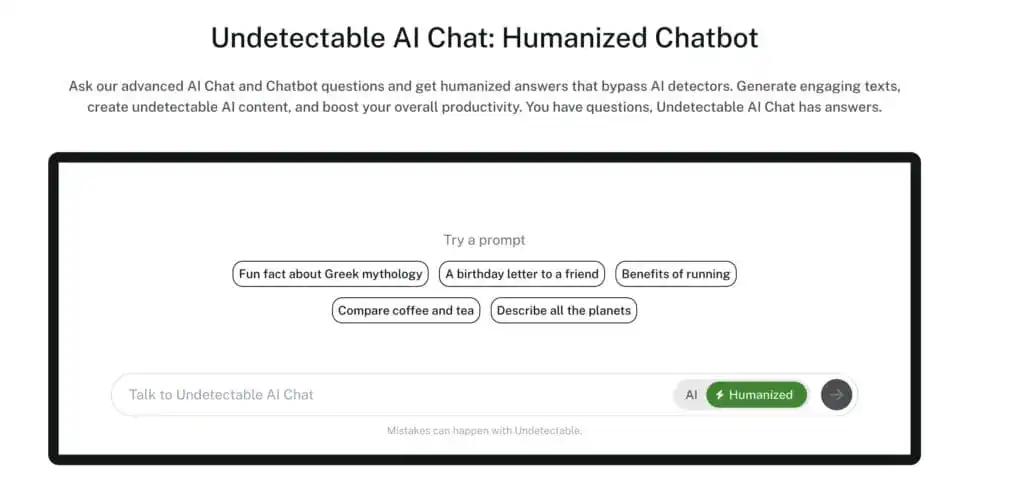
If you’re struggling to get the right results from traditional prompts, Undetectable AI’s AI Chat provides a seamless alternative where you can ask questions in a conversational way.
Questo approccio elimina le congetture dei suggerimenti statici, utilizzando uno scambio simile a quello umano per aiutarti a ottenere risposte più accurate e sfumate con uno sforzo notevolmente inferiore.
Utilizzare gli umanizzatori dell'intelligenza artificiale per garantire risposte accurate
Uno dei modi più intelligenti per migliorare le risposte dell'IA è quello di Umanizzatori di IA-suggerimenti strategici che aiutano a perfezionare le risposte, rendendole più precise e adatte alle vostre esigenze specifiche.
Pensate a come allenare l'intelligenza artificiale a comportarsi come un esperto umano.
Uno strumento potente nel tuo kit di strumenti per porre domande all'IA è Undetectable AI.
Questa tecnologia avanzata sfrutta Elaborazione del linguaggio naturale (NLP**)** techniques to grasp the context and intent behind your questions, leading to more relevant and precise answers.
Inoltre, eccelle nel ridurre l'ambiguità. Riformulando o perfezionando le richieste, Undetectable AI aiuta a eliminare i termini o le frasi ambigue, assicurando che l'intelligenza artificiale generativa comprenda chiaramente la richiesta.
Provatelo subito e sperimentate la differenza in prima persona!
Conclusione
Ecco la guida per padroneggiare l'arte di porre domande all'intelligenza artificiale.
From understanding AI’s nuances to employing advanced techniques like humanizers, you’re now equipped to unlock the full potential of AI in your everyday work.
Ricordate che chiedere all'IA nel modo giusto porta a risposte più nitide e sfumate.
E con strumenti come AI non rilevabileIn questo modo è possibile garantire che i risultati siano il più possibile umani, pur beneficiando dell'efficienza e dell'intelligenza dell'intelligenza artificiale.
Provate queste strategie e scoprirete presto che porre all'intelligenza artificiale le domande giuste può fare la differenza.
Quindi vai avanti, affina le tue domande, interagisci con l'IA e scopri quanto possono essere potenti i tuoi risultati.
Buona interrogazione!