
“This premium organic serum is perfect for your sensitive skin, and it’s made with 100% natural ingredients as labeled clearly on the packaging.”
Does that sentence sound correct to you?
It does, IF you’re in the United States.
But if you’re based in the United Kingdom, the correct spelling would be “labelled” with a double “L”.
But why is that?
Why does the same word have two different spellings?
And which one should you actually use?
Let’s find out.
In this blog, we will show you how to differentiate between labeled and labelled, why the difference exists, which one to use, and what errors you need to watch out for when writing.
Let’s dive in.
Key Takeaways
- Labeled is American English. Labelled is British, Australian, and Canadian.
- Both are correct. Using both in the same document is the mistake you’d want to avoid.
- The double-L follows a real spelling rule, not a typo that stuck around for 200 years. (and nobody corrected it)
- AI writing tools almost always default to labeled, even when writing for a British audience.
- Consistency matters more than which version you pick.
What’s the Difference Between Labelled vs Labeled?
Short answer: Geography.
Labeled is American English. British English is labelled. And it is used throughout the UK, Australia, Canada, New Zealand, and in most of the countries whose educational systems are based on British conventions.
Same verb. Same meaning. Same past tense of “label.” The world has different spellings.


Never Worry About AI Detecting Your Texts Again. Undetectable AI Can Help You:
- Make your AI assisted writing appear human-like.
- Bypass all major AI detection tools with just one click.
- Use AI safely and confidently in school and work.
- Overview and Facts
| Question | Answer |
| Which spelling is correct? | Both |
| Can you use both in one document? | No |
| Is it labeled or labelled in the US? | Labeled |
| Is it labelled or labeled in the UK? | Labelled |
| Is there a difference in meaning? | None |
If you choose one style, you must apply it to the entire family of words to remain professional.
| Base Word | American Style (Single L) | British Style (Double L) |
| Travel | Traveled / Traveling | Travelled / Travelling |
| Cancel | Canceled / Canceling | Cancelled / Cancelling |
| Model | Modeled / Modeling | Modelled / Modelling |
| Quarrel | Quarreled / Quarreling | Quarrelled / Quarrelling |
AI writing tools default to American English data (even when writing for a British audience). But the other British words like “Colour,” “behaviour,” and “organisation.” show up fine.
Why the Spelling Changes
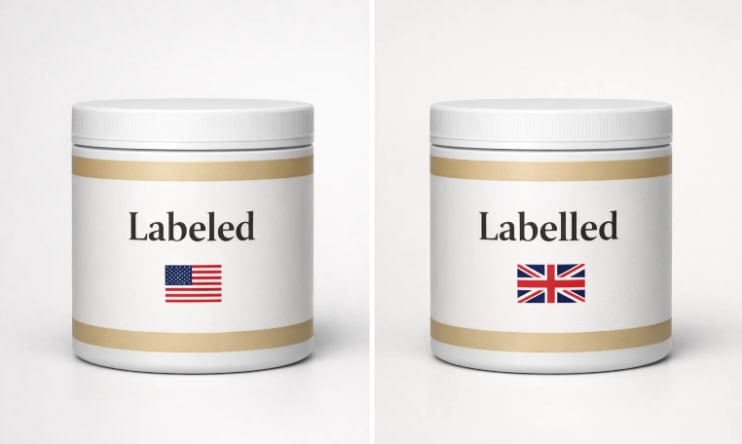
So, how did this difference come about?
Noah Webster was the one who made the first American dictionary in 1828 and simplified British spellings when constructing the American standard. He believed that spelling should be simple and easy to understand.
He changed labelled to labeled.
He also changed:
- colour → color
- honour → honor
- travelled → traveled
These words have clung and been conventional in the US since then.
On the flip side, the British still follow the double-L rule in spellings.
In British English, the rule is “verb-ending vowel + doubled L before a suffix”. Since “Label” ends with E + L. So, in British English, you add -ed to get “labelled.” (But in American English, it’s simply “labeled.”).
This rule applies to all suffixes as well, so you also have “labelling” and “labeller”.
After you become familiar with the pattern, you no longer have to look up each word separately. It will save your time and energy.
When to Use
- Labelled
Labelled = UK, Australia, Canada, or New Zealand audience.
Cambridge Dictionary lists “labelled” as the accepted British spelling. This spelling is used byThe BBC, The Guardian, and the UK’s Food Safety Act in its regulatory text, as well as some Major UK academic journals.
So, if you’re writing for a UK-based audience and use labelled with single L, it’s going to be corrected in the editing process (trust me, it happens every time)
The key here is consistency.
If you use “labelled” in one section and “labeled” in another, it signals that either it was created by multiple sources, or it’s simply an AI draft that wasn’t fully reviewed.
Editors notice first, and then the readers you’re trying so hard to impress.
This is why many writers use Undetectable AI’s AI Humanizer feature to rewrite the AI drafts for better tone, writing consistency, and flow that the reviewers are expecting to see.
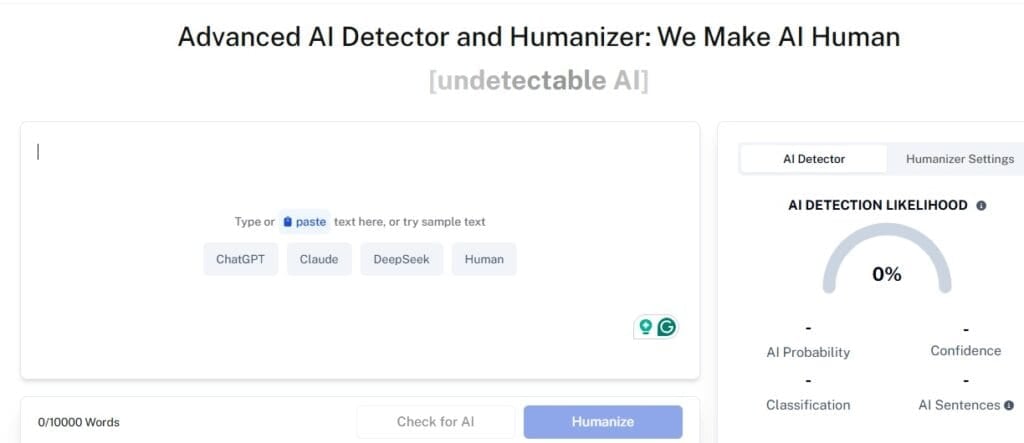
This humanizer will help you sound more native and less robotic, which makes your audience want to read more.
- Labeled
Labeled = American Audience.
This will apply everywhere. Editorial content, marketing copy, academic writing, Product descriptions, Packaging or compliance materials for cross-border markets, social media posts, UI text, legal documents.
Merriam-Webster lists it as standard for Americans. Plus, the Associated Press Stylebook and the Chicago Manual of Style also default to it.
Believe me, no American reader will read “labeled” and think twice because the correct dialect spelling blends easily into the text.
Interestingly, if you look at social media apps or AI tools, they all use “Label” or “Labeled” by default.
For example, see this “AI label” feature on Instagram:
Labelled vs Labeled in Sentences
Seeing both in real sentences makes the pattern easier to hold onto.
With labelled (British English):
- The archivist carefully labelled each folder before filing it.
- All products sold in the UK must be labelled with the country of origin under current trading standards.
- His uncle was publicly labelled as a con artist.
- The boxes were labelled by hand, which took the better part of an afternoon.
- The exhibit cases were labelled in English and Welsh.
With labeled (American English):
- My daughter labeled all the boxes so the crew knows exactly where to put them when they arrive.
- The bottle she gave to her maid was labeled as rat poison.
- In the U.S., products labeled as “organic” must have to meet USDA certification standards.
- Unfortunately, the sample was labeled incorrectly, which led to a delay in the results.
- The tool labeled all the buttons so it’s easier for the new user to navigate without needing a tutorial.
Suppose you’re writing for a UK-based audience, simply swapping “l” isn’t enough. The tone needs to feel British as well.
That’s where you can use the Undetectable AI’s Rewording Tool. It has multiple features that help you in getting the desired tone and style of your content. See the examples below:
- Convert to Formal Tone
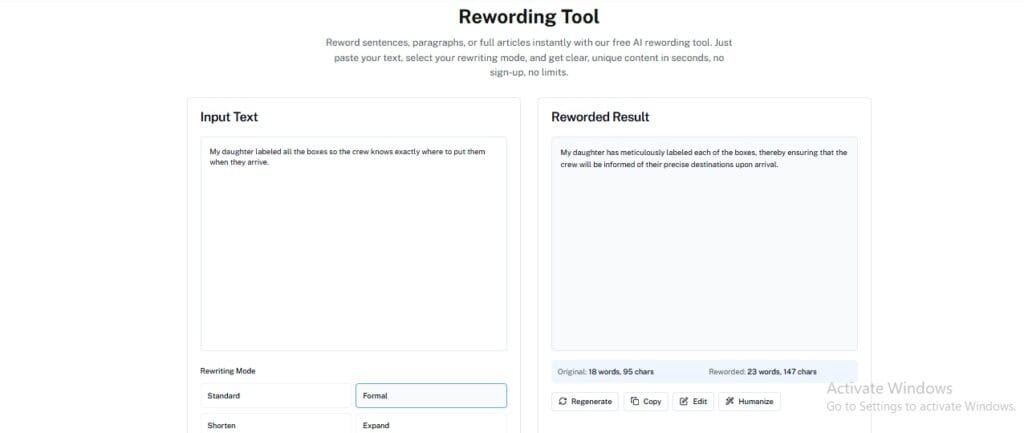
2. Shorten the Text
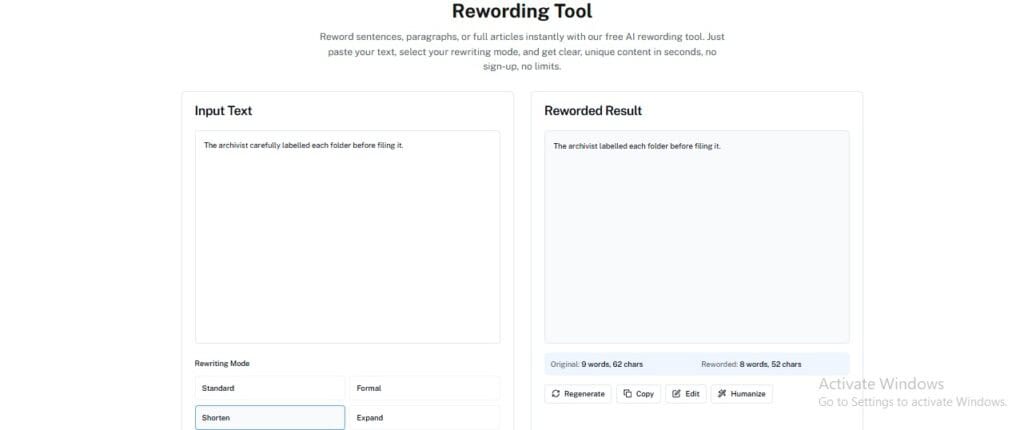
3. Expand the Text
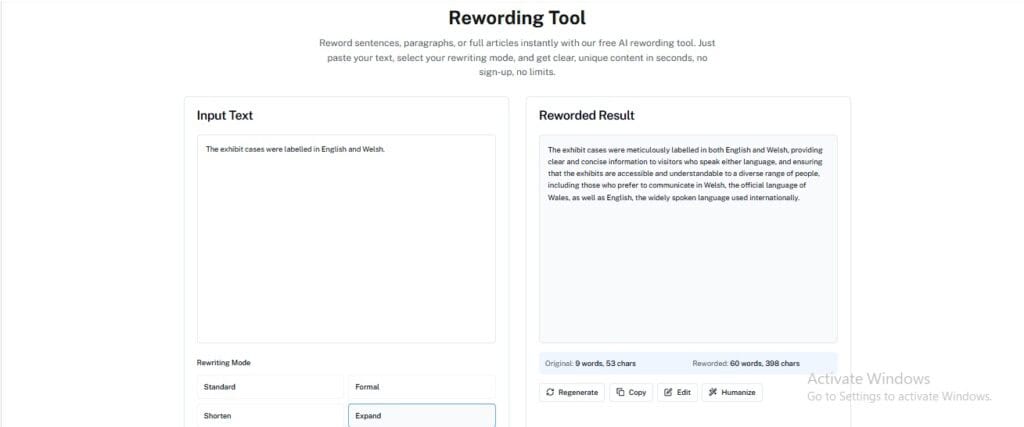
After rewording your sentences, use an AI Detector to ensure the changes haven’t made the text feel choppy or robotic.
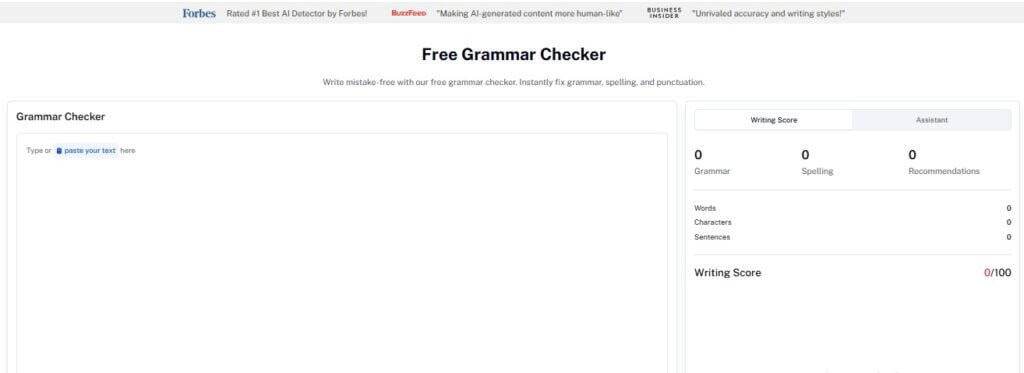
Don’t forget to pass it through the Grammar Checker. After doing so much hard work, you won’t like to drain your credibility by making petty grammar mistakes.
Similar Words with the Same Pattern
The doubling rule applies to all suffixes in British English, as labelled or labeled aren’t the only exceptions here.
Check the other parts of the family in the table below:
| American English | British English |
| traveled | travelled |
| canceled | cancelled |
| modeled | modelled |
| signaled | signalled |
| counseled | counselled |
| fueled | fuelled |
| dialed | dialled |
| labeled | labelled |
Pro Tip: If you are iterating over any document for your native audience, remember to find-and-replace on the -eled suffix in one go.
Common Errors to Watch For
Here are a few commonly occurring errors that you need to watch for:
- Changing the spellings within the same document.
This will happen almost always when an author copies content from someone writing in another dialect (or uses AI to write the draft). It’s going to get noticed when the piece reaches the editor for the final review.
So make sure to scan thoroughly before submitting.
- Auto-correction in MS and Google Docs
It is the most common error that happens all the time. When you are writing in Microsoft Word or Google Docs, these software programs are often set to English (United States) by default (changing labeled or labelled to US English).
Your words will get underlined as a mistake if you use labelled instead of label.
Always make sure that you have the right lingo before typing in your document.
- AI tools write in American English without a warning.
An error that gets bypassed pretty easily, even in AI Tools. And the logic is simple.
AI writing tools pull training data from both American and British corpora. Without a clear regional instruction, models drift between both spellings within the same document, sometimes within the same paragraph.
Tools like Undetectable AI’s Grammar checker can catch these types of mistakes pretty easily. It will save your time and energy.
- Ignoring style guides before writing.
This is the part you should never skip. Even if you’re writing for a British audience, ignoring the style guide can lead to mistakes. Most of the time, academic, corporate, and editorial writing follow strict style guidelines.
A section written in US English can break the pattern for your UK audience.
Always check if there’s a specific guide you need to follow before writing a single word in your document.
Choosing the Right Spelling
Be Straightforward. Don’t think of it as a grammar quiz.
If there’s a style guide you have to follow, then go for it. Otherwise, use the spelling conventions of your audience’s country and stick to it from start to finish.
The most useful habit for writers is to build a pre-submission checklist.
You can refer to this checklist, for instance:
Step 1: Confirm the audience Country/Region
- Is my target audience located in America or another country?
- Is there a style guide that I have to follow? If yes, then which dialect do I have to match my spellings exactly?
(Start with these two questions first before writing a single word in your doc.)
Step 2: Check the tool settings before writing
- Confirm the language setting in Microsoft Word or Google Docs to match the audience.
- In case of using a grammar tool like Grammarly, check its language mode.
Step 3: Run a dialect search before final review
- Press Ctrl + F simultaneously and search for “labeled” and “labelled.” Both spellings should not appear in the same draft. If they do, pick one and replace it with the other throughout.
- Search for “-eled” endings (traveled, canceled, modeled, signaled, fueled, dialed). These follow the same rule.
Step 4: Review AI-generated content separately and check the draft one last time
- If any section of your writing was AI-generated, scan it specifically.
- Does every spelling match with the target audience and what they’d expect to see?
Plus if you’re writing regularly and want to make sure your content reads like it was actually written for your audience, Undetectable AI is worth keeping in your workflow.
Test our AI Detector and Humanizer with the widget below!
Final Thoughts
How to spell labeled or labelled is the question that has been raised for longer than it should be right now.
The fact is that both are acceptable and appear in professional writing on a daily basis. What matters is the situation/context in which they are used. And that’s what a lot of people fail to notice. (and rightfully so)
Because the majority of grammatical guides only discuss the split in the US/UK divide and just leave it at that.
They do not say that the word you are arguing about has been used as “Label or Labeling” in the 800th section of the US FDA regulations. On the other side, the UK Food Standards Agency used the word “labelling” across its regulatory text. Each country has adapted its writing style without question.
In general writing, the stakes are a bit lower. But the idea is pretty much the same.
Choose the version your audience expects. Stick with it consistently. Use labeled or labelled as your final call based on whether you’re writing for a US or UK audience.
Then, concentrate on what really matters: is your writing engaging enough to hold the reader’s interest?
Use Undetectable AI to ensure consistent spelling, refine your writing, and keep your content engaging for any audience.