
There are countless differences in the way English is spoken and written in different parts of the world. The most striking differences are between the American and the British versions of English.
American English tends to follow simpler rules of grammar and spelling, while British, however, is more colloquial.
Learnt or learned is a classic controversy between the two dialects that often confuses English-as-a-Foreign-Language learners. They find themselves questioning if it is lessons learned or learnt, for example, and if both are correct, when do we use which form?
In this article, I will make it very easy for you to understand the difference between the two and know exactly which form to use in what circumstances.
You’ll also find plenty of examples that help you recognize the usage differences.
Let’s dive in.
Key Takeaways
- “Is it learnt or learned?” is a common question for English learners. The quick answer is that both are correct. But their usage differs by geography. American authors prefer to use learned while British authors use learnt.
- Learned as an adjective to describe someone knowledgeable or scholarly remains learned in both American and British English, and you can not use learnt here.
- Learned is the preferred word to use if you write for an international audience. It is a more contemporary version, while learnt was more commonly used in classic literature.
- Several other verbs, such as burn, dream, spell, kneel, etc follow the same rules as learnt or learned. They end with a -t in British form and with an -ed in American form.
What’s the Difference Between Learnt or Learned
Both learnt and learned are grammatically accurate and valid past tense forms of the base verb ‘learn.’
The difference in the usage of the two words is purely geographical. You see, the English language has many recorded differences in the way it is spoken in different parts of the world.
British English and American English, in particular, seem to have a lot of beef (I mean to say there are way too many differences between the two).


Never Worry About AI Detecting Your Texts Again. Undetectable AI Can Help You:
- Make your AI assisted writing appear human-like.
- Bypass all major AI detection tools with just one click.
- Use AI safely and confidently in school and work.
Learned is the standard spelling in American and Canadian English, while learnt is more commonly used in British, Australian, and New Zealand English.
The Only Exception
In most cases, British English would use ‘learnt’ to signify the simple past and past participle forms of the verb learn. Americans use learned for the same.
However, in instances where the word learned (pronounced as two syllables, LER-NED) is used as an adjective to talk about someone knowledgeable, British English also uses the word learned.
You can not say “My Physics professor is a learnt researcher.” It would be grammatically incorrect. The correct way to convey the same would be “My Physics professor is a learned researcher.”
The use of learned as an adjective is outdated, though. We rarely see it in modern pieces of writing simply because there are a lot of other, better adjectives for the same context.
You will, however, encounter it quite often if you read classic literature.
Why Two Spellings Exist
Honestly speaking, no one knows why. There are hundreds of differences in American and British English that just exist, without any concrete reasoning.
I like to believe that Americans want to keep their life easy. Generally, we can turn a verb into its past form by adding -ed to the base form of the verb.
A good chunk of the verbs in English follow this rule, for which they are termed regular verbs.
That is exactly what the Americans do with learn, and with many other verbs.
In contrast, learnt is an irregular verb, i.e., it does not follow the -ed rule to make its past tense and past participle form. Irregular verbs are not predictable. You must know by heart how to use them accurately in different verb forms.
The same happens with learnt.
This difference exists with a lot of other verbs, and here are some of these examples:
| Verb | American English | British English |
| Learnt | Learned | Learnt |
| Dream | Dreamed | Dreamt |
| Burn | Burned | Burnt |
| Kneel | Kneeled | Knelt |
| Spell | Spelled | Spelt |
| Smell | Smelled | Smelt |
| Spill | Spilled | Spilt |
There’s unfortunately not much you can do to know if you’ve used the correct form of the word unless you have the British vs. American differences memorized by heart.
A grammar checker tool, however, can help you cross-check if you have used the correct variation.
Select the form of English you want to go with and run your text through Undetectable AI’s Grammar Checker to fix any unwanted spelling errors. You will eventually get the hang of the accurate use of both verb forms with time.
When Writers Prefer Learned
Since learned is a modern form of expression, writers nowadays prefer to use this version in most of their work.
Any form of communication in American English, and particularly one that’s expected to be read by an international audience, should use learned. This is because American publishing standards have a global reach.
You will see it being used in:
- Research papers
- Business reports
- International publications
- Modern American novels
- Technical manuals
And as we discussed earlier, “learned” also has a secondary meaning as an adjective where it describes formal education.
This alternative use basically reinforces its association with academia, so it makes sense to use this form in all academic and professional contexts.
When Learnt Feels More Appropriate
It’s better for you to go with learnt if your audience is British or other Commonwealth countries, like Australian, New Zealand, South African, etc.
Although learnt is more of an old-fashioned expression, it is more accurate in the British English context.
Learnt was very commonly used in the past. So, if you pick up memoirs from the eighteenth and nineteenth centuries, reflective essays, or fiction rooted in the British voice, you will likely encounter learnt.
You could say there’s a cultural identity in the use of “learnt” because it is written specifically for a British audience.
Like you feel echoes of Dickens, Austen, Woolf in your writing when you use it in place of the more contemporary version, learned.
Learnt vs Learned in Real Sentences
Look at these examples using learnt in the British context, notice how they have a traditional, old-school vibe to them:
- She learnt French at school.
- He had learnt, through years of painstaking effort and quiet observation, that patience was the truest form of wisdom.
- Having learnt of the programme’s cancellation, the organisers immediately began liaising with the centre’s management to minimise disruption to those who had enrolled.
Now, these are the same sentences written in American English:
- She learned French at school.
- He had learned, through years of painstaking effort and quiet observation, that patience was the truest form of wisdom.
- Having learned of the program’s cancellation, the organizers immediately began liaising with the center’s management to minimize disruption to those who had enrolled.
If you haven’t noticed already, there are several other differences in spelling conventions between British and American English that these sentences highlight.
The parallel sentences make the single spelling swap easy to isolate. The British versions use programme, centre, organisers, minimise, but the American versions have program, center, organizers, minimize, etc.
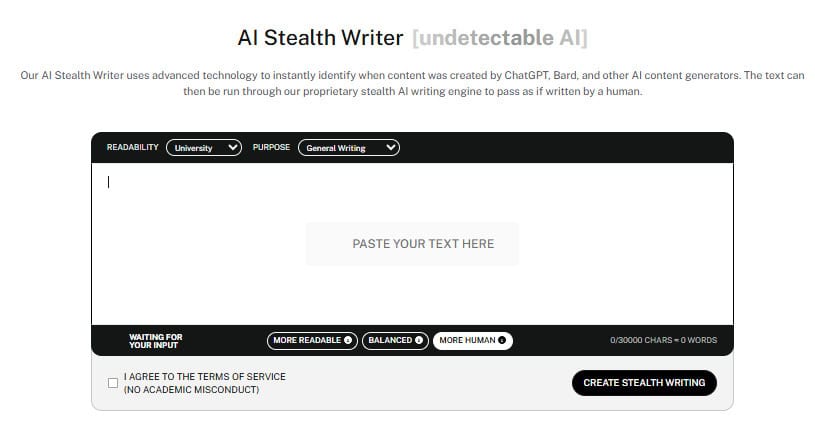
To familiarize yourself with these differences even better, you could use Undetectable AI’s AI Stealth Writer and generate similar texts written in both British and American versions. The tool will also highlight the differences for you to note and learn as you go.
How to Choose with Confidence
As I said, the choice between learnt or learned during writing will become easy for you with practice.
Everytime you want to use the past version of the verb learn, review the audience you are writing it for. If it is specific to British users, go with learnt, but if your audience is American or global, choose learned.
If you’re not sure about your target readership, you could reinforce the differences in the usage of learnt or learned through guided practice exercises.

Undetectable AI’s AI Chatbot will help you with generating different types of exercises through which you can understand when to use which version.
Common Mistakes to Avoid
Whatever dialect you go with, learnt or learned, make sure to stick with it throughout your text. Also, ensure that all other spellings in your writing are consistent with the same version. Either all of them follow the American spell rules, or they follow British rules.
Do not make the mistake of writing learned in one sentence and then colour in the next, or using learnt alongside organize and program.
Always run a quick find-and-replace check for words that we know are different in both variants.
If you use a grammar check, you will sometimes be flagged for using learnt because most grammar check tools are by default set to American English rules.
Make sure your spellchecker’s language is set to match your intended audience.
In both American and British contexts, the use of learned as an adjective, meaning knowledgeable or scholarly, is the same.
Do not make the mistake of swapping in learnt here, a learnt judge is grammatically incorrect in any dialect.
Test your writing through our AI Detector and Humanizer in the widget below!
Final Thoughts
By now, I hope that if you come across someone asking you, “Is learnt or learned correct?” you will have a confident answer.
Practice the use of both verb forms a few times, and you will eventually get their usage really well. The same rules will apply to a lot of other verbs.
And if you use Undetectable AI to create interactive practice exercises for yourself during your English learning, the process will become fun too!
Try out Undetectable AI today!