
Phrases like “not half bad” or “not my first rodeo” don’t sound very positive at first.
But they are, making them perfect examples of litotes, a figure of speech that uses indirect phrasing to express a positive idea.
Intrigued? Or maybe you just need to use litotes in an upcoming paper?
Read on for everything you need to know about how litotes work and how you can start using them more intentionally in your own writing.
TL: DR – Litotes are a literary device used to communicate something positive by phrasing it as a negative. Think phrases like “not a bad idea” or “no small feat.”
You can find them everywhere (in everyday speech, pop culture, and literature), and learning how to use them properly can help your writing sound more natural and polished.
Key Takeaways
- Litotes is a literary device that uses double negatives or the negation of an opposite to express a positive idea through understatement.
- Derived from the Greek word for “simple,” this figure of speech allows writers to communicate ideas with more restraint, irony, or politeness than a direct statement.
- Common everyday examples like “not half bad” or “no small feat” demonstrate how the device emphasizes a point by forcing the reader to fill in the intended meaning.
- Writers use litotes to soften blunt truths, create subtle irony without sounding sarcastic, and maintain a controlled, professional tone in their prose.
- While effective for adding depth and sophistication, the technique should be used sparingly to ensure the writing remains clear and doesn’t become overly repetitive or confusing.
What Are Litotes?
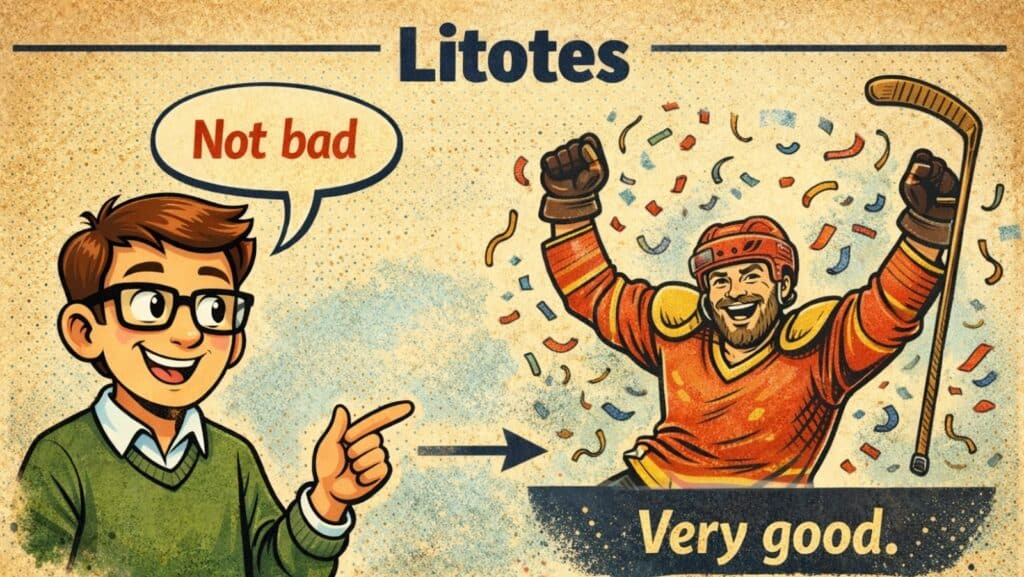
Litotes are a figure of speech that expresses an idea by negating its opposite.
So instead of making a direct positive statement, litotes use a negative statement (often a double negative) to imply a positive meaning.
Litotes Definition
The easiest way to define litotes (pronounced lie tuh teez) is:


Never Worry About AI Detecting Your Texts Again. Undetectable AI Can Help You:
- Make your AI assisted writing appear human-like.
- Bypass all major AI detection tools with just one click.
- Use AI safely and confidently in school and work.
- A form of understatement or a way of expressing something positive by phrasing it as a negative.
The word litotes itself comes from the Greek word meaning “simple” or “plain”, which fits the device perfectly since litotes lean on modest, indirect phrasing.
What makes litotes so tricky, though, is the gap between the literal meaning of the words being said and the intended meaning.
Why? Because on the surface, the words may sound restrained (or even negative), but in context, they usually communicate something positive or affirmative.
This is why litotes can be a bit difficult to understand at first.
Litotes Examples
The easiest way to understand litotes is to see them in action. Once you know what to look for, you’ll start noticing examples of litotes everywhere.
For example, we use litotes all the time in everyday language, often without thinking about it.
Some of the most common examples in everyday speech include:
- “Not half bad” → means good.
- “This isn’t rocket science” → means it’s simple.
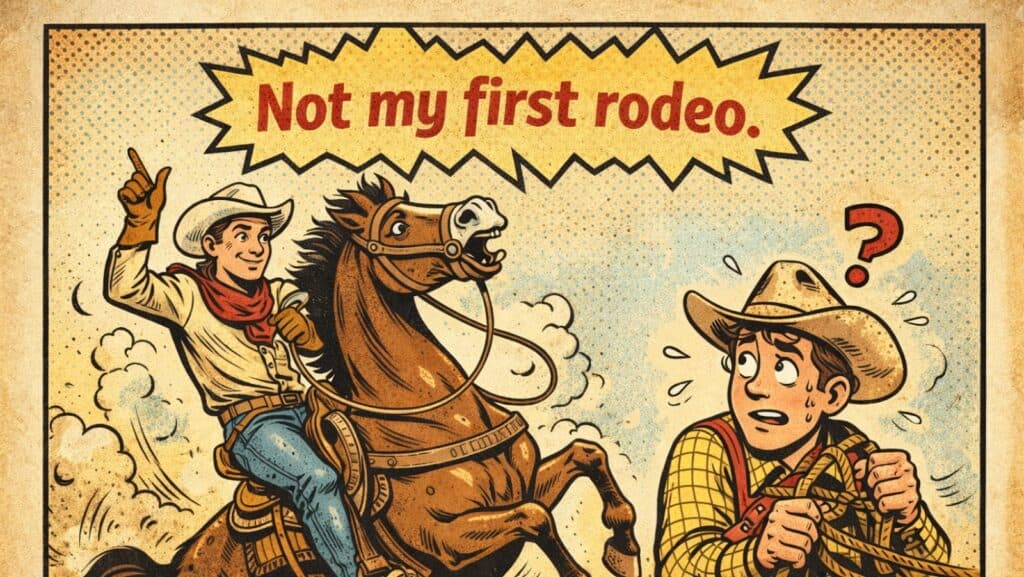
- “Not my first rodeo” → means I’m experienced.
- “Not the sharpest tool in the shed” → a softened way to say someone isn’t very smart.
- “No stone unturned” → emphasizes thorough effort.
- “Not a mean feat” → suggests something was difficult or impressive.
Litotes are also used in classic literature, with writers using them to communicate ideas more gently with added depth.
Here are just a few examples:
| Litotes Examples in Classic Literature | ||
| Author / Work | Example | How It Functions as Litotes |
| William Shakespeare (used across multiple plays) | “Alas, poor soul!” | Softens criticism, while also adding irony without stating judgment outright. |
| Jane Austen (Pride and Prejudice) | Charlotte Lucas describing happiness in marriage as “chance” rather than certainty | Uses indirect, restrained language to imply modest expectations, instead of openly rejecting romantic ideals outright. |
| T.S. Eliot (The Love Song of J. Alfred Prufrock) | “I am not Prince Hamlet, nor was meant to be” | Downplays ambition to reveal insecurity and self-doubt. |
Why Writers Use Litotes
Writers use litotes as a literary device because they make language feel more controlled and intentional.
It’s a subtle tool, but when used well, it helps shape tone and guide how readers interpret what’s being said.
Here are the key reasons why writers turn to litotes.
- To provide emphasis without exaggeration: Saying something is “not bad” or “no small feat” forces the reader to fill in the meaning, which often makes the point feel stronger than direct praise.
- To sound polite or diplomatic: Litotes soften blunt truths by using a negative statement instead of a direct one, making criticism sound more measured and professional.
- To avoid sounding harsh or judgmental: Phrases like “not the sharpest tool in the shed” deliver criticism without being openly insulting, which helps maintain a calmer tone.
- To create irony without sarcasm: Litotes rely on subtle contrast rather than mockery, allowing writers to imply disappointment or doubt without openly attacking someone.
- To add subtle emphasis: By saying less than you mean, litotes draw attention to an idea without overstating it, keeping the tone modest and controlled.
Pro Tip: If you’re studying or writing about litotes, tools like Undetectable’s AI Essay Writer can help you break down exactly how litotes create understatement, politeness, irony, or subtle emphasis, making the device easier to understand and apply naturally in your own writing.
Common Forms of Litotes
While litotes can take many shapes, they usually follow a few recognizable patterns. Once you understand these forms, spotting a litotic phrase becomes much easier.
Double Negatives
The most common form of litotes is the double negative. This happens when a negative word is used to cancel out another negative idea, which creates a softened positive meaning.
Examples include:
- “Not uncommon” → means fairly common.
- “Not unhappy” → means somewhat happy.
- “Not impossible” → means possible.
Negating the Opposite
Another common litotes pattern is negating an opposite adjective or idea.
For example:
- “No small feat” → implies something impressive.
- “Not a bad idea” → suggests something worthwhile.
- “Not without merit” → means it has value.
Softened Descriptions
Litotes are also used to make uncomfortable truths sound a bit less harsh.
For example:
- “Grown slightly bald” instead of bald.
- “Not especially gifted” instead of untalented.
- “A tiny little tumor” as a cautious understatement in sensitive contexts.
How Litotes Changes Tone and Emphasis
Litotes not only change what you say, but they also change how it sounds.
For example, a positive phrase like “that presentation wasn’t half bad” comes across as more natural and sincere than over-the-top praise, because the understatement feels honest.
On the other hand, a negative phrase like “this plan isn’t perfect” still gets the message across, but in a softer way that avoids sounding overly critical or blunt.
Litotes can also create irony without slipping into sarcasm. For example, a phrase like “not exactly Prince Charming” implies disappointment and lets the audience read between the lines.
4 Tips on How to Use Litotes in Your Own Writing
Litotes work best when they’re used with intention. Here are four quick-fire tips for using litotes strategically in your own writing.
Tip #1: Start With a Clear Meaning
Before turning a sentence into a litotic phrase, make sure you’re clear on what exactly you want to express.
Ask yourself:
- What’s my direct positive statement?
- What’s the opposite of that idea?
- Can I negate that opposite without losing clarity?
For example, you could take the direct statement: This task is difficult, and then create the litotic version: This is no small feat.
A few other examples could be:
- She’s very capable → Litotic: She’s not without skill.
- The results were impressive → Litotic: The results were no small achievement.
- The movie was enjoyable → Litotic: The movie wasn’t half bad.
Tip #2: Use Litotes Where You Want to Communicate Subtlety
Litotes are especially useful when you want to:
- Sound polite or diplomatic.
- Offer criticism without sounding harsh.
- Avoid exaggeration.
This is why you’ll often see them in professional writing, essays, and reflective pieces (i.e., places where being too direct can come across as blunt or impolite).
Pro tip: If you’re experimenting with litotes, Undetectable AI’s Paragraph Rewriter can help turn your direct statements into more subtle, litotic phrasing, while still keeping the meaning intact.
Tip #3: Avoid Overusing Litotes
Because litotes use indirect phrasing, piling too many into one piece can weaken your message and make your writing feel messy.
A good rule of thumb: only use litotes for subtle emphasis, not as your default style.
Tip #4: Make Sure They Sound Natural
Because litotes rely so much on tone and context, they can sometimes come across as awkward or unclear, especially if English isn’t your first language or you’re still getting comfortable with writing.
In those cases, it helps to reread the sentence out loud or revise it to make sure the meaning comes through naturally.
Pro Tip: Use tools like Undetectable’s AI Humanizer to help smooth out phrasing and make sure your litotes are clear and easy to understand.
Get started with our AI Detector and Humanizer in the widget below!
Frequently Asked Questions About Litotes
Are litotes a form of verbal irony?
They can be. Litotes often overlap with verbal irony, but they aren’t always ironic. Some litotes simply soften the meaning of a phrase or add understatement, without the added irony or sarcasm.
Are litotes the same as sarcasm?
No. Sarcasm is usually sharp or mocking, while litotes are subtle and restrained. Litotes rely on contrast and negation, not ridicule.
Are litotes common in pop culture?
Yes. Phrases like “not half bad,” “not my first rodeo,” and “this isn’t rocket science” appear frequently in movies, TV shows, music, and everyday speech.
Are litotes the same as a euphemism?
Not exactly. While both soften language, a euphemism replaces an uncomfortable idea with a more pleasant one, whereas litotes express meaning indirectly by negating the opposite.
Final Thoughts: Why Litotes Are Worth Understanding
Now that you know what litotes are, you’ll probably start noticing them more and more in conversations, movies, and even in your own writing.
Like many other language tools, we use instinctively, often without realizing there’s a name for them (or an entire set of rules behind how they work).
So if you need help using litotes more intentionally in your writing, Undetectable AI’s suite of AI tools can help you break down phrasing, experiment with rewrites, and fine-tune your tone for more effective, refined writing.