
Douglas Adams once said, “I love deadlines. I love the whooshing sound they make as they go by.”
If that line from the writer of The Hitchhiker’s Guide to the Galaxy made you smile, you’ve just experienced a paraprosdokian. Say it one more time: “par-uh-pros-DOH-kee-an.”
In the example, your brain expected one thing and read something completely different. It’s like a comedic punchline, but the setup wasn’t relevant or totally unexpected.
In this guide, you’ll see exactly what paraprosdokians are, how they work, and why they’re worth having in your writing toolkit.
Whether you’re telling a story, giving a speech, or just want your writing to stick in people’s heads, getting the hang of this little twisty trick will change the way you look at sentences.
Let’s dive in.
Key Takeaways
- Paraprosdokians redirect sentences in unexpected ways to create humor, surprise, or insight.
- The twist happens at the end and forces readers to reinterpret the entire sentence.
- Writers use them to grab attention, create memorable lines, and add personality to their work.
- They differ from puns because they rely on misdirection, not wordplay.
- Common mistakes include telegraphing the twist too early or forcing unnatural phrasing.
What Is a Paraprosdokian?
The word “Paraprosdokian” looks intimidating. It sounds like something you’d study in an advanced linguistics course or even a philosophy class. But the concept itself is simple.
A paraprosdokian is a figure of speech where the latter part of a sentence or phrase is surprising or unexpected. It causes the reader to reframe or reinterpret the first part.
The term comes from Greek: “para” (against) and “prosdokia” (expectation). Literally, it means “against expectation.”


Never Worry About AI Detecting Your Texts Again. Undetectable AI Can Help You:
- Make your AI assisted writing appear human-like.
- Bypass all major AI detection tools with just one click.
- Use AI safely and confidently in school and work.
Your brain is constantly predicting what comes next when you read, and paraprosdokians exploit that tendency. They set up a pattern, then break it at the last second.
Take Groucho Marx’s famous line: “I’ve had a perfectly wonderful evening, but this wasn’t it.”
The first half sounds like a compliment. Your brain fills in the expected ending (something like “and I’m so glad I came”). Then the actual ending flips everything. Suddenly, you realize the whole sentence was an insult disguised as praise.
Definition and Core Meaning
At its core, a paraprosdokian has two essential parts:
- The setup. This is the first portion of the sentence. It establishes a direction and gets your brain predicting where things are going. The setup needs to feel natural and complete on its own. If it sounds weird or incomplete, the twist won’t land.
- The twist. This is where the magic happens. The ending contradicts, subverts, or redirects the setup in a way that forces reinterpretation. The best twists feel both surprising and inevitable once you hear them.
The key difference between a paraprosdokian and just any surprising statement is the reframing. You have to go back and reconsider the first part with new information, as it changes the meaning of what came before.
Consider Mitch Hedberg’s joke: “I haven’t slept for ten days, because that would be too long.”
The setup makes you think about insomnia. The twist reveals he means something completely different (ten consecutive days vs. ten days total). Your understanding of the entire sentence changes.
This technique works because of how human cognition processes language. We don’t wait until the end of a sentence to start understanding it.
We build meaning as we go, making predictions about what’s coming. Paraprosdokians weaponize that process.
How To Use Paraprosdokians
Using paraprosdokians effectively takes practice. You can’t just stick a twist at the end of any sentence and call it a day.
The setup and payoff need to work together seamlessly.
- Start with a familiar pattern. Your setup should follow a recognizable structure. Common expressions, clichés, and expected phrases work great because readers already know how they’re supposed to end. That familiarity makes the twist more powerful.
Winston Churchill was a master at this: “You can always count on Americans to do the right thing after they have exhausted all other possibilities.”
The phrase “you can always count on” sets up positive expectations. The twist works because it goes against what you thought was coming.
- Make the setup standalone. The first part of your sentence should sound complete and natural on its own. If it feels like you’re stretching for something weird just to make the twist work, readers will see it coming.
- Save the twist for the very end. Timing is everything. Reveal your hand too early, and you lose the surprise. The redirect should happen in the final few words. Any later information should support the twist, not introduce new surprises.
- Test the reinterpretation. After writing your paraprosdokian, read it again. Does the twist actually change how you understand the setup? If not, it’s just a surprising statement, not a proper paraprosdokian.
Here’s a practical example of the process:
Bad: “I love my job even though I don’t, it’s horrible actually.”
This is just contradictory. There’s no elegant twist, no reframing.
Better: “I love my job. It’s the work I can’t stand.”
Now the twist forces you to reconsider what “loving my job” means. Maybe they love the people, the office, the benefits. The work itself is the problem.
You can also use paraprosdokians in longer form by building tension over several sentences, then delivering a twist that recontextualizes everything.
This method is particularly effective in fiction and narrative essays.
Why Do Writers Use Paraprosdokian?
Paraprosdokians have plenty of uses. Once you get why they’re effective, you’ll know exactly how to use them for maximum impact.
- They grab attention. In a world of infinite content, you need hooks. A well-executed paraprosdokian stops readers in their tracks. It makes them think, and that cognitive engagement is precious.
- They create memorable lines. People remember surprises, not predictable sentences. If you want your writing to stick with readers long after they’ve finished, paraprosdokians are a powerful tool. The best ones become quotable.
- They add personality. This device signals cleverness and wit. It shows you’re playing with language intentionally. For humor writing, especially, paraprosdokians are essential. But even in serious work, they demonstrate voice and control.
- They convey complex ideas efficiently. Sometimes you need to express two contradictory truths at once. Paraprosdokians let you do that in a single sentence. The juxtaposition itself becomes the argument.
- They force active reading. When readers encounter a twist, they have to pause and reconsider. They can’t just skim. This makes your writing more engaging and makes your points hit home.
Modern AI tools like Undetectable AI’s AI Essay Writer can help you understand how paraprosdokians create surprise, comedic twists, or dramatic reversals and why that changes reader expectations.
The tool analyzes sentence structure and can show you how different endings alter the reader’s interpretation of the setup.
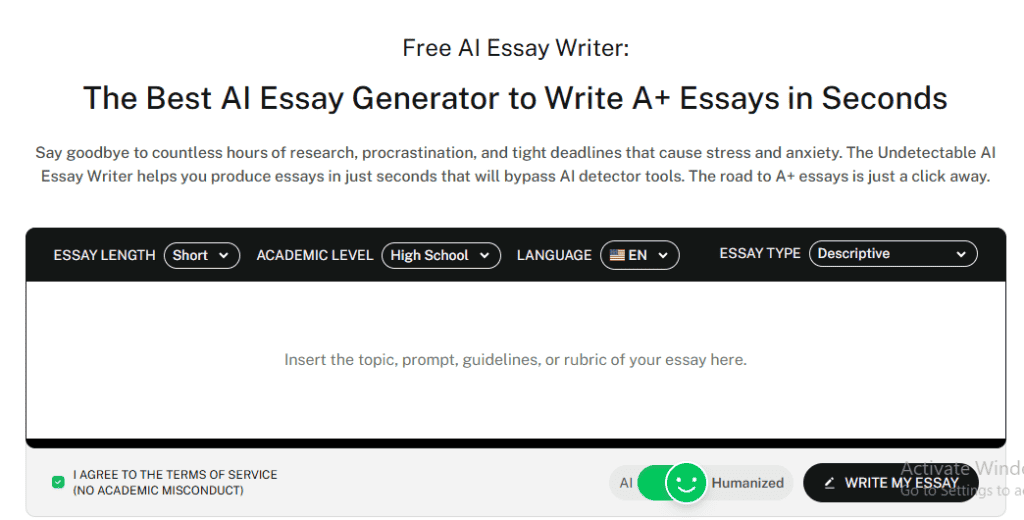
It’s particularly helpful when you’re learning to recognize the pattern in professional writing and want to experiment with creating your own.
The cognitive science behind paraprosdokians is fascinating. They work because of the prediction error. Your brain spends enormous energy predicting what comes next.
When predictions fail, you get a dopamine hit. That’s why surprises feel good (when they’re safe surprises, anyway).
Writers exploit this mechanism. The setup primes certain predictions, and the twist violates those predictions in a controlled way. The result is pleasure, laughter, or insight.
Paraprosdokians vs Puns
People often confuse paraprosdokians with puns. Both are forms of wordplay. Both create surprise. But they work differently.
- Puns rely on double meanings. They exploit words that sound the same but mean different things, or words with multiple definitions. The surprise comes from recognizing the alternate meaning.
Example: “I used to be a banker, but I lost interest.”
The word “interest” does double duty. It refers to both enthusiasm and the financial concept. That’s a pun.
Paraprosdokians rely on misdirection. The surprise comes from redirecting the expected conclusion of the sentence. The twist changes the meaning of the setup, but usually not through double meaning.
Example: “I asked God for a bike, but I know God doesn’t work that way. So I stole a bike and asked for forgiveness.”
No wordplay here. Just misdirection. The setup makes you think this is about prayer and faith. The twist reveals it’s actually about exploiting religious concepts.
Sometimes you get both at once. “Time flies like an arrow. Fruit flies like a banana” is technically both. “Flies” does double duty (verb and noun), making it a pun. But the sentence also redirects your expectations about the phrase structure, making it a paraprosdokian.
The key difference is that puns can happen anywhere in a sentence. Paraprosdokians require a setup and twist structure, with the twist at the end.
The distinction matters because the techniques serve different purposes. Puns are purely playful. Paraprosdokians can be playful, but they’re also useful for serious writing.
The misdirection creates emphasis and forces reconsideration in ways that pure wordplay doesn’t.
Classic Examples of Paraprosdokians
Learning from the masters is the fastest way to improve. Here are some legendary paraprosdokians and what makes them work.
“I want to die peacefully in my sleep, like my grandfather. Not screaming and yelling like the passengers in his car.”
This one is dark. The setup evokes a peaceful image. Everyone wants to die in their sleep. Then the twist hits, and you realize what actually happened. The reframing is complete and brutal.
“If I could say a few words, I’d be a better public speaker.”
Brilliant self-deprecation. The setup sounds like someone is about to give advice. The twist reveals they’re acknowledging their own limitation. It’s funny because it’s self-aware.
“She looks like a million bucks. All green and wrinkly.”
The phrase “looks like a million bucks” is a cliché compliment. Your brain auto-completes it as praise. Then the description forces you to visualize actual money, which is decidedly unflattering for a person.
“I don’t belong to an organized political party. I’m a Democrat.”
Will Rogers’ classic. The setup sounds like someone declaring independence from party politics. The twist reveals they’re actually criticizing their own party’s dysfunction. The surprise comes from the self-own.
“The last thing I want to do is hurt you. But it’s still on the list.”
This sets up what sounds like reassurance. The twist turns it into a threat, but a playful one. The humor comes from the admission that hurting you is still a possibility, just not the top priority.
“You’re never too old to learn something stupid.”
This inverts the inspirational cliché about lifelong learning. The setup borrows authority from that familiar phrase. The twist acknowledges a darker truth about human nature.
Study these examples and notice how the setups feel complete. The language is natural. Nothing about the first part signals that a twist is coming, and that’s what makes them effective.
Common Mistakes When Using The Word “Paraprosdokians”
Even experienced writers stumble with this device.
Here are the most frequent errors and how to avoid them.
- Telegraphing the twist. If your setup sounds weird or incomplete, readers know something’s coming. The surprise dies. Your first clause should be able to stand alone as a normal sentence. Don’t twist the setup just to make the twist work.
- Awkward: “I really do enjoy when I, unlike most people probably, actually hate mornings.” The setup is too convoluted. You can feel the writer straining.
- Better: “I’m a morning person. I can hate them at any time of day.”
- Forcing unnatural phrasing. Sometimes writers get so focused on landing the twist that they sacrifice how the sentence actually sounds. If you have to read it three times to parse the grammar, it’s not working.
- Need a tool to help out? Undetectable AI’s AI Humanizer can smooth awkward phrasing and ensure the twist reads naturally, not forced. It identifies where your sentence structure becomes strained and suggests more fluid alternatives that preserve your twist while improving readability.
- Making the twist too obscure. If readers don’t understand the redirect, the paraprosdokian fails. The twist should be surprising but comprehensible. Avoid references that are too niche or logic that requires too many steps to follow.
- Overusing them. Like any spice, paraprosdokians work best in moderation. If every other sentence has a twist, readers get fatigued. The surprise factor diminishes. Use them for emphasis, not as a constant writing mode.
- Forgetting the reframing requirement. Writers create surprising endings without ensuring those endings actually change the meaning of the setup. Test your paraprosdokians by asking: “Does the ending make me reconsider the beginning?”
- Punctuation problems. Timing is everything with paraprosdokians. Incorrect punctuation can ruin the delivery. A comma in the wrong place telegraphs the twist, while a missing pause disrupts the rhythm.
- Without proper punctuation, the twist is muddled. Is it sarcastic? Serious? You can’t tell.
- Mixing your device. Sometimes writers accidentally create a pun when they meant to write a paraprosdokian, or vice versa. Know which device you’re using and commit to it. Muddying the technique weakens the impact.
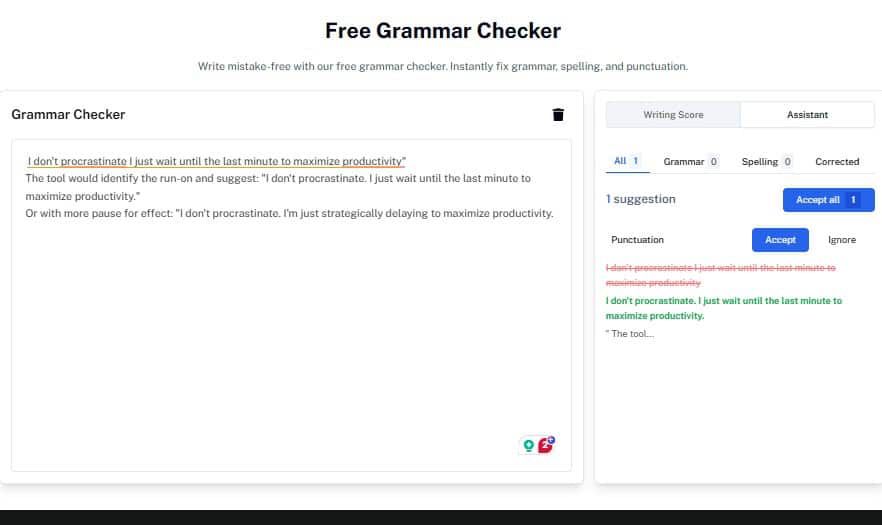
Undetectable AI’s Grammar Checker helps fix punctuation that affects timing. In this example, the punctuation changes everything.
It controls pacing and ensures readers experience the setup fully before hitting the twist.
Find out how our AI Detector and Humanizer work in the widget below!
Nothing More to Add. Except This…
Paraprosdokians are a fundamental tool for writers who want to surprise, delight, and engage their readers.
They’re in comedy specials, novel dialogue, marketing taglines, and political speeches. And now that you know what they’re called and how they work, you can study them in the wild and learn from the professionals.
Start small. Try adding one to your next piece of writing. Play with familiar phrases and see how you can redirect them. The more you practice, the more natural it becomes to spot opportunities for this device.
Remember the core principle: setup, twist, reframing. If you’ve got those three elements working together, you’ve written a successful paraprosdokian.
Your readers might not know the technical term. But they’ll remember your lines. And isn’t that what writing is all about?
Well, that and meeting deadlines. Which, as Douglas Adams reminded us, make a lovely whooshing sound.
Ensure your clever twists stay undetectable and human-like with Undetectable AI.