
When you feel the need to criticize an idea or express disapproval, you naturally reach inside your bag of pejoratives. These loaded terms carry negative connotations, and Gordon Ramsay wields these more than any other food ingredient on the planet.
Pejoratives go beyond their literal definitions and are used in our daily conversations, debates, arguments, and even in writing.
Using this “sharp” side of literature can make you a more effective writer, shaping how readers perceive people, ideas, and situations. And like a weapon, it can wound, hurt, and penetrate your reader’s feelings.
Sometimes we use them intentionally. Other times, they slip out without us realizing the baggage they carry.
This guide looks into what pejoratives are, how they work, and why they matter in both everyday communication and creative writing.
Key Takeaways
- A pejorative is a word or phrase used to express contempt, disapproval, or a negative judgment, effectively “making worse” the subject it describes.
- The function of a word as a pejorative often depends on context and tone; a neutral term like “politician” can become an insult depending on how and when it is spoken.
- Words frequently shift into pejorative territory over time through political weaponization, sarcastic overuse, or the “euphemism treadmill,” where new terms eventually pick up old stigmas.
- In creative writing, these terms are vital tools for building authentic dialogue and revealing a character’s internal biases, worldviews, and social standing without using explicit exposition.
- Because loaded language can unintentionally alienate readers or trigger AI filters, using Undetectable AI helps ensure your use of “sharp” language feels intentional and naturally human.
What Are Pejoratives?
Language isn’t often neutral.
Every word we choose carries emotional weight and cultural meaning beyond its dictionary definition. Pejoratives sit at the extreme end of this spectrum.
Pejorative Definition
A pejorative is a word or phrase that expresses contempt, disapproval, or negativity toward its subject. The term comes from the Latin word “pejorare,” meaning “to make worse.”


Never Worry About AI Detecting Your Texts Again. Undetectable AI Can Help You:
- Make your AI assisted writing appear human-like.
- Bypass all major AI detection tools with just one click.
- Use AI safely and confidently in school and work.
That etymology tells you everything you need to know about how these words function.
Pejoratives can be nouns (calling someone a “snake”), adjectives (describing behavior as “childish”), or even verbs (saying someone “whined” instead of “said”).
What makes them pejorative isn’t necessarily the word itself, but how it diminishes or belittles what it describes.
Some pejoratives are obvious slurs that everyone recognizes as offensive. Others are subtle. They depend heavily on tone, context, and cultural understanding.
The word “politician” might be neutral in one conversation and dripping with contempt in another.
Examples of Pejoratives
Let’s examine some concrete examples to see how these concepts work in practice.
- Occupation-based pejoratives: “Bureaucrat” instead of “administrator,” “hack” instead of “writer,” “quack” instead of “doctor.” These tarnish legitimate professions by associating them with incompetence or fraud.
- Diminutives that belittle: “Kiddo” when addressing an adult, “little” when describing someone’s concerns or problems, “just” when minimizing achievements. These shrink the importance of what they modify.
- Animal comparisons: “Rat,” “pig,” “snake,” “weasel.” Humans have used animal metaphors as insults across cultures for centuries. Each animal carries specific negative associations.
- Terms that question intelligence: “Idiot,” “moron,” “simpleton,” “airhead.” These attack someone’s cognitive abilities, though many started as unfortunate clinical terms before becoming insults.
- Ideological labels as weapons: “Snowflake,” “Karen,” “boomer,” “libtard,” “fascist.” These words originally had neutral or specific meanings but became pejoratives through their use in politics and society.
- Appearance-focused terms: “Ugly,” “hideous,” but also euphemisms like “unfortunate-looking” that try to soften the blow while still being cruel.
The interesting thing about pejoratives is that many neutral words can become pejoratives depending on how you say and use them. Tone and context transform meaning.
Why Writers And Speakers Use Pejoratives
People don’t accidentally pepper their speech with loaded language. Pejoratives serve specific purposes in communication.
- To express genuine disapproval or anger: Sometimes you’re upset, and you want your language to reflect that emotion. Calling a betrayal “backstabbing” is tougher than saying someone “was disloyal.”
- To persuade or manipulate: Political rhetoric thrives on pejoratives. Describing a policy as “reckless” or “radical” frames it negatively before you’ve explained what it actually does. This is a rhetorical strategy, not an accident.
- To signal group membership: Using pejoratives shows you’re part of the in-group that shares these negative views. When everyone in your social circle calls something “cringe,” you’re speaking the same language and reinforcing shared values.
- To create humor: Comedians use pejoratives constantly. The sting of an insult makes people laugh, especially when it targets the powerful or pokes at universal human experiences.
- To reveal character: The pejoratives your characters use reveal everything to readers about their attitudes, biases, and emotional states. A character who refers to someone as a “bleeding heart” versus one who calls the same person “compassionate” reveals their own worldview.
- To establish social hierarchies: Pejoratives enforce power dynamics. Those in dominant positions often use them to keep others “in their place.” This is why slurs targeting marginalized groups carry such weight.
- To vent frustration indirectly: Sometimes you can’t directly confront someone or something, so pejoratives become a release valve. Calling your malfunctioning computer a “piece of junk” doesn’t fix the problem, but it feels better than nothing.
It all comes down to awareness. Knowing why you’re reaching for a particular loaded word helps you communicate more intentionally.
How Do Words Become Pejorative?
Language evolves constantly. Words that were once neutral or even positive can drift into negative territory.
This transformation happens through several processes.
- Pejoration through association: When a word becomes strongly linked with something negative in the cultural consciousness, it picks up that baggage. “Propaganda” once simply meant information spread to promote a viewpoint. Now, it implies deceptive manipulation due to its association with authoritarian regimes.
- Euphemism treadmill: People create euphemisms to avoid saying something offensive. But if the underlying stigma remains, the euphemism itself becomes increasingly offensive over time. Then people create a new euphemism and the cycle continues.
Medical terms provide clear examples. “Idiot,” “moron,” and “imbecile” were once clinical classifications for intellectual disabilities. They became slurs.
New terms emerged, which eventually became insulting as well. “Retarded” followed the same path from clinical to pejorative.
- Political weaponization: Groups deliberately turn neutral terms into insults through repeated negative usage. “Liberal” and “conservative” can function this way depending on who’s talking. “Feminist” has been used as both a proud identifier and a pejorative insult.
- Sarcastic overuse: When people sarcastically use a positive term, it can flip the meaning. “Genius,” said with the right tone, becomes an insult. Do this enough in a culture, and the word picks up that negative connotation permanently in certain contexts.
- Historical trauma: Words used during periods of oppression or violence become permanently loaded. They carry the weight of that history. This is why certain slurs remain deeply offensive generations later.
- Generational shifts: Each generation creates new pejoratives and abandons old ones. “Groovy” was positive, then became a mocking pejorative, then became retro and neutral again. Language moves in cycles.
Context matters enormously here. A word might be pejorative in one community while remaining neutral in another.
Geographic region, age group, profession, and cultural background all influence whether a term carries negative weight.
How Pejoratives Are Used In Communication

Pejoratives don’t exist in isolation. They function within larger communication patterns and strategies.
- In arguments and debates: People use pejoratives to undermine opponents without engaging their actual points. This is called “poisoning the well.” Call someone “hysterical,” and you’ve dismissed their argument without addressing its merit.
- In gossip and social bonding: Talking negatively about others using pejoratives creates intimacy between speakers. It’s a way of saying “we’re on the same side, unlike them.”
- In self-deprecation: People use pejoratives about themselves to deflect criticism, seek reassurance, or create humor. “I’m such an idiot” might be genuine self-criticism or a humble-brag depending on tone.
- In professional settings: Workplace communication often disguises pejoratives as neutral terms. “Difficult” employee, “aggressive” woman, “urban” neighborhood. These coded pejoratives let people express bias while maintaining professional appearances.
- In news media: Journalistic word choice shapes public perception. Describing protesters as a “mob” versus a “crowd,” calling someone a “militant” versus an “activist,” or labeling an area a “compound” versus a “home” reveals editorial bias.
- In marketing and advertising: Brands use pejoratives to position competitors negatively. “Old-fashioned,” “outdated,” “tired.” They’re selling you something by making the alternative sound bad.
- In social media: Online communication strips away tone and body language. This makes pejoratives more common and more misunderstood. A word you meant ironically lands as a genuine insult or vice versa.
The challenge is that pejoratives often work beneath conscious awareness. You might not realize you’ve used a loaded term until someone points it out.
Pejorative In Literature
Writers deploy pejoratives as powerful tools for characterization, world-building, and thematic exploration.
- Revealing character through word choice: What characters call each other matters. A protagonist who refers to his father as “the old man” versus “Dad” signals a different relationship than one who uses a proper name or a term of respect. These choices communicate volumes without explicit explanation.
- Creating authentic dialogue: People in real life use pejoratives. Characters need to as well, or they sound artificial. The trick is using them intentionally to serve the story rather than letting unconscious bias slip through.
- Building historical settings: Period-appropriate pejoratives ground readers in a specific time and place. A Victorian novel uses different loaded language than a contemporary story. Getting this right requires research.
- Exploring social dynamics: Literature can examine how pejoratives maintain power structures. Who gets to use certain words? What are the consequences? These questions drive conflict and meaning.
- Showing character growth: A character might start the story using certain pejoratives and stop by the end, indicating personal growth and a changed perspective. Or they might pick up new ones, showing corruption or radicalization.
- Subverting expectations: Writers can play with pejorative meanings. Characters might reclaim slurs used against them. They might use pejoratives ironically to drain their power.
Want to experiment with how pejoratives function in your own writing? The Undetectable AI’s Paragraph Rewriter lets you create varied examples of pejorative usage without changing the original meaning.
You can test different loaded terms and see how they shift tone and character voice.
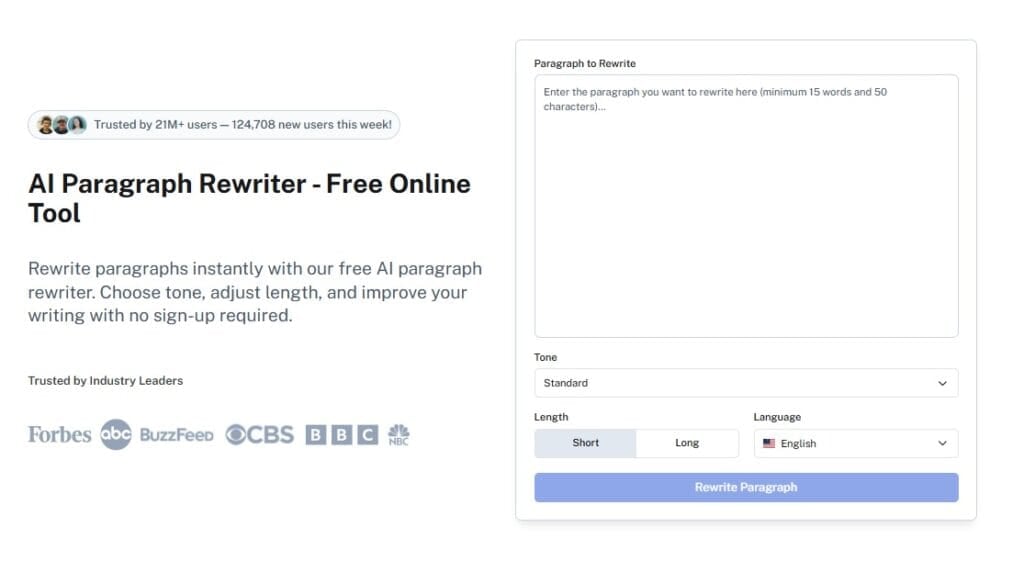
For example, you might write a scene where a character describes someone as “frugal,” then rewrite it with “cheap,” then “penny-pinching,” then “financially responsible.”
Each version reveals different attitudes and creates different reader responses.
Common Mistakes When Using Pejoratives
Even experienced communicators stumble with loaded language.
Here are the most common problems.
- Using pejoratives without realizing it: You might not know a term carries negative weight in certain communities. What sounds neutral to you might be offensive to others. This is especially common with generational slang and regional expressions.
- Overusing them in writing: If every character speaks in constant insults and loaded terms, the impact dilutes. Pejoratives work best when deployed strategically. Too many and your prose sounds shrill.
- Mismatching register: A pejorative that works in casual conversation might be too harsh for professional communication, or a mild pejorative might not carry enough weight for a moment of genuine anger. Matching intensity to context is important.
- Assuming shared understanding: Not everyone interprets pejoratives the same way. Cultural background, age, and personal experience shape how people receive loaded language. What you intend as a joke might land as a real insult.
- Letting them slip in formal writing: Academic papers, business reports, and other formal documents should generally avoid pejoratives unless you’re analyzing them. They undermine your credibility and suggest bias rather than objectivity.
- Using them to avoid clear criticism: Sometimes people reach for a pejorative when they should just state their objection directly. “That’s stupid” is less useful than “I disagree because…”
- Forgetting historical context: Some pejoratives carry trauma and oppression that can’t be reclaimed or used ironically by everyone. Treat these with appropriate gravity.
- Not considering your audience: A pejorative that feels edgy among friends might alienate a broader audience. Know who’s listening.
The fix for most of these mistakes is simple: pause before using loaded language. Ask yourself if this word serves your communication goal or if it has slipped out from habit.
Use the Undetectable AI’s AI Humanizer to ensure your examples and corrections read naturally and maintain context. This tool helps you navigate the subtle line between authentic voice and unintentional offense.
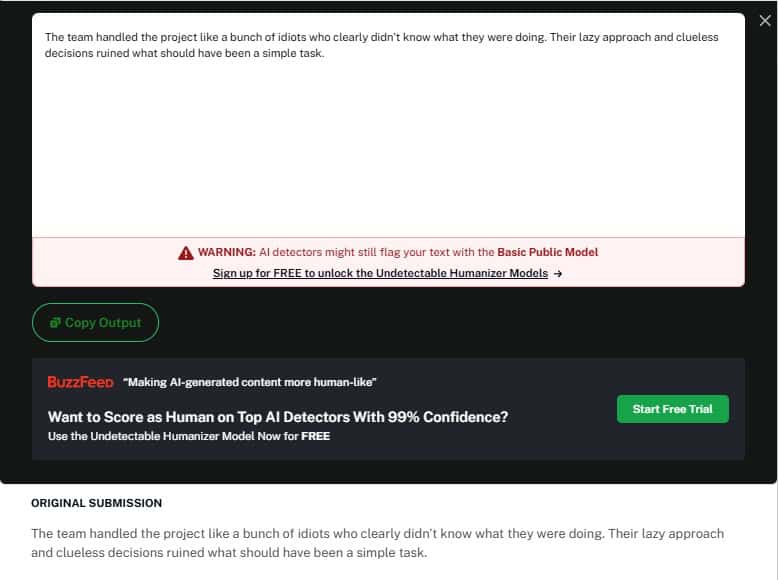
Give the AI Detector and Humanizer a try right below!
Talking Trash, Intentionally
Pejoratives are tools, not weapons you should fear or avoid completely. They have legitimate purposes in communication and creative writing, as long as they’re used with awareness and intention.
As a writer, pejoratives help you create authentic characters and compelling dialogue. They reveal bias, build conflict, and add texture to your prose.
Just make sure you’re in control of them rather than letting unconscious prejudice control you.
As a speaker, understanding pejoratives helps you communicate more effectively. You can choose loaded language when you want emphasis and avoid it when you want objectivity.
You become more conscious of how your words resonate with others.
Want to refine your writing and ensure your word choices land exactly as you intend? Undetectable AI’s suite of tools helps you craft more nuanced, human-sounding prose while maintaining full control over tone and meaning.
Whether you’re polishing dialogue, varying your examples, or checking to see your writing reads naturally, we’ve got the tools for you.
Keep your writing sharp and human with Undetectable AI.