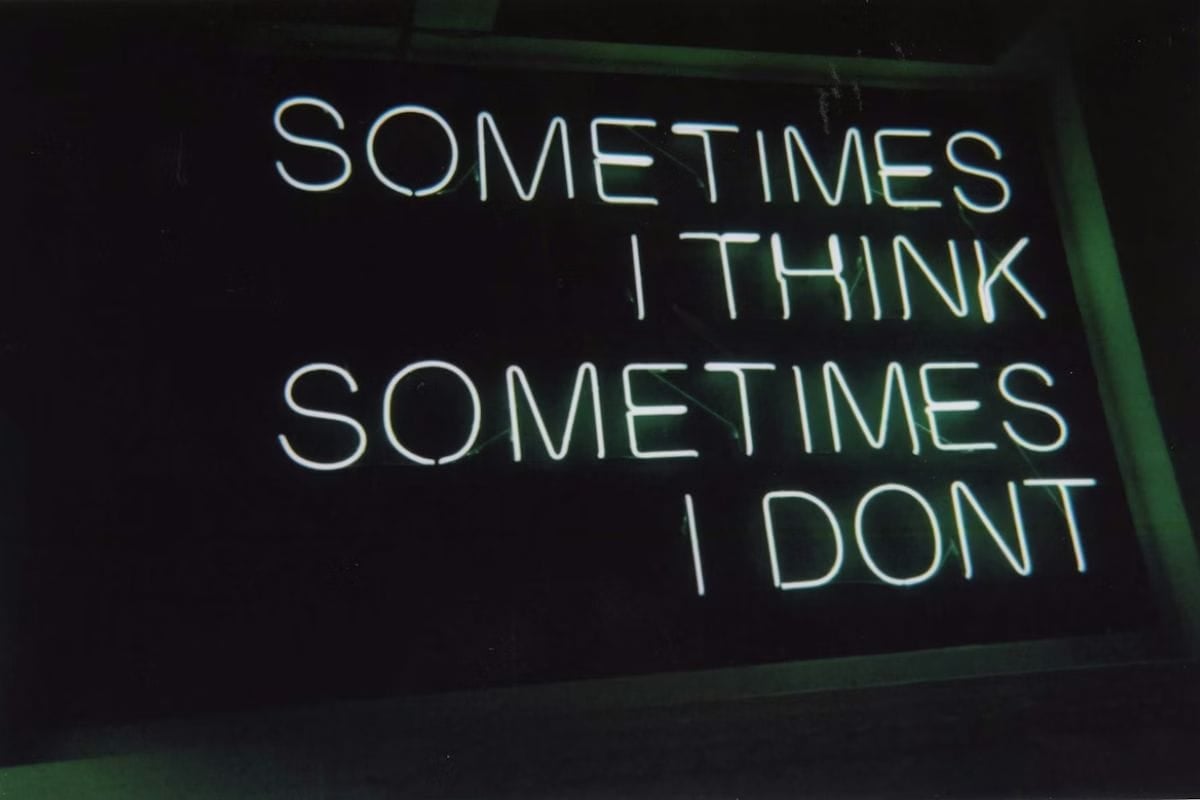
A platitude might initially sound like an exotic creature or a portmanteau of plateau and latitude, but it’s far from what it seems.
If it really were a geographical landmark, it would probably be the most boring landmark ever:
“Welcome to Platitude: Where Everything is Obvious and Nothing Matters!”
Platitude is something far more insidious. It’s your least favourite aunt’s favourite phrase, which she uses whenever you mention an unfortunate happening in your life:
“Everything happens for a reason!”
Yes, it’s well-meaning, but honestly? It’s useless advice that usually forces you to nod and agree, because again, it doesn’t really say anything new.
We’ve all heard them. We’ve all probably used them.
And if you’re a writer, it’s best to learn how to spot and eliminate them from your work before they drain the life out of your prose.
Key Takeaways
- Platitudes are overused statements that sound meaningful but offer no real insight or value.
- They weaken writing by replacing specific, authentic ideas with generic filler.
- Unlike clichés (which are overused phrases), platitudes claim to offer wisdom while saying nothing new.
- Writers might use platitudes when they’re rushed, unsure, or trying to sound profound without doing the work.
- The best way to avoid platitudes is to get specific, personal, and honest in your writing.
What Is Platitude?
A platitude is a remark or statement that has been used so often that it’s become dull and meaningless.
Platitude Definition
These are the sentences that sound wise on the surface but crumble under any scrutiny. They’re the verbal equivalent of empty calories.
The word comes from the French word “plat,” meaning flat. And that’s exactly what platitudes are: flat. No depth, no texture, no nutritional value.


Never Worry About AI Detecting Your Texts Again. Undetectable AI Can Help You:
- Make your AI assisted writing appear human-like.
- Bypass all major AI detection tools with just one click.
- Use AI safely and confidently in school and work.
Examples of Platitude
Let’s look at some classic platitudes you’ve likely encountered:
- “It is what it is.”
Translation: I have nothing useful to say about this situation, so I’m going to state a tautology and hope you move on.
- “Time heals all wounds.”
Does it, though? Tell that to someone with a traumatic brain injury. Or anyone who’s experienced real loss.
- “Everything happens for a reason.”
A statement that’s meant to be comforting but can dismiss legitimate pain and struggle.
- “When one door closes, another opens.”
Sure, but what if you’re trapped in a hallway full of locked doors? What if the door that opened leads to a broom closet?
- “At the end of the day…”
This phrase precedes about 90% of platitudes. It’s a warning sign that something generic is coming.
- “Just be yourself.”
Sounds simple, until your “yourself” isn’t exactly someone people want to copy.
- “Follow your dreams.”
Sounds inspiring, until your dream is to binge-watch TV in your pajamas for the next decade.
In writing, some popular platitudes include:
- “The sun rose on a new day, full of possibilities.”
- “She learned that true beauty comes from within.”
- “He realized that the real treasure was the friends he made along the way.”
- “Love conquers all.”
Notice how these statements could fit into virtually any story? That’s the problem. They’re so generic that they end up saying nothing at all.
When you’re drafting content and need to avoid these hollow phrases, tools like Undetectable AI’s AI Essay Writer can help you identify where your language becomes too generic.
The writer analyzes your text and flags areas where you’re relying on overused expressions instead of crafting something specific and meaningful.
It pushes you to dig deeper, enhance readability, and find the actual insight you’re trying to convey, not just the lazy shorthand.
Why Platitudes Are Considered Weak Writing
Platitudes kill good writing because they replace thinking with autopilot.
- They’re intellectually uninspiring. When you drop a platitude into your writing, you’re essentially saying, “I can’t be bothered to think of something original here, so I’m going to use this pre-fab phrase everyone’s heard before.”
- They distance the reader. Nothing takes a reader out of a story faster than encountering language they’ve seen a million times before. It breaks immersion. Instead of experiencing your unique voice and perspective, they’re suddenly reminded of every other piece of writing they’ve ever read.
- They flatten complex ideas. Life is complicated. Human emotions are messy and contradictory. When you sum up a complex situation with “it is what it is,” you’re doing a disservice to the actual nuance of the moment.
- They signal you don’t trust your reader. Platitudes are often used when writers don’t trust their audience to understand subtlety. They spell things out in the most obvious way possible, assuming readers need everything spelled out to them like a fortune in a fortune cookie.
- They make your writing forgettable. If someone can find your exact sentence structure in a hundred other places, why should they remember yours? Memorable writing is specific, surprising, and true to its unique perspective.
Here’s a quick exercise: try to remember the last platitude someone said to you. You probably can’t recall the exact context or the conversation around it. That’s because platitudes don’t stick.
Good writing should leave a mark. It should make readers think, feel, or see something differently. Platitudes do the opposite.
They confirm what everyone already thinks and ask nothing of the reader.
Why People Use Platitudes
If platitudes are so terrible, why do we keep using them?
- They’re conversational shortcuts. When you’re writing on a deadline or speaking in the moment, platitudes are right there in your mental database, ready to deploy. They require zero cognitive effort.
- They feel safe. Saying something specific and personal is risky. You might be wrong. You might reveal too much. Platitudes let you sound like you’re saying something without actually committing to a position.
- They’re socially acceptable. When someone tells you their dog died, “I’m so sorry for your loss” is expected. It’s a platitude, sure, but it’s also a recognized social script. Going off-script is uncomfortable.
- They sound wise without requiring wisdom. You can drop “the only constant is change” into your essay and make it sound profound, even though you haven’t actually thought deeply about change or offered a fresh perspective on it.
- They fill space. When you’re staring at a blank page trying to hit a word count, platitudes are tempting. They pad your writing without requiring real substance.
- We genuinely think they’re helping. Sometimes people use platitudes with the best intentions. They want to offer comfort or guidance, and these familiar phrases feel like the right tool for the job.
The problem is that good intentions don’t make for good writing. And what feels comforting in conversation often reads as hollow on the page.
Platitude vs. Cliché
People often confuse platitudes with clichés. They’re related but not identical.
A cliché is any overused expression that has lost its original impact through repetition.
“Busy as a bee.” “Cool as a cucumber.” “Think outside the box.” These are clichés. They’re tired metaphors and similes that once felt fresh but have been ground down to dust by overuse.
A platitude is specifically a statement that pretends to be meaningful or wise but actually offers no real insight. “What doesn’t kill you makes you stronger.” “Good things come to those who wait.”
These are platitudes. They sound like advice but provide nothing actionable.
All platitudes are clichés, but not all clichés are platitudes.
“Raining cats and dogs” is a cliché. It’s overused and boring. But it’s not pretending to be profound wisdom about the nature of meteorology.
“When it rains, it pours” can be both. While it’s used literally as a weather description, it’s just a cliché.
It suggests that problems come in clusters, but it has become a platitude because it offers pseudo-wisdom about life.
Both should be avoided in your writing, but for slightly different reasons.
Clichés should be avoided because they’re stale and predictable, while platitudes should be steered clear of because they’re intellectually empty.
There’s also overlap with truisms, which are statements that are obviously true but not helpful. “You miss 100% of the shots you don’t take” is a truism.
Yeah, obviously. You also can’t win the lottery without buying a ticket. These observations are technically accurate, but they don’t actually guide behavior in any useful way.
Common Mistakes When Using Platitudes

Even writers who know better sometimes let platitudes slip through.
Here are the most common ways they sneak into your work:
- Mistake #1: Using them in dialogue to show character wisdom. You want to show that your protagonist has learned something important, so you have them say something like “I finally realized that home is where the heart is.” This doesn’t make them sound wise. It makes them sound like a greeting card.
- Mistake #2: Opening or closing with a platitude. You might think the phrase “they say that every ending is a new beginning” might sound profound and set up your essay. Instead, it signals to your reader that you haven’t thought of an interesting way to start.
- Mistake #3: Using them as substitutes for showing emotion. Instead of describing how a character actually feels, you write “She realized that time heals all wounds and tomorrow is another day.” You’ve told us nothing about her emotional state, and strung together two platitudes.
- Mistake #4: Thinking they add depth to thin ideas. If your article doesn’t have much substance, sprinkling in platitudes won’t help. “At the end of the day, you need to be true to yourself and follow your passion” sounds like something, but says nothing.
- Mistake #5: Using them ironically without making the irony clear. Sometimes writers use platitudes on purpose, trying to be clever or satirical. But if the reader can’t tell you’re being ironic, you’ve just written a bad platitude.
- Mistake #6: Defaulting to them in conclusions. If you just wrote 2,000 words of specific, interesting content, and then wrap it up with, “And remember, the journey is more important than the destination,” you just undercut everything that came before.
The worst part about these mistakes is that platitudes often feel right when you’re writing them.
They have a nice rhythm, sound complete, and your brain gives you a little hit of satisfaction because you’ve finished a thought.
But it’s a false reward because you haven’t actually said anything.
How to Avoid Platitudes in Your Writing
Getting platitudes out of your writing takes practice and awareness.
Here’s how to do it:
- Get brutally specific. This is the single most effective technique. Instead of “She learned that money can’t buy happiness,” write about the specific thing she learned. Maybe: “She learned that the $800 espresso machine in her kitchen couldn’t replicate the taste of the $3 coffee she used to share with her sister every Sunday morning.”
See the difference? One is generic wisdom that could apply to anyone. The other is a specific detail that reveals character and emotion.
- Ask “so what?” and “why?” When you catch yourself writing something that sounds wise, interrogate it. “Time heals all wounds.” So what? Which wounds? How does time help? Why does this matter to this specific character in this specific situation? Push past the surface.
- Use concrete images instead of abstract statements. Don’t just say “she felt free.” Write about the character kicking off her heels in the parking lot and driving home barefoot with the windows down and the radio too loud.
- Replace generalizations with observations. Instead of “People always want what they can’t have,” write about a specific person wanting a specific thing they can’t have, and make it weird and particular to them.
- Trust your reader to draw conclusions. You don’t need to spell out the moral of the story. If you’ve written the scene well, readers will understand what it means without you writing, “and that’s when he learned that family is the most important thing.”
Undetectable AI’s AI Humanizer becomes genuinely useful after you’ve drafted your piece. You can run your phrase or text through the humanizer to catch moments where your language becomes too generic or automated-sounding.
The tool helps ensure your alternatives sound natural and engaging, not forced or overly formal.
It flags sentences that read like they could have been written by anyone and helps you find language that sounds distinctly like you.
The humanizer doesn’t just identify problems but also suggests specific ways to rework sentences so they sound more authentic and less like recycled wisdom.
Use our AI Detector and Humanizer right in the widget below!
Wisdom Sold Separately
Platitudes are the junk food of language. They taste okay in the moment, but provide zero nutritional value. And unlike actual junk food, you can’t even enjoy it at 2 a.m.
Avoiding platitudes isn’t about memorizing a list of phrases to ban from your writing. It’s about changing how you approach the act of writing itself.
It’s about choosing specificity over generality, observation over received wisdom, and authentic voice over borrowed language.
Every time you catch yourself about to write “at the end of the day” or “everything happens for a reason,” you have an opportunity.
You can take the easy route and let the platitude stand, or you can push yourself to figure out what you’re actually trying to say.
So the next time you’re tempted to write that home is where the heart is, or that when life gives you lemons you should make lemonade, stop and ask yourself what you’re actually trying to say.
That’s where the good writing lives, not in the flat, familiar territory of platitudes, but in the strange, specific, surprising place where you figure out how to say something true in a way that’s never quite been said before.
Keep your writing authentic and undetectable with Undetectable AI.