Everyone says ‘just Google the rate’ when you want to convert pounds to dollars.
And everyone is partially wrong.
It is because the Google rate (technically called the mid-market rate) is the purest form of the exchange rate.
But it’s also a rate that virtually no regular person gets.
In 2026, knowing the real rate and knowing what you’ll receive are two very different things.
Here’s the gap between them.
In this blog, we’ll learn about the two currencies: pounds and dollars. We’ll see how to convert pounds to dollars, common conversion mistakes, and tips for using pounds and dollars safely.
Let’s dive in.
Key Takeaways
- As of March 2026, 1 GBP = approximately $1.33 USD (rate fluctuates daily).
- £100 converts to roughly $133 USD. £50 converts to roughly $66.50 USD at current rates.
- The exchange rate you see on Google is the mid-market rate. Banks and exchange services charge more.
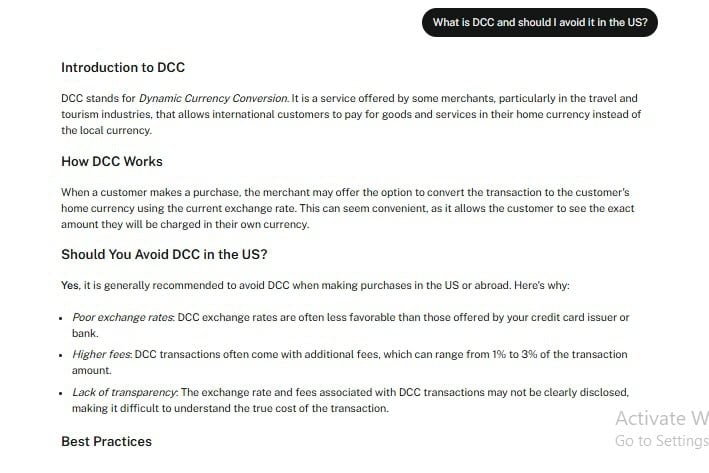
- Hidden fees like Dynamic Currency Conversion (DCC) can cost you 3–12% extra on top of the exchange rate.
- You can convert pounds to dollars manually, digitally, or using AI tools like Undetectable AI’s Math Solver for step-by-step accuracy.
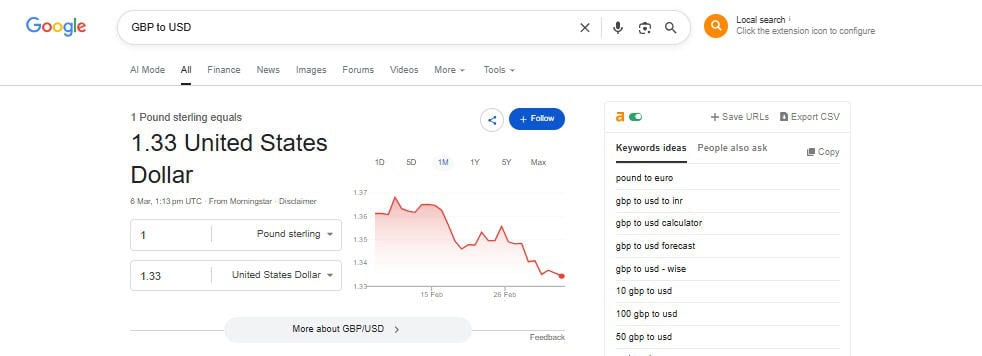
- Always check the rate on the day of your transaction. GBP/USD moved from a high of ~1.38 to a low of ~1.33 within just the first two months of 2026
What are Pounds?
The British Pound Sterling (symbol: £, ISO code: GBP) is the official currency of the United Kingdom and the currency when you’re dealing with pounds to dollars exchange.
Sterling came from the Old English “steorra.”
→ Steorra = Star (small star-shaped marks on early Norman coins)


Never Worry About AI Detecting Your Texts Again. Undetectable AI Can Help You:
- Make your AI assisted writing appear human-like.
- Bypass all major AI detection tools with just one click.
- Use AI safely and confidently in school and work.
GBP is the legal currency in:
- England, Scotland, Wales, and Northern Ireland (the UK)
- British Overseas Territories like Gibraltar and the Falkland Islands
- Several Crown Dependencies (Isle of Man, Jersey, Guernsey) also use pound-pegged currencies informally called “pounds”
Banknotes include £5, £10, £20, £50 (polymer notes introduced from 2016; newer ones feature King Charles III).
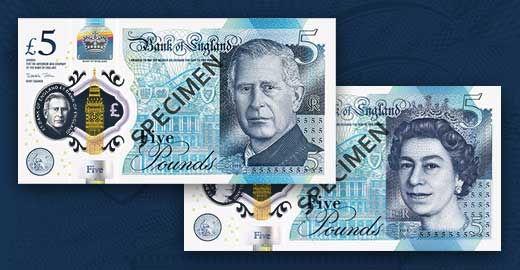
Coins include 1p, 2p, 5p, 10p, 20p, 50p, £1, £2
Here are some of the interesting facts about this currency:
- The pound is the oldest currency still in use, dating back to around 775 AD.
- King Offa of Mercia introduced silver pennies. It officially became England’s national currency under King Athelstan in 928 CE.
- The name “pound” comes from the Latin word libra, which is why the symbol £ looks like a stylized “L.”
- In early times, 240 silver pennies weighed one pound, which is how the currency got its name.
- GBP is the 4th most traded currency in the world after USD, EUR, and JPY.
- In forex markets, the GBP/USD exchange rate (central to all pounds to dollars conversion) is called “Cable.”
- The pound switched to a decimal system in 1971 (1 pound = 100 pence).
- The Bank of England, founded in 1694, manages and issues the currency.
What are Dollars?
The United States Dollar ($, USD) is the official currency of the United States. It is also the most widely used reserve currency in the world and plays a major role in global trade and finance.
It is used in:
- The United States and its territories (Puerto Rico, Guam, U.S. Virgin Islands).
- Countries that officially use the dollar, such as Ecuador, El Salvador, Panama, Zimbabwe, and Timor-Leste.
- Commonly used worldwide in trade, tourism, and for pricing commodities like oil and gold.
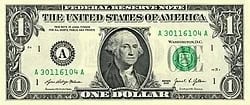
Banknotes include $1, $2 (rare), $5, $10, $20, $50, $100.
Coins include 1¢ (penny), 5¢ (nickel), 10¢ (dime), 25¢ (quarter), 50¢ (half-dollar), $1 coin
The $1 bill design has remained mostly the same since 1963.
Key facts are:
- The dollar became the dominant global reserve currency after World War II (Bretton Woods system).
- Around 57% of global foreign exchange reserves are held in USD.
- The dollar is involved in about 89% of global foreign exchange trades.
- Many countries link or “peg” their currencies to the US dollar.
- Even in crypto markets, about 99% of stablecoins are tied to the USD.
- The Dollar Index (DXY) tracks the dollar’s strength against other major currencies.
How to Quickly Convert Pounds to Dollars
Before diving into methods, here’s a quick pounds to dollars conversion reference table using the approximate March 2026 rate of 1 GBP ≈ $1.33 USD:
| Pounds (GBP) | Approx. US Dollars (USD) |
| £1 | ~$1.33 |
| £10 | ~$13.30 |
| £50 | ~$66.50 |
| £100 | ~$133.00 |
| £500 | ~$665.00 |
| £1,000 | ~$1,330.00 |
Note: Always verify the live rate before transacting. See the sections below to understand how to do this properly.
- Use current exchange rates
Exchange rate means the value of one currency compared to another. For example, GBP/USD shows how many US dollars you get for 1 British pound.
The mid-market rate (also called the interbank rate) is the real pounds to dollar exchange rate used in global markets. This is the rate you usually see on Google or finance websites.
Here’s how to check the GBP to USD rate:
- Google: Search “GBP to USD” for a quick live rate
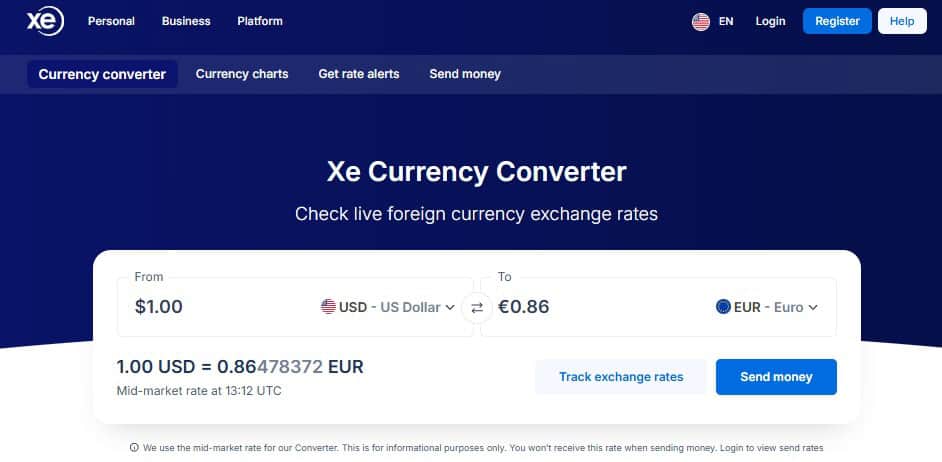
- XE.com: A widely used currency rate website
- Wise: Shows the mid-market rate and its fees clearly
- Bank apps: Convenient, but the rate includes a markup
As of March 6, 2026, 1 GBP = $1.33 USD. 2026 high was about $1.38 (Jan 28, 2026).
Why do exchange rates change?
Currency rates move constantly during forex market hours (24 hours a day, Monday–Friday). They change due to:
- Interest rate decisions by the Bank of England or US Federal Reserve
- Economic growth and inflation data
- Global events and political tensions
- Calculate manually or digitally
Manual pounds to dollar conversion uses this formula:
USD = GBP × current GBP/USD rate
Examples
- 100 pounds to dollars: £100 × 1.33 = $133
- 50 pounds to dollars: £50 × 1.33 = $66.50
- £250 × 1.33 = $332.50
Reverse conversion (USD → GBP)
GBP = USD ÷ current rate
Example:
- $100 ÷ 1.33 = £75.19
Useful digital tools
| Tool | Best use |
| Google search | Quick one-time conversion |
| XE or Wise | Check accurate mid-market rates |
| Bank app | See the rate your bank offers |
| Undetectable AI’s Math Solver | Step-by-step calculation |
- Consider fees and charges
What are currency conversion fees?
When you convert pounds to dollar (or vice versa), you almost never pay just the exchange rate.
There are additional charges layered on top that can significantly affect how many dollars you receive.
| Fee Type | What It Means | Typical Cost | Example |
| Exchange Rate Markup (Spread) | The provider gives you a worse rate than the real market rate and keeps the difference. | Around 2–4% hidden in the rate | If the real rate is £1 = $1.33 but the bank gives £1 = $1.28, the 5¢ difference is their profit. On £10,000, you could lose $300–$500. |
| Foreign / Non-Sterling Transaction Fee | A fee banks charge when you pay in a currency other than GBP. | About 1–3% of the amount | A £1,000 purchase abroad may add £10–£30 in fees. |
| Wire Transfer / SWIFT Fees | Fees for sending money to another country through banks. | $5–$35 sending fee + possible $25–$75 intermediary fee + $10–$35 receiving fee | Several banks may take small fees before the money reaches the receiver. |
| Dynamic Currency Conversion (DCC) | When a foreign ATM or card machine asks if you want to pay in GBP instead of the local currency. | Around 4–12% extra | A $1,000 purchase could cost about $120 more if you choose GBP. |
| Airport / Hotel Exchange Kiosks | Currency exchange counters at airports or hotels with very poor rates. | Up to about 10% markup | Exchanging £1,000 at an airport kiosk could cost $100+ more than a normal bank rate. |
Fee comparison example: Sending £1,000 to the US via:
- High-street bank: Markup on rate (~3%) + wire fee ($25) + possible intermediary fee ($50) = you may lose $100–$130 worth of value
- Wise: Small transparent fee (~0.5–1%) at mid-market rate = you lose roughly $10–$15 because they use the real mid-market pounds to dollars conversion rate
- Airport kiosk: Up to 10% markup = you lose ~$133 on £1,000
Common Conversion Mistakes to Avoid
Here are some of the most frequent mistakes people make:
Mistake 1: Using the Google rate as the rate you’ll get
Many people check the rate on Google and expect to receive that exact amount when they convert pounds to dollars.
The Google rate is the mid-market rate, but banks and exchange services add their own markup.
→ Better approach: Check Google for a reference rate, then check the actual rate your bank or service (Wise, Revolut, PayPal) offers.
Mistake 2: Choosing “Pay in GBP” on a foreign card machine (DCC)
When you use a UK card abroad, the terminal may offer “Pay in GBP.” This activates Dynamic Currency Conversion, which can add 4–12% in extra charges.
→ Better approach: Always choose to pay in the local currency (USD). Your bank’s normal fee is usually lower.
Mistake 3: Exchanging money at the airport
Airport exchange kiosks often give the worst rates. Markups can reach 10% or more.
→ Better approach: Exchange a small amount (like 50 pounds to dollar) before traveling, then use a local ATM or bank after you arrive.
Mistake 4: Not including fees in your budget
People calculate an amount based on the exchange rate but forget about fees. As a result, they receive less money than expected.
→ Better approach: Add a 3–5% buffer to your budget or check the exact quote from your provider before sending money.
Mistake 5: Ignoring Volatility on Large Amounts
Exchange rates change often. While a tiny fluctuation doesn’t matter much when looking at 50 pounds to dollars, it makes a massive difference on thousands.
→ Better approach: Monitor the rate for a few days or set a rate alert on services like XE or Wise.
Mistake 6: Using an outdated rate
Exchange rates change constantly during market hours. Using an old rate leads to incorrect calculations.
→ Better approach: Always check a live rate before converting.
Tips for Using Pounds and Dollars Safely
Tip 1: Use a multi-currency card when traveling
Cards from services like Wise, Revolut, or Monzo let you hold different currencies in one account.
When you pay in USD, the card uses your USD balance at close to the mid-market rate, usually without extra foreign transaction fees.
Tip 2: Use specialist FX services instead of banks
Traditional banks are notorious for lazy exchange rates and flat fees that can reach $40 per transfer.
If you need to convert pounds to dollars for a business invoice or a property deposit, use specialist providers like Wise or CurrencyFair. They offer transparent, low fees that are often 8x cheaper than a standard bank.
Tip 3: Lock in a good rate for large transfers
If you are sending a large amount and the rate is favorable, a forward contract can lock in the current rate for a future transfer. This protects you if the exchange rate moves against you later.
Tip 4: Set exchange-rate alerts
Use tools like XE or Wise to create rate alerts. You’ll receive a notification when GBP/USD reaches your chosen level, so you can convert at a better time.
Tip 5: Always verify bank details before sending money
Before you convert pounds to dollars, confirm the recipient’s bank details directly with them.
This helps prevent fraud and ensures the money reaches the correct account.
How Undetectable AI Can Assist in Pounds to Dollars Conversion
You can use two of the most useful tools of undetectable for [x]
- Undetectable AI’s AI Chat
This AI gives clear, human-like responses to your questions, such as:
You may also ask:
- What’s the cheapest way to convert £500 to dollars?
- What’s affecting GBP/USD in 2026?
- What’s affecting the pounds to dollars conversion rate in 2026?
- I’m sending £10,000 to a US account. What should I watch out for?
Instead of searching multiple sites, the chatbot gives actionable advice in seconds.
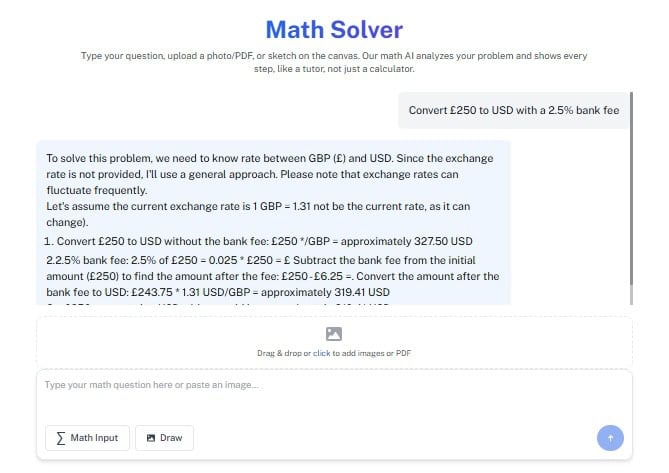
2. Undetectable AI’s Math Solver
This tool handles typed, uploaded, or handwritten problems, showing every calculation step. Perfect for multi-step currency math, including fees.
Example:
Other uses include:
- Compare providers: see which option is better on £1,000
- Reverse conversion: calculate pounds needed to get a set USD amount
- Travel budgeting: figure out daily spending in pounds
It’s free, no signup needed, and works with typed input, photos, or sketches.
Start using our AI Detector and Humanizer in the widget below!
Final Thoughts
Pounds to dollars conversion is the basic but useful financial skills you can have.
As of March 2026, the pounds to dollars conversion rate is 1 GBP = $1.33 USD, meaning 100 pounds to dollars gives you around $133, while 50 pounds to dollars is $66.50.
But that’s only the mid-market rate. What you actually receive depends heavily on where you convert and what fees apply.
The smartest approach to dollars to pounds or pounds to dollars conversion in 2026 is: always check the live rate first, compare providers, avoid DCC, and use specialist tools like Wise, XE, or AI-powered math solvers for accuracy.
Bookmark this guide, check your live rate, and convert with confidence.
Use Undetectable AI to run quick, accurate conversions and double check your calculations so your financial content stays precise and reliable.