
So listen up. Let’s drop some knowledge in your mind. About the magic of rhymes and how it makes words align. From Shakespeare’s sonnets to Drake’s bars you recite. Rhyme makes lines memorable, punchy, and tight.
And it’s not just for poets, rappers, or composers on stage. Many of us use rhymes across every single page. You have your riddles, lyrics, and children’s books to share. Rhyme shows you actually care.
That right there is an example of a good old rhyme scheme. You don’t need to be a master to write these. No fancy degrees. No thesaurus devotion. You don’t need to sound eloquent or flex a massive vocabulary stack.
You just need rhythm, repetition, and a little verbal knack.
Rhymes work because the brain loves patterns. Sound symmetry sticks. When words echo each other, meaning clicks faster. Lines resonate more.
That’s why slogans rhyme and why kids remember books they heard once at bedtime.
And it’s not about sounding clever for the sake of it. A good rhyme feels natural, almost accidental, when you say it. Forced rhymes fall flat. Smooth ones glide.
You hear them once, then they live rent-free in your mind.
Let’s dive in.
Key Takeaways
- Rhyme is the repetition of similar sounds in words, usually at the end of lines or within phrases.
- Writers use rhyme to create rhythm, enhance memorability, and add musicality to their work.
- Multiple types exist: perfect rhyme, slant rhyme, internal rhyme, and more.
- Rhyme works across genres from poetry and rap to advertising and children’s literature.
- Effective rhyme feels natural, not forced or predictable.
What Is Rhyme?
Rhyme is one of those things everyone recognizes, but few can define properly. You know it when you hear it. Cat and hat. Moon and June. Fire and desire.
But rhyme is more than just matching sounds at the end of words.
It sets up patterns, builds expectations, and delights readers when those expectations are met. Or sometimes, when they’re cleverly flipped.


Never Worry About AI Detecting Your Texts Again. Undetectable AI Can Help You:
- Make your AI assisted writing appear human-like.
- Bypass all major AI detection tools with just one click.
- Use AI safely and confidently in school and work.
At its core, rhyme connects words through sonic similarity. It creates a bridge between ideas using sound rather than meaning. In turn, language is stickier, more memorable, and more impactful.
Think about how many advertising jingles are still stuck in your head from childhood. That’s rhyme doing its job.
Definition of Rhyme
Rhyme occurs when two or more words have similar or identical sounds, typically in their final syllables. The technical term for this is “phonetic correspondence.”
The most common form happens at the end of lines in poetry or song lyrics. These are called end rhymes. But rhyme can appear anywhere in a line, which we’ll get into later.
Rhyme isn’t about spelling. It’s about sound. “Though” and “toe” rhyme perfectly, even though they’re spelled completely differently. Meanwhile, “tough” and “cough” rhyme with each other but not with “though.”
English is weird like that.
Rhyme typically involves the vowel sound and any consonants that follow it. In phonetics, this unit is called a “rime” (spelled differently to avoid confusion, because English loves making things complicated).
Why Writers Use Rhyme
Rhyme isn’t just decoration. It serves real purposes in communication.
First, rhyme creates structure. It gives readers and listeners a framework to anticipate what’s coming. This structure makes content easier to follow and remember.
There’s a reason nursery rhymes stick with you for decades.
Second, rhyme adds emphasis. When words rhyme, they create a connection that highlights their relationship.
This can reinforce meaning or create interesting contrasts. Love and shove. Peace and cease. The rhyme forces you to consider these words together.
Third, rhyme generates pleasure. Humans are pattern-seeking creatures. When we recognize a pattern and hear it completed, our brains release a small hit of dopamine. Rhyme literally feels good.
Fourth, rhyme establishes rhythm and musicality. Even when content isn’t meant to be sung, rhyme creates a musical quality that makes language more engaging. This is why political slogans often rhyme, why brand names frequently use it, and why protest chants rely on it.
Fifth, rhyme aids memorization. Before widespread literacy, rhyme was crucial for oral traditions.
Epic poems, religious texts, and historical records used rhyme to help people remember vast amounts of information. That function still works today.
Finally, rhyme signals craft and intentionality. When you use rhyme, you’re showing readers that you’ve put thought into your word choices. You’re not just slapping words on a page but building something deliberate.
Types of Rhyme
Different rhymes serve different purposes.
- Perfect Rhyme (also called exact rhyme or true rhyme) is what most people think of first. The final stressed vowel and all following sounds are identical. Cat and bat. Phone and alone. Believing and achieving.
- Slant Rhyme (also called near rhyme, half rhyme, or imperfect rhyme) involves words with similar but not identical sounds. Hope and hop. Soul and oil. Width and death. Slant rhyme feels more subtle and sophisticated than perfect rhyme. It’s everywhere in contemporary poetry and hip-hop.
- Internal Rhyme happens within a single line rather than at the end. “I wake and bake, then take a break before the lake.” The rhyme occurs inside the line structure, creating additional musicality.
- End Rhyme is the standard version where lines end with rhyming words, which is what you see in most structured poetry and song lyrics.
- Masculine Rhyme involves single-syllable rhymes or multi-syllable words where the final syllable is stressed. Cat/bat. Sublime/time. Compare/declare.
- Feminine Rhyme (also called double rhyme) involves two syllables where the first is stressed and the second is unstressed. Picky/tricky. Glamor/hammer. Turtle/fertile.
- Eye Rhyme looks like it should rhyme based on spelling, but doesn’t when spoken. Love and move. Cough and bough. Laughter and slaughter. These can create interesting effects in written work.
- Identical Rhyme uses the exact same word or homonyms. Bear (the animal) and bear (to carry). They’re generally considered weak rhymes unless used for a specific effect.
- Assonance is the repetition of vowel sounds regardless of consonants. Lake, pain, and sake aren’t technically rhymes, but they create a similar effect.
- Consonance is the repetition of consonant sounds with different vowels. Blank and think. Desk and disk. Again, these aren’t true rhymes but are related.
Learning all these types of rhymes lets you make intentional choices rather than stumbling into whatever ones you can find.
How Rhyme Works in Communication
Rhyme isn’t confined to writing poems. It’s everywhere in daily communication.
Advertisers use rhyme constantly. “Red Bull gives you wings.” “Maybe she’s born with it, maybe it’s Maybelline.” “The best part of waking up is Folgers in your cup.” These phrases stick because of their rhyming structure.
Politicians and activists rely on rhyme for memorable slogans. “Yes we can.” “No justice, no peace.” The sonic pattern makes messages easier to chant and remember.
Children’s literature depends heavily on rhyme. Dr. Seuss built an empire on it. Rhyme helps young readers predict words, develop phonemic awareness, and engage with stories. It makes reading fun rather than a chore.
Music obviously uses rhyme extensively. But the way rhyme functions in rap and hip-hop deserves special attention.
Modern rappers have elevated rhyme to an art form, using complex multi-syllabic schemes, internal rhymes, and creative slant rhymes that earlier poets never attempted.
Even casual speech includes rhyme. “See you later, alligator.” “Easy peasy.” “Fancy pants.” We use rhyme to be playful, memorable, or emphatic.
Stand-up comedy uses rhyme for punchlines and callbacks. Rhyme also appears in brand names. Reddit. Tic Tac. Kit Kat. Reese’s Pieces. The repetition makes names catchier and more memorable.
Common Mistakes with Rhyme
Rhyme can backfire badly when used poorly. Here are the biggest mistakes to avoid.
- Forced rhyme is when you twist your language unnaturally just to make words rhyme. The grammar gets weird. The word choice becomes awkward. The meaning suffers. If you have to sacrifice clarity or natural phrasing for a rhyme, that rhyme isn’t worth it.
- Predictable rhyme makes readers groan. If your love poem rhymes “heart” with “apart” and “start,” it might not sound as creative to the reader. Push yourself to find fresher combinations.
- Sacrificing meaning for sound is another major problem. Don’t say something untrue or off-topic just because it rhymes. The rhyme should enhance your meaning, not replace it.
- Overusing perfect rhyme can make your work sound juvenile or sing-songy. Contemporary writing often benefits from mixing perfect and slant rhyme. The variation creates more sophisticated musicality.
- Ignoring rhythm while focusing only on rhyme creates clunky writing. Rhyme works best when combined with solid rhythmic structure. Pay attention to meter and natural speech patterns.
- Rhyming unstressed syllables weakens the effect. “Walking” and “talking” technically rhyme, but the rhyme falls on an unstressed syllable. “Walk” and “talk” pack more punch because the rhyme lands on the stress.
- Too much rhyme can overwhelm your content. Not every line needs to rhyme. Sometimes less is more. Use rhyme strategically for maximum impact.
- Eye rhyme confusion happens when writers rhyme based on spelling rather than sound. Double-check that your rhymes actually sound similar when read aloud.
How to Use Rhyme Effectively
Good rhyme feels effortless even when it requires serious work to achieve. Here’s how to make it happen.
Good rhyme always starts with meaning. The idea comes first, because sound only works when it has something clear to support.
When writers chase rhyme before message, the result usually feels strained, as if the line exists to impress rather than communicate. That tension becomes obvious the moment the words are spoken out loud.
Eyes gloss over awkward phrasing, but ears catch it immediately. If a rhyme stumbles when read aloud, it’s doing too much work.
Refinement tools become useful at this point, not to replace creativity, but to sharpen it.
Instead of hunting endlessly for alternatives, writers can use Undetectable AI’s Paragraph Rewriter to generate varied rhyme examples while keeping the original meaning intact and the poetic effect natural.
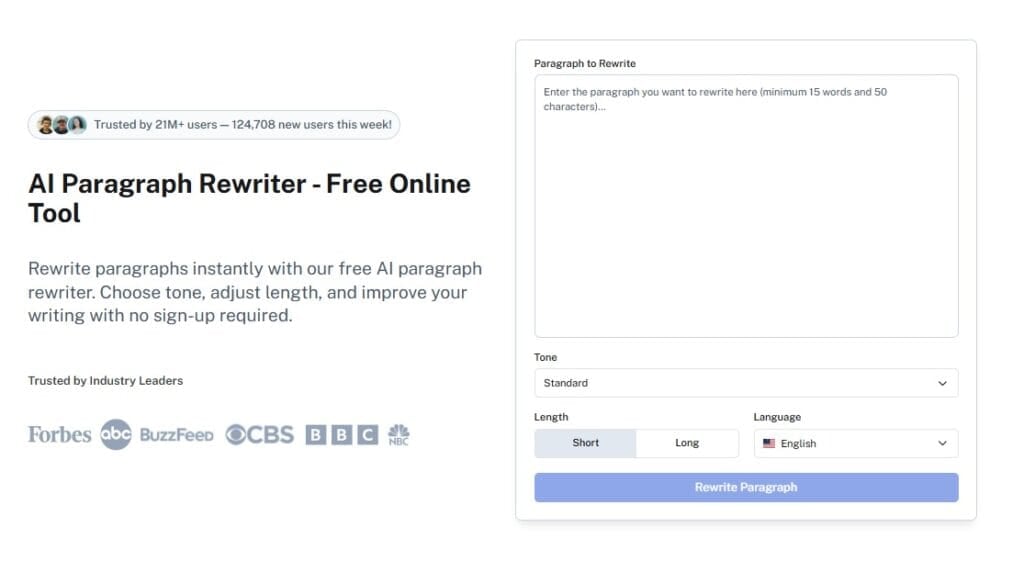
The goal is not to randomize sound, but to explore phrasing options that still feel intentional and human. Strong rhymes should sound inevitable, not engineered.
As those variations take shape, patterns begin to matter. Repeating the same rhyme structure too often can flatten the rhythm, so mixing perfect and slant rhymes keeps the language alive.
Internal rhyme adds texture when used sparingly, and restraint becomes even more important once the audience enters the picture.
Children’s writing can lean into obvious, frequent rhyme without losing charm, while adult poetry and prose usually benefit from subtlety and spacing.
That spacing makes emphasis possible. When rhyme is saved for key moments, it carries more weight. Multi-syllabic rhyme helps here, adding musical complexity without slipping into sing-song territory.
And once those fundamentals are understood, breaking expectations becomes part of the craft. Dropping a rhyme where one is anticipated, or placing it somewhere unexpected, creates surprise and momentum.
None of that works without revision. First choices rarely hold up.
Revisiting stanzas, lines, testing alternatives, and sometimes removing rhyme altogether is what separates functional rhyme from effective rhyme.
Classic Examples of Rhyme
Great writers throughout history have demonstrated the power of effective rhyme.
Shakespeare mastered rhyme in both his sonnets and plays. “Shall I compare thee to a summer’s day? / Thou art more lovely and more temperate.”
The rhyme scheme in his sonnets (ABAB CDCD EFEF GG) creates structure without feeling rigid.
Emily Dickinson used slant rhyme brilliantly. “Hope is the thing with feathers / That perches in the soul / And sings the tune without the words / And never stops at all.” Soul and all don’t rhyme perfectly, but the near-rhyme feels more interesting than an exact match would.
Dr. Seuss showed how rhyme could drive narrative while remaining playful. “I do not like them in a box. / I do not like them with a fox.” Simple, memorable, and perfectly suited to his audience.
Kendrick Lamar represents modern rhyme mastery.
His verse from “Rigamortus” showcases complex internal rhyme and multi-syllabic schemes: “Everybody’s been, everybody’s been here / Everybody’s done that, tell me something you hear.” The density and creativity of his rhyme patterns push the art form forward.
Maya Angelou demonstrated how rhyme could serve serious themes.
“Still I Rise” uses rhyme to create defiant musicality: “You may shoot me with your words, / You may cut me with your eyes, / You may kill me with your hatefulness, / But still, like air, I’ll rise.”
Test our AI Detector and Humanizer with the widget below!
Ending Clean, Not Overseen
Rhyme remains one of the most powerful tools in a writer’s arsenal. It creates structure, generates memorability, and adds musicality to language.
From ancient epic poems to modern rap verses, children’s books to advertising slogans, rhyme shapes how we communicate and connect.
The key is using rhyme intentionally rather than automatically. Understand the different types available to you. Know when perfect rhyme works and when slant rhyme serves you better.
Recognize how internal rhyme can add layers to your writing. Avoid the common pitfalls that make rhyme feel forced or juvenile.
Most importantly, let rhyme serve your meaning rather than dictating it. The best rhymes feel inevitable, like they were always meant to be together. They enhance what you’re saying without overshadowing it.
With practice, rhyme becomes instinctive rather than forced, natural rather than awkward. That’s when you’ll discover just how rhyme can make language sing.
Keep your rhymes natural and your writing authentic with Undetectable AI.