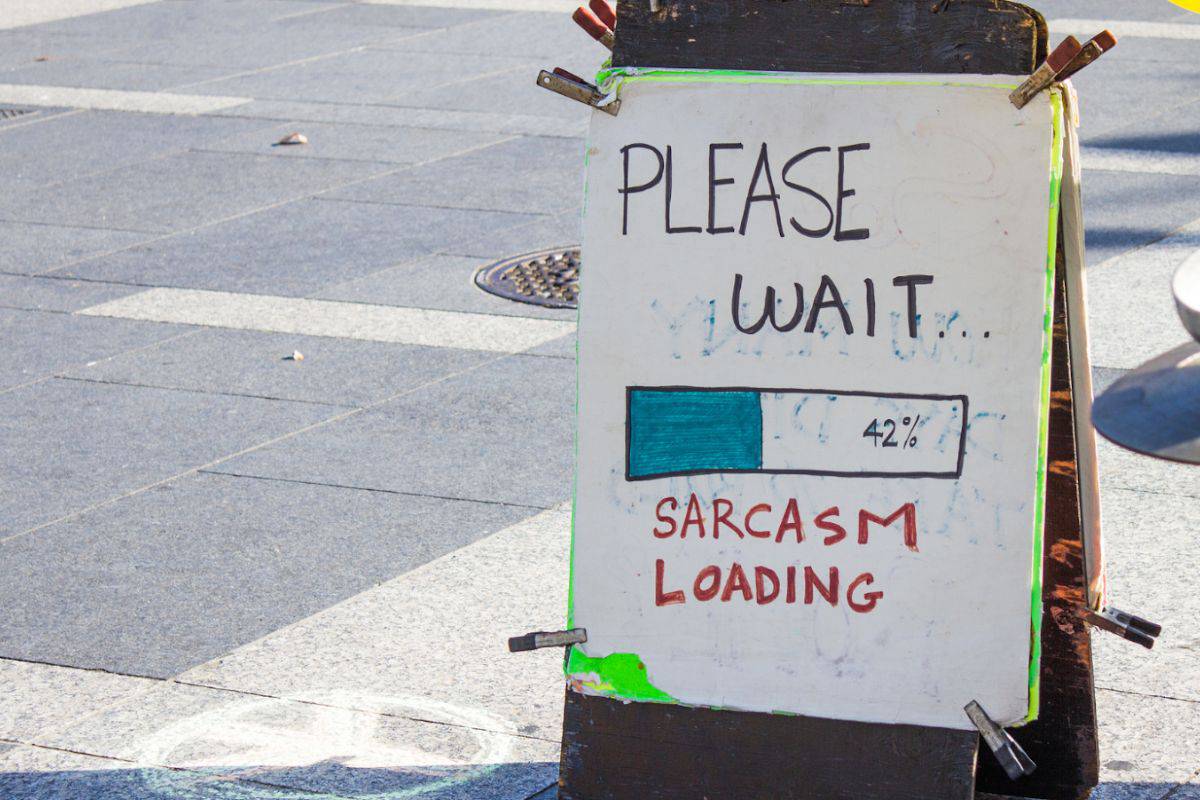
“Oh, fantastic. Another meeting.”
If that sentence made sense without any explanation, you already understand sarcasm. It’s the art of saying one thing, but meaning something entirely different.
But how exactly does sarcasm work, and why does it feel funny in some moments but offensive in others?
Read on to find out.
TL:DR – Sarcasm is a form of verbal irony where someone says the opposite of what they mean, usually to be funny or critical. It relies heavily on tone and context, which is why sarcasm is prone to misinterpretation.
Key Takeaways
- Sarcasm is a specific form of verbal irony where a speaker says the opposite of what they mean, often to mock, criticize, or express frustration.
- The term originates from the Greek word “sarkasmos,” which literally means “to tear flesh,” reflecting the sharp or biting nature of this type of wit.
- Success with sarcasm depends heavily on non-verbal cues like tone of voice, facial expressions, and context, making it very easy to misinterpret in written form.
- While it can be used for mockery or indirect anger, sarcasm also serves positive social functions like breaking tension, self-deprecating humor, and building camaraderie between friends.
- Because sarcastic writing can often come across as unintentionally harsh or confusing, using Undetectable AI helps ensure your tone is balanced and your intent is clear to the reader.
Understanding Sarcasm: Core Meaning and Examples
So, what actually is sarcasm? Let’s take a look at the origins of this (often misunderstood) style of speech, along with a few examples.
Sarcasm Meaning
The word “sarcasm” traces its lineage back to the Greek word “Sarkasmos”, which translates literally to “to tear flesh” or “to gnash one’s teeth.”
While the literal meaning may sound extreme, the underlying bite is still very much present.


Never Worry About AI Detecting Your Texts Again. Undetectable AI Can Help You:
- Make your AI assisted writing appear human-like.
- Bypass all major AI detection tools with just one click.
- Use AI safely and confidently in school and work.
Today, sarcasm is best described in the Merriam-Webster dictionary as:
- A form of verbal irony where someone says the opposite of what they actually mean, often to mock, criticize, insult, or express frustration.
Common Sarcasm Examples
Like most literary devices, sarcasm is easiest to understand once you’ve seen some examples.
Here are a few classic sarcastic phrases you’ve probably heard or even used yourself:
| Examples of Sarcasm in Everyday Life | ||
| Situation | Sarcastic Statement | What’s Actually Being Said |
| When something goes wrong. | “Oh, fantastic. This is exactly what I needed today!” | This is frustrating, and I’m not happy about it. |
| When someone points out the obvious. | “Thanks for that, Sherlock.” | That was obvious and didn’t need saying. |
| When you’re stuck waiting for someone. | “No, no, take your time. I’ve got nothing else to do.” | I’m annoyed that you’re making me wait. |
| When someone messes something up. | “Nice job. Really impressive.” | That went badly. |
| After a plan completely fails. | “Well, that went perfectly.” | Everything went wrong. |
| When extra work shows up unexpectedly. | “Great, I was hoping for more to do today.” | I’m already overwhelmed. |
| During miserable weather. | “What a beautiful day this is.” | The weather is awful. |
| When technology stops working. | “Love it when my computer does this.” | This is irritating and slowing me down. |
| When someone arrives very late. | “Right on time.” | You’re very late. |
The Purpose Behind Sarcastic Language
So why do people use sarcasm? Are we all just a little mean at heart?
Not exactly.
Sarcasm serves several social and psychological purposes, helping people joke, cope, connect, and occasionally call things out.
- Humor and wit: At its best, sarcasm is funny. A well-timed sarcastic comment can break the tension and lighten the mood. For many people, it’s the perfect way to find humor in situations that would otherwise just be annoying.
- Mockery and ridicule: This is sarcasm in its most sinister form. It’s used to call out behavior, ideas, or situations the speaker finds foolish or absurd. The goal here is to make a point, sometimes at someone else’s expense.
- Expressing anger or contempt (indirectly): When saying something outright could cause conflict, sarcasm offers a workaround. It lets people vent their frustration or irritation without direct confrontation, even if the message still comes through loud and clear.
- Social bonding: Among friends or people who know each other well, sarcasm can actually signal closeness. Trading sarcastic remarks without anyone taking offense shows shared understanding and comfort, often creating a sense of camaraderie.
- Self-deprecating humor: Many people use sarcasm as a shield. For example, sarcastic statements like, “It’s a mystery why I’m still single,” help people control the narrative and make fun of themselves before anyone else can.
How Sarcasm Is Interpreted (or Misinterpreted)
Understanding sarcasm can feel a lot like detective work.
Since the words on their own often say the opposite of what’s intended, we instinctively look for other signals to figure out what someone actually means. This is where misunderstandings tend to happen.
Most people rely on a few key clues when interpreting sarcasm:
- Tone of voice: A flat delivery, exaggerated enthusiasm, or a drawn-out, bored tone usually signals that the speaker isn’t being sincere.
- Context: Saying “The weather is just lovely” on a sunny afternoon sounds genuine, but during a storm, it’s clearly sarcasm.
- Body language and facial cues: Eye rolls, smirks, raised eyebrows, or subtle pauses often give sarcasm away.
Things get a whole lot trickier in writing. Without tone of voice or facial expressions, sarcasm in texts, emails, or messages can easily be taken at face value.
That’s why in written communication, people tend to lean on things like emojis, GIFs, and extra punctuation to clarify tone.
Sarcasm vs. Verbal Irony: What’s the Difference?
This is a point of confusion for many. While sarcasm and irony are closely related literary devices, they are not interchangeable.
The simplest way to remember the distinction is that all sarcasm is a form of verbal irony, but not all ironic statements are necessarily sarcastic.
The following table shows why.
| Sarcasm vs. Verbal Irony | |||
| Definition | Intent | Example | |
| Sarcasm | A form of verbal irony used to mock, criticize, or convey contempt. | Often meant to ridicule, cause pain, or express frustration; usually has a specific target. | A cutting remark like, “You’re a real genius!” said to someone who just made a mistake. |
| Verbal Irony | A broader literary device where the intended meaning contrasts with the literal meaning. | Often used for humor, drama, or emphasis; not always negative. | Saying “What nice weather we’re having” during a thunderstorm. |
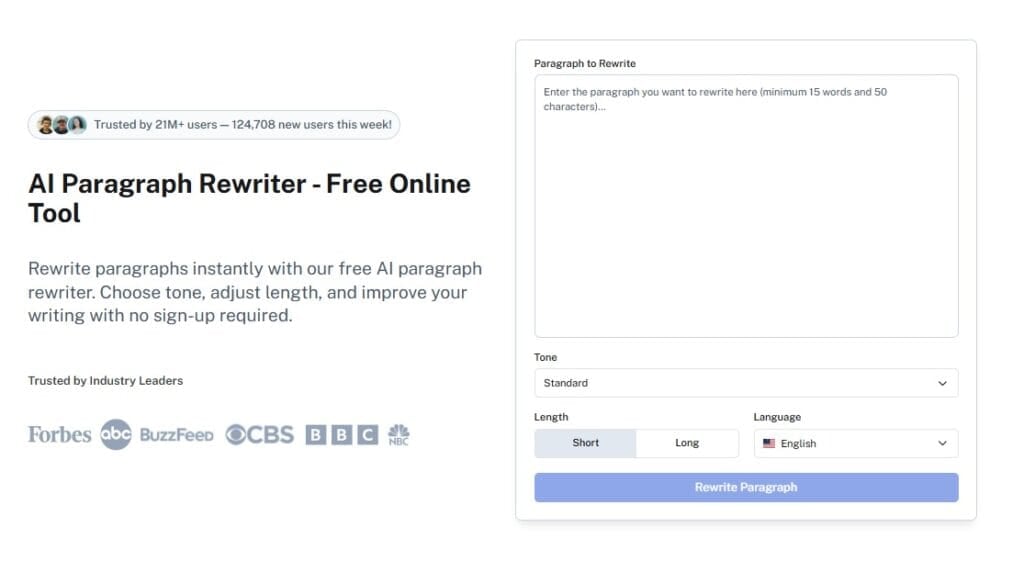
Pro Tip: If you find yourself struggling to clearly convey sarcasm in your own writing, tools like Undetectable’s AI Paragraph Rewriter make it easy to fine-tune your tone and create both sarcastic and sincere examples of the same idea.
Where Sarcasm Commonly Appears
Once you know how to spot it, you’ll see that sarcasm permeates nearly every aspect of our culture and conversations.
Here are just a few examples worth highlighting:
- Sarcasm in literature: Writers have long used sarcasm to poke holes in social norms and call out hypocrisy. Mark Twain, Oscar Wilde, and Jane Austen were especially good at this.
- Sarcasm in television and film: Sarcasm also thrives on screen. For example, the characters Chandler Bing and Dr. House rely on sharp, sarcastic remarks to deflect emotion or express frustration.
- Sarcasm in everyday conversation: Day to day, sarcasm offers an easy way for people to connect with others, without having to be overly direct or confrontational.
Using Sarcasm with Control
Sarcasm is a high-risk, high-reward form of communication. When it lands, you’re witty and humorous. But when it doesn’t, you seem like a jerk. That’s why using it with care and control is absolutely essential.
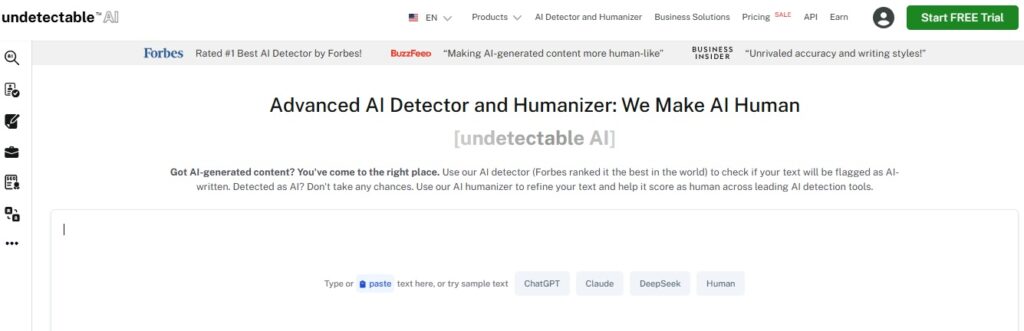
If you’re not quite sure how sarcasm will come across in your writing, tools like Undetectable AI’s Humanizer and AI Detector can be surprisingly helpful for making sure sarcastic phrasing sounds natural (and not too harsh).
Try our AI Detector and Humanizer in the widget below!
Frequently Asked Questions About Sarcasm as a Literary Device
What is the definition of sarcasm?
Sarcasm is a form of verbal irony where someone says the exact opposite of what they really mean, usually to mock or convey contempt.
What are some synonyms for sarcasm?
Common synonyms for sarcasm include:
– Mockery
– Ridicule
– Sneering humor
– Cutting wit
– Dry or biting humor
What is self-deprecating sarcasm?
Self-deprecating sarcasm is when someone directs sarcastic humor at themselves instead of others. People often use it to seem more relatable or avoid embarrassment.
What’s the difference between sarcasm, parody, and satire?
The main difference between sarcasm, parody, and satire comes down to scope.
Here’s a quick overview of each:
– Sarcasm is usually short, sharp, and directed at a specific person or situation.
– Parody imitates a style or genre for humorous effect.
– Satire uses humor, exaggeration, or irony to criticize society or human behavior more broadly. Sarcasm can appear inside satire, but satire doesn’t have to be sarcastic.
Is all verbal irony sarcastic?
No. Sarcasm is a type of verbal irony, but not all verbal irony is necessarily sarcastic. The key difference is that verbal irony can be neutral or playful, while sarcasm usually carries a sharper intent.
Conclusion
Even though sarcasm comes from a word that literally means “to tear flesh,” most sarcasm today is relatively harmless.
However, modern sarcasm still has an edge to it, and it’s important to remember how easily it can be misread or misunderstood.
Because sarcasm depends so heavily on tone, timing, and context, using it thoughtfully is key to making sure it makes people laugh (not cringe).
Make sure your tone lands exactly as intended—polish and humanize your writing with Undetectable AI.