
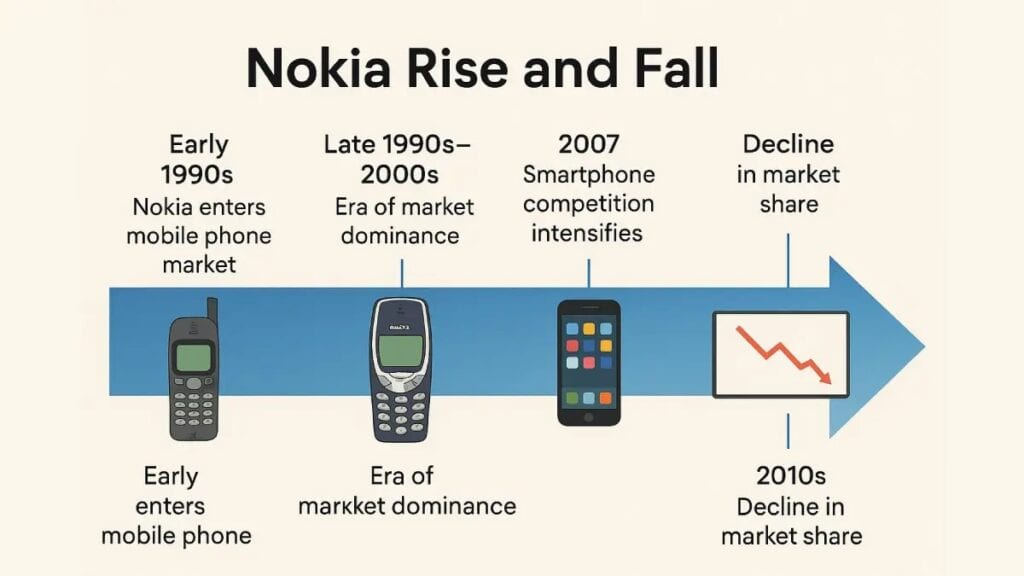
In 2008, Nokia held 40% of the global mobile phone market.
They had a strategy.
They had resources.
They even had early prototypes of touchscreen phones.
But they lacked a strategic planning process that could adapt fast enough. By 2013, their phone business was sold to Microsoft for a fraction of its value.
The lesson?
A plan on paper means nothing without a process to execute it.
In this blog, we’re going to learn what is strategic planning, how to set clear goals and objectives, analyze strengths and use AI to support your strategic planning.
Let’s get into it.
Key Takeaways
- Strategic planning is your roadmap. It sets direction so everyone knows where the business is headed and how to get there.
- Understand what strategic planning means first. It’s about choosing your direction and using resources wisely to reach it.
- The process has five steps: set goals, assess strengths/risks, plan actions, assign owners, and track progress.
- Strategic workforce planning is critical. Without the right people, even the best strategy won’t work.
- In simple terms, it ensures you have the right talent in the right roles at the right time.
- Goals need ownership. Assign a person, a deadline, and a success metric to each one.
- Strategy is ongoing. Review regularly and adjust to stay aligned and effective.
What is Strategic Planning?
Here’s the strategic planning definition:
Strategic planning is the company’s master plan. It’s the process of deciding where the business is going and how it will spend its money and use its people to get there.
Imagine a pyramid. A strategic plan has 7 parts, and each level needs the one below it to stay standing.


Never Worry About AI Detecting Your Texts Again. Undetectable AI Can Help You:
- Make your AI assisted writing appear human-like.
- Bypass all major AI detection tools with just one click.
- Use AI safely and confidently in school and work.
- Vision: The “Dream.” Where do we want to be in 10 years?
- Mission: The “Purpose.” What are we doing right now to reach that dream?
- Values: The “Rules.” How do we behave? (e.g., “We are always honest.”)
- Goals: The “Big Wins.” What major things do we need to achieve?
- Strategy: The “Map.” Which path are we taking to reach our goals?
- Approach: The “Style.” How are we going to stand out from others?
- Tactics: The “To-Do List.” The daily tasks that keep us moving.
Strategic workforce planning is a subset of strategic planning focused specifically on people.
Let’s understand their difference:
| Strategic Planning | Strategic Workforce Planning |
| The “What” and “Where” | The “Who” |
| Deciding the destination | Making sure you have the right team to get there |
| Example: We want to build the world’s best AI software. | Example: Do we have enough AI coders to build it? |
What is strategic workforce planning in practice? Here’s a real-world example:
Tesla didn’t just want to make cars, their big plan was to change how the world uses energy.
- The Problem: They realized they couldn’t reach their goal because they didn’t have enough batteries.
- The Solution: Instead of just hiring more car designers, they used strategic workforce planning to hire Chemical Engineers and Mining Experts.
- The Result: By hiring the “Who” (the experts) to match their “Where” (energy storage), they were able to build their own lithium refineries and battery factories.
Setting Clear Goals and Objectives
Most teams stay busy because either their goals are too vague (like “grow revenue“), they have too many priorities (having 20 priorities means you have zero), or their goals don’t match their big-picture strategic planning approach.
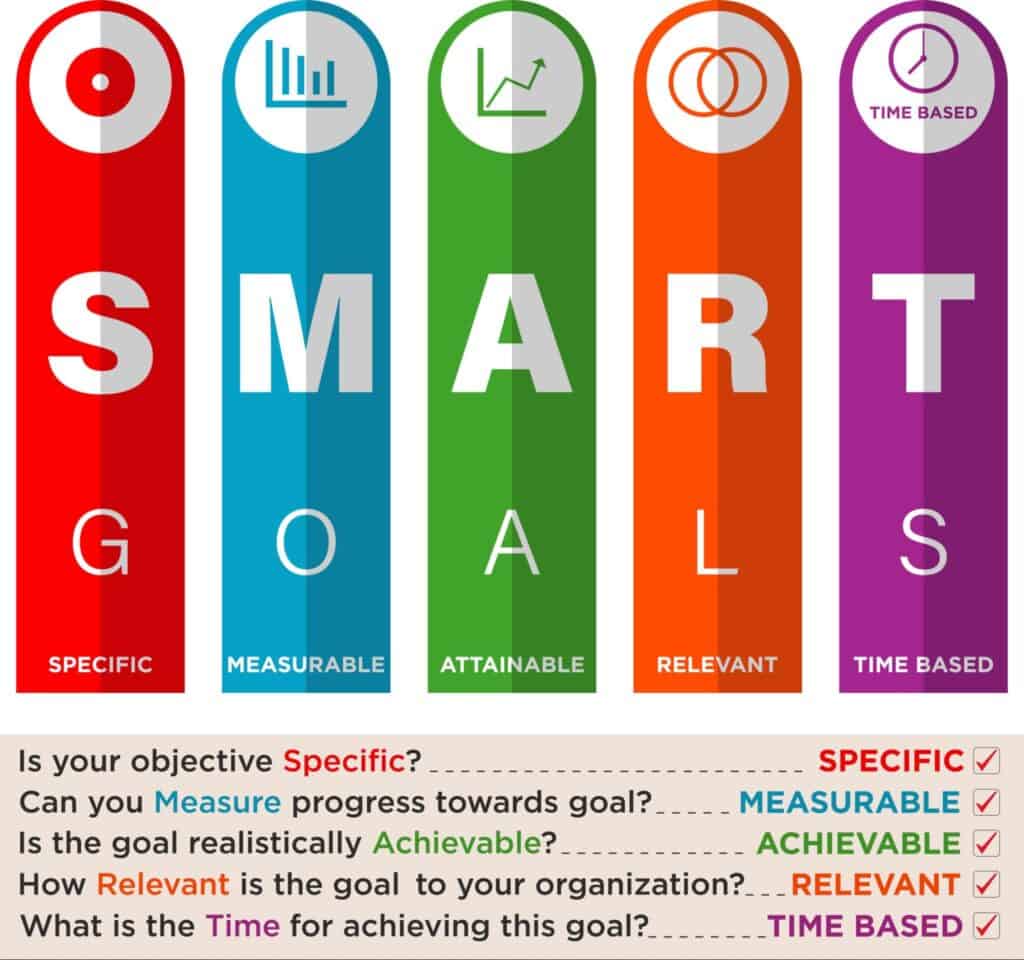
You’ve probably heard of SMART (Specific, Measurable, Achievable, Relevant, and Time-bound). But what does it look like in real life?
The Vague Way: “Improve customer satisfaction.” (How? By when? By how much?)
The SMART Way: “Increase our customer happiness score from 42 to 60 by December 31, 2026, by answering support emails in under 4 hours.”
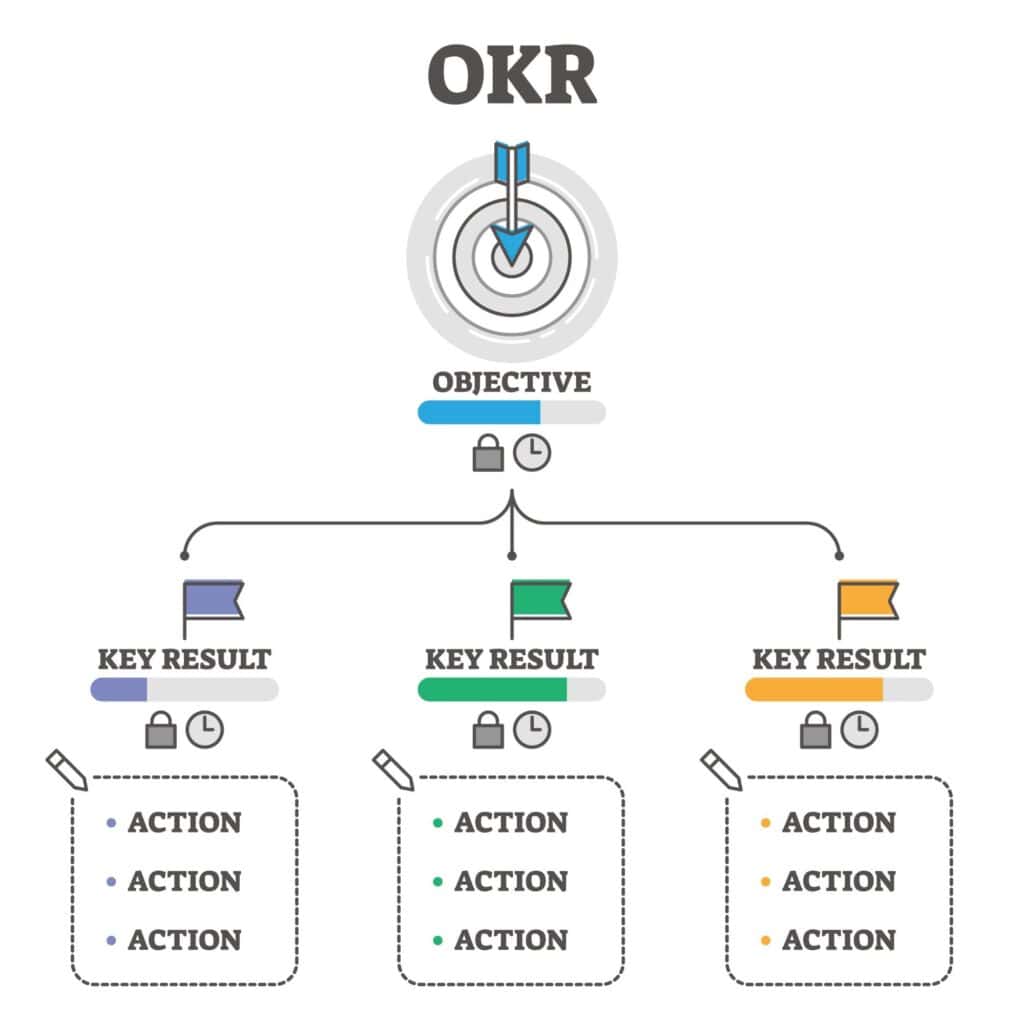
Big companies like Google use OKRs (Objectives and Key Results) to stay on track, and this is a core part of any strong strategic planning process.
Think of it as a destination and a GPS.
- The Objective (The Destination): A big, inspiring goal.
- Example: “Become the #1 brand for first-time homebuyers.”
- Key Results (The GPS): 3–5 specific numbers that prove you are getting there.
- Example: “Get 500 new newsletter sign-ups every month from this group.”
Analyzing Strengths Weaknesses Opportunities Threats
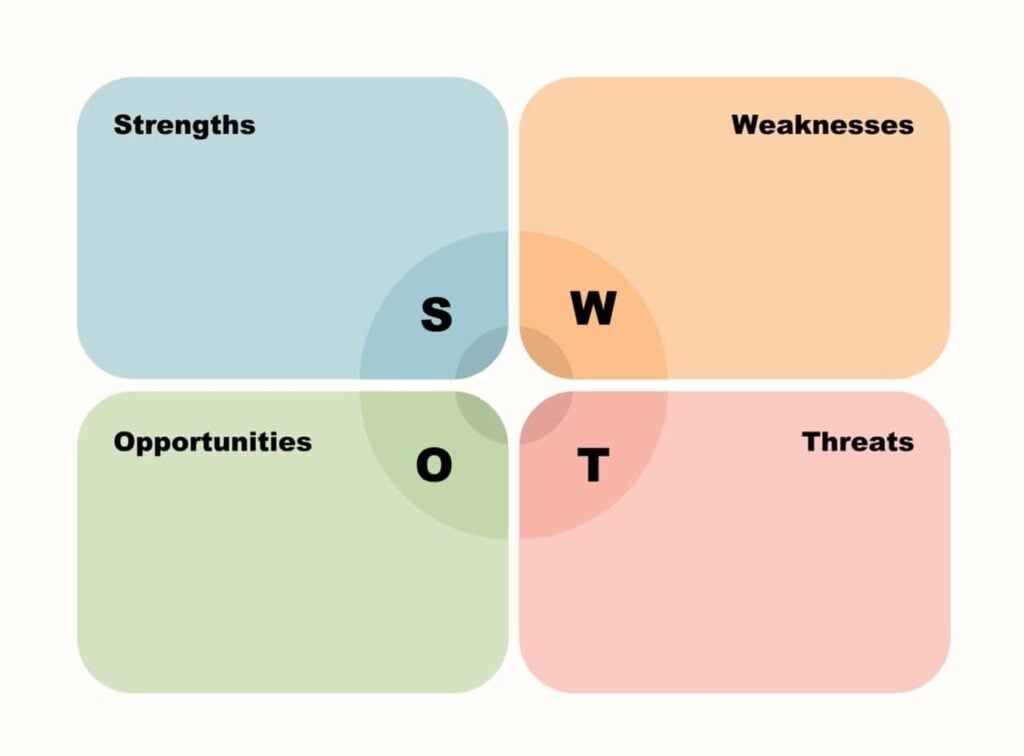
A SWOT analysis is the foundation of any solid strategic planning process. It helps you look at your organization’s internal capabilities (what you control) and the external environment (what you don’t control).
- Strengths (Internal): What do you do better than anyone else?
- E.g., unique tech, a famous brand, or a high-performing team)
- Weaknesses (Internal): Where do you struggle?
- E.g., outdated software, high staff turnover, or a small budget)
- Opportunities (External): What trends in the world can you use?
- E.g., a new market opening up or a competitor failing)
- Threats (External): What outside factors could hurt you?
- E.g., new government laws, rising costs, or a shift in customer tastes)
- Match methods to research goals
Before you run a SWOT (one of the most critical steps in the strategic planning process)decide what you’re trying to learn.
- Are you assessing readiness to enter a new market?
- Diagnosing why growth has stalled?
- Planning a product launch?
The research approach changes based on the question.
| For internal analysis | Employee surveys, departmental performance data, sales reports, exit interview patterns, financial statements |
| For external analysis | Customer feedback, competitor analysis, industry reports (Gartner, McKinsey, IBISWorld), Google Trends, regulatory news |
Practical step: Create a 2×2 SWOT grid and run a 90-minute internal workshop. Invite people from different departments. Each person silently writes 3 items per quadrant, then the group discusses and clusters themes. Silence first prevents groupthink.
- Consider time and resources
SWOT data has a shelf life. A strength from 2022 may be a weakness in 2026. A threat that seemed distant may now be at your doorstep.
This is why any solid strategic plan must be built on current, time-bound data
Practical steps:
- Time-box your SWOT. Plan for a 3–5 year horizon, not 10+. Bank Hapoalim (Israel’s largest bank) negotiated a 5-year planning window with leadership after debate. Their Chief Strategy Officer noted that for banking in Israel, 4–5 years ahead was practical while a decade felt irrelevant.
- Assign a SWOT owner per quadrant. Don’t have one person build the whole thing. Let Finance own the Strengths/Weaknesses from a financial lens, let Sales own market Opportunities/Threats.
- Resource reality check: For each Opportunity identified, immediately ask: “Do we have the budget, people, and time to pursue this in the next 12 months?” If not, mark it as a future consideration, not a current priority.
Example: A mid-sized e-commerce brand identifying “expanding to international markets” as an opportunity should immediately audit:
Do we have multilingual customer support? Are there regulatory barriers? Can our current fulfillment infrastructure handle cross-border logistics?
- Ensure data accuracy
Here are the practical steps to ensure data accuracy in strategic planning process:
- Triangulate your sources. A SWOT entry is credible when at least 2–3 independent data points support it.
- Date-stamp every data point. A market share figure from 2021 should be labeled as such. During your SWOT review, flag any data older than 18 months for re-verification.
- Separate facts from assumptions. In your SWOT grid, use different colors or labels:
| Green | Verified with data |
| Yellow | Team perception (needs validation) |
| Red | Assumption with no data |
- Use primary data when possible. Customer interviews, NPS surveys, and internal financial data are more reliable than secondhand reports.
Strategic planning takes a lot of work. And teams use AI tools to help draft these documents. However, AI writing has one big problem: it sounds like an AI wrote it.
When you present a big plan or market research to your boss or board of directors, your writing needs to be clear, natural, and trustworthy. If it sounds robotic, your ideas might not be taken seriously.
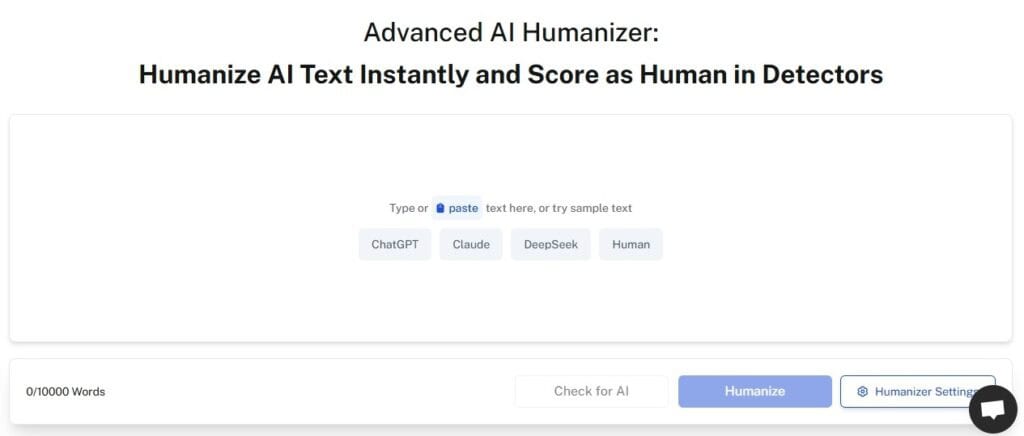
This is where the Undetectable AI’s AI Humanizer becomes a lifesaver for planners.
After you use AI to draft your SWOT analysis or a summary of your competitors, you can run it through the humanizer.
A Quick Example:
- Your team used ChatGPT to write a 2-page report on your competitors.
- Before sending it to the VP of Strategy, paste it into the AI Humanizer. Select the “Professional” tone.
- You get a version that keeps all your smart ideas but removes the robotic patterns.
It sounds natural and ready to share.
How Undetectable AI Supports Strategic Planning
When your team compiles market reports and competitive intelligence as part of the strategic planning process, there is a risk of unintentional overlap.
If your strategic plan document looks like a patchwork of AI-generated text or copied source material, your professional reputation is at risk.
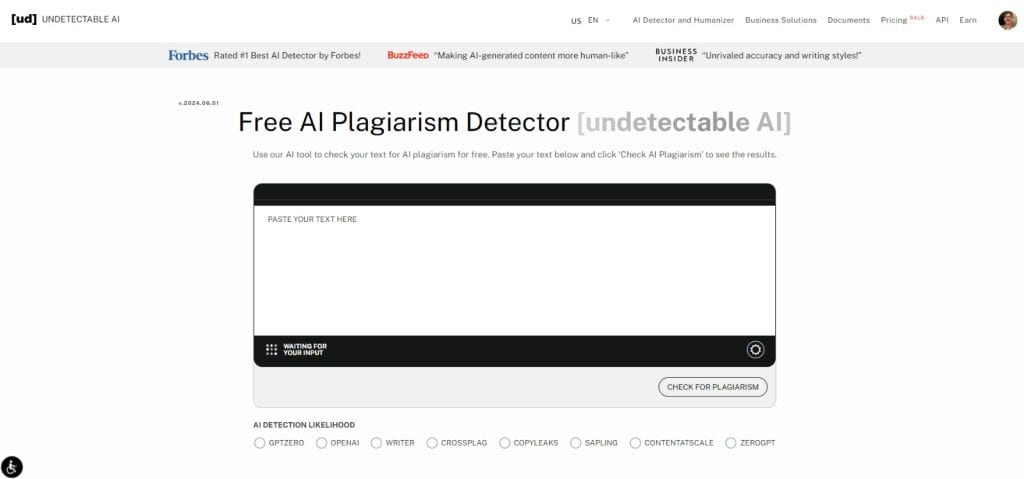
That’s why, before finalizing any report, run it through the Undetectable AI’s AI Plagiarism Checker.
It scans your document to see if any portion flags as AI-generated or overlaps with existing online content. This is a must-have for organizations that require strict audit trails and compliance.
Not only that, but undetectable AI also helps in citing specific sources in your document.
Strategic plans live and die on the strength of their evidence.
If you are citing data from Gartner, McKinsey, or Harvard Business Review, those sources must be formatted perfectly.
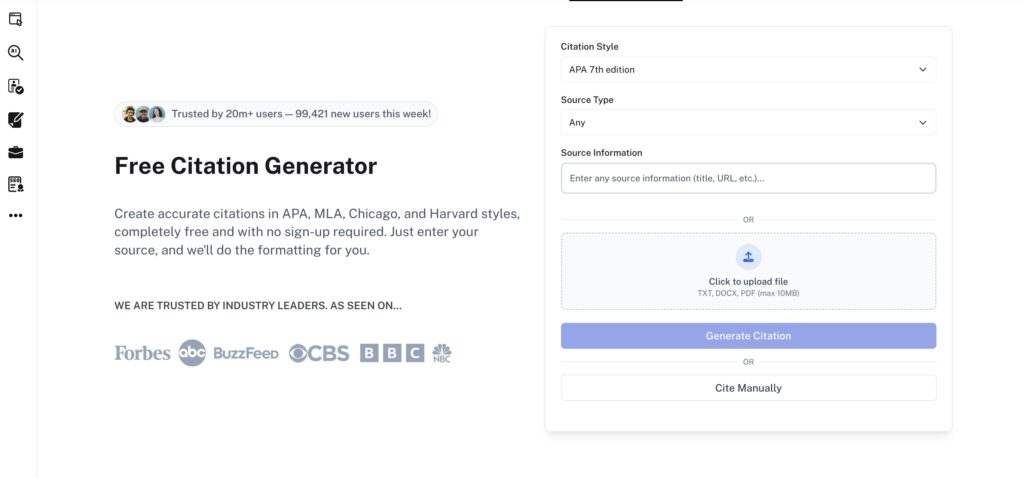
And manual formatting is very tedious. The Undetectable AI’s Citation Generator handles the heavy lifting.
Simply paste a URL or DOI, select your required style (APA, MLA, Harvard, or Chicago), and get a perfectly formatted reference in seconds.
Creating Action Plans for Teams
To move from a big-picture strategic planning goal to daily progress, follow these specific steps:
Step 1: Break it Down into 2-Week Sprints
Don’t look at a 6-month project as one giant block. Divide the goal into small, manageable 2-week chunks called sprints.
- Example: Instead of “Build a new website by June,” your first sprint is: “Complete wireframes for the homepage and contact page by next Friday.”
Step 2: Resource Leveling
Before finalizing the plan, check your team’s workload. Managers accidentally give 80% of the tasks to their top performer.
- Action: Use a workload view in tools like Trello or Asana to ensure tasks are spread out fairly.
Step 3: Define the Communication Protocol
Decide exactly where updates live. Nothing kills a strategic planning process faster than searching through emails for an update.
- Action: Set a rule: “All task updates go in the Slack #project-alpha channel, and status changes happen in Monday.com by 4:00 PM every Thursday.”
Strategy vs. Execution
| Feature | Strategic Goal | Actionable Task |
| Focus | Long-term vision (1–3 years) | Short-term activity (Days/Weeks) |
| Example | “Become the #1 luxury car brand in the UK.” | “Book 3 influencer test-drive sessions by Oct 15.” |
| Ownership | Department or Company-wide | Specific Individual (e.g., Sana) |
| Measurement | Market share, Annual Revenue | “Completed” or “Not Completed” status |
The biggest reason strategic plans fail is that instructions are too complex. If your team doesn’t understand the task, they can’t do it.
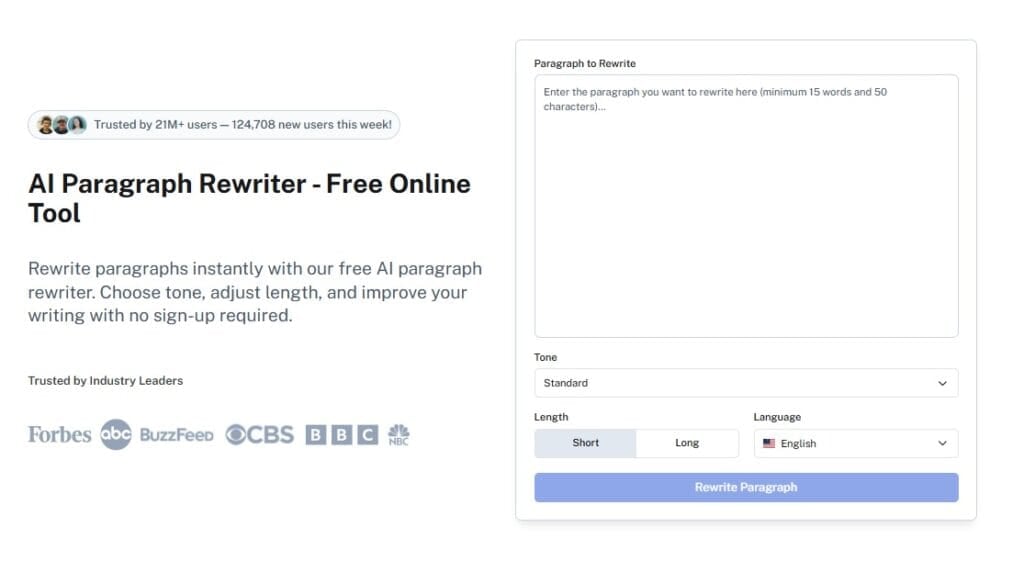
This is where the Undetectable AI’s Paragraph Rewriter becomes a necessity for managers.
Managers use corporate speak that sounds smart but confuses employees. This Undetectable AI Paragraph Rewriter turns your complex strategic planning goals into simple, clear tasks.
Monitoring Progress and Adjusting Strategy
The best teams treat their strategic plan as a living thing. If you only look at your goals once a year, you’ve already lost.
Use visual dashboards (like PowerBI, Monday.com, or Asana) so everyone can see how the team is doing in real-time.
When progress is visible, people stay accountable. This is a non-negotiable part of any effective strategic planning process.
Practical Steps to Stay on Track
- Monthly Strategy Reviews: Instead of waiting for a massive year-end meeting, hold a short strategic planning check-in every month. Look at your SMART goals and OKRs. Are you hitting your numbers? If not, why?
- The Pivot or Persevere Meeting: At the end of every quarter (every 3 months), ask one honest question: “Is this still working?” If the market has shifted, for example, a new AI tool just launched that changes your entire industry, don’t be afraid to pivot (change your strategic plan). If things are going well, persevere (keep going).
- Build Feedback Loops: Your front-line staff usually know about problems before the managers do. Regularly ask them: “What is stopping you from following our strategy?” This kind of ground-level intelligence is what keeps your strategic planning process rooted in reality.
Monitoring is a continuous loop of Action → Measurement → Adjustment
Check out our AI Detector and Humanizer in the widget below!
Final Thoughts
Most businesses have a strategic plan sitting in a drawer somewhere, collecting dust.
The strategic planning process is not a one-time boardroom event.
It is an ongoing cycle of setting clear goals, understanding your strengths and weaknesses through SWOT analysis, building action plans with real ownership, and continuously monitoring your progress. Every step feeds into the next.
And remember, strategic workforce planning is the hidden engine that powers all of it.
You can have the most ambitious strategic plan in the world, but if you don’t have the right people, the right skills, and the right roles aligned to your goals, the plan will fail before it begins.
That is what strategic workforce planning is designed to prevent.
Whether you are a startup figuring out your first 12-month roadmap or an enterprise refining a 5-year vision, the rules are the same: start with a clear strategic planning definition in mind, build your plan around real data, assign every goal to a real person, and never stop reviewing.
Strategy is not about perfection. It is about momentum.
Turn your strategic plans into clear, actionable, and human sounding content with Undetectable AI.