
English grammar can often feel like a labyrinth, and understanding its essential rules is key. Among the many perplexing pairs of words, few cause as much head-scratching as the choice between layed or laid.
You’ve likely seen both forms in writing, perhaps even used them interchangeably, and then paused, wondering if you’ve made a mistake.
It’s a common point of confusion, one that can make you second-guess your every sentence.
But here’s the thing: while one of these words is a perfectly legitimate and frequently used term, the other is, for all intents and purposes, a grammatical phantom: a common misspelling that doesn’t actually exist in standard English.
These seemingly arbitrary rules actually help you write with clarity and precision, so your message is understood exactly as you intend.
Just as with other common grammatical confusions like ‘Your vs. You’re’, mastering these nuances elevates your writing from merely understandable to truly authoritative.
So, let’s unravel this linguistic puzzle and definitively answer the question: which one is correct, layed or laid?
By the end of this exploration, you’ll not only know the right answer but also understand the underlying principles that will help you confidently use these words every time.
Viktiga slutsatser
- “Layed” is a common misspelling and is almost always incorrect in standard English.
- “Laid” is the correct past tense and past participle form of the transitive verb “to lay,” meaning to place something down.
- The confusion often stems from the irregular verb conjugations of “lay” and “lie.”
- Understanding whether a verb requires a direct object is key to using “lay” and “lie” (and thus “laid”) correctly.
What Does Layed vs. Laid Mean?
The core of the confusion between layed or laid usage lies in the relationship between two distinct verbs: the word lie and the verb lay. This layed laid confusion is common.
Many English speakers mistakenly believe “layed” is the past tense form of “to lay,” but this is a common grammatical mistake.
The correct past tense and past participle form of “to lay” is, in fact, “laid.” The word “layed” is not a standard word in the English language and should be avoided.


Oroa dig aldrig för att AI upptäcker dina texter igen. Undetectable AI Kan hjälpa dig:
- Få din AI-assisterade skrivning att synas människoliknande.
- Bypass alla större AI-detekteringsverktyg med bara ett klick.
- Användning AI säkert och självsäkert i skolan och på jobbet.
It’s a non-standard past tense form that has crept into usage due to the irregular nature of these verbs and the general tendency to add “-ed” for past tense forms, as is the case with most verbs in English.
This often leads to questions like “Is spelling part of grammar?” in which the lines between different linguistic concepts can blur.
However, “lay” is an irregular verb, and its past tense doesn’t follow the same rules as regular verbs.
Understanding this distinction is crucial for clear communication, especially when discussing actions involving placing an object or reclining in a horizontal position.
The Transitive Verb “To Lay”
A transitive verb like “to lay” always requires a direct object. You lay något down. Think of it as an action performed på something else.
For example, you lay a book on the table, you lay bricks for a wall, or you lay a baby in a crib. The present tense of this verb is “lay.” Its simple past tense is “laid,” and its past participle is also “laid.”
This is how to use the term “laid” correctly. When you’re talking about putting something down in the past, you’re almost certainly referring to “laid.”
If a company laid off workers, they performed an action on an object (the employees). Even when birds lay eggs, they are using the transitive verb form correctly.
The Intransitive Verb “To Lie”
In contrast, the verb lie is an intransitive verb, meaning it does not take a direct object. You simply lie down; you don’t lie något down. It describes a state of reclining or rest. You might rest in a house.
For instance, you lie on the couch, or a dog lies in the sun. You might lie in bed to sleep, or you might fall asleep lying on the couch. If you fell asleep in bed, you lay there all night. You use the verb lie to describe getting into bed.
The present tense of this verb is “lie.” Its simple past tense is “lay” (yes, this is where it gets truly confusing!), and its past participle is “lain.”
This overlap in forms is a significant source of grammatical confusion for many. It can lead to the incorrect use of “layed” when “laid” is appropriate, or even using “lay” when “lie” is intended.
To avoid these mistakes, always consider whether a direct object is present in your sentence.
Conjugations of Lay vs. Lie
To truly grasp the difference and make sure you’re using the correct word, a clear understanding of their conjugations is essential.
This handy chart and simple chart will help clarify the various forms:
| Tense | To Lay (Transitive – requires a direct object) | To Lie (Intransitive – no direct object) |
|---|---|---|
| Nuvarande | lay (I lay the book down) | lie (I lie down) |
| Tidigare | laid (I laid the book down) | lay (I lay down yesterday) |
| Partiklar i förfluten tid | laid (I have laid the book down) | lain (I have lain down) |
| Partiklar i presens | laying (I am laying the book down) | lying (I am lying down) |
Notice how the past tense of lie is “lay,” which is the same as the present tense of “to lay.” This is the common point of error.
Remembering that “layed” is not a word in standard English is a critical step in overcoming this confusion. When you need the correct past tense of “to lay,” always use “laid.”
Examples of Using Laid Correctly

Let’s look at some practical examples to solidify your understanding of when to use “laid.” Here are more examples to help you figure it out. These examples show the definition in action.
Remember, “laid” is the past tense and past participle of the transitive verb “to lay,” meaning to place something down. If you can ask “laid what?” and get answers, then “laid” is the correct word.
- She laid the baby in the crib. (Laid what? The baby.)
- The workers laid the bricks in a neat row. (Laid what? The bricks.)
- He laid his cards on the table. (Laid what? His cards.)
- The company laid off a significant portion of its workforce. (Laid what? A portion of its workforce. Here, “laid off” is a phrasal verb meaning to terminate employment.)
- The foundation was laid last week. (Here, “laid” is used in the passive voice, but it still implies an object was placed.)
- The presentation was laid out clearly for the audience. (Laid out what? The presentation. “Laid out” means arranged or displayed.)
In all these instances, “laid” correctly conveys the action of placing something. The common misspelling “layed” would be wrong in every one of these tricky phrases.
How to Use and Remember the Difference
Mastering the distinction between “lay” and “lie,” and consequently knowing when to use “laid” versus the incorrect “layed,” can be simplified with a few memory tricks and a clear understanding of the rules.
The key is the direct object test.
- The Direct Object Test: Ask yourself if the verb has a direct object. If you are performing an action on something, use a form of “lay.” If the subject is simply reclining or resting, use a form of the verb lie.
- Exempel: “I need to lay the groceries on the counter.” (Lay vad? The groceries. So, “lay” is correct.)
- Exempel: “I need to lie down for a nap.” (Lie vad? No direct object. So, “lie” is correct.)
- Past Tense of “Lay” is “Laid”: Always remember that the past tense of “to lay” is “laid.” Never “layed.” This is the most crucial rule for this specific confusion. If you’re talking about an action of placing something in the past, “laid” is your correct past tense form.
- “Lie” for Reclining: Associate the word lie with reclining, resting, or being in a horizontal position. Think of the phrase “sleeping dogs lie.” The past tense of lie is “lay.” So, “Yesterday, I lay on the couch.” This can be confusing because “lay” is also the present tense of the transitive verb. Focus on the direct object test.
- Practice and Exposure: The more you read and write, paying attention to these distinctions, the more natural they will become. For those learning English as a second language, consistent practice with examples is invaluable. A second language learner might find this great explanation helpful. You’ll start to develop a natural sense for the correct word.

Still confused about this tricky grammar rule? Get a clear, simple explanation instantly with our Undetectable AI’s AI-frågelösare.
Common Uses of the Word Lay
To truly master the word lay, it helps to see how many everyday phrases and expressions rely on it. The verb lay shows up constantly in English, from the practical to the idiomatic.
Familiarize yourself with these uses:
| Kategori | Exempel |
|---|---|
| Everyday physical actions | lay a book on the table, lay a baby down in a crib, lay a cloth over a surface, lay a fire in the fireplace, lay the table for dinner |
| Construction and trades | lay bricks to build a wall, lay a foundation before you build a house, lay pipes, lay wires, lay irrigation lines |
| Work and professional life | lay out a plan, lay out game plans, lay out expectations, lay out pages, lay out architecture, lay out arguments, lay off workers |
| Idioms and figurative use | lay the groundwork, lay the blame, lay it on the line, lay your cards on the table, lay bare the facts, lay to rest, lay siege to a problem, lay the scene for a story |
| Nature and animals | lay eggs, lay down their arms, lay their hearts bare |
| Personal and financial | lay aside your concerns, lay away money for a rainy day, lay in supplies, lay a wager, lay a claim, lay a charge, lay a course |
| Physical contact and perception | lay a hand on someone’s shoulder, lay eyes on something for the first time, lay stress on a syllable, lay emphasis on a point |
The point is that lay is one of the most versatile and frequently used verbs in the English language, which is exactly why getting its past tense right matters so much.
Every single one of these uses follows the same pattern: lay requires a direct object, and its simple past tense is always laid, never layed.
Common Pitfalls and Why We Get It Wrong
The persistent confusion surrounding layed or laid and the broader “lay” vs. “lie” debate stems from several factors deeply embedded in the english language.
One primary reason is that “lay” is an irregular verb, and many writers mistakenly try to apply the rules of regular verbs, which form their past tense by adding “-ed.” This leads directly to the creation of the incorrect “layed.”
Our brains naturally seek patterns, and when a word deviates from the most common pattern, it creates a cognitive hurdle.
Furthermore, the fact that the past tense of lie is “lay” (which is also the present tense of the transitive verb “to lay”) creates a linguistic trap. This overlap in forms is a significant source of error, making it challenging to differentiate without carefully considering the object.
The subtle difference in meaning (one requiring a direct object and the other not) is often overlooked in casual conversation and writing, further entrenching incorrect usage. Even native English speakers frequently struggle with this pair, highlighting its inherent difficulty.
The key to overcoming these mistakes is a conscious effort to apply the direct object test and to remember that “layed” is simply not the correct spelling. Getting the correct spelling takes practice.
Using Tech to Fix Your Spelling and Grammar
Even the most diligent writers can overlook a grammatical error or a spelling mistake. This is particularly true for tricky pairs like layed or laid. Fortunately, technology offers powerful solutions to help you maintain impeccable writing standards.
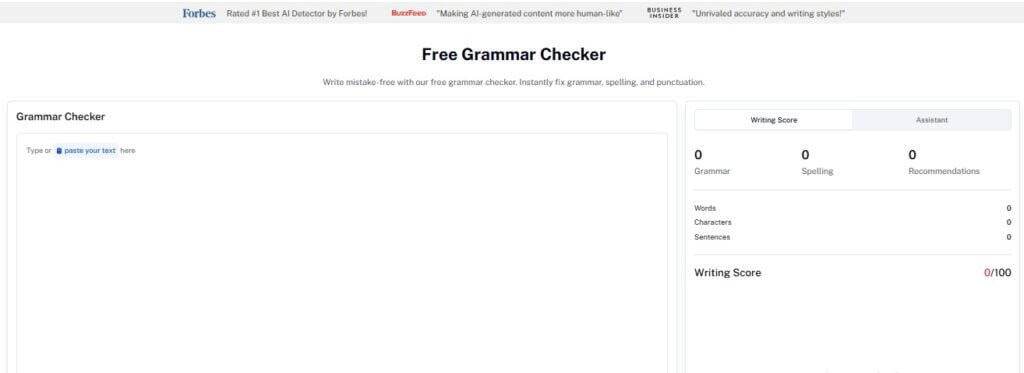
Verktyg som oupptäckbara AI:s Grammatikkontroll are designed to instantly identify and correct common grammatical mistakes, including the subtle nuances of verb conjugations.
AI-powered checkers go beyond basic spelling checks, analyzing sentence structure, context, and word usage to provide accurate answers.
They can be an invaluable asset, acting as a second pair of eyes to catch errors you might miss, making sure your documents and emails are 100% error-free.
By leveraging such advanced tools, you can write with greater confidence, knowing that your grammar is polished and precise, allowing you to focus on the message rather than getting bogged down in linguistic complexities.
This can be especially helpful when you’re trying to remember if you should have used “laid off” or “layed off” in a professional email.
How Undetectable AI Perfects Your Tone
Beyond mere grammar and spelling, the tone of your writing plays a critical role in how your message is received. A grammatically perfect document can still fall flat if its tone is inappropriate for the audience or purpose.
Det är här som Undetectable AI:s AI Humanizer kan hjälpa till.
While using the correct past tense like “laid” is important, the Humanizer helps you maintain a natural, authentic, and engaging voice. It refines your text to sound less robotic and more human, ensuring your writing feels personal, professional, and authentic.
You might be crafting a formal report, a casual email, or a compelling blog post, and the Humanizer will adapt your content to resonate effectively with your readers.
It helps you avoid the generic, sterile language often associated with AI-generated text, allowing your unique voice to shine through.
This means you can confidently write, knowing that your message is not only grammatically sound but also perfectly tuned to convey the right sentiment and impact.
Prova verktygen AI Detector och Humanizer i widgeten nedan!
Frequently Asked Questions About Laying and Lying
Is “layed” ever a correct word?
No, “layed” is not a correct word in standard English. It is a common misspelling of “laid,” which is the past tense and past participle of the verb “to lay.” Always use “laid” when referring to the past action of placing something.
What is the difference between “lay” and “lie”?
The main difference is that “lay” is a transitive verb, meaning it requires a direct object (you lay något down), while “lie” is an intransitive verb, meaning it does not take a direct object (you simply lie down). The past tense of “lay” is “laid,” and the past tense of lie is “lay.”
How can I remember when to use “laid”?
To remember when to use “laid,” think of it as the past action of placing an object. If you can ask “laid what?” and there’s an answer, then “laid” is the correct choice. For example, “She laid the book down.” You laid Boken.
Is “laid out” or “layed out” correct?
“Laid out” is the correct phrase. “Laid” is the past tense and past participle of “to lay,” so when referring to something being arranged or spread out in the past, “laid out” is the grammatically correct form. “Layed out” is incorrect.
What about “laid off” or “layed off”?
Similarly, “laid off” is the correct phrase. It refers to the past action of terminating someone’s employment. Since “laid” is the correct past tense of the verb lay, it is used in this phrasal verb. “Layed off” is a common misspelling and should not be used.
The Final Word on Mastering the Nuances of Language
Navigating the intricacies of the English language, especially when faced with confusing pairs like layed or laid, can feel like a daunting task.
Yet, with a clear understanding of the rules, a few helpful memory aids, and the support of advanced technological tools, mastering these distinctions is entirely achievable.
We’ve established that “layed” is a grammatical error, a phantom word born from the irregular nature of verbs, while “laid” stands firm as the correct past tense and past participle of “to lay.”
By consistently applying the direct object test and remembering the conjugations of “lay” and the verb lie, you can confidently wield these words with precision.
For further assistance in refining your prose, consider exploring how an AI SEO Skribent Blogging Tool can help. You can also explore other AI text tools to further enhance your writing. Keep practicing, keep learning, and let your words reflect the mastery you’ve achieved.
Write with confidence and eliminate grammar mistakes instantly with Odetekterbar AI.