
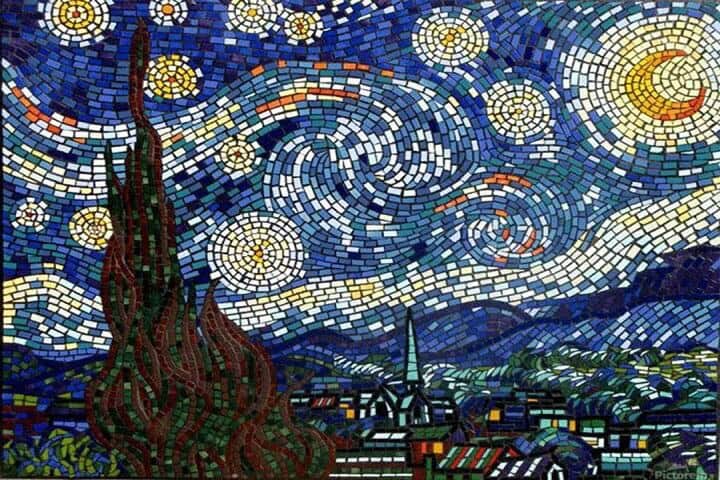
Mosaic is an art masterpiece made by joining small pieces together to create a beautiful image.
But in writing, stitching together pieces of someone else’s words into a new document is a dangerous trap called mosaic plagiarism.
If you’ve lived through the post-2019 era of digital learning, you know the stakes have never been higher. Falling into this patchwork trap can lead to failed assignments or a ruined professional reputation.
To keep your work safe, you need to know what is mosaic plagiarism and how to spot it.
This guide explains the mosaic plagiarism definition, shows you real examples of mosaic plagiarism, and gives you a simple 2026 plan to keep your writing 100% original.
Hadi konuya girelim.
Önemli Çıkarımlar
- Mosaic plagiarism definition → It’s the act of stitching together source material with minor word changes.
- Simply swapping synonyms while keeping the same sentence structure is still plagiarism.
- High-profile figures have faced career-ending charges due to examples of mosaic plagiarism.
- To avoid this, always rewrite from memory and use proper citations for both words and ideas.
- Modern AI tools can inadvertently generate mosaic-style content, making pre-submission checks essential.
What is Mosaic Plagiarism?
To understand what is mosaic plagiarism?, we have to look at the two core components of the term:
- Mosaic is an art form where small, individual pieces of glass or stone are assembled to create a larger image.
- İntihal means presenting someone else’s ideas, research, or words as your own without giving them proper credit.
Buna göre Harvard Guide to Using Sources, the mosaic plagiarism definition is:
“If you copy bits and pieces from a source… changing a few words here and there without either adequately paraphrasing or quoting directly, the result is mosaic plagiarism.”
Yapay Zekanın Mesajlarınızı Algılaması Konusunda Bir Daha Asla Endişelenmeyin. Undetectable AI Sana yardım edebilirim:
- Yapay zeka destekli yazınızın görünmesini sağlayın İnsan gibi.
- Bypass tek bir tıklama ile tüm büyük AI algılama araçları.
- Kullanım YAPAY ZEKA güvenli bir şekilde ve güvenle okulda ve işte.
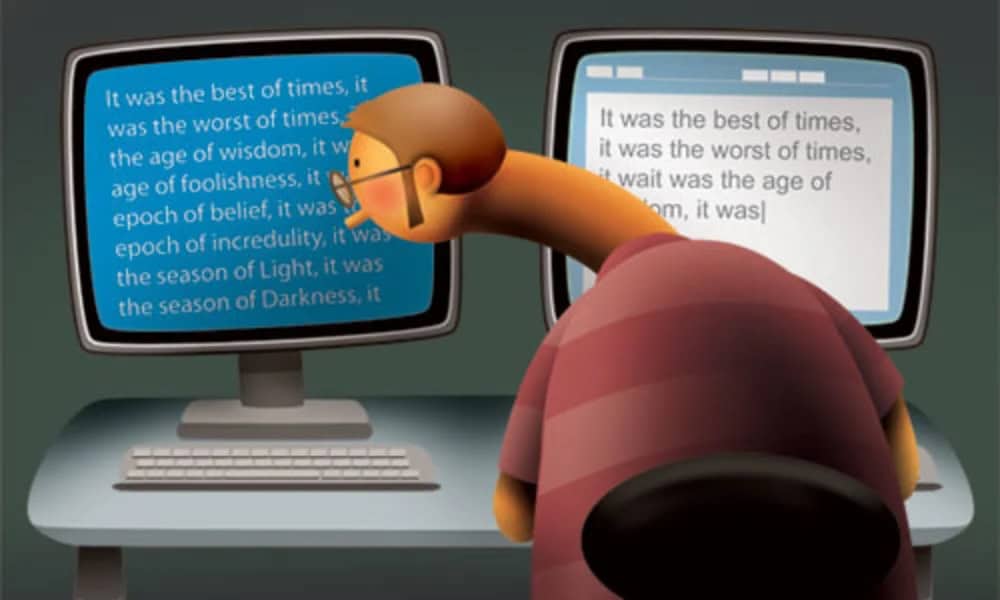
This is also known as Patchwriting veya Incremental Plagiarism.
Mosaic Plagiarism Example:
| Original Source | Mosaic Version |
| “Urbanization has accelerated the loss of biodiversity in coastal ecosystems, fragmenting habitats…” | "The expansion of cities var sped up the erosion of wildlife diversity along shorelines, causing splits in habitats…“ |
- Urbanization → Expansion of cities
- Accelerated → Sped up
- Biodiversity → Wildlife diversity
- Fragmenting → Splits
Without a citation, this is mosaic plagiarism.
Even though words were changed, the sentence structure is identical. Without a citation, this is a classic mosaic plagiarism example.
If you aren’t sure if your paraphrasing is too close to the original, run a quick check through Undetectable AI’s Yapay Zeka İntihal Denetleyicisi. It scans your work against multiple databases to ensure your patchwork doesn’t cross the line before you submit.
Where Does Mosaic Plagiarism Fit in the Spectrum?
Let’s see the full spectrum first:
| Severity Level | Tip | Detection Ease |
| Most Obvious | Global/Complete Plagiarism (submitting someone else’s entire work) | Easy |
| Obvious | Direct/Verbatim Plagiarism (word-for-word copy, no quotes) | Easy |
| Orta düzeyde | Self-Plagiarism (reusing own past work) | Orta düzeyde |
| Subtle | Mosaic/Patchwork Plagiarism | Sert |
| Subtle | Accidental Plagiarism (poor citations, sloppy notes) | Sert |
| Most Subtle | Paraphrasing Plagiarism (idea theft without rewording) | Hardest |
Mosaic plagiarism falls into the grey area because it sits right between direct copy-pasting and original writing.
Understanding what is mosaic plagiarism is essential because it often involves the following:
- Intent Factor: It is accidental. This happens when a writer mixes the source’s words with their own thoughts while taking notes.
- Karmaşıklık: It is hard to catch. While the wording is changed, the idea flow remains exactly the same as the original.
- Ethical Aspect: It is called lazy writing. The writer put in the effort to swap words but failed to show true creativity or original thought.
Common Types of Plagiarism
- Doğrudan İntihal
Direct plagiarism is the word-for-word transcription of a section of someone else’s work without quotation marks, a citation, or permission. It’s the most blatant form.
Örnek:
- Kaynak: “Climate change is primarily driven by the burning of fossil fuels, which releases carbon dioxide into the atmosphere.”
- Plagiarized: “Climate change is primarily driven by the burning of fossil fuels, which releases carbon dioxide into the atmosphere.” (submitted as-is, no citation, no quotes)
It can result in automatic zero on assignments, expulsion in severe cases, and academic probation.
- Kendi Kendine İntihal
Self-plagiarism happens when you submit your own previous work (or parts of it) for a new assignment without permission. It’s also called “recycle plagiarism.”
Örnek:
- Using a research paper written for a high school course in a college assignment
- Recycling sections of a published article into a new submission without disclosure
- Submitting the same essay to two courses simultaneously
While the words are technically yours, academic and professional standards require fresh effort for every new task.
- Kazara İntihal
Accidental plagiarism occurs when a writer fails to cite sources or misquotes them without intending to cheat.
Örnek:
- A researcher copies a quote into their notes without quotation marks.
- A student researches a topic heavily and writes a solid paragraph but forgets to add the citation at the end.
- Using sentence structures or word groupings that are too similar to the source.
Lack of intent does not excuse the action. Plagiarism is treated with the same level of seriousness as intentional cheating and is subject to the same penalties.
- Mozaik İntihal
Mosaic plagiarism means stitching together phrases, sentence patterns, or structural ideas from one or more sources to create a document that looks new.
Örnek:
Original Source: “The rapid industrialization of the 19th century transformed urban landscapes, leading to unprecedented population growth in cities and a shift away from agrarian lifestyles.”
Mosaic Version: “The fast industrial growth of the 1800s changed city environments, resulting in massive population increases in metropolitan areas and a move away from farming-based lives.”
In this mosaic plagiarism example, simply swapping synonyms while maintaining the original sentence’s logic constitutes a violation.
Mosaic vs. Paraphrasing: What’s the Difference?
To better understand what is mosaic plagiarism?, it helps to compare it to proper paraphrasing.
Paraphrasing isn’t plagiarism in itself. In fact, academia expects paraphrasing, because using excessive direct quotes is not best practice.
| Özellik | Proper Paraphrasing | Mozaik İntihal |
| Wording | Completely rewritten in writer’s own voice | Same or very similar to source, with a few word swaps |
| Cümle yapısı | New structure, different from original | Same or near-identical structure |
| Anlamı | Source idea is retained | Source idea retained, but not processed |
| Atıf | Always includes a proper citation | May or may not include citation |
| Original thought | Writer adds their own analysis | Little to no added perspective |
| Detectable by tools? | Generally passes plagiarism checks | Can be flagged by structural-similarity tools |
| Synonym swapping | Full rewriting is used | Relies heavily on thesaurus-substitution |
| Academic acceptability | Fully acceptable and expected | Not acceptable regardless of intent |
| Reader deception | None (source is credited) | Creates false impression of originality |
| Test | No matching footprints | Examples of mosaic plagiarism show matching footprints |
Patchwriting appears in early drafts, especially for students writing in a second language.
If that draft gets submitted as-is, it can become accidental plagiarism. A paraphrasing tool can help you break the mental mold.
Tespit Edilemeyen Yapay Zeka Paraphrasing Aracı rewrites your content from scratch, so the output sounds like you wrote it.
It’s especially useful for academic or technical content where staying too close to the original is an easy trap to fall into.
Examples of Mosaic Plagiarism
Here are some of the high-profile examples of mosaic plagiarism:
- Doris Kearns Goodwin (2002): The Pulitzer Prize-winning historian resigned as a Pulitzer judge after being accused of lifting numerous passages from other authors for her book, The Fitzgeralds and the Kennedys.
- Joe Biden (1988): During his first presidential campaign, Biden withdrew from the race following revelations that he had borrowed phrases and life stories from British politician Neil Kinnock’s speeches without attribution.
- Martin Luther King Jr. (Doctoral Dissertation): Posthumous investigations by Boston University found that King’s 1955 dissertation contained significant instances of mosaic plagiarism, leading to a permanent note being attached to his thesis in the university library.
- Germany’s Political Scandal (2011–2013): Defense Minister Karl-Theodor zu Guttenberg and Education Minister Annette Schavan both resigned after their doctoral degrees were revoked for extensive patchwork plagiarism.
How Can Mosaic Plagiarism Be Avoided?
Here are the most effective strategies to ensure your work remains original:
- Rewrite from Memory
The most effective way to avoid a mosaic plagiarism example is to stop writing while looking at the source. When the source is open in front of you, it’s nearly impossible to resist mirroring its sentence structure.
- Take Source-Aware Notes
If you copy-paste text into your research doc without labels, you’ll likely forget those aren’t your words later. Label direct quotes with “QUOTES”, paraphrases with “P:”, and always include the URL or page number.
- Use Quotation Marks Deliberately
If a source has expressed an idea perfectly, don’t try to lightly edit it. Just use the exact wording, put it in quotation marks, and provide a citation.
This is the simplest way to avoid the mosaic plagiarism definition of bits and pieces copying.
- Change Both Words And Structure
Swapping synonyms is not enough. You must also change the scaffolding of the sentence.
- Örnek: If the source says “A causes B, which leads to C,” don’t just plug in new nouns. Rewrite the logic entirely (e.g., “C is the ultimate result of B, a process triggered by A.”)
- Cite Everything
If the idea came from a specific researcher, provide a citation even if you used 100% of your own vocabulary.
- Use Multiple Sources Thoughtfully
When blending information from various places, use clear transitions (e.g., “While Smith argues X, Jones suggests Y…”). This proves you are managing the information rather than just letting the sources write the paper for you.
Research-heavy writing can often start to sound robotic or oddly similar to your sources, even when you’re trying to be original.
If your draft feels too formulaic or patterned, use Undetectable AI’s Yapay Zeka Dedektörü. It identifies if your writing registers as too structured or similar to existing sources, allowing you to fix it before it ever reaches the grading pipeline.
Tools to Identify and Deter Mosaic Plagiarism
- If you’re a university student, use Grammarly Premium (for self-checking) or ask your institution for Turnitin access.
- If you’re a researcher submitting to journals, use iThenticate.
- If you’re a professor/educator, use Turnitin or Copyleaks.
- If you’re a content writer/blogger, use Originality.ai or Grammarly.
- If you own an institution, use Turnitin or Copyleaks.
If you’ve done your research and you’re concerned that your heavily cited paper might read closely structured around your sources, Undetectable AI’s Yapay Zeka İnsancıllaştırıcı can help you refine the language.
It ensures your own voice comes through. The platform runs your text through multiple major AI detectors at once, so you can see exactly how it registers across different systems before you submit.
Aşağıdaki widget'tan Yapay Zeka Dedektörümüze ve İnsancıllaştırıcımıza göz atın!
Son Düşünceler
Mosaic plagiarism is dangerous. You did the reading, used the ideas, and even took the time to swap some words. But without a complete rewrite and honest attribution, that patchwork is still plagiarism.
The real issue is the intellectual framework. Mosaic plagiarism keeps the original author’s skeleton intact. True scholarship means breaking that skeleton down and rebuilding it using your own understanding.
To stay safe, follow the golden rules of the Harvard Guide to Using Sources:
- Know exactly which idea came from which source.
- Be clear on where the source’s logic ends and your own thoughts begin.
- If it’s not your original thought, it needs a citation.
The risk is higher than ever now. AI tools hallucinate originality while producing mosaic-style content by mirroring their training data. Always check those drafts for plagiarism as strictly as your own notes.
Check, refine, and humanize your work to avoid hidden plagiarism risks with Tespit Edilemeyen Yapay Zeka.