
Do you have a microphone at home and ideas you want to share with the world? If your answer is yes, you might already have considered starting your own podcast.
You’ve seen the trend. Celebrities, athletes, and even everyday people seem to all have their own podcasts nowadays.
With podcast listenership skyrocketing and the sheer accessibility for creators, it’s a growing industry (along with vlogging) that many have tapped into.
Recording and publishing a podcast is a great start, but what happens beyond that content? Not everyone will discover your channel directly—some listeners may find you through posts or even through a Google search.
Transcript-driven blogs exist to repurpose your audio content and turn it into an SEO-friendly avenue for people to discover you.
Read on to find out why it’s become such a go-to strategy for creators who want to get more mileage out of their content.
Key Takeaways
- Transcript-driven blogging converts audio and video content into written blog posts to extend the reach and lifespan of your original material.
- This approach allows you to repurpose existing spoken content rather than starting from scratch, providing audiences with a new way to engage.
- The process requires transcribing, editing, and optimizing the text for readability while ensuring the final version remains conversational.
- Using AI tools to refine transcripts is an ideal strategy for podcasters and video creators who want to produce written content more efficiently.
What Is Transcript-Driven Blogging?
Transcript-driven blogging is the practice of creating blog content from audio or video transcripts. Think podcasts, YouTube videos, webinars, interviews, or even voice memos where you riffed on an idea.
The concept is simple, and it’s one of the best AI content creation strategies you can use. You record yourself talking about something, then transcribe that recording into text.
Finally, you edit and format that text into a blog post that reads naturally and provides value to your audience.


Never Worry About AI Detecting Your Texts Again. Undetectable AI Can Help You:
- Make your AI assisted writing appear human-like.
- Bypass all major AI detection tools with just one click.
- Use AI safely and confidently in school and work.
Creating content from scratch is exhausting. Staring at a blank document, trying to find the perfect opening line, and organizing your thoughts into a logical flow.
It’s a lot. But when you’re talking? Ideas flow more naturally, making your writing feel more conversational, authentic, and engaging.
Transcript-driven blogging captures that authentic voice and packages it for readers who prefer written content.
While visual content is still king, written content makes your content accessible to people who can’t or don’t want to listen to audio. Plus, search engines can’t index a podcast episode the same way they can index a well-optimized blog post.
Content repurposing isn’t a new idea, but modern tools have made the process more practical for solo creators and small teams, not just large media companies with dedicated transcription staff.
How Transcripts Are Turned Into Blog Content
The process isn’t complicated, but it does require some work. Here’s how it typically goes down.
First, you need a transcript. If you’re starting with a video or audio file, you’ll run it through a transcription service. There are tons of options, from automated tools like Otter.ai to YouTube’s built-in transcription feature and ChatGPT.
Some programs are fast and cheap, but they’re not perfect. Expect some weird errors, especially with industry jargon or names.
Once you have your transcript, the real work begins. Raw transcripts are messy, as people don’t speak in perfect paragraphs. You say “um” a lot. You repeat yourself.
You start sentences and abandon them halfway through. All of that needs to be cleaned up.
At this point, you’ll read through the transcript, editing for clarity and removing the verbal tics and false starts. You might break up run-on sentences or add paragraph breaks where topics shift.
Basically, you’re translating spoken language into written language.
Next, you’ll structure it like a blog post. Add headings to break up sections (or maybe pull out a few key quotes to highlight).
If you mentioned resources or tools, turn those into hyperlinks. And don’t forget to add an introduction that hooks readers and a conclusion that wraps things up.
Some people like to expand on points that were mentioned briefly in the original content. Others prefer to keep it tight and true to the original recording. There’s no right answer here, since it depends on your goals and audience.
The final step is optimization. Add SEO elements such as meta descriptions and keywords, and check that the formatting is clean and readable.
Benefits of Transcript-Driven Blogging
If you want your podcasts or videos to do more work for you, transcript-driven blogging delivers.
- Efficiency is the biggest win: You get two pieces of content for the price of one. Once you record a podcast episode, you also get a blog post. That gives you real leverage without doubling your workload.
- It supports different learning styles and consumption preferences: Some would rather read a 1,500-word blog post in five minutes than listen to a 45-minute podcast. Offering both formats expands your reach without creating entirely new content.
- Search engines favor text-based content. A blog post can rank for keywords that a podcast episode never could. That leads to more organic traffic, better discoverability, and more opportunities for people to find your work.
- It preserves authenticity. Speaking naturally often produces phrasing and explanations that feel more genuine than polished writing. That conversational tone can make blog content more relatable and engaging.
- Refinement tools help bridge the gap. Even after editing a transcript, content can feel stiff or disjointed. Tools like Undetectable AI’s AI Humanizer help refine transcript-based content so it reads smoothly, keeps its conversational vibe, and flows like intentional writing rather than cleaned-up speech.
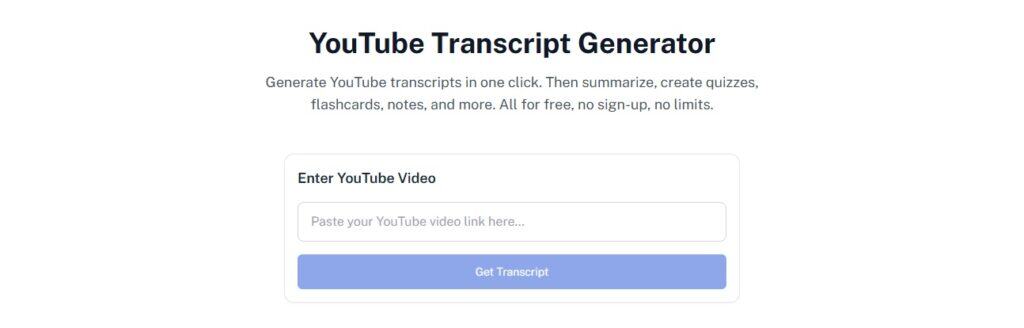
If you’re working with YouTube content specifically, check out Undetectable AI’s YouTube Transcript tool.
It pulls transcripts directly from YouTube videos and gives you a solid starting point for turning video content into blog posts. No manual transcription required.
Just paste the URL, grab the transcript, and start editing.
Optimizing Your Transcript-Based Posts
A raw transcript, even a cleaned-up one, isn’t quite ready for prime time. You need to optimize it so it actually serves your readers.
- Edit for clarity: This is non-negotiable. Spoken language is repetitive and circular. Written language needs to be tighter. Cut redundant explanations and clarify vague statements. If you said “that thing I mentioned earlier,” go back and specify what thing you’re talking about. Your blog readers can’t rewind.
- Highlight key takeaways: Some people skim blog posts. They’re looking for the meat of the content without having to read every single word. Help them out by pulling key points into bulleted lists, callout boxes, or bolded text to make it easy to extract value.
- Add visuals or links. A wall of text is intimidating. Break it up with relevant images, screenshots, or embedded videos. If you mentioned a study or a tool, link to it. Give readers ways to go deeper if they want to.
Think about readability, too. Short paragraphs are your friend. Subheadings every few hundred words keep things scannable.
Use simple language when possible, because remember… you’re not writing an academic paper.
Tools and Techniques to Streamline the Workflow
If you’re transcribing regularly, you need reliable systems. Trying to manually transcribe and edit every piece of content will burn you out fast.
Start with a good transcription tool. YouTube’s auto-captions are free but sometimes hilariously wrong. Otter.ai is solid for general use. Rev offers human transcription if accuracy is critical.
Undetectable AI’s YouTube transcript generator is great if you want to edit both the audio and the transcript simultaneously.
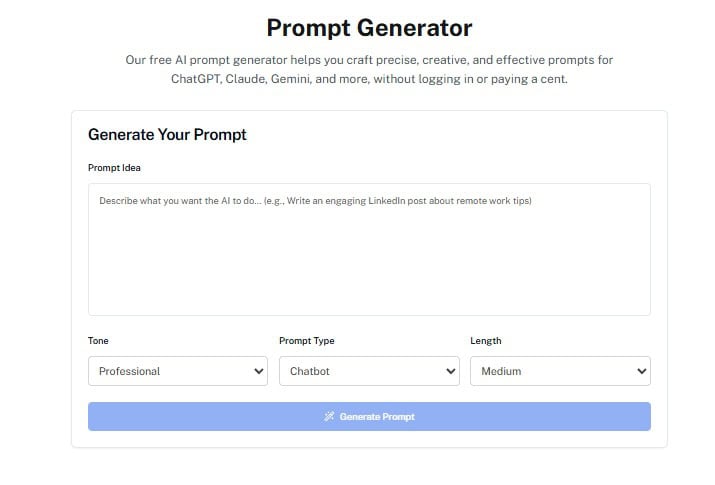
For the editing and structuring phase, AI can be extra helpful. While it shouldn’t write content for you, it can help organize and refine what’s already there.
The Undetectable AI’s Prompt Generator can generate specific prompts that help you summarize long transcripts, restructure sections for better flow, or expand on points that need more detail.
For example, you might use a prompt like “Summarize this section in three key points” or “Restructure this transcript segment to flow more logically for a blog post.”
The AI doesn’t replace your voice or your ideas, but helps you work through the editing process more efficiently.
Create templates for your blog posts so you don’t have to reinvent the structure every time.
Maybe you typically start with a brief intro, followed by key takeaways, then the main content in three to five sections, and finally a conclusion with a CTA. Having that framework ready to go speeds things up.
Batch your work, too. If you’re recording multiple podcast episodes or videos, transcribe them all at once. Then set aside time to edit and format them. Switching contexts constantly kills productivity.
Try out our AI Detector and Humanizer right below!
FAQs
What is the 80/20 rule in blogging?
The 80/20 rule in blogging suggests that 80% of your results come from 20% of your efforts. In practical terms, this means a small portion of your blog posts will drive most of your traffic, engagement, and conversions.
Can you make $1,000 a month with a blog?
Yes, absolutely. It’s not guaranteed, and it takes work, but making $1,000 a month from a blog is a realistic goal for many people.
You can monetize through affiliate marketing, sponsored posts, digital products, ads, or services. The key is producing consistent, valuable content and steadily building an audience.
Your Mic Did Half the Work
Transcript-driven blogging isn’t a magic shortcut, but it is a smart strategy. You’re taking content that already exists and giving it new life in a different format.
You’re reaching people who prefer reading over listening. You’re improving your SEO. And you’re doing it all without starting from zero every single time.
The process takes some refinement. Your first few attempts might feel clunky. The transcript might read weird, or the flow might be off. That’s normal. Like any skill, you get better with practice.
Use the tools available to you. Transcription services save you hours of manual work, and AI tools like Undetectable AI’s Humanizer and Prompt Generator help you polish and organize content faster.
But don’t forget the human touch. Your voice, your insights, and your unique perspective are what make the content worth reading in the first place.
Your content deserves to be seen by as many people as possible. Transcript-driven blogging helps you make that happen.
Turn raw transcripts into polished, human sounding articles with Undetectable AI.