
“I’m tired of your constant talk of tires.”
Americans use the word ‘tire’ for both a car’s rubber cover around the wheel and also for exhaustion.
Similarly, if you go towards the British side, the spellings would change to “tyre.”
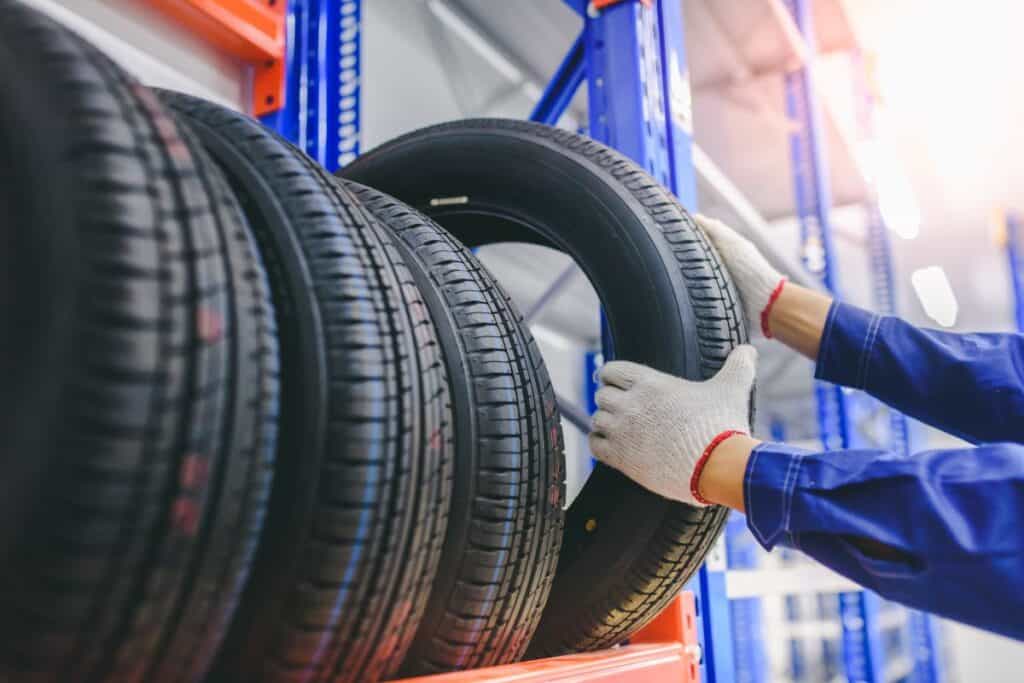
So is it tyre or tire?
Let’s discuss it in this blog. In this blog, you will learn tire vs tyre meaning, which one to use and when, the history and regional implications, proper usage of both spellings, and how not to make the same mistake on repeat.
So let’s get started.
Key Takeaways
- Tyre vs tire, both spellings are correct and refer to the rubber covering around a wheel.
- Tyre = British English (UK, Australia, New Zealand, Ireland, South Africa, Canada)
- Tire = American English
- The tyre vs. tire spelling difference is purely regional, as they just belong to different audiences in different countries.
- Don’t use both spellings in one document.
- The majority of AI writing tools always default to American English. Hence, they will write “tire” even when you’re writing for a British audience. Double-check your draft before submission.
What Do Tyre or Tire Mean
- Meaning
The tyre/tire is actually the rubber covering that goes around a wheel. There’s no difference in meaning at all.
- “Tyre” is the British English spelling,
- “Tire” is the American word used for the same thing.
Now that should be the whole story, right?
Except it isn’t.


Never Worry About AI Detecting Your Texts Again. Undetectable AI Can Help You:
- Make your AI assisted writing appear human-like.
- Bypass all major AI detection tools with just one click.
- Use AI safely and confidently in school and work.
In American English, “tire” is the same for nouns and verbs. One is the rubber wheel covering (noun), and the other means to “become fatigued or exhausted” (verb)
See this other sentence, for example:
- “She is tired (verb) after a long drive.”
On the flip side, British English uses “tyre” (noun) and “tire” (verb) differently.
So when a British writer types:
“The truck driver gets tired.” It’s correct. The verb is the same everywhere.
But if he types “truck’s front tire was losing pressure”…That will be marked as a grammatical error.
So what does that mean for the writers? Tire and tyre split only as a noun.
Every other British vs American spelling split hits the entire word family.
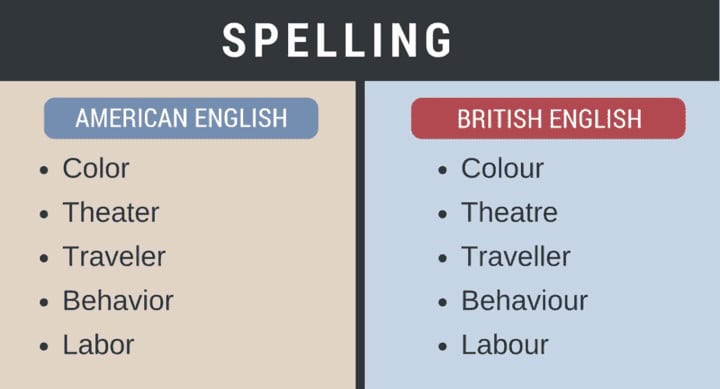
Understanding the Regional Rule Behind the Spelling
- “Tyre” is standard in British English regions
Tyre with “y” is the right spelling in British English.
It is widely used across the UK and in all the countries that follow British English conventions, such as Australia, New Zealand, Ireland, and South Africa.
Writers who follow the Oxford Style Guide and the Cambridge Dictionary use British spellings of this word.
British commitment to this word can be seen even in law. For example, their national tyre safety authority, TyreSafe, spells its name with a “y” and the UK Highway Code uses “tyre” throughout its vehicle safety sections.
- “Tire” is standard in American English writing
Tire is the default spelling across all American content.
This rule applies to editorial, product descriptions, regulatory or legal writing, academia, and all everyday writing.
The NHTSA uses “tire” in all its published safety standards. Merriam-Webster lists “tire” as the primary American entry. Plus, writers who follow The AP Stylebook and the Chicago Manual of Style default to this spelling without any question.
| American & Canadian English (Tire) | Commonwealth English (Tyre) |
| United StatesCanada (one of the few words where Canadians prefer US spelling) | United KingdomAustralia & New ZealandIndia & PakistanSouth Africa & IrelandMost of Africa & the Caribbean |
Knowing the difference in regional rules and implementing them are two different things…
It’s not feasible for large content teams to manually remove writing inconsistencies every time when working with different clients from different regions. The chances of dialect slips are high because the research and data come from both sides of the region.
Therefore, using a Writing Style Replicator makes your writing process easier and adapts your text automatically to your preferred spelling convention.

Use it to fix your tyre vs tire spelling difference.
How the Same Word Splits into Two Spellings
| TireAmerican English | TyreBritish English |
Let’s go back to the 15th century. The word ‘tire’ was used as the short form of ‘attire,’ which means ‘dressing’ or ‘covering’. So just like armor outfits a knight, a tire covers the entire wheel.
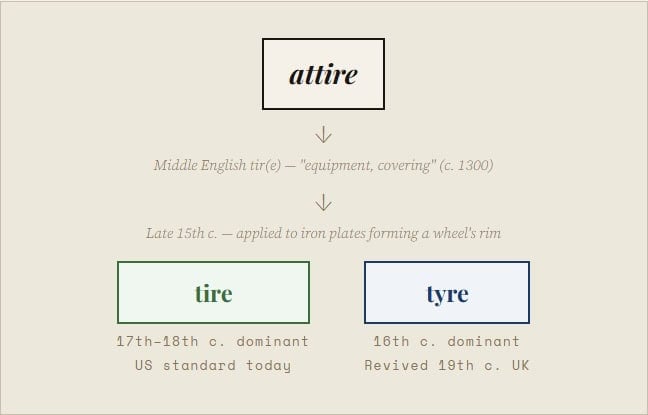
For centuries, these two words/spellings coexisted.
According to Wiktionary’s etymology entry, the word “tyre” was more dominant in the 1500s, while “tire” took over in the 1600s. (long before Webster entered the picture.)
Then came Noah Webster in the 18th century, and he simplified English in his American Dictionary.
| British spelling | American spelling |
| Centre | Center |
| Travelled | Traveled |
| Colour | Color |
| Honour | honor |
| Labour | Labor |
| Theatre | Theater |
| Grey | Gray |
The word tire remained unchanged. But in the meantime, Britain silently reverted to the old spelling of “tyre” during the railway boom of the early 1800s, and that spelling has now become the British standard.
Remember, neither spelling is wrong. Everything depends on your audience’s country.
Writing for the US or Canada? Use “tire.”
Composing in the UK, Australia, India, or South Africa? Use “tyre.
| Feature | Tire | Tyre |
| Region | United states | British Commonwealth countries except Canada |
| Usage | Same for noun and verb | Distinct noun (tyre) and verb (tire) |
| Style Authority | AP Stylebook, Chicago Manual, Merriam-Webster | Oxford Style Guide and the Cambridge Dictionary |
| Is there any difference in meaning? | None | None |
| Can I use both in the same docs? | Never | Never |
Examples That Show Proper Usage in Context
With “tyre” (British English):
- The car mechanic checked all the tyres as the owner patiently waited.
- The UK government has been raising awareness of the importance of tyre safety for a long time.
- The cycling team changed all the tyres on their training fleet before winter.
- He had been driving on a slow puncture before the tyre fully gave out.
- New tyre safety regulations for commercial vehicles come into force next April.
With “tire” (American English):
- The mechanic was fixing the tire when his boss called him.
- Her daughter had a flat tire on her bicycle.
- Always rotate your tires every 5,000 miles for even tread wear.
- The only thing between you and the road is your tires, so make sure to get the best ones.
- He pulled over his car as he felt the back tire getting dangerously low.
How Undetectable AI Improves Spelling Accuracy
AI writing tools default to American English. So if you’re writing for British audiences, there’s a high chance that your draft has the spelling “tire” as well as “tyre” (if you haven’t checked manually).
But your standard spell-checker won’t flag it. And technically, it isn’t wrong. It’s just wrong for your audience.
That’s where the real issue begins.
Most writers already understand the tyre vs. tire spelling difference. The problem here is execution (where you use them).
Look at this mixed sentence:
“Last week I had to replace my car tire after a long road trip across the city. The mechanic told me that one tyre was completely worn out but the other tires were still in decent condition.”
It’s grammatically fine. However, this mixing shows the text could have been written by AI or not carefully proofread.
So let’s correct this by using an Undetectable AI’s Paraphrasing Tool.
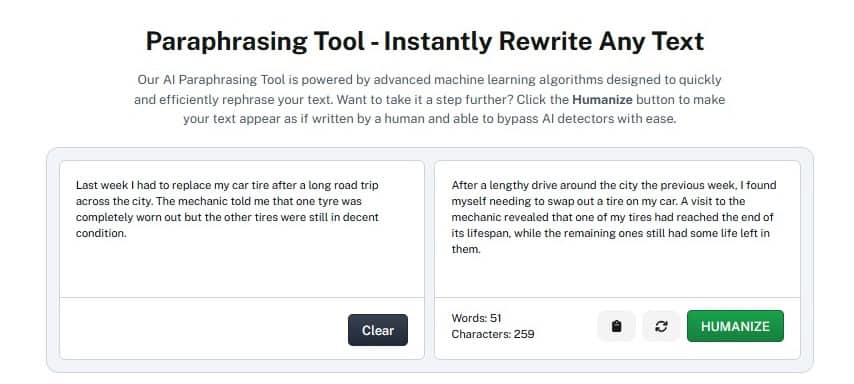
Notice how the tyre vs. tire inconsistency has been removed without changing the sentence’s essence. (You can further humanize it if you want)
Moreover, if you’re handling multiple articles every week or working with a big content team managing multiple clients, it’s humanly impossible to run a full dialect audit on every draft.
Not to mention the tight deadlines. You’re scanning, editing, and moving on.
This is where Undetectable AI’s AI Humanizer saves the day by rewriting your content while aligning tone and spelling with a single standard.

So instead of fixing words one by one, the entire document gets adjusted easily.
Choosing the Correct Form for Your Audience
Confirm your audience’s country/Region before you start writing. Set your tools to match their spelling convention. Then don’t forget to run a Ctrl+F spell check for both spellings after finishing the final draft. Avoid mixing them in the same doc.
Want to end this tyre vs tire spelling confusion forever?
Just remember these two questions religiously and answer them before you open a blank document.
Q1: Where is your audience located?
Q2: What spelling do they use in their region?
These questions will set the basis of your writing.
Furthermore, refer to this evergreen step-by-step guide whenever you write.
| Step 1 | Confirm your target audience’s region. Ask those two questions! |
| Step 2 | Make sure your Google Docs or MS Word supports the English of that region. |
| Step 3 | Once you’re done writing, press Ctrl+F both and search for “tyre” and “tire” (both spellings shouldn’t exist in one draft). |
| Step 4 | Scan the AI-generated sections of your content separately, just to be safe. You can use an Undetectable AI’s Paraphrasing Tool to sound human without losing the real essence of your text. |
Practical Tip for Content teams dealing with multiple clients from different regions:
For each client you’re working with, add at least one extra line at the start of your brief document stating the spelling convention. It will take less than a minute, but it will definitely save you from making revisions later on.
Find out how our AI Detector and Humanizer work in the widget below!
Final Thoughts
Now that we have established that the tyre vs tire spelling difference is kind of permanent, as both coexist and are grammatically correct. It’s better to clear all your confusions before you start writing.
Most AI writing tools draw data from both regions and can slip dialects pretty easily if you’re not sure about which one to use.
If you’re using AI tools to help with your writing for British, Australian, or South African audiences, keep in mind that your drafts likely default to using “tire.”
As a result, you get more revision comments, which can be very tiring.
Writers who hit the nail on the head aren’t just those who know the rules better; they’ve got a solid system in place.
They double-check their audience first, set the right regional language preferences, and then do a consistency check before sending off the final draft.
They take all the actionable steps. And most importantly, they use trusted and reliable tools such as Undetectable AI at all times to manage their spelling, tone, and dialect.