
Job hunting feels like a full-time job itself. According to current labor market data, millions of people are competing for the same roles, making the search more intense than ever.
Imagine entering this arena without a properly written resume or a cover letter. It is like being in The Hunger Games but without a weapon; the odds are definitely not in your favor.
Between tweaking your resume and scrolling through endless job boards, you might wonder if a cover letter is worth the effort. Spoiler alert: it absolutely is.
You need strategy, precision, and a killer first impression to stand out.
At the end of this guide, you will understand the importance of crafting the perfect document and exactly how to do it.
Let’s dive in.
Key Takeaways
- A cover letter provides the narrative context that a resume cannot, allowing you to explain the “why” behind your career moves and achievements.
- Personalization is the secret to success because generic templates are easily spotted by recruiters and often lead to immediate rejection.
- Undetectable AI offers a suite of career tools that help you generate, humanize, and check the grammar of your applications to ensure a professional finish.
- Effective research is your strongest weapon since mentioning specific company goals or recent news shows you are genuinely invested in the role.
- The call to action is essential for closing the loop, politely suggesting a meeting or conversation to discuss how you can add immediate value.
What Is a Cover Letter
Think of a cover letter as your personal commercial. It is a one page document that tells your professional story in a way your resume cannot.
While your resume lists the “what” and “when” of your career, your cover letter explains the “why” and “how.” It serves as a bridge, offering context and relevance to your professional journey.
This is your opportunity to speak directly to the hiring manager, addressing their specific pain points and explaining how you are the unique solution they need.


Never Worry About AI Detecting Your Texts Again. Undetectable AI Can Help You:
- Make your AI assisted writing appear human-like.
- Bypass all major AI detection tools with just one click.
- Use AI safely and confidently in school and work.
By providing a narrative, you can turn a list of job duties into a story of problem solving and growth. A good cover letter highlights your communication skills and your ability to synthesize information.
It is not just about repeating your resume; it is about expanding on the most relevant parts of your experience to prove you are a perfect fit for the company culture and the specific demands of the position.
When Should You Write a Cover Letter?
Many job seekers wonder if they can skip this step, but there are specific moments where a cover letter is your best tool for getting noticed.
Applying for a Job Online
When you submit an application through an online portal, you are often just one of hundreds of names in a database. A cover letter gives you the chance to use keywords from the job description in a natural, conversational way.
This helps you pass through automated filters while still appealing to the human recruiter who will eventually read it.
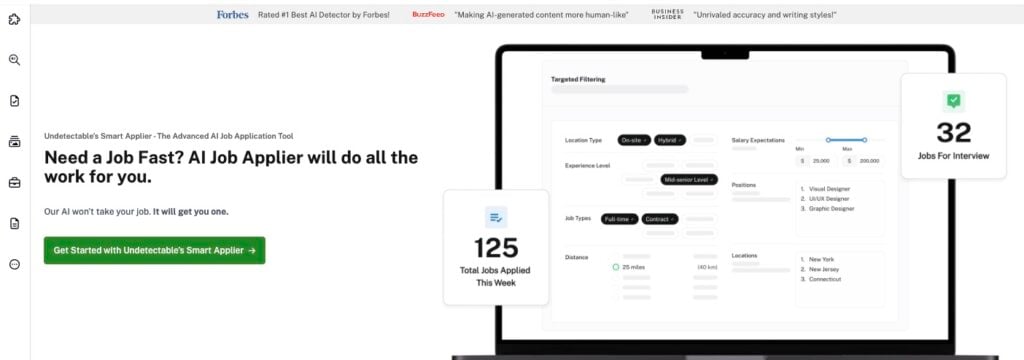
To make this process even faster, you can use the Undetectable AI’s AI Job Applier to look for opportunities and apply with personalized materials, saving you hours of manual labor.
Following Up After Networking
If you met someone at a professional event or were referred by a friend, a cover letter allows you to mention that connection right at the beginning.
It provides a formal framework to remind the hiring manager of your conversation and explain why that interaction motivated you to apply.
It turns a casual “hello” into a professional intent to join the team.
Submitting for Internships or Volunteer Positions
For those with limited work experience, the cover letter is actually more important than the resume. It allows you to focus on your passion, your academic projects, and your soft skills.
You can explain how your volunteer work or school leadership has prepared you for the professional world, giving the recruiter a reason to take a chance on a newcomer.
Essential Elements of a Strong Cover Letter
A successful letter is not just a wall of text. It requires a specific structure to be effective and easy for a recruiter to scan.
- Professional Header and Contact Information
Your letter should start with a clean header that includes your name, phone number, email, and LinkedIn profile. Below that, include the date and the contact information for the hiring manager.
Addressing the letter to a specific person rather than “To Whom It May Concern” shows that you took the time to research who actually holds the keys to the position.
- Clear Opening Statement
The first paragraph needs to hook the reader. State the position you are applying for and why you are excited about it.
Avoid generic openings; instead, mention a specific company achievement or a shared value that draws you to the organization.
This shows that your application is not part of a “spray and pray” strategy.
- Highlighting Relevant Skills and Achievements
The middle paragraphs are where you sell your value. Choose two or three key requirements from the job posting and provide specific examples of how you have met those challenges in the past.
Use data and metrics whenever possible to prove your impact. If you increased sales or saved time, state the exact percentage to give your claims more weight.
- Tailored to the Job Description
A great cover letter is a mirror of the job description. If the company emphasizes “innovation” and “agility,” use those words in your letter.
Show that you have analyzed their needs and that your past performance aligns perfectly with their future goals.
This level of tailoring is what separates the top 5% of candidates from the rest.
- Strong Closing and Call to Action
End with confidence. Reiterate your enthusiasm and state that you look forward to the possibility of discussing the role further. A polite but firm call to action shows that you are proactive.
For example, mention that you are eager to share more about a specific project you led that relates to the company’s current initiatives.
- When a Cover Letter Can Give You an Edge
In competitive fields, the cover letter is often the tie-breaker. If two candidates have identical resumes, the one who writes a compelling letter that shows personality and research will win every time.
How to Write a Cover Letter: 7 Easy and Effective Guide
Follow these steps to build a letter that gets you into the interview room.
1: Research the Company and Role
Before you type a single word, spend twenty minutes on the company’s LinkedIn and website. Look at their recent news, their mission statement, and the tone of their social media.
Understanding the company’s “vibe” allows you to match their level of formality and speak to their current priorities.
2: Start With a Professional Greeting
Avoid “Dear Sir or Madam” at all costs. It feels outdated and lazy. Use the hiring manager’s name if it is available in the job posting or on LinkedIn.
If you absolutely cannot find a name, “Dear [Department] Hiring Team” is a much better alternative.
| Instead of… | Try… |
| To Whom It May Concern | Dear Sarah Jenkins |
| Dear Sir or Madam | Dear Marketing Hiring Manager |
| Hey there | Dear [Company Name] Team |
3: Introduce Yourself and Your Goals
State who you are and what you want. Mention the specific job title and where you saw the posting. Briefly explain why this specific role at this specific company is the logical next step for your career.
This shows you have a plan and are not just applying to every open role.
4: Highlight Key Skills and Achievements
Focus on your “greatest hits.” Pick the achievements that most closely align with what the company is asking for. If they want a leader, talk about the team you built.
If they want a technician, talk about the complex problems you solved. Keep this section punchy and result-oriented.
5: Show How You Can Add Value
This is the most important part. Don’t just talk about what the job will do for you; talk about what you will do for them.
Explain how your skills will solve their current problems or help them reach their goals. This shifts the focus from your needs to their success.
6: Write a Strong Closing Paragraph
Summarize your value proposition in one or two sentences. Thank the reader for their time and mention that you are available for an interview at their convenience.
End with a professional sign-off like “Sincerely” or “Best regards” followed by your name.
7: Proofread and Format Professionally
A single typo can ruin a great letter. Read your letter out loud to catch awkward phrasing. Check that your font is professional and that there is plenty of white space on the page.
According to career experts, a clean, error-free layout is the first sign of a high-quality candidate.
Examples of Effective Cover Letters

Seeing a finished product can help you understand how to weave these elements together.
Example 1: Entry-Level Job
“As a recent graduate with a degree in Communications, I have spent the last four years mastering the art of storytelling through digital media. During my internship at local news outlet, I managed three social media accounts and increased their total reach by 40 percent. I am eager to bring this same passion for engagement to the Junior Content Creator role at [Company Name].”
Example 2: Career Change
“While my background has been in retail management for the past decade, the skills I have developed in team leadership, conflict resolution, and inventory logistics are directly transferable to the Project Coordinator role. I have spent the last six months earning my PMP certification to ensure I can hit the ground running and help your team streamline its upcoming product launches.”
Example 3: Internship Position
“My academic focus on sustainable engineering has led me to follow [Company Name]’s work in solar grid efficiency for the past year. I am seeking an internship where I can apply my laboratory research skills to real-world energy challenges. I am particularly impressed by your recent project in Nevada and would love to contribute to similar initiatives.”
Example 4: Remote or Freelance Role
“Having worked as a remote writer for the last five years, I am well-versed in the self-discipline and communication tools required to excel in a distributed team. My experience with Slack, Trello, and Zoom ensures that I can provide high-quality, on-time deliverables while staying perfectly aligned with your team’s creative direction from my home office.”
What Does a Good Cover Letter Like
Key Features of a Strong Cover Letter
- A compelling hook: Start with something that makes the recruiter want to read paragraph two.
- Keyword integration: Use the same language the company uses in its job posting.
- Specific examples: Don’t just say you are a “hard worker”; prove it with a story.
- Professional tone: Stay respectful and enthusiastic without being overly casual.
- Conciseness: Keep it to one page. Recruiters usually spend less than a minute on the first read.
Formatting Guidelines
| Element | Recommendation |
| Font Style | Professional (Arial, Calibri, Helvetica) |
| Font Size | 10 to 12 point for body text |
| Margins | 1 inch on all sides |
| Spacing | Single spaced with double spaces between paragraphs |
| File Type | Always save and send as a PDF |
Common Mistakes to Avoid in a Cover Letter
- Using Generic or Copy-Paste Templates
Recruiters can spot a generic template from a mile away. If you don’t take the time to customize the letter, they will assume you won’t take the time to do the job well either.
Always mention the company by name and refer to their specific needs.
- Repeating Resume Information
Your cover letter should not be a prose version of your resume. Instead of listing every job you have ever had, pick the one or two most relevant roles and tell a story about a specific success you had there.
- Being Too Wordy or Vague
Avoid “fluff” phrases like “I am a highly motivated self-starter who enjoys working in fast-paced environments.” These are cliches that add no value. Instead, be specific about what you did and the results you achieved.
- Spelling or Grammar Errors
A typo in a cover letter suggests a lack of attention to detail. This is especially damaging if the job requires writing or client-facing communication. Always use a second pair of eyes or a technical tool to verify your work.
How Undetectable AI Can Help Craft a Perfect Cover Letter
Modern job hunting is about working smarter, not harder. You can use Undetectable AI to generate personalized drafts in minutes, ensuring that every letter you send is tailored to the specific job description without spending hours on a blank page.
Our tool analyzes the job requirements and your experience to create a professional narrative that hits all the right notes for recruiters.
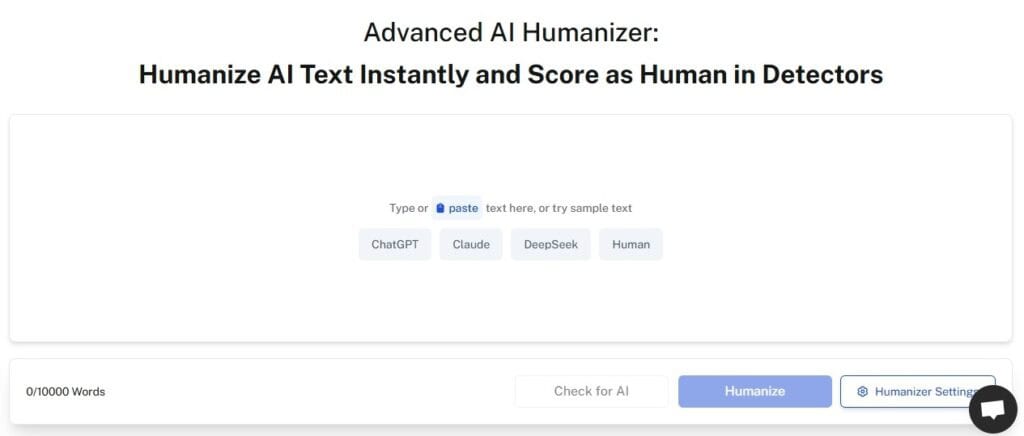
Once you have a draft, our Undetectable AI’s AI Humanizer ensures that your letter sounds natural and conversational rather than like a robotic template. This is crucial for showing personality and culture fit.
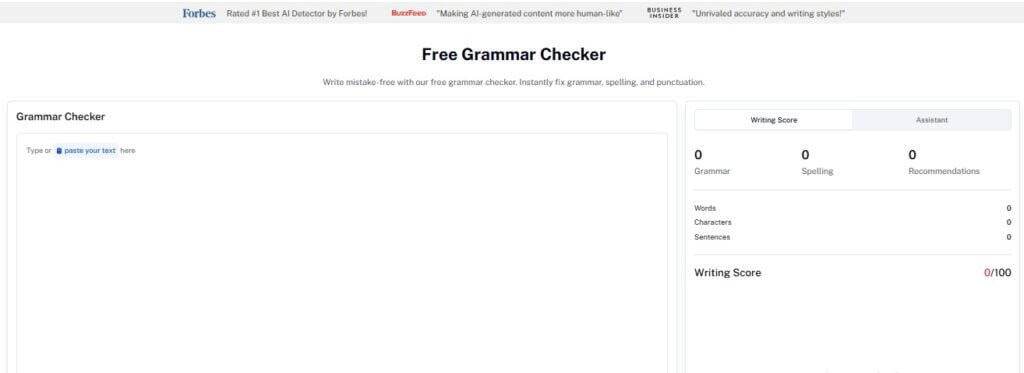
For a final check, our AI Grammar Checker performs a technical sweep to catch any subtle errors, ensuring your application is perfectly polished.
This combination of speed and quality gives you the edge in a competitive market where the first impression is everything.
Tips for Sending Your Cover Letter and Following Up
- Best Email Subject Lines: Use a clear format like “Job Application: [Your Name] – [Job Title].” This makes it easy for the recruiter to find your email later.
- Attaching or Including Inline: If the application portal asks for an attachment, use a PDF. If you are emailing a person directly, you can include the letter in the body of the email for easier reading.
- Timing for Follow-Up: Wait about one to two weeks before following up. A short, polite email asking if they need any additional information shows your continued interest without being pushy.
- Leveraging Networking: If you have a contact at the company, mention in your cover letter that you have spoken with them. This “social proof” can often move your application to the top of the pile. Referrals are still the most effective way to land an interview.
Try the widget below to access our AI Detector and Humanizer!
FAQs
Should I send a cover letter if it’s optional?
Yes. It shows initiative and gives you an extra chance to sell your value. Most candidates will take the easy route and skip it, so sending one automatically puts you ahead.
How long should my cover letter be?
The sweet spot is between 250 and 400 words. It should be long enough to tell a story but short enough to be read in under 60 seconds.
Can I use the same cover letter for every job?
No. You should have a “master” version, but you must customize the opening, the specific achievements mentioned, and the closing for every single application.
Conclusion
A great cover letter opens doors. It turns your application from a list of qualifications into a compelling story about why you are the best person for the job.
By focusing on your unique value, doing your research, and using the right tools to polish your message, you can create a first impression that leads directly to an interview.
Job hunting is a competitive journey, but with a well-crafted letter, you can ensure the odds are in your favor. Remember that you are writing for a real person, so show your enthusiasm and your authentic voice.
The perfect job is out there, and your cover letter is the key that unlocks the door to your next career milestone.
Try Undetectable AI today to generate and humanize your application in minutes.