
AI might have caught your attention in early 2023, but the concept itself is over 70 years old.
Back in the 1950s, people didn’t even fully accept the term “artificial intelligence.”
It was just a bold, futuristic concept, something that seemed more like science fiction than reality.
Fast forward to today, and AI is everywhere. It’s so ingrained in our lives that we barely realize how much we’ve started relying on it, sometimes even more than our own “human intelligence.”
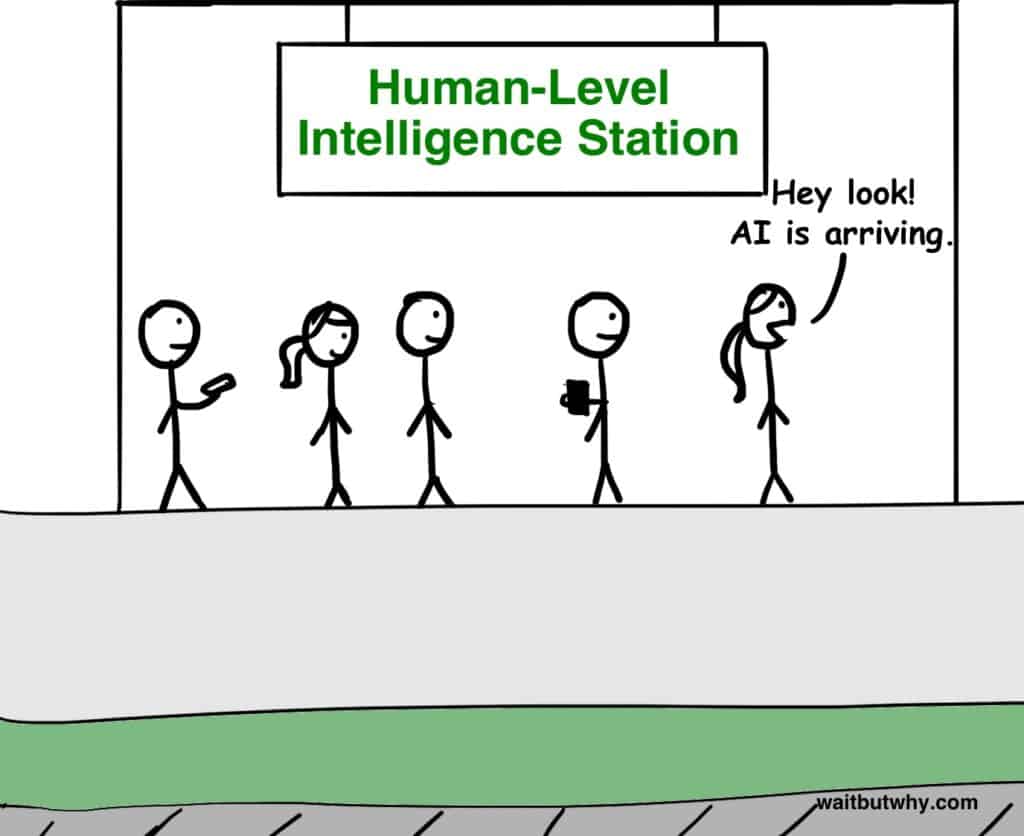
But how did we get here? How and when did an AI become so popular that millions use daily to write essays, generate images, code, or even have conversations?
In this blog, we’ll explore when did AI become so popular.
We’ll look at its early phases, the big AI boom, three major reasons it became so popular, why it continues to grow, and what the future holds.
Let’s dive in.
Key Takeaways
- AI’s breakthrough moment came in late 2022 with ChatGPT’s launch, reaching 100 million users in just 2 months.
- When did generative AI become popular? The explosion started in August 2022 with AI art winning competitions, followed by ChatGPT in November 2022.
- Three core drivers of AI popularity: accessibility (free tools anyone could use), massive productivity gains (55% faster coding, 60% faster writing), and viral social media adoption.
- The 2020s created the perfect storm: transformer technology, powerful GPUs, massive datasets, COVID-19 digital acceleration, and $400B+ in AI investment converged simultaneously.
- AI’s future is moving beyond screens into wearables, AR glasses, and agentic AI systems that can complete complex tasks independently by 2030.
Early Beginnings of Artificial Intelligence
The story of Artificial Intelligence dates back to the small workshop at Dartmouth College in 1956.
This is where John McCarthy gathered a handful of researchers and dropped a futuristic idea on the table:
“What if we could describe every part of human intelligence so precisely that a machine could understand it?”


Never Worry About AI Detecting Your Texts Again. Undetectable AI Can Help You:
- Make your AI assisted writing appear human-like.
- Bypass all major AI detection tools with just one click.
- Use AI safely and confidently in school and work.
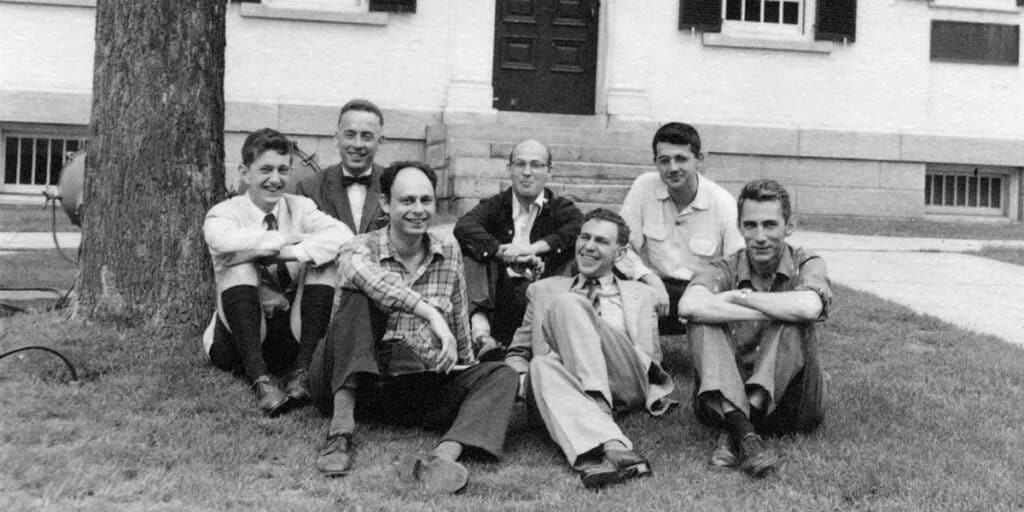
It sounded bold, almost poetic. He gave this idea a name: artificial intelligence. But the truth is, at that time, the world wasn’t ready for it. It was an idea far ahead of its era.
A year later, in 1957, Herbert Simon confidently claimed that “within twenty years, machines will be capable of doing any work a man can do.”
Spoiler: he was off by a few decades (and honestly… we still aren’t fully there).
There are 6 periods of Artificial Intelligence before it went mainstream in 2023:
Period 1: The Spark (1956–1966)
These first years produced some impressive breakthroughs.
- The Logic Theorist (1956): It solved mathematical problems, and even came up with a better solution than the one mathematicians had published.
- Arthur Samuel’s Checkers Program (1950s): It learned by playing itself. When demonstrated on TV in 1956, IBM’s stock jumped 15 points. That’s how new and magical it felt.
- ELIZA (1966): A basic chatbot pretending to be a therapist. The wild part? People believed it understood them. Even the creator’s secretary got attached to it.
But the excitement didn’t last.
Period 2: The First AI Winter (1974–1980)
Governments expected miracles, but they got prototypes and big promises. The UK published the brutal Lighthill Report, saying Artificial Intelligence hadn’t delivered anything worth funding.
Money disappeared, almost 90% of it.
In the U.S., the ALPAC Report said machine translation was slow, inaccurate, and more expensive than humans, even after spending $20 million. Funding vanished there too. It looked like AI was dead.
Period 3: AI’s First Celebrity Moment (1997)
Then came 1997.
IBM’s supercomputer Deep Blue defeated world chess champion Garry Kasparov.
This was the first time when AI belonged to the public. Deep Blue analyzed 200 million moves per second, won the match, and even pushed IBM’s stock upward.

Still, even after this victory, AI didn’t become part of everyday life. It was expensive and academic. Scientists avoided the term “AI” because it had become associated with failure.
Period 4: The Invisible Phase (2000s–2010s)
Then came the decade where Artificial Intelligence slipped into everyday life without people noticing.
- Spell checkers
- Google Search ranking
- Netflix recommendations
- Spam filters
- Fraud detection
These were all AI-powered, but companies avoided the word. Even when Siri launched in 2011, Apple didn’t emphasize “artificial intelligence”, they focused on the features.
In 2012, deep learning achieved huge breakthroughs with ImageNet, but outside of tech communities, hardly anyone paid attention.
AI was quietly getting better, but it wasn’t culturally loud yet.
When did AI become so popular? This was the turning point.
Period 5: The Slow Build Before the Explosion (2021–2022)
People think AI became so popular in 2023 with ChatGPT, but the buildup quietly started in 2021–2022.
- June 2021: GitHub Copilot brought AI into programming.
- 2021–2022: GPT-3’s API lets developers embed smart language models into tools.
- January 2022: DALL·E 2 sparked the first viral wave of AI art.
- July 2022: Midjourney entered the scene and artists loved it.
- August 2022: Stable Diffusion went open-source and the world suddenly had image generation on their laptops.
Then everything changed.
Period 6: The Cultural Shock Moment (August 2022)
When did AI art become popular? Jason Allen submitted a Midjourney artwork to the Colorado State Fair… and won first place. Twitter exploded. News channels covered it.
Suddenly, AI was part of real cultural debates:
- Is this art?
- What is creativity?
- Are machines competing with humans?
AI had finally entered mainstream conversation.
When AI Started to Gain Popularity
November 30, 2022, 12:00 AM PST: ChatGPT launched.
Within 5 days, it hit 1 million users. Within 2 months, it hit 100 million, becoming the fastest-growing consumer app in history.
For context, it reached that milestone 50x faster than Instagram and over 4x faster than TikTok. Not bad for a chatbot that looks like a plain little text box.

Fast-forward to November 2025, and ChatGPT is a global giant. It has 800 million weekly active users, 2+ billion queries every day, and is now ranked as the 5th most-visited website in the world.
And here’s the wild part: OpenAI didn’t spend a single meaningful dollar on marketing.
People spread it themselves. The interface was so simple that if you could type… congratulations, you could use world-class AI. And it was free.
Then came January 2023. Schools reopened. Districts from Seattle to Paris blocked ChatGPT overnight.
Teachers were discovering neatly written essays that had a suspiciously “robotic brilliance” to them.
Turnitin later revealed jaw-dropping numbers:
- Out of 200+ million student papers, 22 million showed signs of being at least 20% AI-written, and 6 million looked 80%+ AI-generated.
Coverage around generative AI jumped by more than 800% compared to 2022. AI was the conversation.
And that’s how, almost overnight, AI became so popular that it went from a niche research topic to a cultural force, a classroom disruptor, a business revolution, and the beginning of a new technological era.
The AI Boom: 2020s and Beyond
We already saw that AI has been around for decades. It wasn’t new. But for the longest time, nobody accepted the word “AI” until the 2020s arrived.
This was the time when generative AI became popular.
So why did AI boom specifically in this decade? What changed now that wasn’t true before?
Turns out, there were five major breakthroughs that had never happened in any previous era.
Let’s see them:
- The Transformer Breakthrough Changed Everything
In 2017, Google released the “Attention Is All You Need” paper. This paper ended up becoming one of the most influential scientific papers of the century, which now has 173,000 citations.
What was in that paper?
A radically new idea: Previous neural networks read text like humans reading slowly, one word at a time. Transformers flipped that approach. They read entire sequences at once, and used attention to figure out which parts matter the most.
Because of this parallel processing, they trained way faster. The very first transformer model trained in just 12 hours, which was impossible before.
This single breakthrough unlocked everything that followed:
- BERT (2018) — made search engines smarter overnight
- GPT-2 (2019) — surprised everyone with fluid text generation
- GPT-3 (2020) — jumped to 175 billion parameters
- ChatGPT (2022) — put AI directly in people’s hands
Before transformers, AI models hit scaling limits. With transformers, those limits vanished.
- Hardware Caught Up
Artificial Intelligence is extremely hungry for massive computing power, fast memory, and machines that don’t melt during training.
Luckily, the 2020s were the perfect storm for hardware.
GPUs evolved far beyond gaming. NVIDIA’s Ampere (2020) architecture delivered huge performance gains.
Google pushed even further with its AI-specific TPUs, and the latest Trillium chips are 4.7x faster while consuming 30x less power than their early versions.
By 2024, NVIDIA’s growth was so insane it became the first $4 trillion company in history. Meanwhile, the cost of computing dropped dramatically.
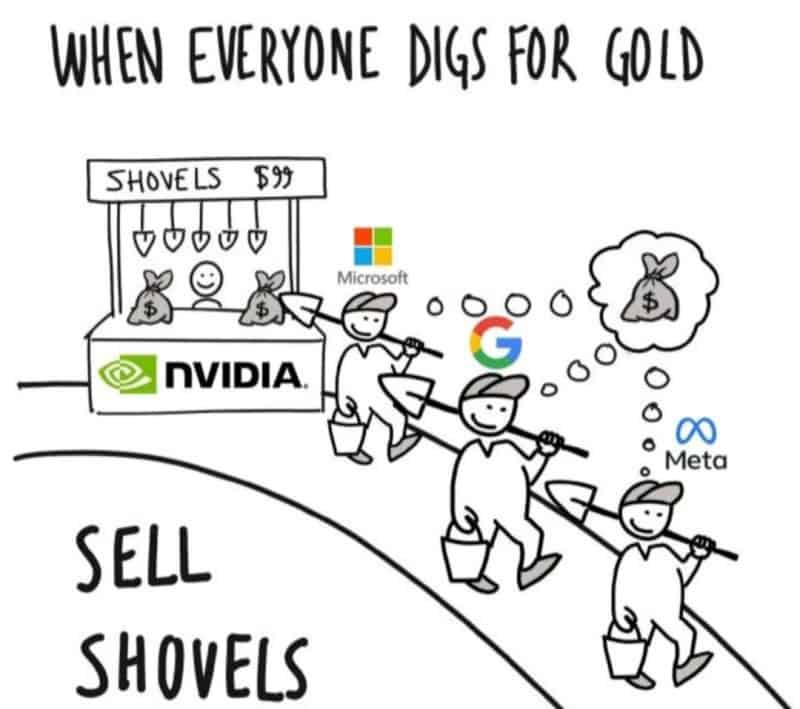
Training runs that once cost tens of millions became affordable for small teams.
And with cloud platforms like AWS, Google Cloud, and Azure offering pay-as-you-go GPU time, anyone (literally anyone) with an idea could start building.
For the first time in history, AI development was democratized.
- The World Generated More Data Than Ever Before
AI learns from data, and the world was creating more data than any human could ever hope to process.
- 2010: 2 zettabytes
- 2020: 64.2 zettabytes
- 2025: 394 zettabytes
A 197× increase in just 15 years.
ChatGPT itself was trained on around 300 billion words from books, websites, code repositories, and more.
Old-school Artificial Intelligence needed humans to manually encode rules (“if this, then that”).
Modern AI simply learns from humanity’s collective written output online.
- COVID-19 Accelerated Digital Adoption by Years
Then the pandemic hit, and everything moved online overnight.
Companies that resisted automation were forced into it. Remote work made AI-powered tools mainstream: transcription, summarization, virtual collaboration, automated support.
A major survey reported that digital transformation accelerated by 5.3 years during COVID. Another study described it as “two years of transformation in a few months.”
By the time ChatGPT launched in late 2022, the world was already comfortable with:
- video calls
- cloud apps
- digital workflows
- automation
The public was primed and ready. ChatGPT didn’t create the demand, it simply met it at the perfect moment.
- Money Started Flowing Into AI Like Never Before
Investment is fuel, and AI got a lot of it.
Global AI spending jumped from $18B in 2014 to $119B in 2021. And it doubled again right after the pandemic. By 2025, companies are projected to spend $400B on AI infrastructure.
But the biggest signal of all? The Stargate Project, a $500 billion mega-partnership between OpenAI, SoftBank, Oracle, and MGX, announced in January 2025.
Business models also became real:
- The freemium + subscription model (free tier → $20/month Pro) proved wildly profitable.
- GitHub Copilot now earns more than GitHub did when Microsoft acquired it.
- 92% of Fortune 500 use ChatGPT Enterprise.
- 90% use GitHub Copilot.
All of this sounds exciting… until you look at the downside. The world is overflowing with content.
And now, Artificial Intelligence can generate all of it. That means it’s harder than ever to know what’s real and what’s fake.
So just like every venom has an anti-venom, the AI world needs detection tools to keep things safe.
The rise of complex, highly realistic synthetic media marked the point when AI defense became as critical as AI generation.
Tools like:
- TruthScan Deepfake Detection — verifies images, faces, voices, and videos
- Undetectable AI’s AI Checker — flags AI-generated text
- Undetectable AI’s AI Video Detector — demonstrate this shift by offering specialized verification against deepfakes and manipulated footage
As AI became powerful at creating content, the world needed tools that were just as powerful at validating it. Creation and verification now go hand in hand.
Why AI Became Popular
AI became so popular because of three core reasons:
Accessibility and Usability
Hands down, this is the biggest reason AI became so popular. Before, AI felt like a distant dream, something only experts could touch.
You needed to learn TensorFlow, Python, endless command lines, and a bunch of other technical stuff just to get started.
Then ChatGPT arrived and changed everything. You could type a question in plain English, or even in your native language, and get a sophisticated answer instantly.
The pricing strategy was brilliant too. Anyone with internet access could try GPT-3.5 for free.
Power users could subscribe to ChatGPT Plus for just $20/month which was much cheaper than specialized software.
Its API also became more affordable, dropping 83% in cost between July 2023 and July 2025, making it feasible for startups to deploy AI at scale.
By June 2023, the mobile app launched, making Artificial Intelligence even more accessible.
ChatGPT’s iOS app earned 4.9/5 stars from over 813,600 reviews and was downloaded 16 million times in just two months.
Not only is it accessible to everyone, but it’s also extremely easy to use.
Productivity and Personalization
Anyone using AI has noticed the impact on productivity.
On average, workers using generative AI save 5.4% of their weekly work hours, that’s 2.2 hours per 40-hour week.
When employees actively use AI, they’re 33% more productive.
Take coding as an example. GitHub Copilot has completely changed the game. In a trial with 95 professional programmers, tasks were completed 55.8% faster with Copilot.
But it’s not just coding. A Stanford/World Bank study looked at 18 common work tasks and found AI reduced completion times by over 60% on average.
Writing assignments went from 80 minutes to just 25 minutes.
Teachers save 6 hours a week, and lower-skilled workers see up to 14% productivity gains. AI is leveling the playing field by enhancing human capabilities.
Then comes personalization, which is becoming just as important as productivity. People love experiences that feel personal, when someone “gets” them. AI makes this easy.
For example:
In e-commerce, recommendation engines increase average order value by 10–15%, boost click-through rates by 21%, and reduce cart abandonment by 25%.
B2B companies see similar results, with 80% higher conversion rates through AI-powered personalization.
Artificial Intelligence is helping in everyday professional and academic life too:
- Students can complete essays and assignments faster using Essay Writer.
- Content writers and bloggers can generate SEO-optimized blogs with this SEO Writing tool.
- Job seekers can send personalized applications using this AI Job Applier tool.
- Cover Letter Generator tool automatically tailors applications for each position, saving time and improving results.
These tools work because they deliver real, tangible outcomes: faster homework, better content, more job interviews, and higher productivity.
Viral Adoption and Media Coverage
When ChatGPT launched, it went viral almost immediately. Everyone wanted to show how it saved them hours writing code, finishing assignments, or creating blogs.
At the same time, AI art became popular online. Midjourney’s photorealistic creations filled Instagram, while DALL-E made images that were amazing and sometimes funny.
Social media made it even bigger. On TikTok, AI content was everywhere from 2023 to 2024, reaching billions of views. #The perfume hashtag alone got 39.3 billion views by early 2023.
The news media also covered AI a lot. Between late 2022 and 2023, channels like CNBC, CNN, Fox, and MSNBC ran daily AI stories.
Words like “generative AI,” “AI models,” “AI safety,” and “responsible AI” started appearing everywhere.
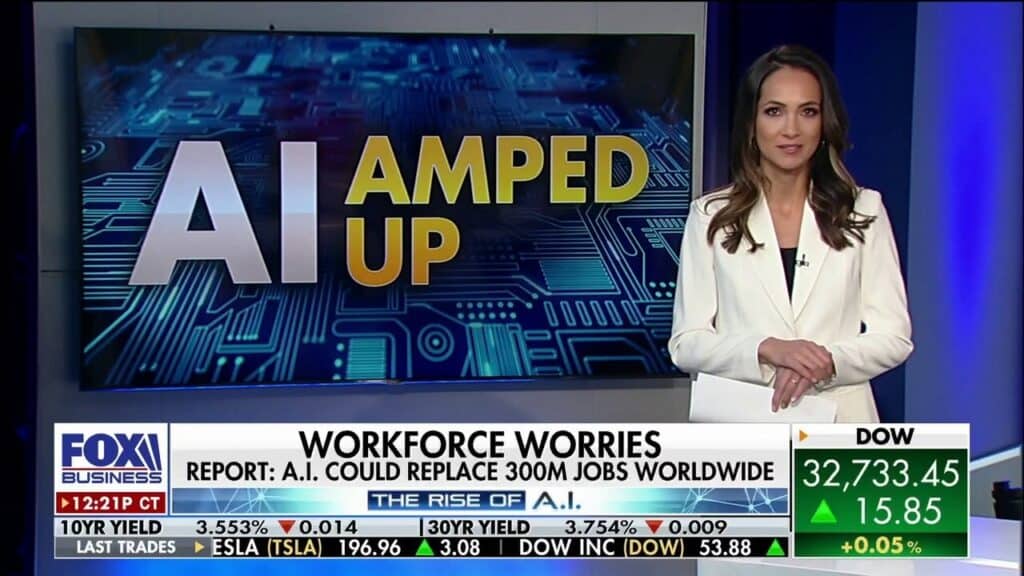
At first, headlines were amazed at what AI could do.
By mid-2023, the focus shifted to the risks: job loss, cheating in schools, deepfakes, and even election manipulation.
Hollywood writers and actors went on strike partly because of AI, and artists and authors started legal challenges. The EU sped up the AI Act to regulate AI safely.
The Future of AI Popularity
We’ve seen when did AI become so popular, but what does AI’s future look like?
Right now, the next big frontier is headsets and wearables. AI is moving into the physical and virtual world, not just screens.
Companies like Google, Meta, and Apple are working on AI-powered glasses and headsets that can see what you see, hear what you hear, and provide help in real time.
The VR market is jumping from $35 billion in 2023 to $45 billion in 2024, with over 14 million headsets sold.
AI can now generate entire virtual worlds, create intelligent characters (NPCs), and adjust experiences dynamically. VR gaming alone could hit $45 billion by 2027.

Augmented reality + AI is bringing smart assistance into everyday life:
- Real-time translation overlays
- Object recognition and instant information retrieval
- Context-aware navigation
- Industrial applications like maintenance and employee training
These smart glasses could make AI as common as smartphones, but even more seamlessly woven into our daily routines.
Looking a bit further ahead (2025–2030), the biggest leap will be agentic AI. These systems can complete multi-step tasks on their own.
Today, AI still needs us to guide it step by step. Tomorrow, AI could plan, execute, and manage complex workflows independently, acting less like a tool and more like a colleague you can rely on.
The Next Phase of Detection
As AI gets better at creating text, images, videos, and even doing tasks on its own, it’s getting harder to tell what is made by a human and what is made by a machine.
That’s why detection and transparency are very important.
Some tools that help with this are:
- TruthScan – Checks deepfakes and verifies images, faces, voices, and videos.
- AI Detector – Flags AI-generated text so you know if it was written by a machine.
- Humanizer – Helps in humanizing the AI-generated text.
Give our AI Detector and Humanizer a try in the widget below!
Conclusion
So, when did AI become popular? Officially at the start of 2023, but it was built on 70 years of research, failure, persistence, and breakthrough moments.
When did generative AI become popular?
It happened in two waves: first in August 2022 when AI art shocked the world by winning competitions, then in November 2022 when ChatGPT made AI accessible to everyone with an internet connection.
And when did AI art become popular? That moment arrived when creativity itself was questioned. When a machine-generated image won a state fair art competition.
What made the 2020s different from all the decades before wasn’t just one thing. It was the perfect timing and the right opportunities for AI to take off.
But AI didn’t just explode and stop there, it stayed useful. Not just in labs or for tech demos, but in everyday life.
You can use it for almost anything: writing essays, making art, coding, or even organizing work.
And remember, this boom has only been going on for 2–3 years, yet we’ve already seen so much. Just imagine what the future will bring.
This time, it’s not just the sky that’s the limit, the galaxy is.
For reliable AI detection and humanization that keeps your content authentic, try Undetectable AI today.