
During our school years, most of us learned that there are four main categories of writing in academia or professional settings.
These typically include the expository essay, the descriptive essay, the narrative essay, and the argumentative essay.
However, the world of modern composition is far more expansive than these traditional pillars.
In the current educational environment, students and professionals are often asked to manage a specific word count or structure, leading many to wonder how many paragraphs are necessary to fully explore a complex topic.
Beyond the basics, there are actually many other formats used in various contexts that help us process information and persuade audiences.
In this guide, you will discover twenty distinct types of essays that provide a foundation for tackling almost any writing task with confidence and style.
Let’s dive in.
Key Takaeaways
- The purpose of the assignment dictates the essay type, ensuring that you use the correct structural tools to either inform, persuade, or reflect.
- Undetectable AI offers a suite of writing assistants such as the Essay Writer and AI Humanizer to help you maintain a professional and natural flow.
- Mastering different formats improves critical thinking by forcing you to analyze subjects from multiple angles, such as cause and effect or comparison.
- Clarity and structure are universal requirements regardless of the specific essay type, making a strong thesis statement essential for success.
- Modern tools can streamline the application process by helping you adapt your personal narrative to meet the specific requirements of various institutions.
What Are Essays?
Essays are your intellectual playground. They are where ideas take shape, arguments come alive, and stories find their voice.
Think of them as structured conversations on paper that help you explore, explain, or argue your point of view. While they are often viewed as mere academic hurdles, they are actually essential tools for personal growth and clear communication.
Developing the ability to solve problems and write clearly is a primary aim of modern undergraduate education, as it prepares citizens to engage with complex societal issues.


Never Worry About AI Detecting Your Texts Again. Undetectable AI Can Help You:
- Make your AI assisted writing appear human-like.
- Bypass all major AI detection tools with just one click.
- Use AI safely and confidently in school and work.
Whether you are applying to college, writing a professional report, or sharing your insights online, knowing which “intellectual knife” to use in the kitchen of ideas makes all the difference in your final result.
What Are the Different Types of Essays?
Essays come in different forms because our goals as writers change depending on our audience and the message we need to deliver.
A scientist explaining a chemical reaction needs a completely different structure than a student sharing a personal story about overcoming adversity.
The purpose and audience shape everything from the tone of the writing to the types of evidence presented.
You will encounter these various types throughout your academic journey and professional career, and being able to identify them early prevents the common mistake of using the wrong “voice” for an assignment.
By understanding the nuances of each format, you can ensure that your writing is impactful and meets the specific expectations of your readers.
The 20 Most Common Types of Essays Explained
Narrative, Descriptive, and Expository Essays
- Narrative Essay: This is storytelling with a clear purpose. It weaves personal experiences into a compelling story with a defined beginning, middle, and end.
- Descriptive Essay: You paint a picture with words by using sensory details to immerse your reader in a specific moment, person, or place.
- Expository Essay: The goal here is to make complex ideas crystal clear by breaking down a topic into digestible pieces without including personal bias.
Persuasive, Argumentative, and Analytical Essays
- Persuasive Essay: These are similar to courtroom arguments where you combine logical reasoning with emotional appeals to change the reader’s mind.
- Argumentative Essay: This format leans heavily on formal evidence and research to build a case that would satisfy even the most skeptical academic critic.
- Analytical Essay: You take a complex subject and break it down into its component parts to explain how the pieces interact and why the whole matters.
Compare and Contrast, Cause and Effect Essays
- Compare and Contrast Essay: This involves playing “spot the difference” with two or more ideas to uncover deeper insights about their relationships.
- Cause and Effect Essay: You act as a detective, connecting the dots between specific events and the outcomes they eventually produce.
Critical, Reflective, and Informative Essays
- Critical Analysis Essay: This requires a deep investigation of a work or idea, looking beyond the surface to consider context and broader implications.
- Reflective Essay: These are personal journeys that explore how specific experiences have molded your growth and transformed your perspective.
- Informative Essay: Similar to the expository style, the primary goal is to educate the reader on a topic using facts and objective data.
Admission, Scholarship, and Personal Essays
- Application Essay: This is your chance to showcase your unique value and future goals to a committee, often requiring a balance of humility and confidence.
- Scholarship Essay: These focus on your financial need, academic merit, or community impact to persuade an organization to invest in your education.
- Personal Essay: A broader format that reveals individual stories and universal truths about human nature through a conversational tone.
How to Choose the Right Type of Essay
Understand the Assignment Prompt
The first step is always to read the instructions carefully. Look for “action verbs” like analyze, describe, or argue.
These are neon signs pointing you toward the correct essay type.
If the prompt asks you to discuss the reasons behind a historical event, you are likely looking at a cause and effect essay. If it asks you to take a stand on a controversial policy, you are heading into argumentative territory.
Misinterpreting the prompt is the most common reason for receiving a low grade, even if the writing itself is excellent.
Identify Your Purpose (Inform, Persuade, Explain)
Ask yourself what you want the reader to feel or do after they finish reading. If you want them to feel like they were standing in a rainforest, use a descriptive approach.
If you want them to vote for a specific candidate, use a persuasive one. Your ultimate goal acts as the “GPS” for your writing process.
Matching the essay type to your purpose ensures you are communicating with clarity and precision, much like a professional with a touch of style.
Consider Your Audience
Who is reading this? A peer reviewed journal requires a different tone than a personal blog or a college admission board.
If your audience is composed of experts, you can use more technical language and longer paragraphs. If you are writing for the general public, you need to be more conversational and use relatable examples.
Understanding your audience helps you decide how much background information to provide and what kind of emotional appeals are appropriate.
Match Structure With Essay Type
Each essay type has a “skeleton” that works best. A process essay needs a chronological, step by step structure. A compare and contrast essay might use a “point by point” or “subject by subject” layout.
When you choose the right skeleton, the rest of the writing process becomes much smoother because you aren’t fighting against the natural flow of the information.
Examples of Different Types of Essays

1. Narrative Essay — Tells a personal story A narrative essay on “How Getting Lost in Paris Changed My Life” uses vivid details to share a journey.
If you find that your narrative feels a bit disjointed, you can use our AI Paragraph Rewriter to help you bridge the gaps between your experiences while improving the overall flow.
2. Descriptive Essay — Paints a vivid picture “My Grandmother’s Kitchen” uses the smell of cookies and the hum of the refrigerator to create an emotional connection. Success here comes from choosing concrete language that creates visual imagery.
3. Expository Essay — Explains a concept clearly “The Mechanics of Photosynthesis” breaks down a complex biological process into digestible parts, maintaining an objective tone throughout.
4. Persuasive Essay — Convincing the reader “Why Every City Needs More Public Parks” uses emotional appeals about community health and logical data about property values to influence the reader’s opinion.
5. Argumentative Essay — Presents evidence-based arguments “The Economic Case for Universal Basic Income” relies on financial studies and logical reasoning to build a case for a specific policy change.
6. Compare and Contrast Essay — Highlights similarities and differences “Netflix vs. Traditional Television” explores how viewing habits and content creation have transformed over the last decade.
7. Cause and Effect Essay — Explains relationships between events “The Impact of Social Media on Teen Mental Health” tracks how specific digital interactions lead to measurable psychological outcomes.
8. Application Essay — Breaks down ideas and concepts This showcases your unique strengths for a job or school.
You can reference our Undetectable AI’s AI Job Applier to see how automation can help you manage the structural requirements of various application prompts while you focus on the personal narrative.
Purpose of Essays
Beyond just being a requirement for a grade, the purpose of an essay is to serve as a structured vehicle for human thought and communication.
In the professional and academic setting, writing an essay forces you to organize a chaotic set of ideas into a linear, logical progression that another person can follow.
This process is essential for critical thinking, as it requires you to vet your own arguments, find credible evidence, and anticipate the questions a reader might have.
Essentially, essays exist to bridge the gap between information and understanding. Whether you are using a narrative to build empathy or an argumentative structure to advocate for social change, the goal is to create a shared space where ideas can be examined and debated.
As digital information continues to expand, the ability to synthesize data and present a clear, human-centered narrative is more valuable than ever.
The primary aim of modern writing instruction is to develop the “human element” of storytelling and complex reasoning that machines often struggle to replicate
Tips for Writing Different Types of Essays Successfully
- Always understand the purpose of your essay first: You cannot build a house without knowing if it is a cottage or a skyscraper. Define your goal before you type a single word.
- Follow the correct structure for each essay type: Use chronological order for narratives and process essays, but use a thematic structure for analytical or critical works.
- Use clear examples to support your ideas: Abstract thoughts are hard to follow. Ground your essay in real world data or vivid personal anecdotes to make it memorable.
- Keep your writing focused and organized: Every paragraph should support your central thesis. If a sentence does not add value to your main argument, it is likely filler that should be removed.
- Adapt your tone depending on the essay type: Use “I” and “me” in reflective and narrative essays, but maintain a neutral, third person voice in expository or argumentative pieces.
- Edit and revise your work carefully: A single typo can undermine your credibility. Read your essay out loud to catch awkward phrasing and ensure your transitions are smooth.
Common Mistakes to Avoid Across Essay Types
Mixing Different Essay Styles Incorrectly
One of the biggest pitfalls is starting an expository essay but accidentally slipping into a persuasive tone.
If your goal is to explain how a machine works, you should not be trying to “sell” the reader on why it is the best machine ever made. Keeping your styles separate ensures that you meet the specific expectations of the assignment.
Weak Thesis Statements
A thesis statement is the “North Star” of your essay. If it is vague or non-existent, your reader will get lost.
A strong thesis should be specific, debatable (for argumentative essays), and clearly stated in your introduction. It tells the reader exactly where the conversation is headed and why they should care.
Lack of Clear Structure
Writing without an outline often leads to a “wall of text” that is exhausting to read. It suggest that readers often skim for subheadings and clear transitions.
Without a logical flow, your arguments will feel like a pile of disconnected facts rather than a cohesive masterpiece.
How Undetectable AI Can Help You Write Better Essays
Generate Ideas for Different Essay Types
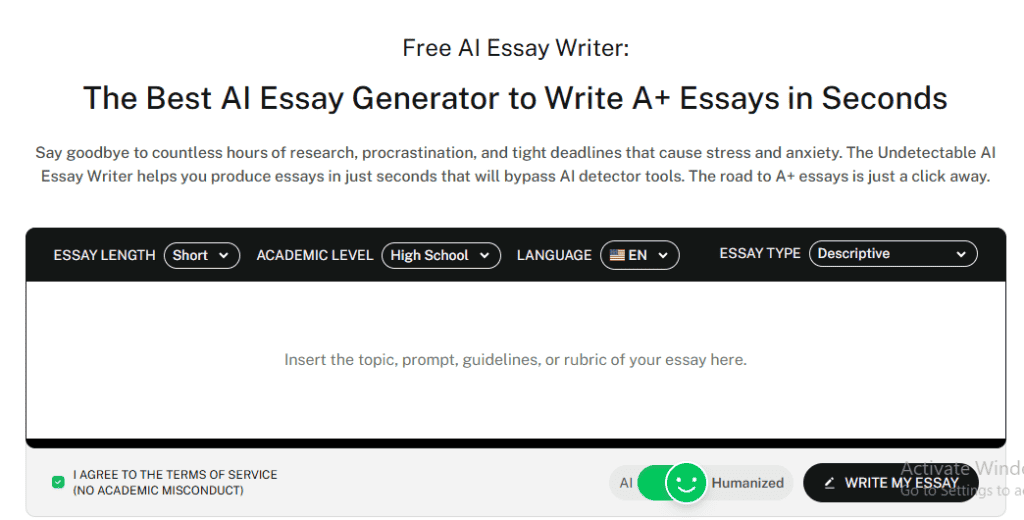
If you are staring at a blank page, our Undetectable AI’s AI Essay Writer can act as your personal guru. It generates fully structured, custom essays tailored to your specific topic and academic level.
Whether you need a high school narrative or a university level argumentative piece, this tool crafts content that is well researched and logical.
Improve Structure and Flow
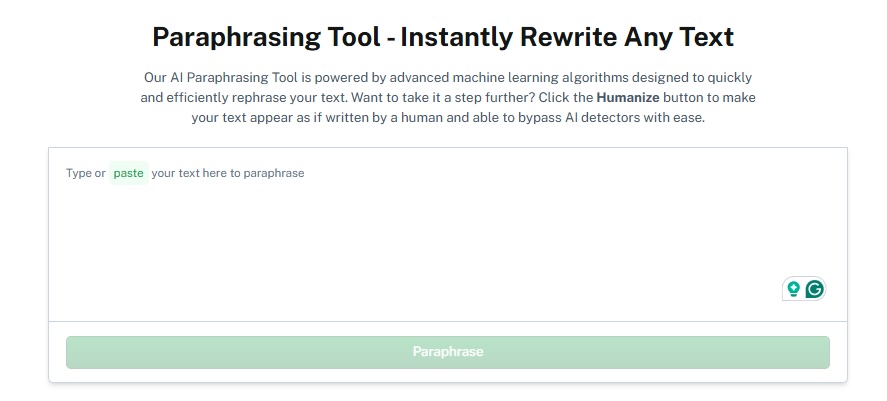
Sometimes you have the right ideas, but the “glue” between them is missing. This is why we use our AI Paraphrasing Tool to refine existing drafts.
It enhances word choice and ensures your transitions are razor sharp, turning a decent draft into a professional masterpiece that flows naturally from one point to the next.
Humanize AI-Assisted Writing
If you have used AI to help brainstorm or outline, it is essential to ensure the final product does not sound robotic.
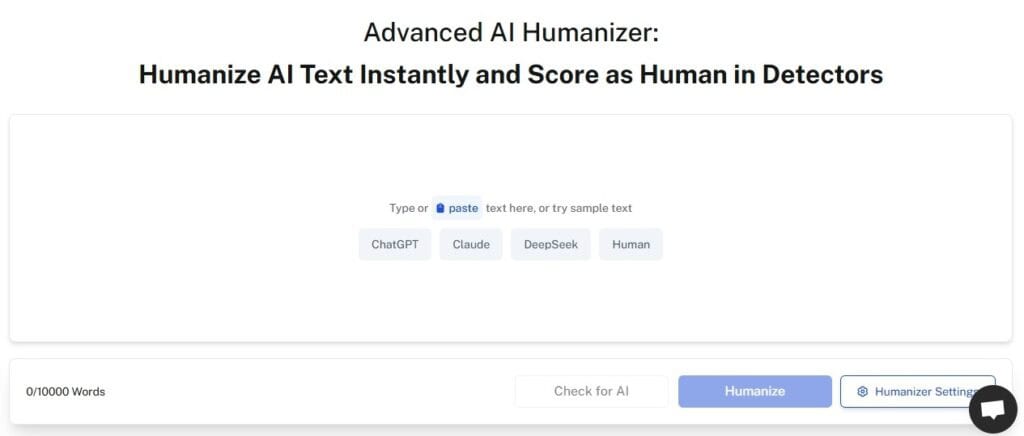
Our AI Humanizer adds the subtle nuances and rhythmic variations found in human prose. This ensures your essay is not only clear and accurate but also possesses the warmth and “voice” of a real writer.
Try both our AI Detector and Humanizer directly in the widget below!
FAQs
What are the most common essay types in college?
Most university students frequently encounter argumentative, analytical, and critical analysis essays. These formats are designed to test your ability to research, synthesize data, and form original conclusions.
How do I know if my essay is too persuasive?
If you are supposed to be writing an expository essay, look for “opinion” words like better, worse, should, or must. If your draft is full of these, you have shifted from explaining to persuading.
Can I use AI to help me write my essay?
Yes, AI is a powerful assistant for outlining, brainstorming, and refining your tone. Using tools to help you communicate more clearly is a valuable skill in the modern world, as long as you maintain academic integrity and your own unique perspective.
Conclusion
Essays are powerful communication tools, but choosing the right approach is the secret to making your voice heard.
Whether you are telling a personal story, explaining a scientific breakthrough, or fighting for a political cause, the format you choose serves as the foundation for your success.
Great essays start with clear thinking and a deep understanding of your audience’s needs.
By mastering these twenty essay types and utilizing modern tools to polish your prose, you will be well equipped to handle any writing challenge that comes your way.
Explore Undetectable AI to help you refine your essay structure and ensure your academic work always sounds perfectly human and professional.