
Whether you’re planning to write an essay or summarize a book, you’ll quickly realize that the English language is full of surprises.
What seems like a one-way path often turns into two: American English and British English.
British English and American English are two of the most widely recognized varieties of the English language, with subtle differences in grammar and style.
At their core, both languages express the same ideas, but the way they spell, phrase, and punctuate can differ. A classic example of a point of debate is aluminum or aluminium.
Neither is wrong to use per se, but it’ll depend on the context (and which side of the Atlantic you’re on).
So, is it aluminum or aluminium?
Let’s break it down here.
Key Takeaways
- Both aluminum and aluminium refer to the same metal, with “aluminum” used in American English and “aluminium” in British English.
- There’s no wrong spelling between the two words, but choosing which word to use depends on the context, like your audience and region.
- Choose either “aluminum” or “aluminium” and stick with it throughout your piece to keep your text clear, professional, and easy for the readers to follow.
What Is the Difference Between Aluminum vs Aluminium?
Is aluminum or aluminium correct? It’s okay to use either! Both are acceptable spellings for the same metal. “Aluminum” is used in American English, while “aluminium” is preferred in British English.
These differences show how American and British English have evolved separately over time.
Here’s a quick look at how often both dialects are used today:


Never Worry About AI Detecting Your Texts Again. Undetectable AI Can Help You:
- Make your AI assisted writing appear human-like.
- Bypass all major AI detection tools with just one click.
- Use AI safely and confidently in school and work.
- Around 1.53 billion people worldwide speak English, either as a first or second language.
- More than 60% of English-learning students are taught American English, while roughly 25% practice British English.
- Both varieties increasingly overlap, with Britishisms slowly making their way into American English, with Gen Z helping speed up the trend.
There’s nothing wrong with using either aluminium or aluminum, but it helps to know which fits your audience.
Let’s explore the definition, origins, and historical usage of the two words.
Definition and Origins
To set this straight: both aluminum and aluminium are used to define the same chemical element (atomic number 13). It’s the light, silvery metal that’s used in everyday objects like kitchen foil and mobile gadgets, as well as airplanes.The only actual difference between the two is the spelling.
But which came first, aluminum or aluminium? The story goes way back to the early 19th century.
British chemist Sir Humphry Davy first suggested the name alumium when identifying the element in alum (so it was neither of the two at first, really). But he did later use aluminum in 1812.
Around the same time, other chemists introduced aluminium, following the naming pattern of other elements like potassium and sodium.
So if we’re following this timeline, aluminum appeared first in print, then aluminium gained traction in British and European usage.
Historical usage
Both the aluminum and aluminium spellings were already quite common in the 1800s.
In the US, the word aluminum became the standard when Noah Webster (yes, the creator of the original Merriam-Webster dictionary) included it in his 1828 dictionary, and the American Chemical Society officially adopted it in 1925.
Meanwhile, the aluminium word took hold in the UK and was endorsed by the International Union of Pure and Applied Chemistry (IUPAC), becoming the international standard in 1990.
So there isn’t a single “correct” spelling of the term universally. The “right” choice depends on what you’re writing and for whom, as both terms are widely accepted for scientific and everyday use around the world.

When to Use
If you’re serious about improving your grammar, it pays to know which form of English you’ll actually be using first. A lot of word choices depend on that, including spelling differences like aluminum and aluminium. And while there’s no wrong answer for both words, consistency matters.
Once you know whether you’re using American or British English, your spelling choices become clearer, and your writing feels more intentional instead of being a jumbled mess.
Aluminum
Use aluminum when writing in American English. This is primarily for audiences in the US and Canada. It’s the standard spelling in US dictionaries, style guides, and everyday writing.
You’ll see the word aluminum used across sectors, like science, education, industry, as well as casual writing across North America.
In short, if your readers are American or Canadian, the word aluminum is the way to go.
Aluminium
Aluminium is primarily used in British English, which is the standard in the UK, Australia, New Zealand, and many other non-English-speaking regions.
This spelling also follows the international scientific naming conventions and is widely used across academic and scientific writing outside North America.
Put simply, it’s more appropriate to use the word aluminium if you’re writing for a global or UK-based audience.
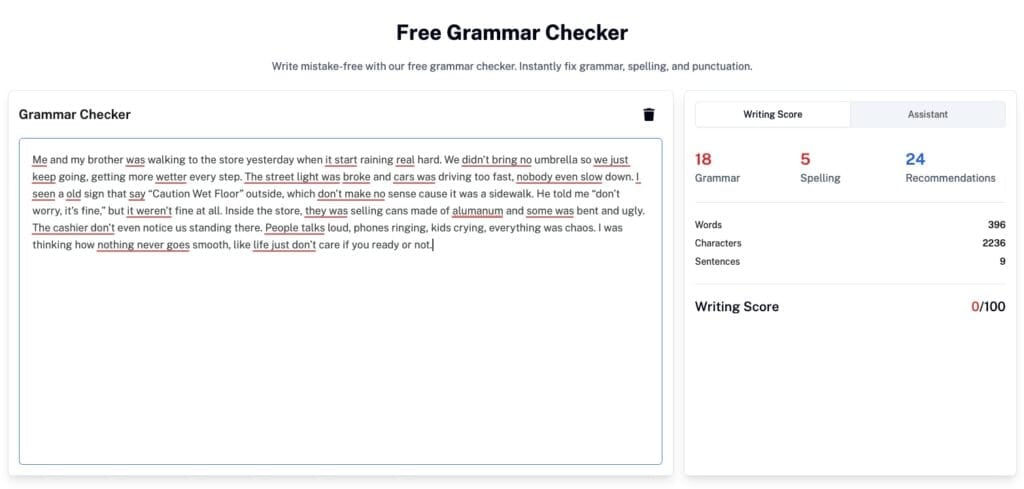
As a complement to your writing escapades, the Free Undetectable AI’s Grammar Checker can instantly spot grammar, spelling, punctuation, and style issues in your text.
Simply paste your text or practice your writing directly in the checker, and it highlights any mistakes in real time with suggested fixes you can accept with a click.
Examples of Aluminum vs Aluminium
In real use, both aluminum and aluminium mean the same thing, like the examples below:
American English:
“The bridge is made from lightweight aluminum for durability and strength.”
British English:
“The bridge is built with lightweight aluminium for durability and strength.”
They’re basically the same, right? The only way to tell when to use either of the two words is by knowing what form of English you’ll be writing in.
Context and Region Matter
Now, let’s add some context. The way you use aluminum or aluminium makes more sense when you pair them with other region‑specific terms. This shows how regional vocabulary and spelling go hand in hand.
Take these examples:
American English:
“The aluminum ladder is stored next to the elevator in the apartment building.”
British English:
“The aluminium ladder is stored next to the lift in the block of flats.”
Here’s another set:
American English:
“The aluminum siding was damaged during the storm, so the truck delivered new panels.”
British English:
“The aluminium cladding was damaged in the storm, so the lorry delivered new panels.”In each pair, the word used fits naturally with other vocabulary from the same form of English.
Vocabulary like elevator vs lift or truck vs lorry reflects distinct regional usage.
Being consistent with your spelling and terms ensures that your writing flows well and avoids judgment from your audience (they’ll immediately notice when something’s off).

Not sure if the way you use aluminium or aluminum sounds natural enough?
The Undetectable AI’s AI Humanizer sees to it that your writing fits any context. Just paste your text in, and let the tool do the work. The humanizer adjusts phrasing, word choices, and sentence flow without changing your meaning.
Aluminum vs Aluminium in Writing Style
Spelling isn’t the only thing that marks the difference between American and British English. The writing style also varies depending on the word choice, rhythm, and even sentence structure.
Consider these key factors when choosing the correct spelling and style for aluminum or aluminium:
- Audience: Use aluminum for American readers and aluminium for British or international audiences familiar with UK English.
- Consistency: Stick to one spelling throughout a piece, because mixing both can distract or confuse readers.
- Supporting vocabulary: Pair the spelling with region-specific words, like our previous examples for truck vs lorry, elevator vs lift, apartment vs flat.
- Tone and formality: British English can feel more formal, with longer spellings and phrasing, while American English tends to be shorter and more direct.
- Readability: Match your spelling and word choices so the text flows naturally.
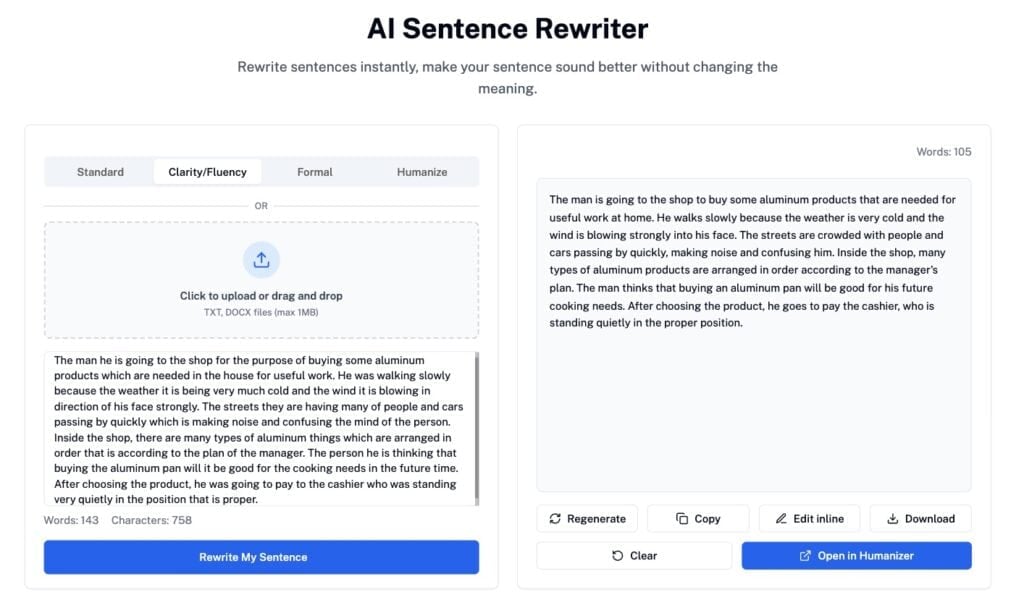
Sometimes fixing grammar isn’t enough. And if you’re stuck in a rut, use the free Undetectable AI’s Sentence Rewriter to rework your sentences with ease and get back in the groove.
The tool is perfect for polishing tricky lines, making your writing more natural, and avoiding those awkward or stiff sentences.
Common Mistakes and Guidelines
When it comes to using aluminium or aluminum, small slip-ups can stand out. Here are common mistakes when using these words to avoid confusing your readers, and some simple guidelines to keep your writing quality consistent.
Mixing spellings
A common mistake is thinking that no one will notice you using aluminium and aluminum in the same document.
Using both typically happens when a writer isn’t sure which form of English they’re using, and using them interchangeably shows that you aren’t confident in the words you’re using.
To avoid this, choose either American or British spelling at the start and stick with it throughout.
Maintain consistency
Consistency matters in any form of professional writing, and we’re not just referring to aluminum or aluminium here. Style guides, academic papers, and formal reports often expect a single spelling pattern for all terminology.
Switching between British and American English can ruin the flow and make readers question the quality of your work.
A pro tip is to set your document’s language (US or UK) in your word processing platform to automatically catch inconsistencies.
Match audience
Using the spelling that matches your audience’s expectations improves how your writing is received. In North America, people are used to aluminum and may notice the British version as unusual.
Outside North America, aluminium is often the standard word used in schools, publications, and technical writing.
Choosing the right spelling shows respect for your readers and prevents unnecessary confusion.
Avoid casual misuse
Some writers use aluminum and aluminium casually without thinking about context, like in informal chat or when in mixed English locales.
While native speakers will likely understand either spelling, using the wrong form in formal writing or technical contexts can make you look careless.
In scientific and international documents, aluminium is widely accepted under IUPAC conventions, while aluminum dominates in US manuals and trade documents.
Always check the style requirements or audience expectations before you finalize your text.
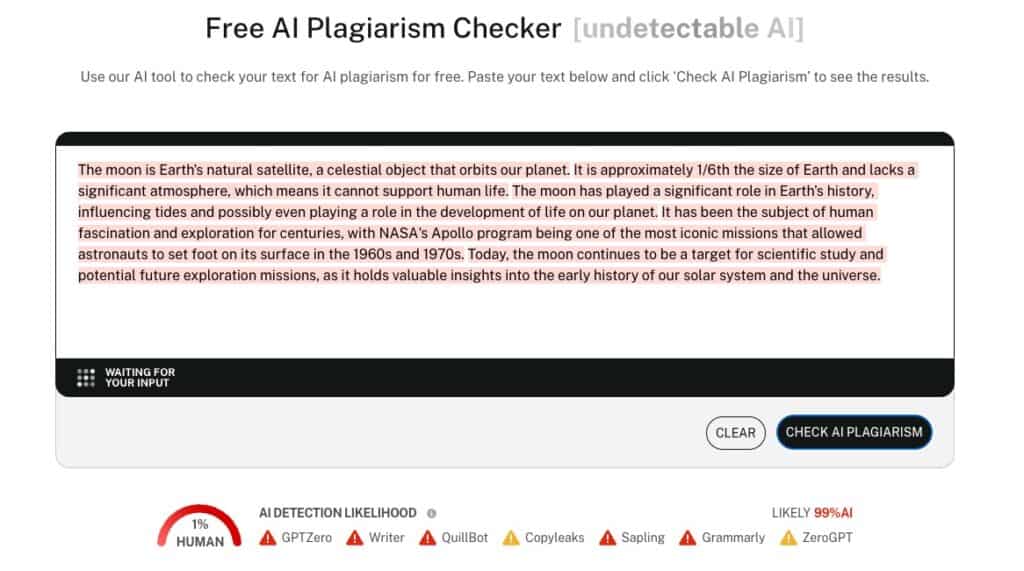
Worried about text that might sound similar to what you’ve already seen online? Or worse, resemble AI-generated text?
The free Undetectable AI’s Plagiarism Checker helps you confirm originality quickly and easily. The tool compares your text against a wide range of models and content to flag possible similarities.
If something gets flagged, don’t worry. You can revise and re‑check until you feel confident that your work is original and properly cited.
Try the AI Detector and Humanizer tools in the widget below!
Aluminum or Aluminium? Consistency Wins
American English favors aluminum, while British English prefers aluminium. Both are right, but consistency is key.
Use one spelling and apply it throughout your writing (with proper context) to avoid confusion and keep your text clear.
To double-check your work and make sure that your spelling, style, and phrasing flow naturally, use Undetectable AI.
With Undetectable’s wide array of AI tools, you’ll spot inconsistencies, smooth awkward sentences, and refine your tone so you can write with confidence—no guesswork required.