
You started a blog because you had something to say. Now you’re wondering: can this actually become a source of income?
You’ve seen the stories. Bloggers earning a full-time income from their personal websites. But when it comes to your own blog, you’re not sure where to begin, or what actually works.
The honest truth is that blog monetization isn’t as simple as throwing ads on your site and hoping for the best. There’s a right way to do it, and getting it wrong can cost you readers and revenue.
So if you’re serious about turning your blog into something more than just a creative outlet, read on for our practical blog monetization tips that actually work.
TL: DR – The key to blog monetization is building consistent traffic, earning your audience’s trust, and choosing income streams that align naturally with your content.
Key Takeaways
- Successful blog monetization depends on building consistent traffic and a foundation of high-quality content before introducing revenue streams that align with your niche.
- Diversifying your income through a mix of display ads, affiliate marketing, and digital products creates a more stable and resilient financial model than relying on a single source.
- Prioritizing audience trust is essential for long-term growth, as readers are more likely to support bloggers who offer genuine value and honest recommendations over aggressive sales pitches.
- Building an email list provides a direct line to your audience, ensuring your business remains protected even if search engine or social media algorithms change.
- To maintain an authentic connection with your readers, using Undetectable AI ensures your articles and newsletters feel personal and relatable rather than generic or automated.
What Is Blog Monetization Exactly
Blog monetization is the process of generating revenue from your blog content and audience.
The key idea behind monetization is that your blog traffic has value. When people visit your site to read articles, they’re giving you their attention.
That attention can be converted into money through different monetization strategies. Some bloggers focus on passive income through ad networks and affiliate marketing, while others build active income streams through freelance work, consulting services, or selling their own products.


Never Worry About AI Detecting Your Texts Again. Undetectable AI Can Help You:
- Make your AI assisted writing appear human-like.
- Bypass all major AI detection tools with just one click.
- Use AI safely and confidently in school and work.
What makes a successful blog different from a personal blog is the focus on creating valuable content that serves a specific audience.
For example:
- A food blog that shares recipes might monetize through sponsored posts from kitchen brands.
- A travel blog might earn through affiliate links to booking sites.
- A technical blog might sell digital products like courses or templates.
The monetization approach depends on your niche, your audience, and what fits naturally with the topics covered on your site.
Why Traffic Matters More Than Anything
You can’t monetize what doesn’t exist. So before you even think about revenue streams, you need blog traffic.
Why? Because the number of readers visiting your site determines how much money you can make from most monetization strategies.
For example, ad networks like Google AdSense pay based on ad clicks and impressions, and affiliate programs generate sales when readers click your links. Digital products are also more likely to sell when lots of people see your sales page.
Most successful bloggers recommend waiting until you have consistent traffic before focusing heavily on monetization.
While there’s no magic number, many suggest reaching at least 1,000 to 5,000 monthly visitors before adding ads or pushing affiliate products.
Some monetization methods, like selling consulting services or freelance work, can start earlier because they don’t require massive traffic. But for passive income through ads and affiliates, volume is everything.
Practical Tips for Building Blog Traffic
Building traffic doesn’t happen overnight. It takes strategy, consistency, and a whole lot of patience.
Here’s what that typically involves:
- Publishing high-quality, search-optimized content: Create articles that answer real questions and solve real problems.
- Doing keyword research: Write content around terms people are actively searching for, not just what you feel like writing.
- Optimizing for SEO: Make sure your site loads quickly, works on mobile devices, and is easy to navigate.
- Promoting on social media: Share your content where your audience already spends time.
- Guest posting and backlink building: Write for other sites to tap into new audiences and improve search rankings.
- Building an email list: Email marketing brings readers back repeatedly, instead of relying only on search engines.
One of the biggest mistakes new bloggers make is trying to monetize too early.
They add lots of ads or affiliate links before they have enough traffic to make meaningful revenue, which can end up hurting the user experience and driving readers away.
Blog Monetization Methods and Different Ways Blogs Make Money

There are several proven ways to generate revenue from a blog. Most successful bloggers use multiple income streams rather than relying on just one source of money. Here’s a quick look at the main monetization strategies that work.
Ads on Your Site
Display ads are one of the easiest ways to start monetizing a blog.
All you have to do is sign up with a network like Google AdSense, Mediavine, or AdThrive, and you can place ads on your site.
You then earn money based on impressions (views) or clicks. Once it’s set up, it runs in the background, making it a relatively passive income stream.
But here’s the catch: ads only work well with traffic. Premium networks typically require 50,000+ monthly page views. AdSense has no minimum; however, it pays much less per click.
Affiliate Product Links
Affiliate marketing is where you recommend a product, and if someone buys through your link, you earn a commission.
Here’s how it works:
- You join an affiliate program and get a unique tracking link.
- You naturally include that link in your blog content or social media content.
- When a reader clicks and makes a purchase, you get a percentage of the sale.
Affiliate links work best when the recommended product or service genuinely helps your audience.
The biggest upside to affiliate marketing is that it often outperforms ads, especially in high-value niches like finance or software. In other niches, commissions may be smaller, but they can still add up with the right audience.
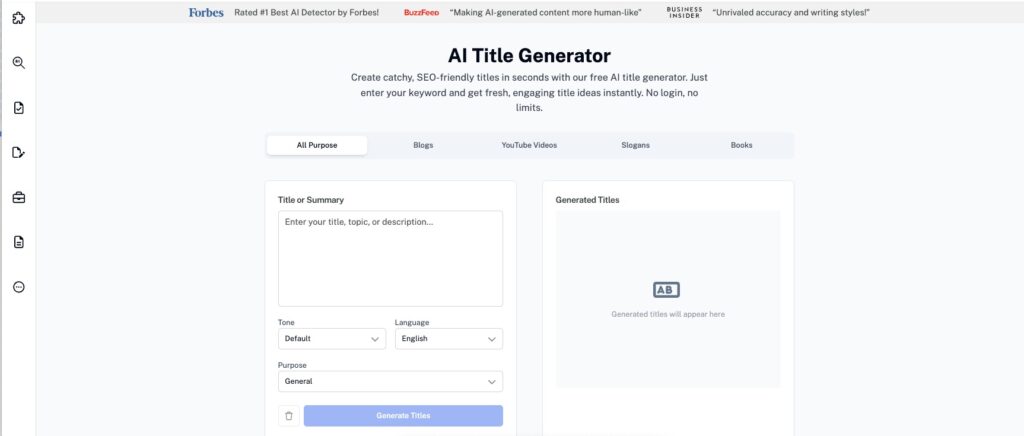
Pro Tip: When drafting blog articles for your website, use Undetectable AI’s Title Generator to create engaging headlines quickly.
AI SEO Writer can also help you create high-quality content that ranks in search engines and drives more traffic to your site.
And don’t forget: before publishing, always run your content through our AI Detector to flag potential passages of text that might come across as robotic or generic.
Selling Digital Products
If you want higher profit margins, this is where things get interesting.
Selling your own digital products, like ebooks, courses, templates, printables, or memberships, means you keep most of the revenue (aside from listing or platform/marketplace fees).
No commissions or middleman. And because your products are digital, you can sell them again and again without extra production costs.
This strategy takes a little work upfront, because you’ll have to create the product, set up a sales page, handle payments, and promote it to your audience.
However, once it’s live, it can become one of your strongest income streams. In fact, many bloggers eventually make more from their own products in the long term than from ads or affiliate links.
Building Trust Before Selling Anything
The biggest mistake new bloggers make is trying to monetize their blog before they’ve built trust with their target audience.
Readers can tell when you’re more interested in making money than providing valuable content. And if every blog post feels like a sales pitch, people will leave and never come back.
Trust takes time, and it only comes from:
- Consistently creating great content that helps your readers solve problems or learn something new.
- Being honest about what works and what doesn’t.
- Only recommending products you actually use and believe in.
- Responding to comments, engaging on social media platforms, and showing that you genuinely care about your audience.
So before you add sponsored posts or push affiliate links, ask yourself if you’ve provided enough value to earn the right to sell.
Have you published enough quality content to establish yourself as someone worth listening to? Have you built an email list of new subscribers who want to hear from you? Have you engaged with readers and built a community around your blog?
The blogs that make the most money are usually the ones that focus first on serving their audience. And the monetization comes naturally once that foundation is in place.

Pro Tip: Use a tool like Undetectable’s AI Humanizer to refine any AI-assisted drafts into natural, relatable writing that has the power to build genuine trust with readers.
Common Mistakes New Bloggers Make
Understanding what not to do is just as important as knowing what to do.
Here are the most common mistakes that prevent bloggers from successfully monetizing their sites.
| Creating Your Blog Monetization Strategy: 7 Common Mistakes New Bloggers Make | ||
| Mistake | Why It Hurts | What to Do Instead |
| Starting Too Early | Adding ads or affiliate links without enough traffic clutters your site and generates little revenue. | Focus on building consistent traffic before monetizing heavily. |
| Adding Too Many Ads | A site packed with banner ads looks spammy, slows load times, and drives readers away. | Use strategic, minimal ad placements that protect user experience. |
| Promoting Irrelevant Products | Recommending products that don’t fit your niche can damage trust. | Only promote products that genuinely help your audience. |
| Ignoring Email Marketing | Relying only on search or social traffic leaves you vulnerable to algorithm changes. | Build an email list early to maintain direct access to your audience. |
| Not Creating Enough Content | A blog with only a handful of posts can’t build authority or rank consistently. | Publish high-quality content regularly to grow visibility and trust. |
| Copying Everyone Else | What works for other bloggers may not work for your audience. | Test different monetization strategies and track what performs best. |
| Giving Up Too Soon | Monetization takes time and setting unrealistic expectations for yourself too soon can lead to burnout. | Treat blogging as a long-term investment and stay consistent. |
Give our AI Detector and Humanizer a spin in the widget below!
Frequently Asked Questions On Blog Monetization
Can you actually make money blogging?
Yes, but it takes time and thoughtful strategy. Many bloggers are able to earn a part-time and even full-time income through ads, affiliate marketing, digital products, and sponsored posts.
However, success depends on having consistent traffic, being able to build audience trust, and treating your blog like a business (not a quick cash grab).
Is it better to focus on ads or affiliate marketing?
It all depends on your niche and audience. Blogs with very high traffic often make more from ads, while blogs with smaller but highly engaged audiences in specific niches often make more from affiliate marketing. Many bloggers use both.
If you’re not sure which one is best for you, it’s a good idea to test different approaches and see what generates more revenue for your own blog.
How often should you publish content before monetizing?
When it comes to creating content, consistency matters more than volume. You don’t need hundreds of posts, but you do need enough high-quality content to establish authority and attract steady traffic.
Aim to build a solid foundation of helpful, search-optimized articles first. Once you’re seeing consistent visitors and engagement, your monetization efforts will be far more effective.
Final Thoughts on Blog Monetization Strategies in 2026
The most successful bloggers who win in the long term don’t rely on just one income stream.
They combine ads, affiliate marketing, digital products, sponsored content, and sometimes services. That mix makes their income more stable and far less stressful.
But here’s what really sets them apart: they don’t chase quick money. They focus on creating great content and building real relationships with their readers. And that’s the approach that will always win in 2026 and beyond.
Protect your blog’s credibility and keep every post sounding authentic with Undetectable AI.