
Accidental plagiarism happens when someone copies another person’s ideas, words, or creative execution without intending to. It usually stems from citation mistakes, misunderstandings, or memory errors like cryptomnesia.
In this article, we identify the most common reasons accidental plagiarism occurs and how to avoid it.
Principais conclusões
- The most common cause of accidental plagiarism is disorganized note-taking, but it can also stem from cryptomnesia or informal sourcing.
- Accidental plagiarism can still come with significant consequences even if the institution you submit your work to understands that it was unintentional.
- You can avoid accidental plagiarism by tracking where you get your information, keeping research separate from drafts, and running your work through plagiarism checkers and human review.
What Accidental Plagiarism Means
Accidental plagiarism is when you unconsciously duplicate another person’s phrasing, creative execution, or other ideas in your own work. It often arises from the following:
- Disorganized note-taking: Some real-world cases of accidental plagiarism happened because the offender mistook research notes for their own writing.
- Subconscious memory of copied material: It is possible for the mind to misremember a forgotten memory as an original thought. This memory bias, called cryptomnesia, sometimes leads to plagiarism.
- Forgotten citations: Submitting works that forget to cite sources for lifted phrases, sentences, or ideas constitutes plagiarism.
- AI-assisted writing: Generative AI can produce content that closely resembles phrasing, ideas, and data from existing sources. Left unedited, AI-generated work can lead to plagiarism claims.
Accidental Plagiarism vs. Other Types of Plagiarism
The term accidental plagiarism focuses on the intention behind the offense. It can overlap with other types of plagiarism, such as mosaic plagiarism and incremental plagiarism.
- Accidental plagiarism vs. global plagiarism: Global plagiarism is the act of taking credit for a complete work that is not your own. It never happens accidentally, and is therefore considered the most severe form of plagiarism.
- Accidental plagiarism vs. direct (verbatim) plagiarism: Direct plagiarism copies existing work word-for-word without attribution. Like with global plagiarism, it rarely happens accidentally.
- Accidental plagiarism vs. patchwriting: Patchwriting, also known as mosaic plagiarism, combines multiple passages, ideas, or data points from other sources without credit. It can happen accidentally, such when a writer loses track of which passages are borrowed and which are their own.
- Accidental plagiarism vs. incremental plagiarism: Incremental plagiarism is when small pieces of borrowed material accumulate in a work without citations. It almost always happens unintentionally.
Six Real Cases of Accidental Plagiarism
To illustrate how accidental plagiarism happens and what the consequences are, here are a few famous real-world examples.
Nunca mais se preocupe com a detecção de seus textos pela IA. Undetectable AI Pode lhe ajudar:
- Faça sua escrita assistida por IA aparecer semelhante ao humano.
- Bypass todas as principais ferramentas de detecção de IA com apenas um clique.
- Uso IA com segurança e com confiança na escola e no trabalho.
Maureen Dowd
One famous example of accidental plagiarism was New York Times columnist Maureen Dowd’s 2009 scandal. Here, as reported in O Guardião, readers pointed out that a paragraph in her column duplicated a passage by Josh Marshall, the blogger who created the famous news websiteTalking Points Memo.
After word of the plagiarism caught on, Dowd explained that she pulled the paragraph from a friend and mistakenly believed that the wording was original. The New York Times eventually issued a correction acknowledging Josh Marshall as the source.
Jacob Epstein
In 1980, novelist Jacob Epstein came under fire after critics discovered that his debut novel, Wild Oats, contained numerous passages that closely resembled material from Martin Amis’s The Rachel Papers.
Amis himself identified dozens of similarities between the two books, which led the public to question whether Epstein had copied the work intentionally.
Epstein concluded that the error occurred because he had recorded passages he liked in his drafting notebooks and later mistook them for his own original writing. Though he admitted fault and even issued a public apology through the British newspaper the Observer, the scandal damaged his reputation and ended his career as a novelist.
Doris Kearns Goodwin
Doris Kearns Goodwin’s reputation as a prominent historian and political commentator came under question when a 2002 report uncovered that multiple passages from her work The Fitzgeralds and the Kennedys resembled material from other authors, including Lynne McTaggart’s Kathleen Kennedy: Her Life and Times. McTaggart herself reached out to Goodwin to investigate the potential plagiarism.
Eventually, Goodwin admitted that she used McTaggart’s works as references during the research process.
However, she claimed that she hadn’t intended to pass McTaggart’s work as her own, but rather mistook her research notes for original writing. According to Library Journal’s account of the scandal, Goodwin then agreed to give McTaggart writing credits and monetary compensation.
Alex Haley
Another example of accidental plagiarism was the bestselling author Alex Haley. In 1978, fellow writer Harold Courlander filed a lawsuit claiming that Haley’s novel Roots replicated multiple passages and plot elements from Courlander’s earlier work, The African. Haley denied intentional plagiarism and insisted that any similarities were unintentional.
According to the New York Times’ account of the event, Haley eventually agreed to settle. As the suit proceeded, he came to the conclusion that material from the African found its way to The Roots’ final manuscripts because he mistook his research notes for original material.
Allegedly, many people offered him handwritten notes to support his research process.
In Alex Haley’s words, “Somewhere, somebody gave me something that came from ‘The African.’ That’s the best, honest explanation I can give.”
George Harrison
In 1971, George Harrison released “My Sweet Lord,” which became a massive commercial success. Soon afterward, Bright Tunes Music Corporation filed a lawsuit against the song’s publishers over claims that its melody closely resembled that of the Chiffons’ 1963 hit “He’s So Fine.” Harrison denied intentionally copying the earlier song and insisted that any similarities were unintentional.
When the case went to court, the judge concluded that Harrison had engaged “subconscious plagiarism,” alleging that Harrison heard the song and unconsciously reproduced many of its elements rather than deliberately copying them. However, as the record still infringed copyright, the court still ordered Harrison to pay damages.
Helen Keller
Twelve-year-old Helen Keller faced plagiarism accusations in 1891 when readers found suspicious similarities between Keller’s story, The Frost King, and Margaret T. Canby’s Birdie and his Fairy Friends. However, despite public backlash, Keller asserted that she had never encountered Canby’s story.
Later, Keller’s instructor, Anne Sullivan, discovered that Keller had the story read to her by a teacher she once met on vacation. She alleged that while Keller forgot coming across the story, her mind subconsciously remembered many elements, which led her to accidentally use some of the same ideas while working on her own. This makes it a clear-cut case of cryptomnesia.
Disorganized Note-Taking Caused Three out of Six Real-World Plagiarism Cases
| Caso | Cause of Plagiarism |
| Maureen Dowd | Informal sourcing |
| Jacob Epstein | Disorganized note-taking |
| Doris Kearns Goodwin | Disorganized note-taking |
| Alex Haley | Disorganized note-taking |
| George Harrison | Cryptomnesia |
| Helen Keller | Cryptomnesia |
The most common cause of accidental plagiarism among the cases we recorded was disorganized note-taking. Even experienced writers like Doris Kearns Goodwin and Alex Haley managed to let this mistake slip through.
The second most common cause of accidental plagiarism was cryptomnesia. Without intending to, creators like George Harrison and Helen Keller reproduced work they forgot that they had previously encountered.
I believe that two common denominators among these cases are 1) memory biases and 2) a lack of checks and balances before publication. The second point is a lot easier to address.
It’s normal for people to forget where their ideas come from. However, failing to check for similarities to existing work before submission causes them to face severe consequences.
How To Avoid Accidental Plagiarism, Step by Step
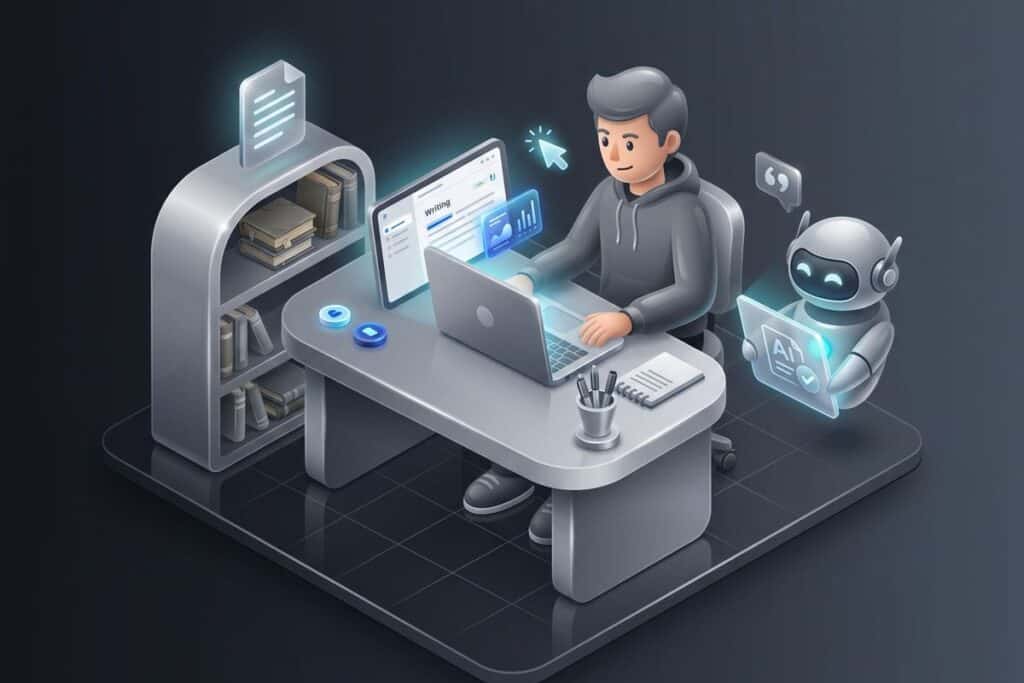
As I mentioned, the two main reasons accidental plagiarism slips people by are memory and a lack of checks and balances before submitting work.
To protect yourself, you need to keep your notes organized so that you remember where your information comes from, then put your work through machine and human review to catch mistakes you might have missed.
Step One: Keep Your Research Notes Organized
Make sure your research notes clearly separate what you learned from other people and what you came up with yourself.
To achieve this, you can:
- Separate drafts and research notes: Having separate documents for original writing and references reduces the risk of confusing one for the other.
- Track sources: As you research, keep a record of where each idea and piece of information originated. This makes it easier to provide correct attribution later on.
Step Two: Cite Sources
Once you’ve tracked your sources, cite them properly. Citations give credit to the original creator and help readers verify your claims.
Step Three: Run Your Work Through a Plagiarism Checker
Always request feedback from a plagiarism checker before turning in your work. As our article on Como funcionam os verificadores de plágio explains, these tools help you identify whether your work contains any sentences or phrases that resemble your sources or other existing material.
Step Four: Ask A Human to Review Your Work
While plagiarism checkers are effective at flagging similarities in phrasing or structure, they’re weaker at identifying replicated ideas.
To give yourself an extra layer of protection, it helps to ask someone who is familiar with your field to review your work and point out potential overlaps with existing material.
Perguntas frequentes
Can schools penalize students for accidental plagiarism?
Yes, schools often penalize students for plagiarizing unintentionally. However, most still make distinctions between careless mistakes and deliberate plagiarism when determining how to respond.
This means students who commit accidental plagiarism are more likely to face reduced grades, assignment failures, or suspension rather than more severe punishments like expulsion.
Can you reproduce existing work without realizing it?
Yes. Some people suffer from occasional memory biases where they mistake forgotten memories for original thoughts. This is called cryptomnesia. One famous example is Helen Keller, who accidentally reproduced a story her instructor Anne Sullivan taught her when she was a child.
How common is cryptomnesia?
Cryptomnesia is a very common phenomenon. A set of experiments conducted by psychologists Alan S. Brown and Dana R. Murphy showed that unintentional plagiarism happens in 3% to 9% of activities involving brainstorming and word-generation tasks. This proves the importance of running works through human and machine review before publication.
Is using generative AI plagiarism?
It depends on context and severity. Settings that value authorship, such as academia, publishing, and competitions, view all AI-generated work as plagiarism because it obfuscates the writer’s level of involvement in producing the work.
Outside of these settings, AI-generated work can count as plagiarism if it replicates phrasing, execution, or other ideas from sources that the author fails to credit.
How can I check if my writing accidentally plagiarizes a source?
To prevent accidental plagiarism, run your draft through a plagiarism checker. These tools can effectively flag similarities to existing works.
It also helps to have your work checked by another person who is familiar with your field so you can catch the similarities computers might miss.
Considerações finais
The scandals of Jacob Epstein, Doris Kearns Goodwin, Alex Haley, and others prove that accidental plagiarism can come with significant consequences, even if everyone knows it was unintentional. To protect yourself from plagiarism claims, it helps to track your original sources, use plagiarism checkers, and ask for human review before submitting your work.
Em Undetectable AI, we offer a free Verificador de plágio de IA that can flag AI-generated or plagiarized work. It can help your submissions pass popular detectors, such as Turnitin, Grammarly, and Copyleaks.