
“I drink, and I know things.”
“You know nothing, Jon Snow.”
We all loved Game of Thrones. Despite the controversial Season 8 finale, we still love it because of the characters who made us fall in love with Westeros in the first place.
Tyrion Lannister with his sharp wit, our fierce Ygritte with her declarations, and Littlefinger who thinks: “Knowledge is Power.”
These characters had a gift for saying double-meaning sentences.
You, as the audience, and we, as devoted fans understood there was something more beneath the surface.
But what were those words they used?
They were double entendres. And what is a double entendre? These are phrases with hidden layers of meaning.
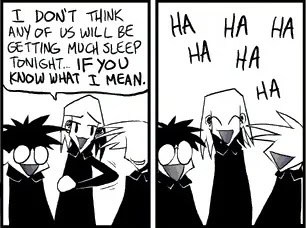
In this blog, we’ll cover what is a double entendre, how it works with examples, the main types, and how it helps build humor.
On top of that, you’ll get a step-by-step guide on writing your own double entendres, tips for using them, and how AI tools can help perfect your phrasing.
Let’s dive in.
Key Takeaways
- A double entendre is a phrase with two meanings. One innocent and straightforward, the other hidden, risqué, or ironic.
- The brain scans word meanings, filters by context, then “clicks” when both layers register, creating that satisfying recognition moment.
- There are two double entendre types: Lexical double entendres hinge on a single word with multiple meanings. Contextual ones rely on situations to imply hidden meanings.
- They build an “in-group” for readers who get the joke, release tension via taboo topics, and reveal character traits based on who uses, misses, or reacts to them.
- Stick to the “One Bridge Rule” (1–2 pivot words), ensure the surface meaning stands alone, and use AI tools to refine tone and clarity.
What Is Double Entendre?
- Double Entendre Definition
What is a double entendre?
A double entendre is a figure of speech, like a pun, irony, or metaphor, that operates on two levels at once.
The term came from two French words: double (“twofold”) and entendre (“to hear/understand”), though the phrase itself is English, likely coined by John Dryden in 1673.


Never Worry About AI Detecting Your Texts Again. Undetectable AI Can Help You:
- Make your AI assisted writing appear human-like.
- Bypass all major AI detection tools with just one click.
- Use AI safely and confidently in school and work.
When exploring the double entendre definition, it’s important to understand it is any simple phrase that works in two ways:
- Surface Layer: Innocent, straightforward, and socially acceptable.
- Subtext Layer: Ironic, risqué, or socially subversive.
Examples:
- Victorian England: Authors like Oscar Wilde used double entendres to hint at scandalous topics while avoiding censorship.
- Hollywood (Hays Code era): Screenwriters implied sexual acts without breaking strict moral rules.
- Modern Media: Movies like Shrek or Finding Nemo hide adult jokes that children hear literally, while adults understand the hidden double entendre meaning.
- Double Entendre Examples
Let’s examine these classic double entendre examples to understand how masters of the craft deployed this device:
Example 1: Shakespeare’s Romeo and Juliet
Title: The “Bawdy Hand”
Context: Mercutio mocks the Nurse while pretending to tell the time.
Quote: “Tis no less, I tell you; for the bawdy hand of the dial is now upon the prick of noon.”

Surface Meaning (Innocent): The clock’s hand (dial) points at 12:00 PM (noon). “Bawdy” could be read as “worn” or just a rough adjective.
Subtext Meaning (Risqué): “Bawdy” = sexual; “prick” = penis in Elizabethan slang. The sentence humorously suggests a sexual image.
Mechanism: Homonymy—the word “prick” has two meanings (a clock mark and male genitalia). The ambiguity allows both interpretations.
Example 2: Goldfinger (1964)
Title: Pussy Galore
Context: Bond meets the character Pussy Galore for the first time.
Quote:
- Pussy Galore: “My name is Pussy Galore.”
- Bond: “I must be dreaming.”

Surface Meaning (Innocent): “Pussy” is her legal name or a nickname, perhaps referencing a cat. Bond’s line could simply express amazement at meeting a famous pilot or attractive woman.
Subtext Meaning (Risqué): “Pussy” is slang for female genitalia, and “Galore” means “in abundance.” The name hints at sexual availability, and Bond’s reply acknowledges the sexual fantasy.
Mechanism: Lexical ambiguity (polysemy). The writers rely on the audience understanding the slang to catch the joke.
This remains one of the most famous double entendre examples in cinema history.
How Double Entendres Work
To write a successful double entendre, you need to understand how the brain processes it.
This psycholinguistics is explained by the “Ambiguity Resolution Model.”
Step 1: Lexical Access (Scanning the Word)
When a reader sees a word like “organ” (e.g., He has a massive organ), the brain retrieves all possible meanings:
- Musical instrument (church organ)
- Biological body part (heart, liver)
- Slang for genitalia (penis)
Step 2: Contextual Priming (Filtering)
The brain checks the context. If the scene is in a church, it prioritizes the musical meaning and suppresses the slang meaning. This is called the suppression mechanism.
Step 3: Incongruity Injection (Triggering Ambiguity)
The writer adds a phrase that fits the innocent meaning but hints at the risqué meaning.
- Example: He plays his organ with such vigorous strokes.
While this could describe music, it also strongly suggests the slang interpretation.
Step 4: Reanalysis and Superposition (The “Click”)
The brain notices the tension between the innocent context and the suggestive phrasing. Both meanings become active simultaneously, producing the humor response.
This is how a clever double entendre works.
Word Seen
│
▼
All possible meanings retrieved
│
▼
Context highlights one meaning, hides others
│
▼
Writer adds phrase suggesting hidden meaning
│
▼
Brain notices incongruity → both meanings active
│
▼
Reader enjoys the ambiguity
The Two Main Types of Double Entendres
While double entendres can take many forms, most writing examples fall into two main categories:
| Type | Key Idea | How It Works | Example | Best For |
| Lexical (Word-Based) | One word carries two meanings | Uses homonyms or polysemy; joke breaks if word changes | “The baker couldn’t make enough dough.” (bread vs. money) | Headlines, jokes, character names |
| Contextual (Situation-Based) | Whole situation carries the hidden meaning | Uses context to imply risqué or taboo ideas | “It’s so hard to get it in when it’s this tight.” (parking vs. sex) | Romance, screenplays, chemistry-building scenes |
Understanding these types helps clarify what is a double entendre in practical terms and how to deploy each type effectively.
How Double Entendres Shape Tone and Humor
A double entendre shapes tone and humor in three interconnected ways, each reinforcing the others to engage the reader and deepen character dynamics.
- Superiority Theory (The “In-Group”)
Humor often comes from feeling “in on the joke.” When a double entendre is missed by some characters but understood by others, the reader automatically aligns with those who “get it.”
This alignment creates intimacy and connection between characters, signaling shared knowledge or attraction.
- Example: In Shrek, Donkey doesn’t catch all of Lord Farquaad’s sly comments, but Shrek and the audience do, making us feel “in on it.”
- Relief Theory (Venting Taboos)
Freud’s Relief Theory explains that laughter releases tension built up by social taboos.
Double entendres allow writers to touch subjects like sex, bodily functions, or other forbidden topics without breaking social norms.
The tension created by the taboo is immediately released when the hidden double entendre meaning is recognized, giving the reader a satisfying sense of relief.
- Example: In Shrek, many jokes about bodily humor fly over children’s heads but give adults a private laugh.
- Character Development Through Double Entendres
Double entendres also reveal personality and social roles:
- Characters who use the wits are clever, dominant, and socially confident (e.g., James Bond or Tyrion Lannister).

- Characters who miss the joke (the “Innocents”) appear naive or distracted.
- Those who notice but are offended (the “Prudes”) are rigid, judgmental, or socially uptight (e.g., The Nurse in Romeo and Juliet).
Step-by-Step Guide to Writing Your Own Double Entendres
Here is the step-by-step guide to writing your own double entendres:
- Step 1: Identify the Primary Meaning
Start with what you want to say (the Subtext). Usually, this is the taboo, sexual, or aggressive thought.
- Scenario: You are writing a romance scene. Character A wants to imply to Character B that they are sexually compatible.
- The Raw Subtext: We would be good at sex because we fit together well.
- Step 2: Find a Secondary Meaning That Fits
Now, look for a non-sexual context (The Surface Layer) that uses similar verbs or nouns. You need a “Cover Story.”
- Brainstorming: What else involves “fitting together,” “rhythm,” “heat,” or “movement”?
- Options: Dancing, cooking, fixing a car, playing music, unlocking a door.
- Selection: Let’s choose Ballroom Dancing. It involves bodies moving together, rhythm, and leading/following.
- Step 3: Test the Line for Subtlety
Draft lines that apply to dancing but leak into the sexual subtext. Use Polysemous words.
- Draft 1: “I bet you move your hips good.” (Too explicit. Fails plausible deniability).
- Draft 2: “We dance well together.” (Too boring. No second meaning).
- Draft 3: “You have to anticipate my movements. If you follow my lead, we can find a rhythm that works for both of us.” (Better).
- Step 4: Adjust Wording for Clarity and Rhythm
Refine the sentence so it sounds natural in conversation. The double entendre must not sound “written.”
- Polished Line:It’s all about the friction, darling. If you hold on too tight, you lose the flow. You have to let it slide a little.
- Literal: Advice on dance holds.
- Subtext: Advice on intimacy.
Tips for Writing Smooth and Clever Double Entendres
To write a strong double entendre, you need knowledge of language/context and skill of using AI tools:
- Context Is King
The surface meaning must make sense in the scene. A joke forced into the wrong setting falls flat.
- Example: Two characters in an empty room discussing “erecting pillars” feels awkward. But if they are architects examining blueprints, the same line works perfectly, the surface layer is justified.
- Use Undetectable AI’s Writing Style Replicator
Wit is about tone. Too academic, and the joke fails. Too crude, and it offends. Writers often struggle to maintain a consistent voice for a witty character.
So you can feed the Writing Style Replicator samples of dialogue from authors like Oscar Wilde or Aaron Sorkin.
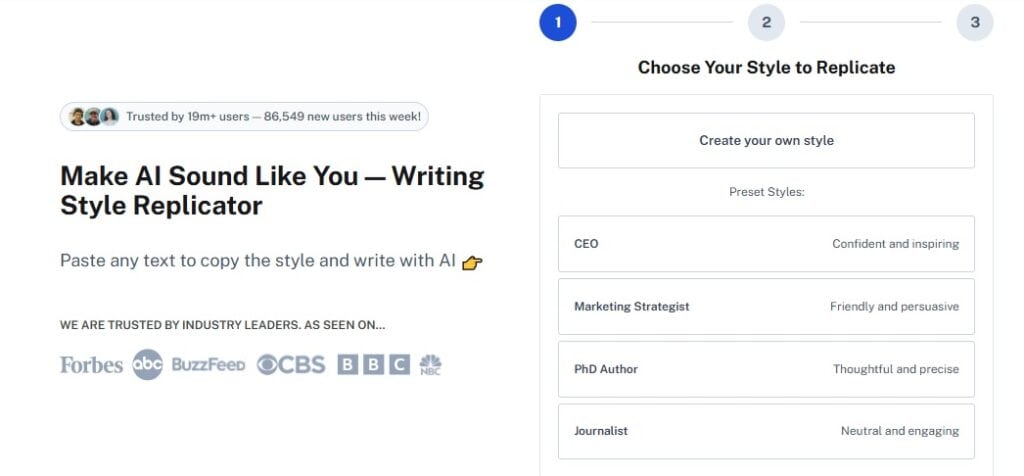
The tool analyzes sentence variation (“burstiness”) and vocabulary, then rewrites your double entendre to match the desired style.
- Example: “You need to push it in harder” (crude) → “One must apply a certain vigor to achieve penetration” (witty/academic).
You can experiment with different flavors of the same joke to see which fits your character best.
- Use Undetectable AI’s AI Humanizer for Natural Flow
Double entendres rely on conversational rhythm. Over-edited or AI-generated drafts often sound stiff or unnatural.
Safe, explicit lines like “The banana is large and resembles a phallus” kill subtlety.
You can use AI Humanizer to smooth awkward phrasing, introducing natural irregularities.
How to Use Double Entendres Without Confusing Readers
The biggest risk in writing double entendres is too much ambiguity. If the reader can’t grasp the literal meaning, the subtext will fail.
- The “One Bridge” Rule
Only one or two words should carry double meaning. The rest of the sentence must stay clear.
Bad: The stiff rod fits the tight slot if you bang it hard. (Too many pivot words; sounds like explicit content.)
Good: It’s a tight squeeze, but with a little grease, the bolt will slide right in. (Only “tight squeeze” pivots; literal meaning stands.)
- Verify the Surface Logic with AI
The innocent meaning must make sense alone. Remove the reader’s “dirty mind,” does it still read logically?
Tool: Use Undetectable AI’s Paragraph Rewriter in “Simplify” or “Standard” mode. If the AI can’t make sense of it, your surface layer is too vague, rewrite before adding subtext.
- Maintain Tonal Consistency
Use the Writing Style Replicator to match the double entendre’s tone with the paragraph.
- Dark thriller? Avoid cheerful puns.
- Ensures the subtext sneaks in without breaking immersion.
Try the AI Detector and Humanizer tools in the widget below!
Conclusion
A double entendre plays on two meanings at the same time, but its charm comes from those moments that make readers pause, grin, and think, “Ah, clever!”
Used in romance, comedy, or nuanced dialogue, it adds a touch of wit, depth, and playful sophistication.
The best double entendres don’t announce themselves, they whisper, wink, and reward attentive readers. It creates a secret connection between writer and audience.
Ready to elevate your writing?
Use Undetectable AI to refine double entendres, match your character’s voice, and ensure every clever phrase lands.
Write smarter. Write with subtext. Your readers will notice.