
Do you know that the best elegies aren’t about death at all.
Shocking?
Milton’s “Lycidas” is about wasted talent and corrupt institutions.
Gray’s Elegy Written in a Country Churchyard highlights class inequality.
Tennyson’s In Memoriam explores science challenging faith.
Elegies work on many levels, and grief is just the surface.
They let poets ask deep questions like: Does talent matter if life is short? What gives life value?
In this way, elegy poems create a world where endings can feel like beginnings.
In this blog, we’ll focus entirely on elegies. We’ll explore what does elegy mean, elegy soul of the metaphor, famous examples, key characteristics, themes, and the three main types.
We’ll also learn how to write elegies and which tools can help you. And there’s much more to discover.
Let’s dive in.
Key Takeaways
- The elegy poem helps people express and process grief.
- Elegies usually have three parts (grief, praise, and consolation) with personal voice and nature imagery.
- The three primary elegy types are personal (mourning intimate losses), formal (honoring public figures with strict metrical patterns), and pastoral (using shepherds and idealized landscapes).
- Recurring elegiac themes include: Death is universal, some die young, nature mirrors feelings, memory or art preserves them, youth fades.
- Spot an elegy by examining subject, tone, and structure. Unlike eulogies (which praise), elegy poems always seek transformation.
- The most frequent errors include: Confusing with eulogy, skipping consolation, using clichés, ignoring rhythm, focusing only on sadness.
What Is Elegy?
- Elegy Definition
What does elegy mean? The word elegy comes from the Ancient Greek elegos, which means “a song of mourning.” From the beginning, the elegy has been connected to loss. It’s basically giving words to grief.
When we look at its history, elegy definition has two sides: one is about its poetic form, and the other is about the emotions behind it.
It’s different from a eulogy, which is a speech praising someone. An elegy is a quiet, thoughtful way of processing sorrow.


Never Worry About AI Detecting Your Texts Again. Undetectable AI Can Help You:
- Make your AI assisted writing appear human-like.
- Bypass all major AI detection tools with just one click.
- Use AI safely and confidently in school and work.
- Elegy Examples
Let’s look at five of the most important elegies ever written.
There’s high probability that you’ve likely come across these examples at some point:
- “Lycidas” by John Milton (1637)
The Gold Standard of Pastoral Elegy.
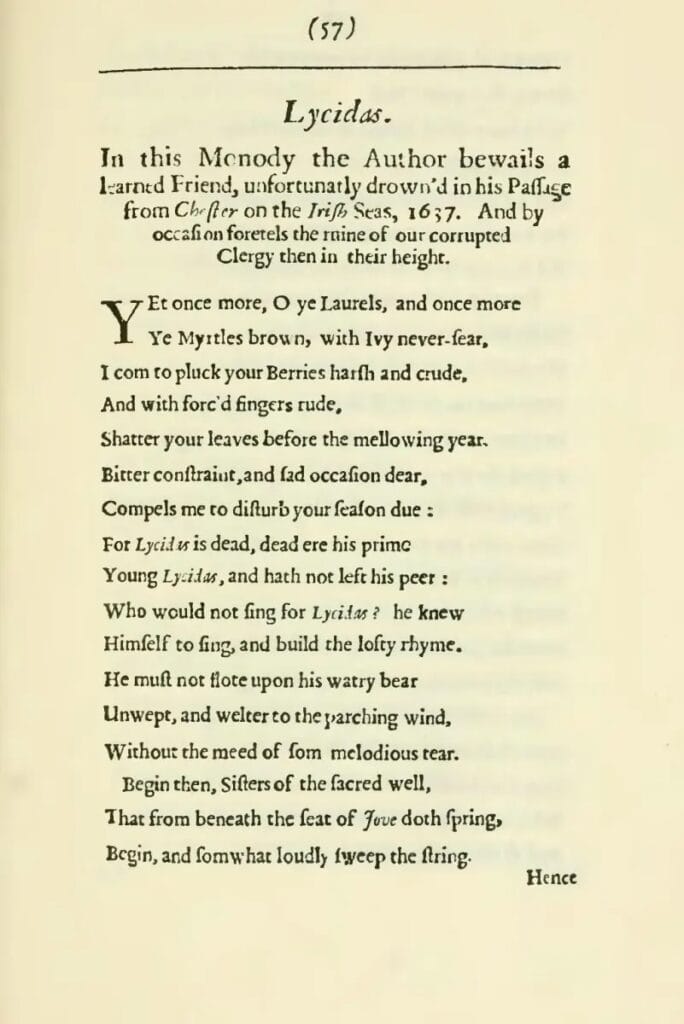
Milton wrote this elegy poem for his friend Edward King, who drowned at sea.
Instead of mourning only the man, Milton uses his death to question God’s justice, the purpose of talent, and the unpredictability of life.
The poem moves from deep sorrow to spiritual reassurance, imagining King transformed into a guiding spirit.
It tells what does elegy mean when combining personal loss with questioning.
2. “Elegy Written in a Country Churchyard” by Thomas Gray (1751)
The Elegy for the Common Man.
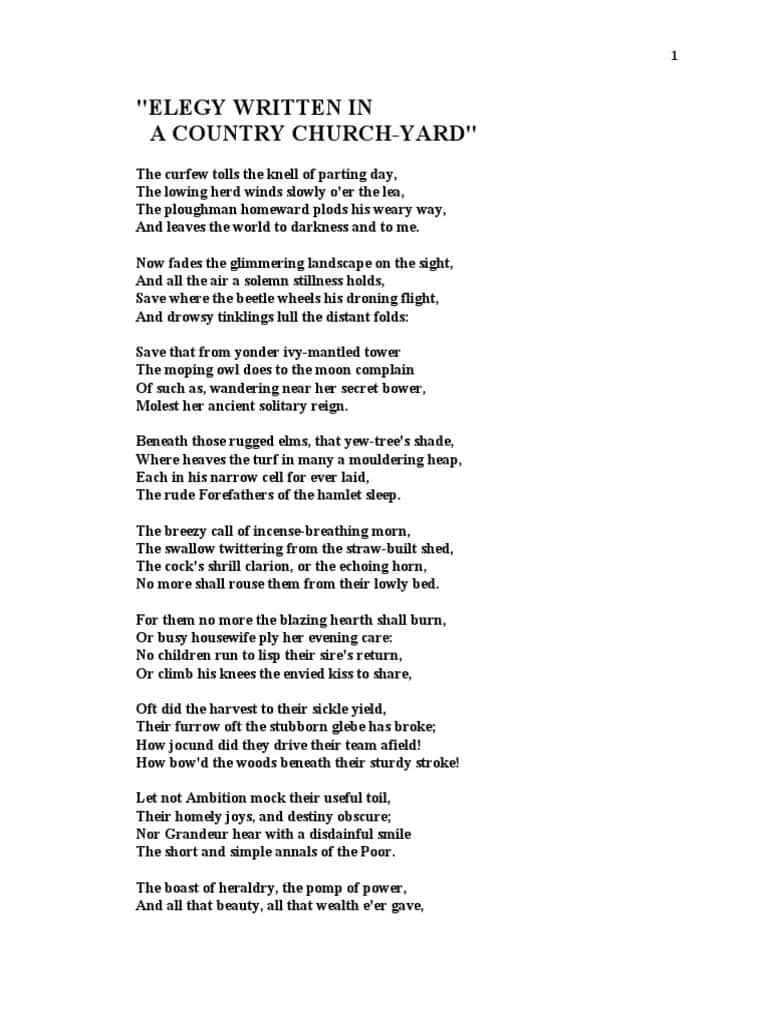
Gray breaks tradition by mourning the unnamed villagers buried in a quiet graveyard.
He reflects on the wasted potential of those who never had the resources to rise.
Lines like “Some mute inglorious Milton here may rest” highlight his belief that greatness is universal, even if opportunity is not.
The elegy poem introduced the calm, reflective mood that later defined the English elegy.
3. “Adonais” by Percy Bysshe Shelley (1821)
The Poet Mourning the Poet.
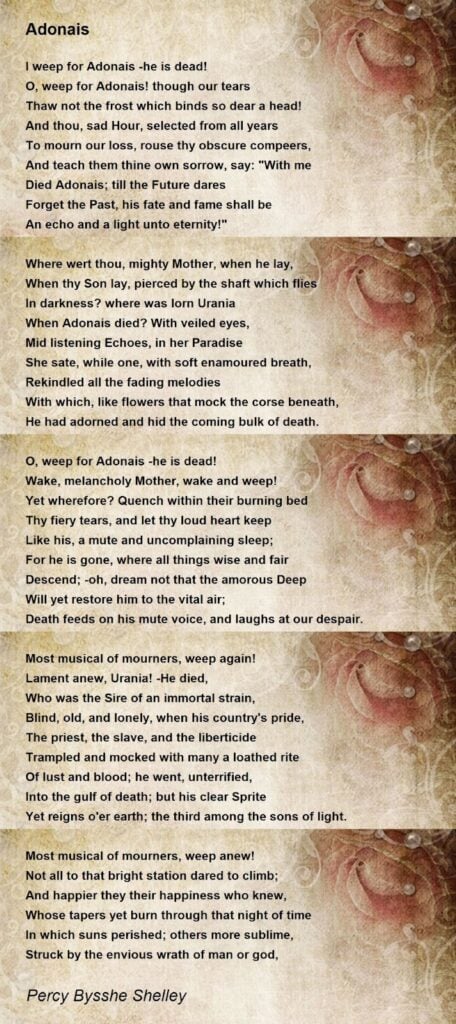
Shelley wrote this after the death of John Keats. The elegy poem is full of anger, sorrow, and eventually hope.
Using Greek myth and dramatic imagery, Shelley elevates Keats to the heavens, suggesting that artists gain immortality through their work.
The closing lines, comparing Keats’s soul to a shining star, remain among the most famous consolations in elegiac poetry.
4. “O Captain! My Captain!” by Walt Whitman (1865)
The Public Lament.
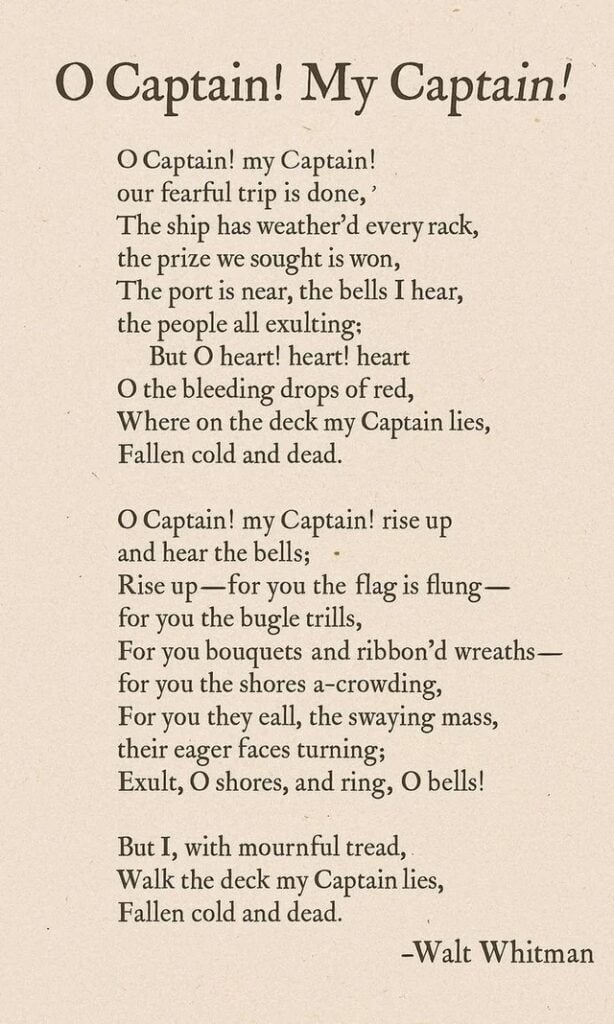
Written after Abraham Lincoln’s assassination, this elegy poem became an American classic.
Whitman sets aside his usual free verse for a rhythmic, mournful style that feels like a funeral march.
The ship (America) reaches safety, but the Captain (Lincoln) is dead, capturing the bittersweet end of the Civil War.
It shows how an elegy can mourn not just a person, but a nation’s collective heartbreak.
5. “In Memoriam A.H.H.” by Alfred, Lord Tennyson (1849)
The Monument of Grief.
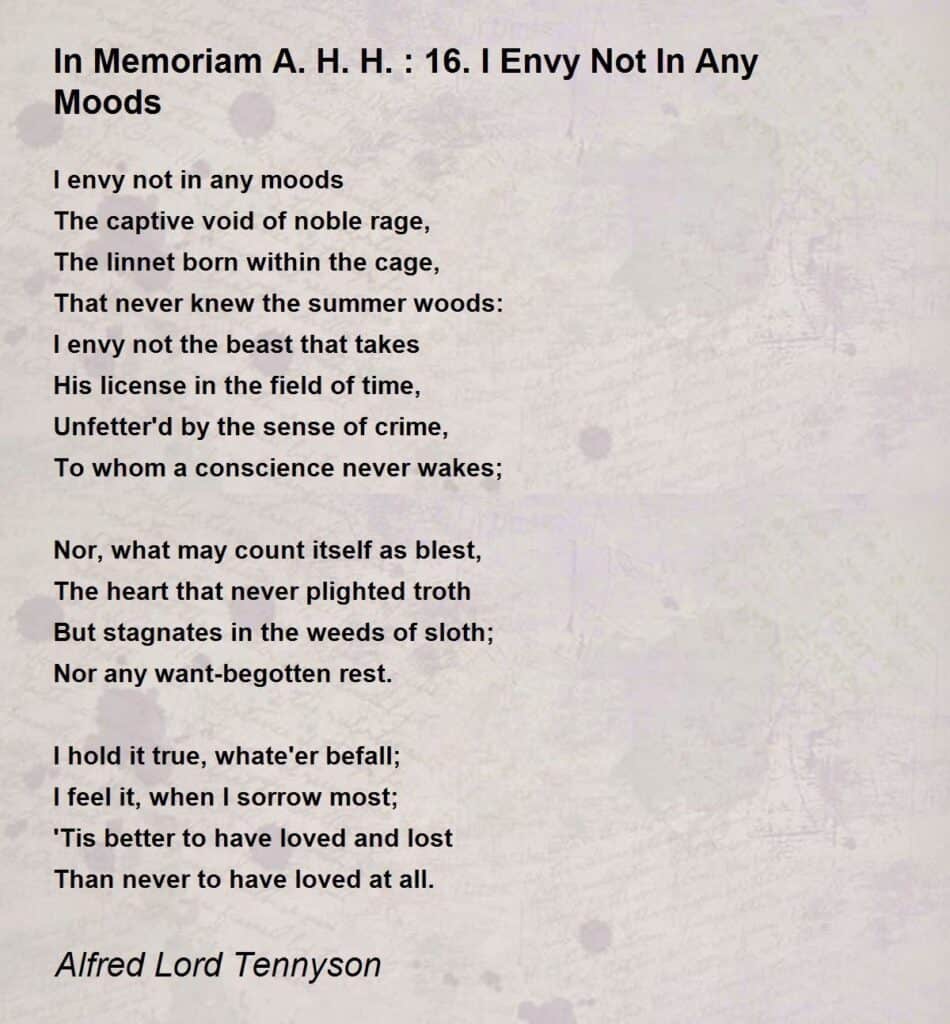
Tennyson spent 17 years writing this after losing his closest friend, Arthur Henry Hallam.
The elegy poem moves through stages of grief (denial, anger, doubt, acceptance) long before psychology named them.
It also confronts the spiritual crises of the Victorian era. Lines like “’Tis better to have loved and lost…” express the elegy’s core idea: love is worth the pain it leaves behind.
The Key Characteristics of an Elegy
An elegy poem has its own special style just like other forms of English literature.
Let’s walk through its main characteristics that define elegy meaning:
- The Three-Stage Structure
Traditional elegies usually move through three emotional steps:
- Lament (the cry): The poem begins with pure grief. The poet admits the loss and often sounds shocked or heartbroken.
- Example: Milton’s heavy sigh, “But O the heavy change,” in Lycidas.
- Praise (the tribute): Then the poet shifts to celebrating the person, what made them good, talented, or unique.
- Example: Shelley calling Keats “the loveliest and the last” in Adonais.
- Consolation (the turn): In the end, the poet looks for meaning or comfort. The loss is accepted, and hope appears, maybe through memory, nature, or faith.
- Example: “He is not dead, he does not sleep” in Adonais.
This three-stage journey defines what does elegy mean structurally and emotionally.
- First-Person Voice
Elegies usually use “I” because the poet speaks directly from personal emotion. This makes the grief feel real, intimate, and lived.
- Calling on the Muse
Many elegies start by calling for help from a Muse (a source of inspiration). It’s a way of saying, “This grief is too heavy, I need guidance to express it.”
- Example: Milton calling on “the Sisters of the sacred well.”
- Nature Imagery
Elegies often mirror sadness through nature. Flowers “weep,” the sky turns dark, winds sound tired. This makes the loss feel shared by the entire world.
- Examples: Weeping flowers in Lycidas; Spring “wild with grief” in Adonais.
- A Gathering of Mourners
Many elegies show symbolic mourners such as shepherds, gods, memories, emotions. This places the deceased in a wider circle of grief, not just the poet’s.
- Repetition
Grief is repetitive, it circles back. Elegies reflect this through repeated lines or refrains, giving the poem a chant-like rhythm.
- Example: “For Lycidas is dead, dead ere his prime.”
- Anger at Fate or Death
Elegies often express frustration, sometimes even blaming Fate, Death, or the universe.
This anger shows the raw truth of mourning, because grief is rarely calm.
The Three Main Types of Elegies
Scholars have generally identified three main lineages of elegies. While they often overlap at certain points, each elegy definition has a distinct purpose.
- Personal Elegy
A personal elegy poem mourns the loss of someone known closely to the poet, exploring the deep emotional impact of that private relationship.
Examples:
- “Mid-Term Break” by Seamus Heaney: Heaney reflects on his young brother’s death with quiet, powerful detail such as “A four foot box, a foot for every year.”
- “Clearances” by Seamus Heaney: A sonnet sequence for his mother, highlighting intimate, everyday moments like peeling potatoes.
- “On My First Sonne” by Ben Jonson: A father’s raw lament for his seven-year-old son, blending grief with theological questioning and emotional honesty.
- Formal or Traditional Elegy
A formal elegy poem is a poem written with strict rules of meter or stanza, often honoring public figures or exploring big ideas about life and death.
Examples:
- “In Memory of W.B. Yeats” by W.H. Auden: Uses structured form to mourn Yeats while reflecting on the power of art despite political realities.
- “Elegy Written in a Country Churchyard” by Thomas Gray: Heroic quatrains (ABAB, iambic pentameter) give order and dignity to the chaotic nature of death.
- “Tithonus” by Alfred, Lord Tennyson: A monologue serving as a formal elegy for lost youth, using structure to explore the horror of endless aging.
- Pastoral Elegy
A pastoral elegy poem is a traditional form where both the poet and the deceased are imagined as shepherds in an idealized rural landscape.
This showcases the elegy soul of the metaphor through symbolic natural settings.
Examples:
- “Lycidas” by John Milton: Edward King is the shepherd Lycidas. Milton mourns him while also criticizing the corrupt church.
- “Adonais” by Percy Bysshe Shelley: Keats is the shepherd Adonais, and other poets are imagined as mourners. Critics are shown as a dangerous boar.
- “Thyrsis” by Matthew Arnold: Arnold mourns his friend Clough and also the loss of youth and simpler times.
Themes Commonly Found in Elegies
The five main themes of elegies are:
| Theme | Meaning | Example |
| Death Comes for Everyone | Everyone dies, rich or poor; it reminds us life is short. | Thomas Gray: “The paths of glory lead but to the grave” |
| Unfair Timing | Sometimes death comes too soon or at the wrong time. | Shelley in Adonais: “The bloom whose petals nipp’d before they blew” |
| Nature Reflects Grief | Nature shows our sadness such as flowers, weather, or seasons mirror feelings. | Milton in Lycidas: flowers weep, woods mourn |
| Living On | People live on through Heaven, nature, or art. | Lycidas: soul in Heaven; Adonais: body becomes part of earth; poem keeps memory alive |
| Youth and Beauty Don’t Last | Life, beauty, and energy fade quickly; we mourn what is lost too soon. | Roman poets, Mimnermus: mourning early loss and youth |
Why Writers Use the Elegy Form
Usually, elegies are used to express grief because they give it a shape. And psychologists explain that giving grief a structured form helps the brain manage intense emotions.
When emotions are “organized” into patterns (like words, rhythm, or imagery) they become more manageable and less overwhelming.
This is the practical elegy definition from a psychological perspective.
| Reason | Healing Through Art | Safe Structure | Remembering the Lost |
| Explanation | It helps the poet deal with grief. The poem acts as a “stand-in” for the lost person, giving control over feelings that feel too big. | The rules of the elegy poem (rhyme, rhythm, or traditional forms) create a safe space to express strong emotions without being overwhelmed. | It preserves the memory of the person who died. Reading the elegy poem keeps them alive in words and memory. |
If you want to write elegies for your projects, an AI Essay Writer can help you understand the emotions in them.
You can use it for 3 main purposes:
- Find Emotions in Lines – It can show what feelings each line expresses.
- Compare Old and Modern Poems – It highlights how comfort and grief have changed over time.
- Suggest Words and Phrases – It helps you describe deep emotions clearly, instead of just writing “sad.”
Elegies in Classical Literature, Modern Poetry and Writing
In the past two and a half millennia, the elegy has changed a lot over time, because humans’ way of understanding death and loss has evolved.
- Classical Literature (700 BCE–400 CE)
In ancient Greece and Rome, elegies followed strict meters. Archilochus used them for war songs, Mimnermus for love and aging, and Roman poets like Ovid for complaining about cruel lovers.
They expressed longing for a person, a place, or a time.
- The Renaissance (1500–1700)
English poets like Spenser and Milton formalized the elegy. They used shepherds, nymphs, and processions, turning mourning into art and a way to show poetic skill.
The elegy soul of the metaphor became more elaborate and symbolic during this period.
- Modern Poetry (1900–present)
20th- and 21st-century poets like Auden and Sylvia Plath broke old rules.
Some skip comfort, focus on abstract or environmental loss, and often end in continued grief rather than consolation. Modern elegies show that mourning doesn’t always have a neat ending.
How to Identify an Elegy
To spot an elegy, look at three main things: tone, subject, and structure.
| Subject: Is the poem about a death, loss, or the passing of time? If yes, it could be an elegy. | Tone: Is it reflective and somber? Unlike a dirge, which is loud and mournful, an elegy thinks about loss rather than just crying. | Structure: Look for a “turn”—starting with grief and moving toward hope. |
These three criteria help you understand what does elegy mean in practical identification terms.
If you are writing an elegy, these two AI tools can be very useful.
- AI Detector: When you use AI for help, your writing can sometimes show patterns that seem stiff or robotic. This tool checks if your text has AI-sensitive patterns. If it does not have, you can include the report in your project so your teacher sees everything is properly done.
- AI Humanizer: If the detector finds patterns, this tool can fix them. It improves phrasing and rhythm. A simple line like, “The poet is sad because his friend died” can be turned into a richer, more expressive line: “The poet wrestles with the crushing weight of absence.” This helps keep the natural flow and emotional depth of an elegy.
How to Write Your Own Elegy
Here is a guide to writing your own elegy poem, using the traditions of the genre.
Step 1: Choose the Subject
Decide who or what you are mourning. It could be a person, a place, a past self, or even a public figure.
Tip: The more specific you are, the stronger the feeling. Focus on details: an empty chair, the smell of old books, or the silence in a hallway.
Step 2: Decide on the Tone
Pastoral Elegy: Uses nature as metaphor. List natural elements (leaves, rain, seasons) that match your mood.
Personal Elegy: Raw and direct. List specific memories (their laughter, their perfume, a shared habit).
Step 3: Build the Structure
Follow the classic three-part structure that defines elegy meaning:
- Lament (Stanzas 1–2): Describe the shock and emptiness. Show what the world looks like now. (Example: “The clocks have stopped.”)
- Praise (Stanzas 3–4): Celebrate their qualities. What do you miss? (Example: “Your hands were always busy.”)
- Consolation (Stanza 5): Look for meaning. Where are they now—in memory, nature, or stars? Give your grief a resting place.
Step 4: Use Imagery and Reflection
Avoid saying “I am sad.” Use metaphors:
- Instead of: “I miss him.”
- Write: “The garden is overgrown; the weeds wait for hands that will not return.”
Then reflect with questions: “Where does love go when the heart stops?”
Common Mistakes When Studying Elegies
Here we list some common mistakes so you can avoid them while writing an elegy poem.
- Confusing Elegy with Eulogy
An elegy is a poem about grief and loss, reflecting on the emotions caused by death. A eulogy is a speech praising someone’s life, usually delivered at a funeral.
While writing an elegy, you cannot just list achievements or write a biography. The eulogy is for the funeral; the elegy is for the silence afterward.
- Missing the “Turn” (Consolation)
The “turn” or moment of consolation is the most important part of any literary piece, and it is the same in an elegy.
If you skip it, your poem will remain stuck in sadness with no movement or shift. This turn defines what does elegy mean in its complete form.
- Overusing Clichés
Common phrases like “tears falling like rain” or “in a better place” have become overused and feel robotic.
Think of fresh, unique ways to express loss, or use an AI Humanizer to add emotional depth and avoid plain, lifeless writing.
The elegy soul of the metaphor requires originality.
- Ignoring the Music (Meter and Rhythm)
Simply chopping prose into lines does not make an elegy. Elegies are musical. Read your poem aloud; the rhythm should echo the slow, heavy beat of grief.
After writing your elegy, run it through a grammar checker once to make sure everything is correct.
- It ensures that your tense and tone stay consistent throughout the poem.
- Line breaks might be flagged as errors, this is normal in poetry and a useful learning point.
- It helps catch typos so that your reader focuses on the emotion, not mistakes.
See what our AI Detector and Humanizer can do—try them below!
Conclusion
The meaning of an elegy is more than just sadness on a page. It is a way to face loss, guiding the writer through grief toward some sense of hope or understanding.
From Milton’s pastoral poems to Whitman’s national mourning, the elegy has shown itself as one of humanity’s most lasting ways to express deep emotion.
Now that you know what an elegy is, its history, its feeling, and its structure, you can read them with fresh insight or even try writing your own.
Every elegy is personal yet universal, which makes them timeless.
Undetectable AI can help you in this. The AI Humanizer improves the flow and emotion of your words, while the AI Detector checks authenticity.
Whether for school or personal writing, these tools help you turn grief, memory, and reflection into poetry that will resonate with your audience.
Ensure your elegy reads naturally and passes AI checks with Undetectable AI.