Most of the iconic quotations taught in schools and heard every day are quite memorable due to a unique repetition that few catch on.
That’s the epistrophe doing its thing with repeated endings that give certain phrases memorability. The epistrophe definition indicates a repetition at the end of successive lines in any given medium.
This device has given us some of our most notable quotations.
An example is Abraham Lincoln’s Gettysburg address, where he remarked, “government of the people, by the people, for the people.”
This is a commonplace application of epistrophe that you have perhaps not thought of.
All in all, we’ll give you the standard epistrophe meaning plus examples that’ll make it easier for you to grasp.
Key Takeaways
- Epistrophe is a device that shows up as a repetition of the same phrase at the end of multiple lines successively.
- This device has been used by notable people to emphasize key ideas and rouse emotions.
- Epistrophe works best when you need an impactful phrase.
- You’ll find epistrophe in notable speeches and modern songwriting across every era.
What Is an Epistrophe?
Epistrophe works by creating an echo that your brain can’t ignore.
As such, epistrophes have been found in famous speeches and texts. With its relevance, people now use this repetition to highlight important messages.
Significantly, the device appears in ancient Greek rhetoric, advertising slogans, and song lyrics. In that case, what is epistrophe?


Never Worry About AI Detecting Your Texts Again. Undetectable AI Can Help You:
- Make your AI assisted writing appear human-like.
- Bypass all major AI detection tools with just one click.
- Use AI safely and confidently in school and work.
Epistrophe Definition
Epistrophe is a rhetorical device that occurs when the same word or phrase repeats at the end of several sentences. The term comes from Greek and can actually be broken down into two parts.
Epi means upon, and strophe means turning. So, you’re turning back to the same ending point or idea again and again.
Through this device, your ear picks up on the repetition and signals to your brain that something is being discussed.
Writers use this when they want certain ideas to resonate with people and build momentum.
Epistrophe Examples
Epistrophe appears across every form of communication where persuasion and memorability matter.
These epistrophe examples come from various places. Still, they all use the same device to achieve their intended effects.
Therefore, the following epistrophe examples will give you a mental framework when discussing the concept.
| Example | Source | Phrase |
| When I was a child, I spoke as a child, I understood as a child, I thought as a child. | 1 Corinthians 13:11 | As a child |
| Government of the people,by the people,for the people,shall not perish from the Earth. | Abraham Lincoln, Gettysburg Address | The people |
| There is no Negro problem.There is no Southern problem.There is no Northern problem.There is only an American problem. | Lyndon B. Johnson, “We Shall Overcome” speech | Problem |
| For no government is better than the men who compose it,and I want the best,and we need the best,and we deserve the best. | John F. Kennedy (Wittenberg College Speech) | The best |
| See no evil, hear no evil, speak no evil. | Traditional Proverb | Evil |
| Wherever they’s a fight so hungry people can eat, I’ll be there.Wherever they’s a cop beatin’ up a guy, I’ll be there. | John Steinbeck, The Grapes of Wrath | I’ll be there |
How Epistrophe Creates Emphasis
You’ll get to understand why epistrophe works so well when you factor in how our brains latch onto patterns.
The repetition at the end of phrases forces listeners and readers to stop and register what’s being repeated.
The following mechanisms make this work.
- Your ear expects the repeated expression once the pattern starts. As a result, each repetition lands with more impact than it would in isolation.
- Each time the phrase repeats, it gains momentum. The impact compounds toward a climax that feels both powerful and satisfying.
- The repeated phrase becomes the focus that everything else in the passage references.
- The sonic effect of the repetition creates an emotional cadence that feels urgent and true.
- Epistrophe shows up so often in speeches meant to inspire or persuade people due to its memorability.
The Core Structure of Epistrophe
Epistrophe leans on a structure that’s easily spotted as long as you understand its structure, which doesn’t change at all.
The structure follows this format:
- (Clause 1) + (Repeated expression)
- (Clause 2) + (Repeated expression)
- (Clause 3) + (Repeated expression)
The opening parts of each line refine the idea. At the same time, the endings remain fixed and create a pivot point where meaning builds up with each repetition.
As seen in a classic epistrophe example, this structure looks like this:
“Government of the people,
by the people,
for the people…”
- Clause 1: government of the people ← ending
- Clause 2: by the people ← ending
- Clause 3: for the people ← ending
Each phrase takes a different angle (of, by, and for), but they all land on the same target, which is the people.
The structure lets Lincoln explore three distinct relationships while emphasizing the central concept.
When reading this, your eye and ear both register this alignment, which gives the passage its distinctive rhythm and force.
Epistrophe vs. Other Repetition Devices
Repetition devices all aim to create emphasis and rhythm, yet they vary greatly in terms of placement and impact.
In light of this, Epistrophe belongs to a larger family of rhetorical techniques that all use repetition in different ways
Each one produces a different psychological impact based on where the repeated elements appear, and will guide you on when to use it versus other options.
| Device | Repetition Placement | Example | Effect |
| Epistrophe | End of successive clauses | We want peace.We need peace.We demand peace. | Drives emphasis toward a conclusion and creates a landing point. |
| Anaphora | Beginning of successive clauses | We shall fight on the beaches.We shall fight on the landing grounds.We shall fight in the fields. | It launches each statement with momentum and creates forward drive. |
| Symploce | Both the beginning and the end of clauses | When there is talk of hatred, let us stand up and talk against it. When there is talk of violence, let us stand up and talk against it. | It creates intense framing and reinforcement. |
| Epanalepsis | Beginning and end of a single clause | Nothing comes from nothing. | This creates a self-contained unity. |
| Anadiplosis | This appears at the end of one clause and the beginning of the next one | Fear leads to anger. Anger leads to hate. Hate leads to suffering. | This links ideas in a chain and shows progression. |
| Conduplicatio | The repetition focuses on words in various positions | Alone, alone, all, all alone, alone on a wide, wide sea. | The scattered emphasis throughout creates a single obsessive focus. |
| Epizeuxis | The immediate repetition of a word or phrase in succession for emphasis. | Never give in. Never, never, never, never, in nothing great or small, large or petty, never give in… | It’s often used for dramatic or emotional effect. |
How to Recognize Epistrophe in a Text

Epistrophe gives itself away through its consistent appearance at the end of lines.
With a few telltale signs, you too will easily identify this device.
- Look for identical words or phrases that wrap up two or more clauses in a row.
- The repetition should have a payoff that heightens a key idea or theme.
- The beginnings should differ while the endings stay fixed. Total repetition of entire sentences is not epistrophe.
- You can find epistrophe more easily in speeches, advertisements, and political writing than in technical writing.
- You should take away the repeated element and see if it affects the message. A strong epistrophe will collapse without its anchor point.
- Writers often combine epistrophe with punctuation to highlight the repeated phrase even more.
How to Write Your Own Epistrophe
A strong epistrophe feels natural instead of pushed. That happens when the repeated phrase supports the message in a clear and meaningful way.
Moreover, the surrounding content should lead naturally to the repeated expression.
It’ll be no surprise when you too, write a resonant epistrophe using the structured approach below:
Step 1: Identify the Key Message
For the most part, epistrophe relies on line-ending repetition to amplify an idea to your audience.
So, note down the core message you want to impart before you begin writing that poem or speech you have in mind.
For instance, your key message might be a value like “freedom.” At the end of this process, the expression you’ll repeat should be crucial to your argument.
This way, repeating it strengthens your point rather than annoys the reader.
Step 2: Choose the Repeated Phrase
The repeated phrase needs to be short and meaningful. Single powerful words often work best.
Nevertheless, short phrases of two to four words can create strong effects too.
You should avoid choosing something too long or complex. A petition of an eight-word phrase becomes tedious rather than emphatic. The sweet spot usually sits between two and five words.
After this, read your writing out loud, practicing how you’ll say it to your audience.
Hearing it this way helps you catch how it really sounds.
You’ll notice that solid consonants and open vowels tend to carry more presence than anything soft or mumbly.

Finding that perfect “anchor word” is the difference between a catchy hook and a repetitive mess.
You can reference Undetectable AI’s Slogan Generator to experiment with different repetitive structures.
It allows you to see how various “ending words” change the emotional weight of your brand’s mission, helping you choose a phrase that feels purposeful and sophisticated.
Step 3: Shape the Lines Around the Repetition
Now, you can build your sentences so they all lead naturally to your chosen endpoint.
Each opening portion should present a different angle of your argument while driving toward the same repeated expression.
Realistically, you might use different clauses, but they all need to connect logically to your repeated expression.
For the repetition, you should aim for at least three repetitions to establish the pattern.
On one hand, two instances can work, but they often feel incomplete. Yet, more than five will exhaust the effect of the epistrophe.
Lastly, always read your draft aloud and check whether the repetition feels purposeful rather than mechanical.
Tips for Making Epistrophe More Impactful
You’ve perhaps been trying to use epistrophes in your writing and failed at it.
This is partly because your epistrophe is technically sound yet lacking in emotional resonance.
Thus, you have to think beyond just structure and look into rhythm and word choice in order to improve your attempts at epistrophe.
Nevertheless, the guidelines below will give you a framework to make your epistrophes impactful:
- Arrange your clauses so they escalate in intensity or specificity. This plays out with each line feeling weightier than the last. This will create a momentum that peaks at the final repetition.
- You should pair the repeated phrases with active verbs. This is better because passive ones will affect the message you’re presenting.
- Then, keep the lines concise, removing everything that doesn’t improve clarity.
- You could also choose repeated expressions with sonic qualities that reinforce your message.
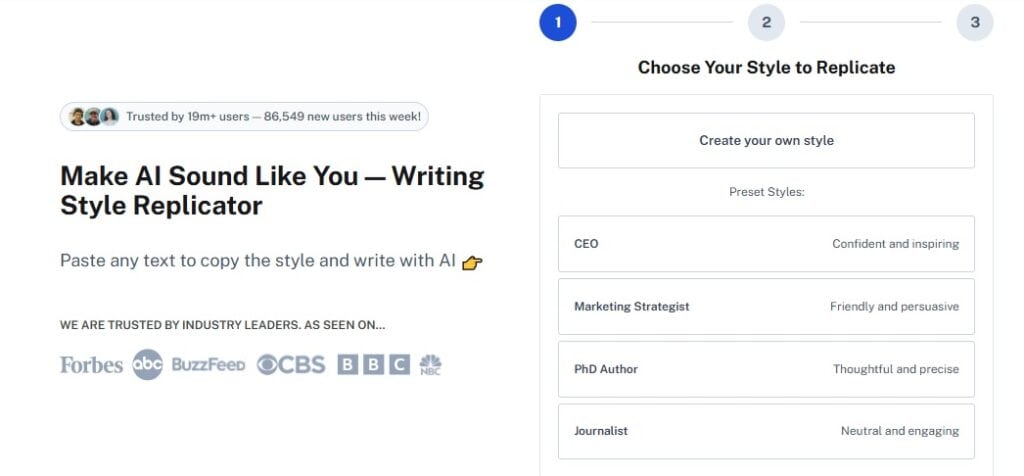
- You would find our Writing Style Replicator helpful in strengthening the pacing and emotional impact of your epistrophes. It’ll mirror your writing patterns and give you authentic replicas of what you’re trying to achieve.
- When giving speeches, you should use brief pauses before saying the repeated expressions so that it’s impactful for your listeners to register the pattern.
- You can combine the epistrophe with other devices like parallelism and alliteration without diluting the central repetition.
- You can use epistrophe in parts of your writing where you want to make a point really stick or drive a call to action.
Common Errors to Avoid
Your writing will be robotic if you use epistrophe erroneously. The intended impact you’re going for would be lost on your readers.
However, with the following clues, you should be able to catch these errors early and keep your writing purposeful:
- Stretching epistrophe across seven, eight, or nine iterations exhausts the technique. Three to five repetitions are usually enough.
- Twisting sentences into awkward shapes just to land on the repeated expression makes writing feel stiff and contrived.
- You should use our AI Detector to catch mechanical epistrophe and flag forced repetition patterns so you can improve the epistrophe.

- Your anchor phrase must carry real significance. Generic repeated elements like “it is” or “that matters” lack the weight to justify repetition.
- Epistrophe needs variety in the setup to work. So, if you keep repeating nearly identical sentence structures with only minor words, it’ll seem lazy.
- You should use our AI Humanizer to fix unnatural repetitions and elevate your writing.
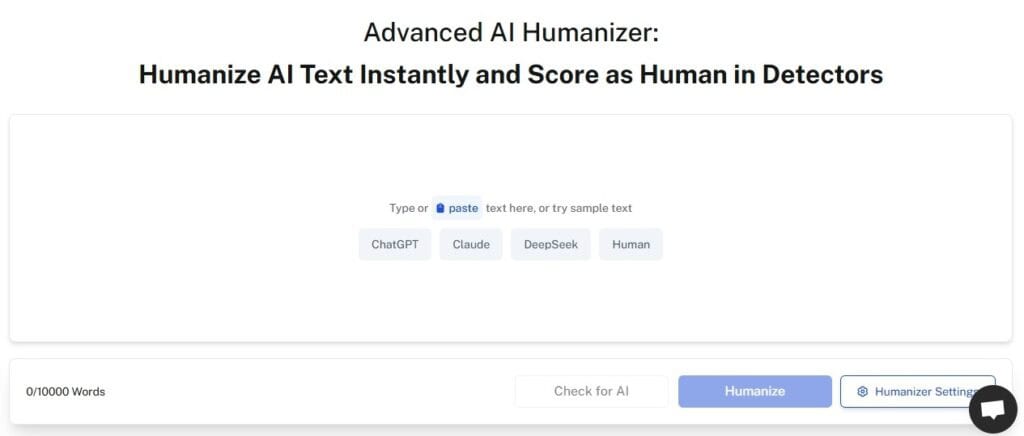
Run your text through the AI Detector and Humanizer widget below!
Conclusion
Epistrophe is one of many rhetorical devices that great writers and orators have used to give purpose to their expressions.
We still have modern examples from songs to popular speeches from political figures and activists.
You can also have your writing join the league of memorable pieces out there by working on your use of epistrophe with adequate tools from Undetectable AI.
In no time, epistrophe will come naturally and purposefully in your speech and writings.