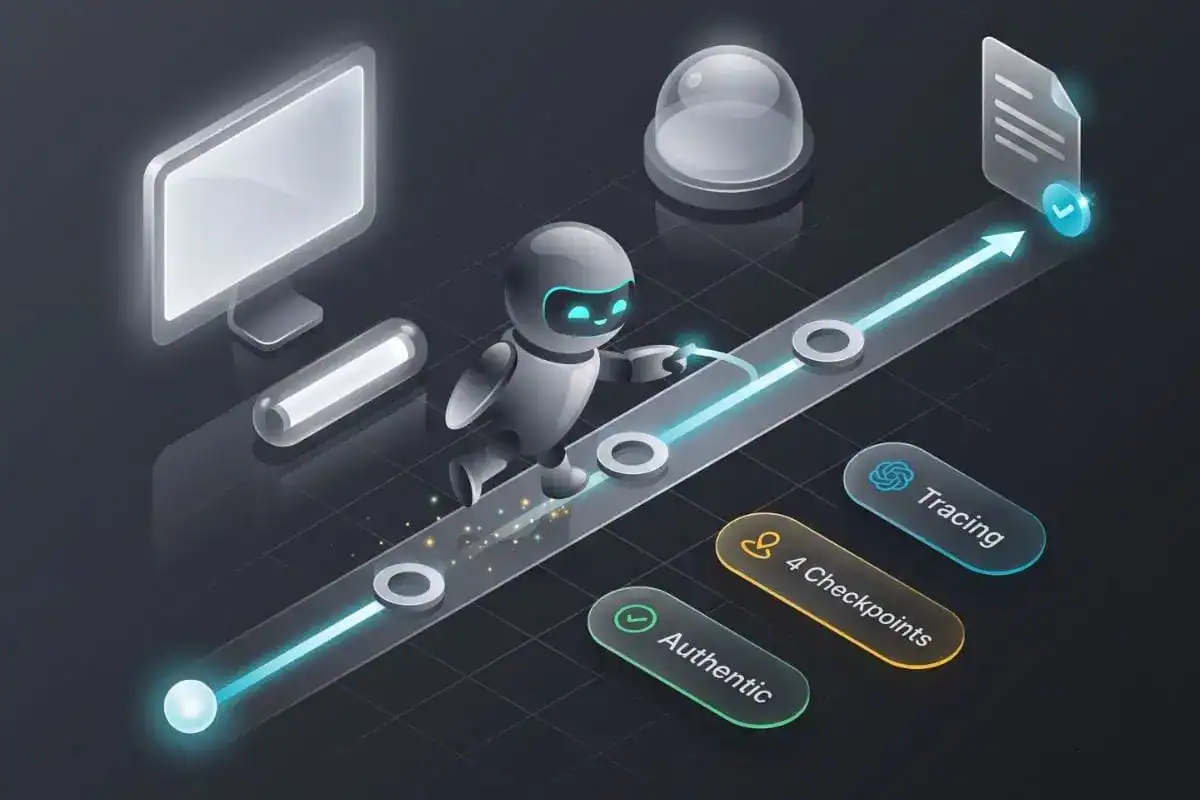
Learning how to make ChatGPT undetectable is quickly becoming one of the most searched skills of 2026. As AI writing tools get smarter, so do the detectors built to catch them, and staying ahead of that curve means knowing exactly what separates flagged content from writing that reads as genuinely human.
Mastering the art of subtlety in a fast-changing environment of technological growth is key. It’s the only way to stay ahead of the curve and the competition.
However, making ChatGPT undetectable can only be done when you take into account several factors while using this tech to create text you plan to publish or submit as your own.
Hay que ser estratégico e inteligente.
Simply copying and pasting content, then posting it on your blog or handing in an assignment, can get you in trouble. Nobody wants that.
If you decide to use ChatGPT to help create your text, whether for school or work, you need to know how to do it the right way so your content goes undetected by the tools and algorithms specifically designed to catch AI-assisted writing.
Principales conclusiones
- Making ChatGPT undetectable requires strategic use of the tool, not direct copy-pasting, since that’s what gets flagged by AI detection software.
- Winning strategies include a natural, human-like tone, blending AI output with human input, careful editing, and varied sentence structures.
- Specific illustrations, personal touches, current references, and reading your content aloud all help humanize AI-generated text.
- ChatGPT’s limitations, including generic phrasing, a consistent style, and limited emotional nuance, can be overcome with human input for deeper context and creativity.
- Detection tools themselves have changed fast: 2026 data shows even top-rated detectors still misfire on genuinely human writing, which is exactly why a light human touch matters more than ever.
- Undetectable AI’s Detector, Humanizer, AI Stealth Writer, and Human Auto Typer work together as an end-to-end system, so you’re not relying on a single tool to catch every AI pattern.
ChatGPT y los detectores de texto AI: Una mirada más de cerca
ChatGPT, the AI tool that took the world by storm, is a master at producing text at astonishing speed and with precise accuracy.
However, the content ChatGPT creates can raise eyebrows from time to time, especially with tools built to review patterns and details that often go unseen by the human eye.
Despite their growing sophistication, these tools are sometimes outsmarted by ChatGPT’s finesse, particularly when a writer knows how to make ChatGPT undetectable in the first place.
No vuelvas a preocuparte de que la IA detecte tus textos. Undetectable AI puede ayudarle:
- Haz que aparezca tu escritura asistida por IA de aspecto humano.
- Bypass las principales herramientas de detección de IA con un solo clic.
- Utilice AI de forma segura y con confianza en la escuela y el trabajo.
Here, we’ll analyze this intriguing dynamic, offering insight into the subtle dance between AI authenticity and detection evasion.
Estrategias para eludir la detección de GPT
To make ChatGPT’s output virtually indistinguishable from human writing, here’s a closer look at the strategies you’ll need to implement in order to bypass ChatGPT detection tools.
Write, Rewrite, and Personalize
1. Adopte un tono de escritura natural: Make sure the content you’re producing with ChatGPT’s assistance is natural and matches a human tone.
Think about how you talk with friends or colleagues. It’s far more relaxed, spontaneous, and fluid than what ChatGPT typically produces.
If you revise the text to match those qualities, ChatGPT’s output can feel far more genuine and human, so readers won’t sense something is off, and detection tools won’t flag your content.
2. Mezclar IA y contenido humano: Mix ChatGPT’s responses with human input so the final piece reads as one cohesive, natural narrative.
3. Edit and proofread meticulously: Every word counts. Carefully review and revise each sentence for both clarity and readability.
This step is essential for transforming ChatGPT-generated text into content free of the AI quirks that trigger red flags.
4. Mantener estructuras oracionales naturales: Keep it simple. Avoid overly complex, robotic sentences that ramble.
Instead, focus on structures that flow smoothly and read directly. That makes the content far more relatable and helps you build a genuine connection with your audience.
Add What ChatGPT Can’t
5. Incorpore ilustraciones y detalles específicos: The right details bring stories to life. Vivid, real-life examples let readers relate and feel a human connection.
Adding this depth and authenticity turns generic ChatGPT-style content into something that’s uniquely yours.
6. Infundir toques y opiniones personales: Add your own personality to the content. Share your opinions, anecdotes, and personal experiences that reflect a unique point of view.
ChatGPT can’t do this on its own, and folding it in is one of the most reliable ways to both bypass detection and connect with readers.
7. Use advanced grammar and vocabulary, carefully: Elevating the language shows sophistication and expertise, but don’t overdo it.
The goal isn’t to sound condescending or like you’re trying too hard. Find the balance.
8. Referencia a temas actuales y relevantes: Stay aware of trends and events, and work them into your writing.
This shows you’re not just cranking out fast content (or letting ChatGPT do it for you), but that you’re a human genuinely engaged with the world.
9. Read your content aloud: This works for every writer, no matter the format. Reading aloud, whether it’s a ensayo persuasivo or a blog post, helps you catch unnatural wording and awkward phrasing before anyone else does.
Using these strategies will help you skillfully disguise ChatGPT-generated content, making it indistinguishable from human writing and undetectable to the tools and algorithms built to stop the bots.
Why the Detection Landscape Has Shifted in 2026

The tools on both sides of this equation, generation and detection, have moved fast since this topic first started trending, so it’s worth understanding what’s actually changed before you rely on any single tactic.
The Arms Race Between Models and Detectors
ChatGPT’s own footprint keeps growing. OpenAI confirmed in February 2026 that the platform had crossed more than 900 million weekly active users worldwide, which means detection tools are scanning a far larger and more varied pool of writing than ever before, and false flags on genuinely human text are becoming a bigger problem alongside it.
That’s not a small issue. Independent testing published in 2026 comparing detector accuracy found meaningful gaps between how tools perform on paper versus how they perform on real, unedited human writing, particularly work from second-language writers whose natural phrasing can look more “predictable” to a detector than it actually is.
This is exactly why leaning on a single AI detector, or assuming any one tool is infallible, is a mistake. It’s also why platforms built specifically around humanizing and detection, like Undetectable AI’s own Detector de IA, are updated constantly rather than treated as a one-time fix.
What Institutions Are Actually Doing Now
Detection policy has matured too. By mid-2026, many schools have moved away from treating a single detector score as proof of misconduct, leaning instead on a broader mix of evidence, process checks, and direct conversations with students.
Reporting on this shift has described the situation as an ongoing, unresolved balancing act between protecting academic integrity and avoiding false accusations, rather than a settled rulebook.
That nuance matters for how you use ChatGPT. A “just make it pass one scanner” mindset is outdated. The real goal, and the reason strategies like blending human input and editing for voice still matter in 2026, is producing writing that would hold up under a human reviewer’s judgment, not just an algorithm’s.
Detecting ChatGPT Content: A How-To Guide
Identifying whether content was generated by a tool like ChatGPT or written by a person is getting more challenging by the day.
That said, plenty of red flags still make it obvious, to both tools and humans, which is which.
By digging into the nuances that separate ChatGPT’s content from human writing, patterns in phrasing, consistency of style, and depth of contextual understanding, we can learn how to blend the two into content that delivers real value to readers while going undetected by tools.
ChatGPT’s Limitations and Overcoming Them
Comprender Limitaciones de ChatGPT is essential to using the tool effectively.
Recognizing these constraints lets you strategically supplement AI-generated content with human insight and creativity, producing a more sophisticated, nuanced result.
If you’ve ever hit a wall with ChatGPT’s usage caps or generic phrasing mid-project, that’s usually the moment human input needs to step in.
Utilizing ChatGPT Without Detection: Tips and Tricks
Using ChatGPT so its work stays undetected is really the only way you should consider using it to begin with. You don’t want to risk being caught out.
Staying undetected involves a mix of strategic techniques so you can add a genuine personal touch to content ChatGPT creates.
The goal should be to use ChatGPT as a tool that enhances, not defines, the content you produce. Whether professionally or academically, AI should be an aid to human creativity, not a replacement for it.
Doing this properly, and avoiding getting flagged for passing off AI-created content as your own, takes a number of deliberate steps.
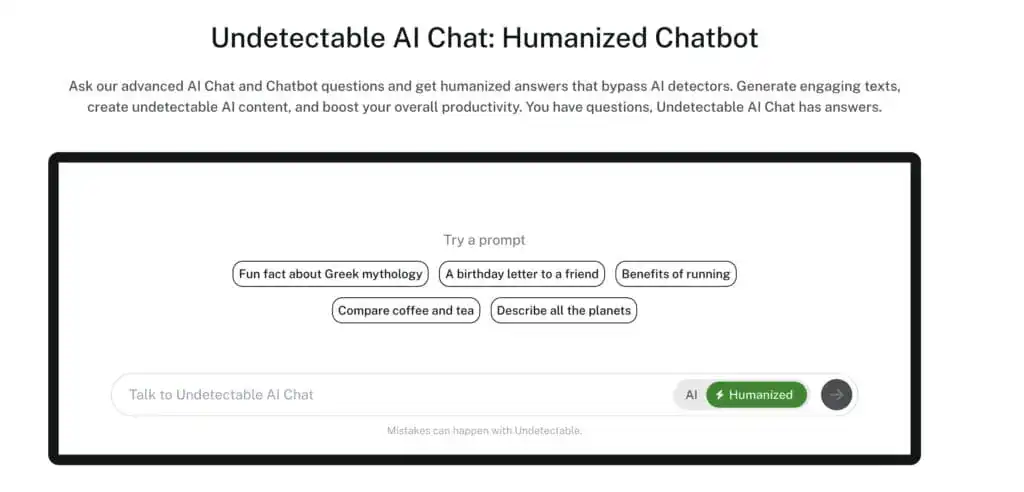
If you’re looking to scale your communication without the rigid, robotic feel of standard models, Undetectable AI’s AI Chat offers a seamless way to refine your digital voice.
It lets you conduct deep-dive research and drafting through a conversational interface that keeps your AI-assisted work undetectable to sensors and scanners.
Undetectable AI’s Full Toolkit, Explained
Knowing the writing strategies above will only get you so far without the right tools backing them up. Here’s how each piece of Undetectable AI’s toolkit fits into the process of making ChatGPT undetectable, start to finish.
AI Detector and AI Humanizer
Herramientas como las IA indetectables Detector de IA help analyze and break down AI-written traits in your text before anyone else sees it, while our Humanizador AI transforma un texto plano y robótico en una escritura atractiva y fácil de leer.
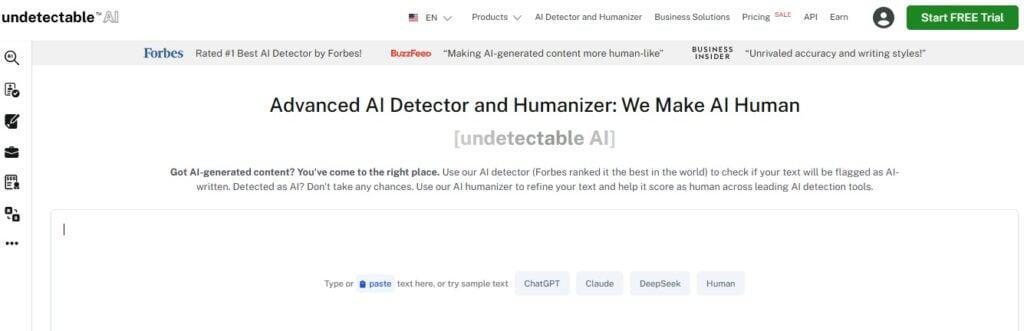
If you want a deeper breakdown of what these tools are actually catching, this guide on how to spot the telltale signs of AI-written text walks through the specific patterns detectors look for, and this piece on five proven ways to humanize AI writing covers additional editing techniques beyond what’s outlined here.
Escritor sigiloso de IA
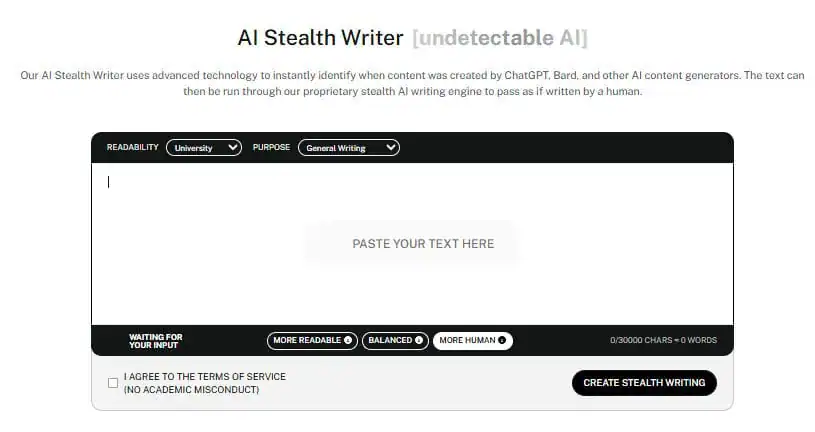
For those starting from scratch rather than editing existing ChatGPT output, Escritor sigiloso de IA ofrece una forma de crear contenidos sutiles e indetectables sin comprometer la calidad ni la claridad.
It’s especially useful when you’d rather build human-sounding text from the ground up than retrofit it later.
If you already have a ChatGPT draft in hand and just need to rework it, this step-by-step guide on how to rewrite a ChatGPT-drafted essay is worth a look too.
Human Auto Typer: The Final Step
Una vez que el texto generado por ChatGPT se ha refinado y humanizado, el último paso es enviarlo o publicarlo de forma auténtica.
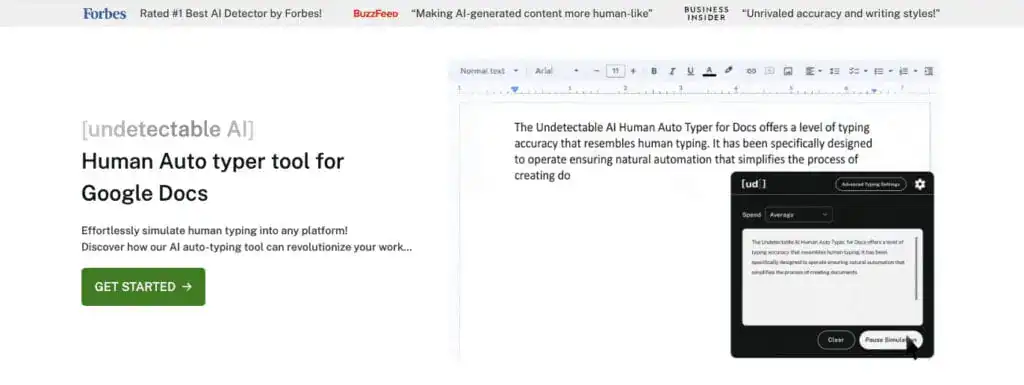
That’s where Undetectable AI’s Human Auto Typer comes in.
This tool simulates real human typing patterns, re-entering your text character by character, just as a person would.
It’s a fit for students, freelancers, and professionals who need to enter text into platforms that flag pasted content or monitor typing behavior.
By mimicking genuine typing speed, rhythm, and pauses, the Human Auto Typer keeps your content looking and feeling completely natural while preserving your formatting and flow.
Together, the AI Detector, Humanizer, and Human Auto Typer form an end-to-end system for making ChatGPT content sound, look, and perform like it was written by you, not a machine.
Don’t leave without exploring the AI Detector and Humanizer in the widget below.
Profundizar en la detección de contenidos ChatGPT

Distinguishing between ChatGPT-generated text and human-written content has already become an essential skill for content producers and students alike.
Those who can do it well are a large step ahead of the competition. So what are the main ways people identify content created by ChatGPT?
1. Patterns in phrasing. Despite how far it’s advanced, ChatGPT still leans on certain phrasing patterns, including repetitive sentence structures and repeated words or phrases. It also tends to default to generic explanations that feel thin rather than genuinely connecting with readers. Human writing shows far more variety and unpredictability in sentence structure and phrasing.
2. Consistency in style. ChatGPT-generated text usually holds a consistent style throughout a piece. That consistency cuts both ways: it ensures a uniform quality, but the lack of a human touch can be an issue for both readers and the tools trying to spot AI-written content.
3. Depth of contextual understanding. ChatGPT provides contextually relevant responses, but it struggles with highly specialized or technical topics. People bring a deeper level of understanding by weaving in personal experience and anecdotes, insights that aren’t just technically accurate but rich in subjective, lived detail.
4. Response to complex queries. ChatGPT can lack the nuance needed for generalized answers to complex, multi-layered questions. Human responses typically show a clearer grasp of complex ideas, addressing more angles with greater depth.
5. Creativity and originality. Human writing remains more creative and original than AI-generated content. That’s simply a fact for now, and things like unique analogies and creative metaphors are areas where the human touch still needs to step in during revision.
6. Emotional nuance. ChatGPT can simulate human emotion to a degree, but human writing usually carries a far richer range of emotion, reflecting a writer’s actual perspective and state of mind.
7. Idiomatic and cultural references. Human writers weave in idioms, cultural references, and regional slang more naturally than AI. ChatGPT can attempt idioms, but the results don’t always land the way a native speaker’s would.
8. Error patterns. The errors AI and humans make differ. ChatGPT’s mistakes tend to stem from its training data or a misread nuance in language. Human errors are typically more unpredictable and varied.
Mastering the art of undetectable AI conversations means understanding both how AI content gets identified and how it can be refined.
¡No te vayas sin explorar nuestro AI Detector y Humanizer en el widget de abajo!
Preguntas frecuentes
Is it actually possible to make ChatGPT undetectable?
Yes, but it takes more than one trick. The most reliable approach combines a natural writing tone, real personal input, careful editing, and a dedicated humanizing tool rather than relying on any single tactic alone.
Can AI detectors tell the difference between edited and raw ChatGPT output?
Often, yes. Raw, unedited ChatGPT text tends to carry statistical patterns, like predictable word choice and low sentence-to-sentence variation, that detectors are trained to catch. Heavily edited or humanized text is far harder to flag because those patterns get broken up.
Are AI detectors 100 percent accurate?
No detector is perfect. Independent testing throughout 2025 and 2026 has repeatedly shown that even well-regarded tools can misclassify human writing, especially from non-native English speakers, which is one reason schools and employers are increasingly told not to rely on a single score as proof.
What’s the difference between an AI humanizer and just editing the text yourself?
Manual editing works, but it’s slow and easy to get wrong. A dedicated humanizer, like Undetectable AI’s, is built specifically to identify and rework the exact patterns detectors look for, which makes the process faster and more consistent than eyeballing it yourself.
Is using ChatGPT for school or work assignments risky?
It can be, if you’re submitting raw AI output as entirely your own work without disclosure. The safer approach is treating ChatGPT as a drafting and brainstorming aid, then applying your own voice, edits, and review before anything gets submitted or published.
Do I need multiple tools, or is one enough?
Most reliable workflows use more than one. A detector to check your risk level, a humanizer to fix flagged sections, and a typing tool if you’re entering text directly into a monitored platform each solve a different part of the problem.
Conclusión
ChatGPT has opened the door to a fascinating world of AI for so many people, pushing technology once only seen in movies into the mainstream.
Understanding the strategies above will help you use ChatGPT’s full potential while learning how to make ChatGPT undetectable the right way, elevating your content production process in the process.
To make it even more efficient, and to help your ChatGPT-generated content sound naturally human, use IA indetectable para evitar ser detectado y prescindir de un redactor contratado.
Try Undetectable AI today and make your AI content truly undetectable.