
Fiber is not a new word to many of us. We’ve heard it from our doctors, seen it on the packs of food and even heard of fiber being used in technological advancements.
However, the word fiber is tricky because it has a variant spelling fibre. These spellings can be confusing when you want to write and you can’t make up your mind on which spelling is correct.
This kind of mix-up happens more often than you think and there’s a quick fix for this.
The fiber vs fibre spelling difference comes down to whether the spelling is American or British, and in what situations you can use it.
We’ll give you the rules behind their difference and tips to use them without doubting yourself.
Let’s dive in.
Key Takeaways
- Fiber is the accepted spelling in standard American English.
- Fibre is the British spelling of the word. This means it’s also accepted in Commonwealth countries.
- Both Fiber vs fibre are correct spellings with the same definition. The only difference lies in regional spelling.
- Always pick a spelling based on your audience or location and remain consistent.
What’s the Difference Between Fibre vs Fiber?
The fiber vs fibre meaning is identical. It does not matter if you’re using the word to refer to dietary fiber that you see listed on the back of your cereal box or the synthetic fiber in your jacket, because the meaning is the same all through.
The only real difference in these spellings comes down to geography. Once you know where a spelling belongs, you can then use it correctly.
Origins and Regional Use
The origin of the word fiber can be traced to the Latin word fibra.


Never Worry About AI Detecting Your Texts Again. Undetectable AI Can Help You:
- Make your AI assisted writing appear human-like.
- Bypass all major AI detection tools with just one click.
- Use AI safely and confidently in school and work.
Fibra simply referred to a thread or filament. Due to a strong Old French influence on the English Language, the word entered common usage and became fibre. And so, this spelling was used by default across all English-speaking regions for a long time.
Everyone, including the early American colonists, wrote fibre.
By the 1700s, the lexicographer, Noah Webster, started making changes to American English spellings. Webster noted that America had already broken free from Britain politically, and linguistically, he saw a lot of the British spellings as unnecessary.
So, he pushed for changes that have made American English look and sound different today. You could say he wanted American English to have its own identity. For him, spelling was one of the ways he went about it.
Consequently, he pushed for spellings that were closer to the pronunciation of the word.
In this process, fiber became the recognized American spelling. In the same vein, words like centre became center and theatre became theater for Americans.
These were not the only changes as Webster carried out the same process on a lot of words. All this has led to American and British English having so many of these small but noticeable differences today.
However, the British spelling of fibre remains the accepted spelling in the United Kingdom and other Commonwealth countries.
Meanwhile, fiber is used in the United States and countries that have been influenced by American influence.
In light of this, neither of the spellings is more correct than the other. It all comes down to your audience and where your content is going to be read.
When to Use Fibre
You can use fibre in any of the following situations:
- When you’re working on academic papers being submitted to UK, Australian, or Canadian institutions.
- If your labels and health content will be published for non-American markets.
- When drafting government documents in Commonwealth countries.
- Your news articles or journalism pieces follow British English style guides.
- You’re writing product descriptions on websites that target Commonwealth shoppers.
When to Use Fiber
In contrast to fibre, you can use fiber in these situations:
- You’re creating any type of content, from blog posts to product pages, whose target audience is in the US.
- You’re submitting your scientific or medical writing to American publications.
- You’re producing telecommunications content in the US that includes references to fiber optic cables and fiber channel technology.
- You are writing food packaging and dietary guidelines on items that will reach the American market.
- You’re completing school assignments or university papers at US institutions.
- Your marketing materials that’ll be used for an American company.
Even with these predictable scenarios, you can still have spelling inconsistencies slip into your writing when using fiber.
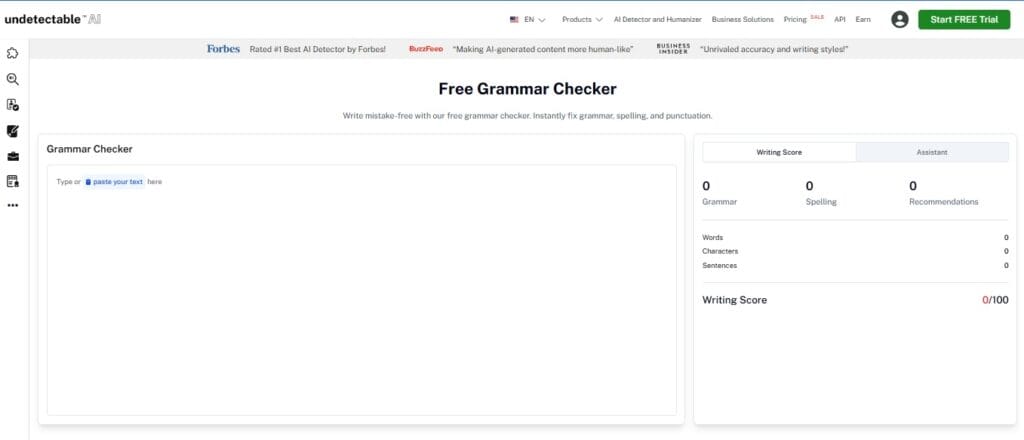
Use our Grammar Checker to go through your entire text for regional spelling errors and grammatical errors. The result will be a polished and professional output worthy of publication.
Examples of Fibre vs Fiber in Sentences
The following examples will aid you in understanding how to use either fiber or fibre correctly, and in the right context:
| Fibre (British Spelling) | Fiber (American Spelling) |
| The doctor recommended that we buy her better fibre supplements for her health. | He informed the doctor that he has been taking the recommended fiber dosage in his diet. |
| This jacket is made from a natural fibre that many have boasted lasts longer. | This jacket is made from a pricey natural fiber from a Chinese factory. |
| The new Mayor of New York City is investing billions in fibre optic broadband. | The mayor promised that he’d install air fiber in the community so we’d switch from fiber cables. |
| Whole grains are an excellent source of dietary fibre that more people need to eat. | I keep telling my mom that wheat is a great source of fiber, but she only believes quacks online. |
| The research focused on carbon fibre composites. | I did my PhD thesis on carbon fiber and the harm it causes when left exposed for too long. |
| The new fibreglass panels we ordered arrived at the warehouse this morning. | My nutritionist stressed the importance of eating high-fiber foods daily. |
| I discovered on Twitter that scientists developed a stronger carbon fibre material for aircraft wings. | In just 50 years, fiber optic cables have connected most major cities across the US. |
| The Independents don’t trust the current Administration’s plan for a nationwide fibre broadband rollout. | My lab is testing a new synthetic fiber blend for military uniforms. |
| We found out on the BAFTA Awards’ red carpet that her dress was made entirely from natural plant fibre. | Due to health doomsayers, fiber supplements have become one of the top-selling health products in the US. |
| That old radio company on the commercial lane upgraded its network using fibre channel technology. | I’m pleased the construction crew installed fiber cement boards along the exterior walls. |
Beyond examples and your writing, you also have to check if your work comes off as robotic.
Our AI Detector picks up on unnatural writing and highlights content that doesn’t read like a person wrote it. With this information, you can ensure that your content always has a human touch before publishing it.

American vs British English
Worldwide, there are different varieties of the English Language, but we have only two standard forms accepted and they are American English and British English.
You will find them in schools, publications, and style guides across the globe.
These two variants were once one, with the American English branching off from the British English. The split started slowly during the colonial era when settlers carried 17th-century English with them to North America.
Back then, nobody was arguing about whether to write fiber or fibre. Everyone spelled English words the same way.
Now, the spellings ended up different due to Noah Webster’s publication of his 1828 American dictionary. This dictionary reshaped American English to shed off the French and Latin influence found in British English.
He’s the reason Americans write fiber instead of fibre, and flavor instead of flavour. The Brits disagreed and kept the older spellings, and Commonwealth countries followed suit.
Even with that, the American spelling didn’t really gain global recognition until after the Second World War. As the US rose to global superpower status, its version of English also spread with it.
American movies filled cinemas across Europe, brands like Coca-Cola were expanding into the markets on every continent, and countries like Japan and Brazil started picking up American spellings without even realizing it.
That’s how American English ended up sitting right next to British English as a global standard.
These are some of the distinct features of the two languages:
| Features | American English | British English |
| -er vs -re endings | center, theater, fiber | centre, theatre, fibre |
| -or vs -our endings | color, honor, favor | colour, honour, favour |
| -ize vs -ise endings | organize, realize | organise, realise |
| -og vs -ogue endings | catalog, dialog | catalogue, dialogue |
| -ense vs -ence endings | defense, license | defence, licence |
| Double consonants | traveled, canceled | travelled, cancelled |
| Vocabulary differences | apartment, truck, elevator | flat, lorry, lift |
| Date format | Month/Day/Year | Day/Month/Year |
Common Errors to Watch For
We all tend to make mistakes when writing, and with a tricky word like fiber, it’s even easier for you to slip up if you are not careful.
These are the common errors you want to avoid:
- Do not mix fibre and fiber spelling in the same document you’re working on. This is a mistake you’ll make when writing hastily. It makes your writing look careless and won’t be good for you when your work is reviewed. So, you have to pick one spelling and use it consistently or proofread your work to catch these errors.
- You must avoid using the spelling of fiber you’re comfortable with when writing for a non-US audience. You have to match the spelling to the reader and not to your wishes.
- Don’t forget about compound words either when using the word fiber. In compound words with fiber, you have to use the regionally correct spelling. In a case where you’re writing about fiber channels, and are trying to choose between fibre channel vs fiber channel, just go for the one your reader accepts.
- Also, check your spell checker settings before you start writing, as it can autocorrect your spelling if set to the wrong region. If your device is set to British English and you’re writing to an American audience, it’ll flag fiber as wrong and autocorrect it without informing you.
- Don’t assume one spelling is more correct than the other. Although American English and its spellings have had more global reach, that does not make it more correct. The only mistake you can make is using the wrong one for your audience.
Tips to Remember the Correct Spelling
The following tips can help you remember which spelling to use going forward:
- As a simple rule, words that end in “-re” (like fibre) are typically British spellings, while words that end in “-er” (like fiber) are American spellings.
- Research your target audience before you start writing. This will give you the language preference you will stick to throughout your writing to prevent any inconsistencies.
- Use regional tags or labels in your style guide. If you’re a writer who produces marketing content for multiple markets, you need to have a quick reference sheet listing the spelling conventions needed for each market. This setup saves you hours of second-guessing later.
Even the best writing tips can fall flat when they sound too technical or dry. You can use our AI Humanizer to reshape flagged AI writing in your work into a natural output that has a better impact on readers.

Test your writing through our AI Detector and Humanizer in the widget below!
Final Thoughts
Fibre and fiber have the same meaning no matter where they appear. The only difference between them is their spelling, which depends on who your audience is.
The core rule here is that Americans expect you to use fiber, while the British expect fibre.
Once you lock in that simple rule, the guesswork disappears entirely, even when you’re debating the finer points of air fibre vs fiber line in a technical document.
For faster results, you can skip the whole guesswork by using Undetectable AI tools.