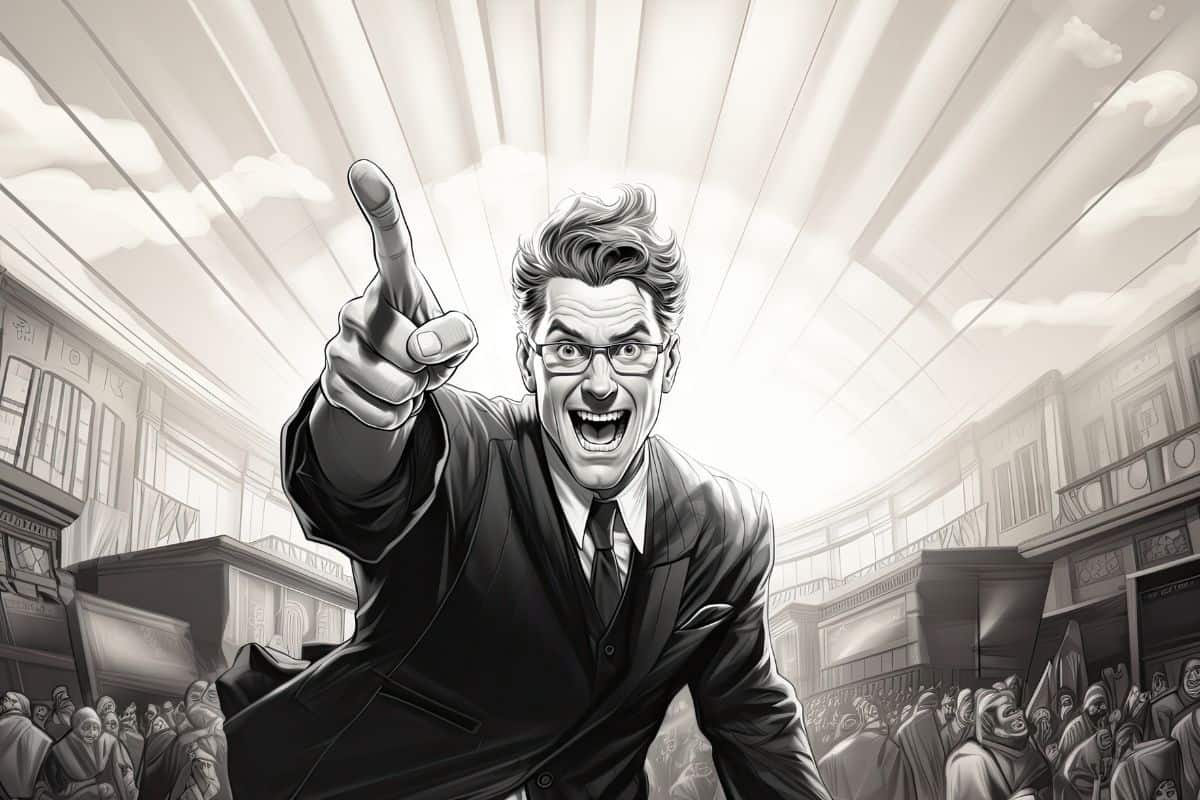
“%@$&*!”
Did you just read a curse word?
What you’re looking at is called a grawlix, a clever literary device writers use to replace obscenities with symbols.
Without having to decode it like a cryptographer, you know exactly what they meant, even though you’re just looking at a random string of symbols.
What’s especially interesting is that grawlixes have been hiding in plain sight since childhood in cartoons, manga, comics, and later, as an adult, those passive-aggressive work emails.
Most people don’t realize this cluster of random “shift + numbers” keys actually has a name. That’s the beauty of writing.
Nothing is random, and everything has a purpose.
And once you learn the term, you’ll start spotting grawlixes everywhere. They’re the universal language of “I can’t say this out loud, but you know what I mean.”
Key Takeaways
- A grawlix is a string of typographical symbols (like @#$%!) used to represent profanity or strong emotion in comics and writing.
- The term was coined by cartoonist Mort Walker in 1964 and has since become standard terminology in the comics industry.
- Common grawlix symbols include @, #, $, %, &, and !, though creative writers often mix in other punctuation marks.
- Grawlixes differ from censor bars because they actively engage the reader’s imagination rather than simply blocking content.
- Modern AI tools can help writers identify, refine, and creatively implement grawlixes in their work.
What Is a Grawlix?
You’ve seen them a million times. Those angry little symbol explosions that appear in speech bubbles when cartoon characters lose their cool.
But what are they actually called?
Grawlix Definition
Created by the cartoonist, Mort Walker, in 1964, a grawlix is a sequence of typographical symbols used to represent swear words, curses, or strong exclamations in comics, cartoons, and written text.


Never Worry About AI Detecting Your Texts Again. Undetectable AI Can Help You:
- Make your AI assisted writing appear human-like.
- Bypass all major AI detection tools with just one click.
- Use AI safely and confidently in school and work.
The symbols don’t spell anything as they don’t need to. Your brain fills in the blanks automatically.
Think of it as a visual sound effect for profanity.
The beauty of a grawlix is that it works across languages and cultures.
A French reader and a Japanese reader will both understand that “#@$%!” means something inappropriate just came out of that character’s mouth. The exact word doesn’t matter. The emotion does.
Writers love grawlixes because they let you keep things family-friendly while still conveying raw, unfiltered emotion.
It’s the difference between writing “he was angry” and showing a character yelling “@#$%&!” at a broken printer. One tells. The other shows.
Grawlix Examples
Let’s look at some classics:
Grawlix shows up everywhere. Not just in old newspaper strips but in some of the biggest franchises on the planet. Here are a few of the most recognizable examples.
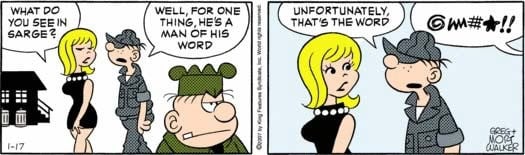
Classic American comics relied on grawlix to keep things family-friendly.
In Beetle Bailey, characters explode in frustration using clusters like @##%! whenever the camp falls apart or Sarge loses his temper.
The strip couldn’t use real profanity, so these symbols became part of its trademark humor.
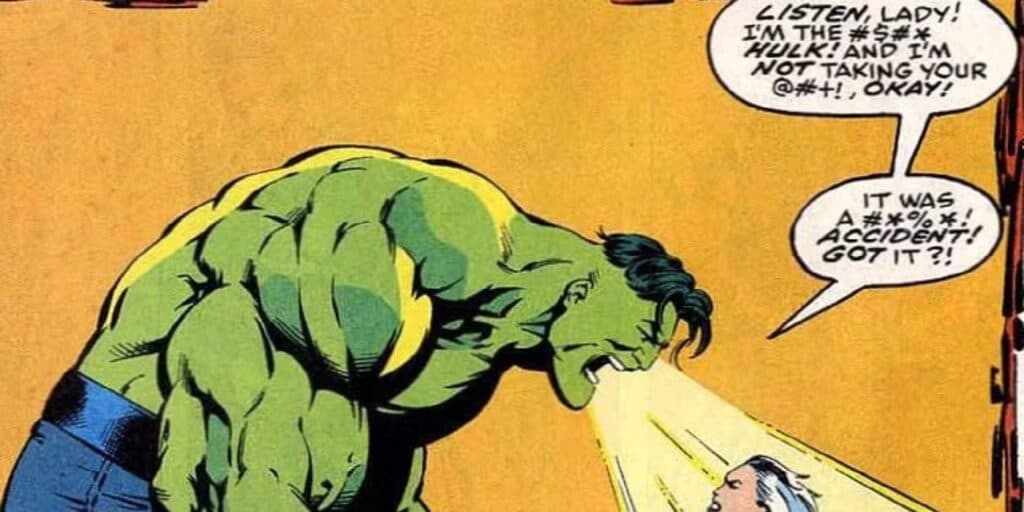
Comic book characters swear a lot more than publishers are allowed to show. The Hulk is one of the clearest examples.
Writers use strings like #%$*@! to show he is yelling actual curse words without violating rating guidelines. The anger is real. The symbols soften it just enough to stay on the page.
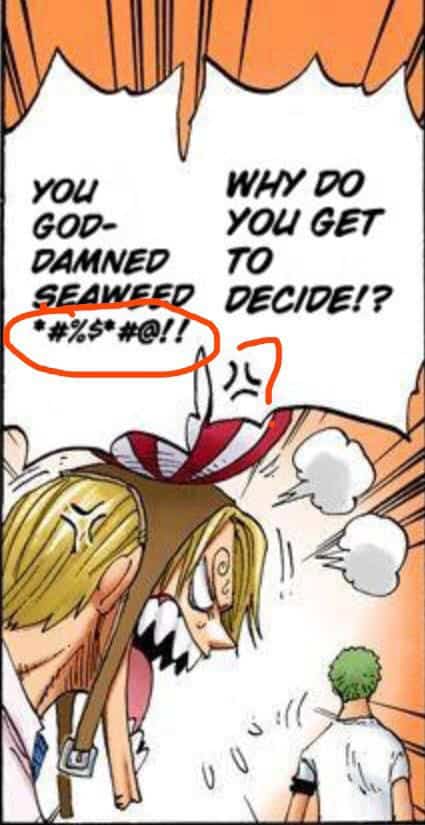
Manga uses grawlix too. In One Piece, Sanji often fires back at Zoro with symbol-heavy outbursts like #%$@!! whenever they argue.
It maintains a comedic and intense tone while avoiding explicit language in a series suitable for a wide age range.
These examples demonstrate the universality of the trick.
Even when characters come from totally different worlds, a grawlix remains the fastest way to show pure, uncensored emotion without printing the actual words.
Where the Term “Grawlix” Comes From
As mentioned earlier, the word “grawlix” was invented by Mort Walker.
If that name doesn’t ring a bell, his comic strip definitely will. Walker created Beetle Bailey in 1950, and it became one of the longest-running comic strips in American history.
But Walker wasn’t just a cartoonist. He was also a scholar of his craft.
In 1964, he began documenting and naming all the visual elements that make comics work, including elements that had been used for decades but had never had official names.
He called this collection “The Lexicon of Comicana.”
In it, Walker named everything from “emanata” ( lines that show movement or emotion radiating from a character) to “waftarom” (the wavy lines that indicate smell).
And yes, he gave typographical symbols representing profanity an official name: the grawlix.
Before Walker, people just called them “those symbols” or “cartoon cursing.”
Now we have a proper term. It’s like discovering that the plastic tip on your shoelace is called an aglet. Suddenly you can’t unknow it.
The term caught on slowly at first. Comic artists used it. Writers used it. Eventually, it made its way into dictionaries and style guides.
Today, if you’re studying visual storytelling or working in comics, you’d better know what a grawlix is.
How Grawlixes Are Used in Writing and Comics
Grawlixes aren’t just random. They follow patterns.
In comics, they appear in speech bubbles, usually in bold or emphasized text. The font size often matches the intensity of the emotion. Bigger symbols mean louder cursing.
The shape of the speech bubble matters too. Jagged edges suggest yelling. Cloud-like bubbles suggest thinking angry thoughts.
Context is everything. A grawlix next to a character hitting their thumb with a hammer reads differently than one in the middle of an argument.
The surrounding visuals tell you whether the emotion conveyed is pain, anger, frustration, or surprise.
In written fiction, grawlixes work similarly but with less visual support. You rely on surrounding dialogue tags and action beats to sell the emotion.
For example: “Sarah slammed her laptop shut. ‘@#$%!’ She’d just deleted three hours of work.”
You don’t need to spell out what Sarah said. The grawlix, along with the context, paint a complete picture.
Some writers use grawlixes sparingly for maximum impact. Others pepper them throughout for a more irreverent tone. Compare Scott Pilgrim comics versus The New Yorker cartoons.
Both use grawlixes, but the frequency and style differ wildly.
The key is consistency. If you use a grawlix once, readers expect you to keep using them to indicate profanity throughout the piece.
Switching to actual curse words later breaks the established rules of your fictional world.
The Common Symbols in a Grawlix
Some characters show up in grawlixes more than others. There’s an unofficial hierarchy.
The Big Five:
- @ (the at sign)
- (hashtag or pound sign)
- $ (dollar sign)
- % (percent sign)
- ! (exclamation point)
These are the workhorses. They’re visually distinct, easy to type, and most readers immediately recognize them as “not real words.”
The exclamation point especially sells the emotion as it’s already associated with yelling and emphasis.
The Supporting Cast:
- & (ampersand)
- (asterisk)
- ~ (tilde)
- ^ (caret)
These add variety. Mix them in to avoid repetitive grawlixes. An all-hashtag curse looks weird, while a well-balanced combination of symbols looks intentional.
The Rarely Used:
- (plus sign)
- = (equals sign)
- | (pipe or vertical bar)
These can work, but they’re less common. They don’t have the same visual punch. Plus signs especially feel too positive for angry cursing.
Here’s a pro tip: avoid using letters or numbers in grawlixes.
The moment you include actual characters, readers try to decode them. “Does F@#K mean something?”
Now you’ve pulled them out of the story to play detective. Stick to pure symbols.
Some writers develop signature grawlix patterns. If you read enough of one comic strip, you’ll notice the artist tends to favor certain symbol combinations. It becomes part of their visual style.
Grawlix vs. Censor Bars and Blurring
People confuse grawlixes with other censorship techniques. They’re not the same thing.
A censor bar is passive. It literally blocks text or imagery. You see a black rectangle, and you know something’s been removed.
It’s censorship imposed from outside, similar to those pixelated faces in crime documentaries or bleeped audio on TV.
A grawlix is active as it engages your imagination. It’s not hiding the profanity but representing it in a creative way.
The author chose to use symbols instead of words as a stylistic decision, not because someone forced them to censor content.
This matters for tone.
Censor bars feel authoritarian. Someone decided you couldn’t handle the real thing. Grawlixes feel playful or dramatic. The creator is working with you, not against you.
In comics specifically, grawlixes are part of the art. They contribute to the visual composition of the panel.
A speech bubble full of @#$%! has shape and texture and takes up space in an interesting way.
A censor bar is just a boring rectangle.
That said, some modern works combine both techniques. A character might yell a grawlix while simultaneously having their mouth pixelated in the artwork.
This creates a layered censorship effect that can be funny or unsettling depending on the context.
How to Identify a Grawlix
Most of the time, spotting a grawlix is obvious. However, symbols may appear in text for legitimate reasons.
How do you know when you’re looking at a grawlix versus, say, an email address or a mathematical formula?
Here’s what to look for:
- Context is important. If symbols appear in dialogue, in a speech bubble, or immediately after an action that would provoke cursing, it’s probably a grawlix.
- Random assortment. Real functional symbols follow patterns. Email addresses have predictable structures. Grawlixes deliberately mix unrelated symbols.
- Emotional emphasis. Grawlixes usually come with exclamation points or are surrounded by other indicators of strong feeling.
- Length and rhythm. Most grawlixes are 4-7 symbols long. That mimics the length of common curse words and phrases.
Tools like Undetectable AI’s AI Detector can flag unusual symbol clusters in text.
If you’re editing a manuscript or reviewing submitted work, running it through an AI detector might highlight grawlixes you missed.
The algorithm notices when punctuation appears in statistically improbable combinations.
This is especially helpful for writers working on digital comics or interactive fiction, where symbols might accidentally trigger formatting issues.
You want your grawlixes to render correctly across different platforms.
And if you’re polishing text around a grawlix, Undetectable AI’s AI Humanizer can help smooth out awkward phrasing.
Sometimes adding symbols disrupts the natural flow of a sentence. The humanizer analyzes the surrounding text and suggests adjustments so everything reads naturally.
Think of it like this: you want readers focused on your story, not stumbling over weird syntax because you shoved @#$% into the middle of a sentence without proper setup.
How to Use Grawlixes in Your Own Creative Work
Ready to deploy some grawlixes?
Here’s how to do it right.
- Start by considering the character. Not everyone talks the same way when they’re angry. A sailor might let loose with an eight-symbol explosion. A buttoned-up accountant might whisper a tiny “#!” Different grawlixes work best for different personalities.
- Match intensity to the situation. Stubbing a toe warrants a quick “@#!” Discovering your car got towed deserves a full “@# %&*!” Scale matters.
- Don’t overuse them. Grawlixes work because they stand out. If every other line contains symbols, they lose impact. Save them for moments that genuinely call for profanity.
- Consider your audience. Writing for kids? Grawlixes are perfect. Writing for adults? You might want actual curse words. Know your market.
- Experiment with placement. Grawlixes don’t just work in dialogue. Try them in narration, chapter titles, or even as standalone visual elements on the page.
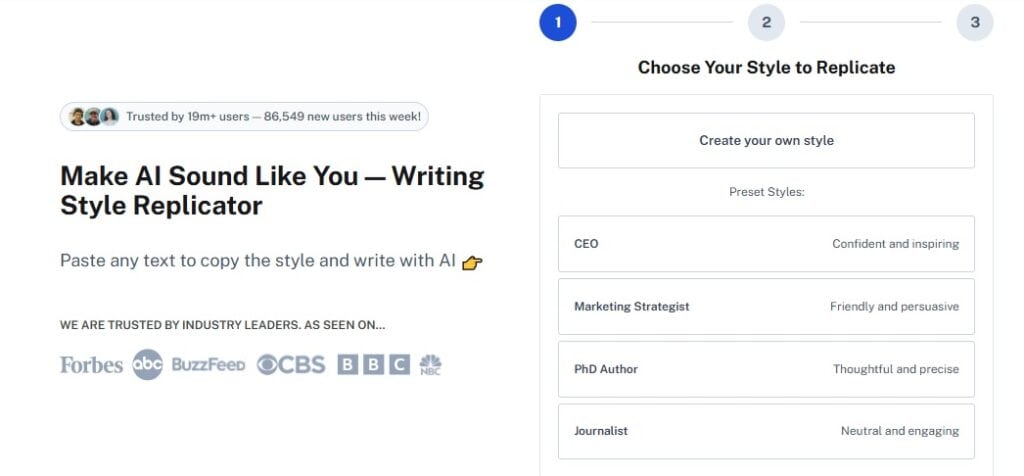
Undetectable AI’s Writing Style Replicator lets you test different approaches.
Want to see how a grawlix reads in a comedic tone versus a dramatic one? Feed it sample text and compare outputs.
You’ll quickly learn which style matches your voice.
Maybe you’re writing a tense thriller where a character’s “@#$%!” needs to feel genuinely terrifying.
Or maybe you’re crafting a lighthearted rom-com where the grawlix should make readers laugh.
The style replicator helps you nail that distinction.
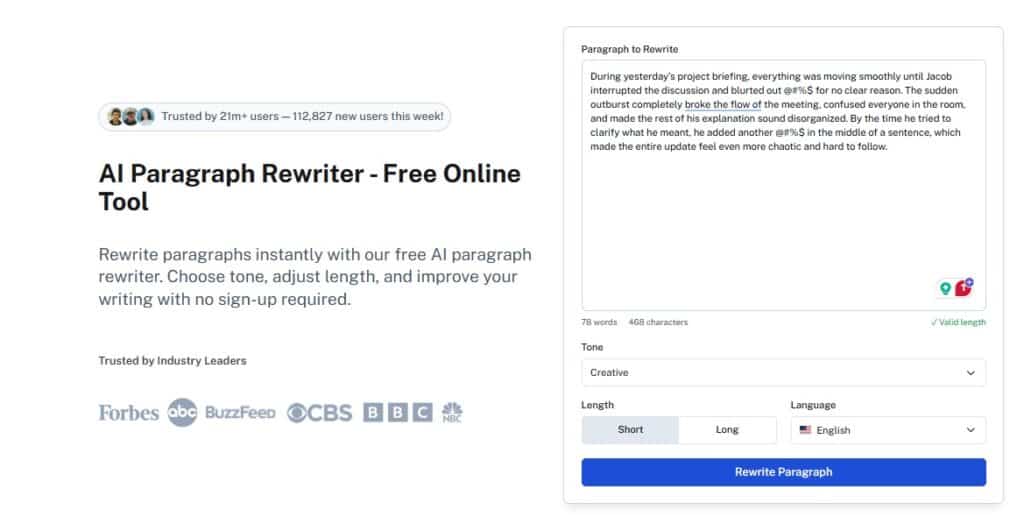
And once you’ve written your grawlix-filled scene, run it through Undetectable AI’s Paragraph Rewriter. This tool integrates the symbols smoothly into the surrounding text.
It catches rhythm issues, pacing problems, or places where the grawlix feels forced.
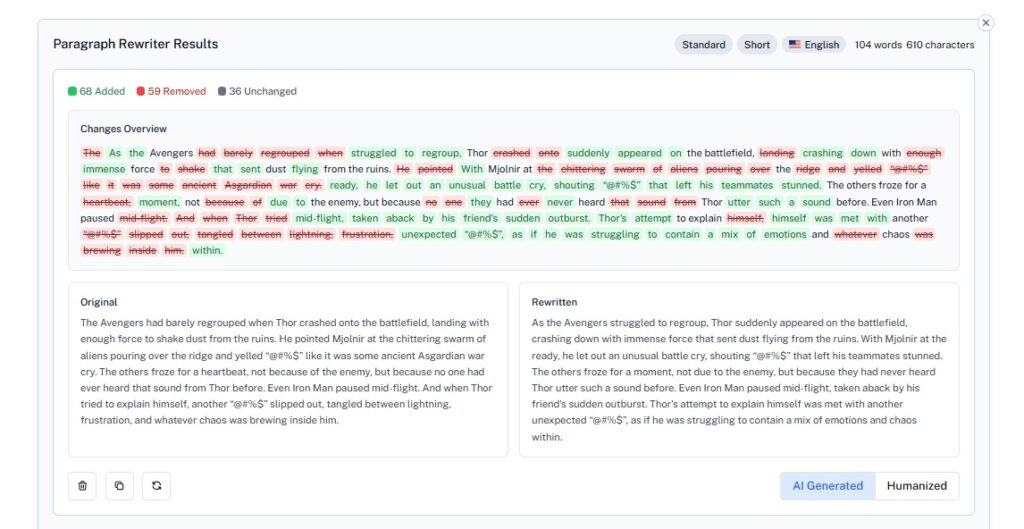
The rewriter essentially acts like an editor who specializes in writing that is profanity-adjacent. It ensures your @#$%! lands exactly how you intend.
One last tip: read your grawlixes out loud. Not the symbols themselves, obviously. But read the sentence with the understanding of what the grawlix represents.
Does it feel natural? Would a real person react that way? If not, adjust.
Get started with our AI Detector and Humanizer in the widget below!
That’s How You Turn @#$% Into Art
Grawlixes are more than just comic book cursing. They’re a sophisticated storytelling tool that conveys emotion, protects tone, and engages the reader’s imagination.
From Mort Walker’s original documentation to modern digital writing, the grawlix has evolved but never lost its core purpose: letting characters express strong feelings without explicit profanity.
Whether you’re writing graphic novels, fiction, or even professional content with a playful edge, knowing how to deploy a well-timed @#$%! gives you creative flexibility.
It’s the difference between telling readers someone was angry and showing them something they’ll remember.
The best part is that grawlixes work in virtually any genre. Comedy, drama, horror, romance. They adapt to your needs.
And with modern AI writing tools, crafting perfect grawlix-filled prose has never been easier.
You can test different emotional tones, smooth out awkward integration, and even identify when symbols might be causing formatting problems.
Ready to level up your writing with grawlixes and other creative techniques?
Undetectable AI offers a full suite of tools designed for writers who want to push boundaries while maintaining professional polish.
Whether style replication or paragraph refinement, we help you write with confidence and clarity.
Try them free today!