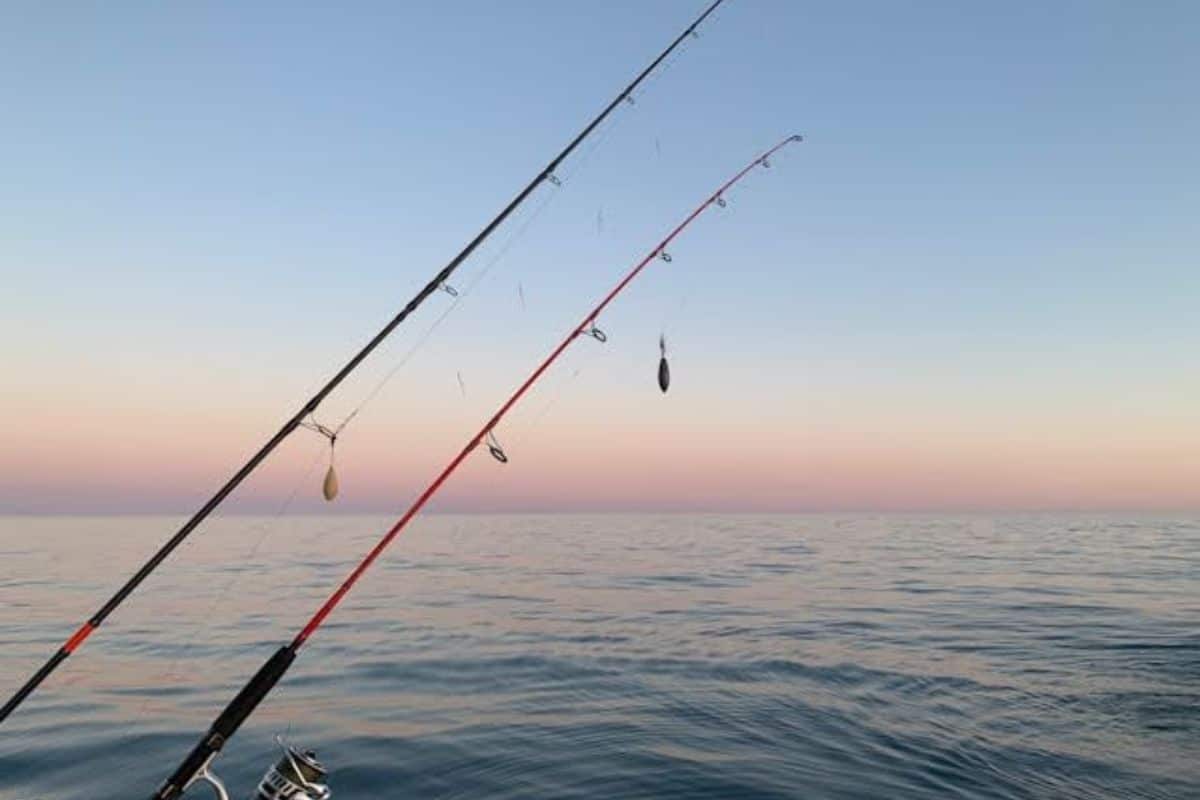
“Hook? Line? Sinker? These are fishing tools, so how are they relevant to the English language?”
The reason is quite easy: it is an idiomatic expression, or put simply, it is a phrase that one cannot decode using the meaning of the single words.
The phrase hook, line, and sinker is the most appropriate way to refer to when one becomes a victim of a lie or a trick. It might be a rather strange description of what being gullible is, but it creates a clear image of a fish swallowing the parts of a fishing tool.
Let’s dive in.
Key Takeaways
- ‘Hook, line, and sinker’ means to believe something without a doubt.
- It is fishing terminology that represents accepted without question
- It implies someone has been deceived because they believed something they should not have
What Does Hook, Line, and Sinker Mean?
Hook, line, and sinker is an idiomatic phrase that is applied to explain how an individual believes something without any reservation.
When someone accepts something “hook, line, and sinker,” they have accepted the whole story without questioning its authenticity.
It is a term that is linked to fishing, where a fish swallows an entire fishing tool. That is, the hook that caught the fish, the line connecting to the rod, and even the sinker weight.


Never Worry About AI Detecting Your Texts Again. Undetectable AI Can Help You:
- Make your AI assisted writing appear human-like.
- Bypass all major AI detection tools with just one click.
- Use AI safely and confidently in school and work.
Not only has the bait been swallowed by the fish, but all the rest of the tool has been swallowed too.
When this term is employed, it refers to the fact that an individual has been deceived. That person has accepted something to be true without stopping to critically think about it.
“Hook, line, and sinker” in a way suggests that maybe a person was too trusting or gullible, especially when it is an obvious lie.
Origin and Context
Like other interesting idioms, “hook, line, and sinker” has its roots in everyday life. The phrase originated in the 19th century when fishing was a more popular activity than it is today.
It refers to the act of catching a fish with all three parts of a fishing rod.
These parts include:
- The hook: This is a curved piece of metal that holds the fish.
- The line: It is a cord or a string that is attached to the fishing rod used to reel the fish in.
- The sinker: This is a weight that is employed to draw the bait and hold the hook in the water.
Most people who know much about fishing can really paint a clear picture when they hear the phrase, mostly because they are familiar with a fishing tool.
When a fish swallows all three parts, it is usually considered the ultimate catch because the fisherman does not have to do much work for the catch.
The use of this phrase to describe human behavior is apt because most people fall for things they should not have.
When one accepts an idea or statement in its entirety, and without any question, you can say that they have accepted the bait hook like and sinker.
The hook line and sinker meaning has gained popularity over the years in English-speaking countries and was even originally printed in the United States in the middle of the nineteenth century.
How Hook, Line, and Sinker Is Used
Hook, line, and sinker is not a weird phrase these days; you will come across people who use it quite often. This is how the phrase is used:
Conversations
This phrase is a common term in daily conversation, particularly when one wishes to describe someone who believes something without doubting. It is an ideal storytelling device when it comes to being deceived or pranked.
For instance:
- “I told him chocolate milk comes from brown cows, and he believed me hook, line, and sinker.”
- “She believed his excuse hook, line, and sinker.”
- “He fell for the fake lottery email hook, line, and sinker.”
It is used jokingly, without being insulting in a conversation. You can tease someone or even yourself about being too trusting. It is friendly in a way that it does not sound mean.
You are simply trying to suggest that a person should have been a little more suspicious.
Media and Marketing
People in media and marketing are fond of telling stories to engage their customers. Sometimes, their stories are fictional, and they are only done with the sole purpose of getting their target audience engaged enough to buy products.
In marketing and media contexts, “hook, line, and sinker” has a slightly different meaning. It doesn’t describe gullibility or deceit. It is used by marketers and advertisers to make a person understand and buy into their messages completely.
For example, if you are in media or marketing, here are ways you can use the phrase:
| Context | Use |
| Advertising Campaigns | “The ad was nostalgic, and consumers bought into the brand story hook, line, and sinker.” |
| Political Campaigns | “Voters accepted the campaign promises hook, line, and sinker.” |
| Clickbait and Viral Content | “The fake news article was shared thousands of times, and people believed it hook, line, and sinker.” |
| Product Launches | “Apple’s marketing team knows how to get people to anticipate a new product hook, line, and sinker before it even hits shelves.” |
People in the media love to use this phrase because it perfectly describes their goal, which is uncritical acceptance of information. When an ad convinces you that you need something, you’ve fallen for it hook, line, and sinker.
Advertisers, politicians, and even influencers want people to believe their messages totally. In the era of social media and viral materials, it is harder not to be hooked, line, and sinker.
You should be careful what you hear and believe. Do not take a step without researching.
Phrases such as hook, line, and sinker help to enrich your speech. If you want to learn how to use them in a sentence, try practicing with Undetectable AI’s AI Chat.
You can use our AI Chat to come up with creative ways to use the phrase.

Hook, Line, and Sinker Examples
Here are some examples of the hook, line and sinker in a sentence:
- “When Bobby said he was a renowned artist, Emma believed him hook, line, and sinker.”
- “The business pitch was well put together that investors accepted the profit projections hook, line, and sinker, despite the lack of actual revenue.”
- “The SOS message was reposted many times on Facebook, with hundreds of people believing it hook, line, and sinker before anyone checked the source.”
- “When I was younger, my brother told me if I swallowed a seed, a fruit would grow in my stomach, and I believed it hook, line, and sinker for years.”
- “When the company sent a phishing email about unlimited vacation days, new employees bought into it hook, line, and sinker and clicked the link.”
- “The kids swallowed the story about Santa watching them through the Elf on the Shelf hook, line, and sinker. They were on their best behavior all December.”
- “When the email said I had won a free cruise, I almost believed it hook, line, and sinker before my daughter proved it was an obvious scam.”
- “The documentary showed a one-sided view, and many people accepted it hook, line, and sinker without thinking about the other view.”
- “He told his boss he was sick, and she bought it hook, line, and sinker, even when he posted himself on the beach on his ‘sick day’”
From these examples, each sentence shows complete acceptance without question, even though there is a subtle hint of “they should have known better.”
Tips and Common Mistakes
Some people sometimes see the use of ‘hook, line, and sinker’ as a difficult thing. But it is not, it is quite easy.
You only need to learn what the phrase entails and keep an eye out for the instances where you can use it.
The tips on how to use the phrase correctly are as follows:
- Use it when you want to talk about complete belief: Hook, line and sinker is not the most appropriate expression to use to refer to partial belief. The phrase does not exactly fit in a scenario in which you narrate to an individual a story, and they only believe a part of the story. The person you are talking to has to believe the whole thing without questioning you.
- Use it at the end of sentences: ‘Hook, line, and sinker’ makes sense at the end of a sentence. It gives other people the context of the statement that was believed. Putting it at the end gives it the most impact.
- Use it only to describe accepting wrong behaviour: The phrase is only used to point out that someone believed something too easily, especially false information. It is not the most appropriate way to explain the acceptance of true and proven information.
While the phrase seems so easy to use, most people still make mistakes with it. Here are common errors people make:
- Swapping the sequence: Do not forget that it is hook, line, sinker and not line, hook, sinker or otherwise. You must always see it through the eyes of the fish.
- Using it to describe partial belief: If you say, “I kind of believed it hook, line, and sinker,” that’s contradictory. The entire essence of the phrase is complete belief.
- Omission of commas: You are supposed to use commas to separate the words when you are writing. It must be hook, line, and sinker with the right punctuation mark between the words.
Every use of hook, line, and sinker in a sentence must be natural and clear.
Our Undetectable AI’s AI Humanizer helps you apply the phrase in a way that sounds helpful, not judgmental.
Similar Idioms and Expressions
The following are some of the similar idioms and phrases you can include in your vocabulary
| Idiom | Meaning | Example |
| To swallow whole | To accept something without question, just like swallowing food without chewing | “He swallowed that excuse whole.” |
| To buy into | To completely accept something | “She really bought into his explanation.” |
| Eat it up | To eagerly accept or believe something | “The audience ate up every word of his speech.” |
| Take the bait | To fall for a trap or deceit | “I can’t believe you took the bait on that obvious prank.” |
| Fall for it | To believe a lie or a trick | “I can’t believe I fell for that old trick.” |
| Lock, stock, and barrel | To accept everything completely | “They bought the business lock, stock, and barrel.” |
Each expression here describes the same unquestioning acceptance, like “hook, line, and sinker.” They all point to the same idea that the phrase portrays.
Try the AI Detector and Humanizer tools in the widget below!
FAQs
What Does It Mean To Fall For Someone Hook, Line, and Sinker
It refers to the fact that you have fallen in love with someone or are romantically involved with someone.
Using the word here does not mean to be gullible; it is a question about feelings and not implying that somebody was misled. Sometimes, it could also describe falling too hard or too fast without thinking, depending on the context.
This is what is interesting about idioms: they can change, depending on the context in which they are applied. Although hook, line, and sinker is understood as being fooled in other situations, when used in romance, it is more about feelings than being fooled.
Final Thoughts
Hook line and sinker meaning is widely used because you can actually imagine how a fish is caught using fishing equipment.
It is ideal when it comes to complete acceptance, either in the way you feel about a person or how consumers respond to a marketing campaign.
The fact is that when you know you have swallowed something hook, line, and sinker, it is important to be more critical and recognize what you accept as the truth.
This is what makes this idiom so relatable and why it will continue to be used for a number of years to come.
Before you hit publish, run your writing through Undetectable AI to make sure it reads naturally and authentically human.