
A judgment has just been handed down by the judge in court, and you have to write the verdict. Then, all of a sudden, you cross-check the spelling of judgment you just used.
You could swear you’ve seen it spelled judgement elsewhere. So, you begin to wonder, is it judgment or judgement?
Well, both spellings are correct, but this only solves half your confusion. The other question is, if both spellings are correct, then what is the difference, and how do you correctly use them so next time you don’t doubt your choice?
This guide will provide you with the answers, along with examples and the rules of judgement or judgment spelling.
Let’s dive in.
Key Takeaways
- The difference between judgment and judgement is just a matter of spelling choice in the US and UK.
- Both spellings have the same meaning and pronunciation.
- Judgment is the spelling accepted in American institutions and in every English-speaking legal system in the world, including Britain.
- Judgement is the preferred spelling in British English and in other Commonwealth countries like Australia and New Zealand. However, you can’t use the spelling “judgement” in British courts and legal writing. You have to default to using judgment.
What’s the Difference Between Judgment vs Judgement
The difference between judgment and judgement is purely regional. So, to be clear, you’re not choosing between two different meanings since they function the same way in a sentence.
The only difference separating them is spelling preference based on location.
In American English, the spelling “judgment” is preferred and used in American publications and legal documents.


Never Worry About AI Detecting Your Texts Again. Undetectable AI Can Help You:
- Make your AI assisted writing appear human-like.
- Bypass all major AI detection tools with just one click.
- Use AI safely and confidently in school and work.
In contrast to the Americans, the British and other countries that follow British English conventions use “judgement” with the ‘e’ intact. This is why your choice of spelling will depend on where your readers are from.
Meaning Basics
Judgment or judgement is a noun and is used to describe your capacity to effectively make sound decisions and have a rational opinion.
Besides that, it is also applied to imply a formal verdict by either a judge or a jury in a court to settle a matter or to punish an offender. To put it briefly, the definition of judgment never changes, even while the spelling may.
Why There Are Two Spellings
The reason behind the two spellings is that there is more than one standard spelling system in the English language.
The largest division is between American and British English and the spelling of judgment is one of those divisions. Each system has its own correct spelling of many common words.
In fact, the word judgement was first written in English in 1250 -1300, and derived from the Old French as jugement with the e in it. Consequently, for centuries, British and American speakers spelled it as “judgement.”
However, at the end of the 1700s and the beginning of the 1800s, Noah Webster pushed for a language reform of American English.
He promoted American English with simple spellings, and lots of words lost their letters as they were considered unnecessary. This change is evident in words like flavour and flavor, and cozy and cosy.
Through this reform, this shorter spelling was adopted in American English, and it became the norm in the United States.
In the meantime, there was no movement for spelling reform in Britain as seen in America. Thus, the spelling of judgement remained commonly in use in Britain and its colonies.
Globally, the judgment spelling prevails in popular culture because of the American world superpower position.
When to Use
Although both spellings have the same meaning, you have to stick to the accepted spelling in a given region.
Judgment
You can use the shorter spelling when you are:
- Writing for an American audience or following American English standards.
- Writing academic papers that follow US style guides like APA or Chicago.
- Drafting legal documents in any English-speaking country, since the legal system worldwide prefers this spelling regardless of region.
- Submitting work to American publications and newspapers.
- Taking standardized tests in the United States, as they expect American spelling.
- Writing business communications for US-based companies or clients.
- Writing for a global audience, since this spelling is accepted and understood globally.
Judgement
For a British audience, this spelling will look natural in everyday writing. It is common in UK spelling conventions outside of legal use. You can use Judgement if:
- You are writing for a British, Australian, or Commonwealth audience.
- You are following British English style guides or conventions.
- You are writing informally, and your natural spelling habit includes the “e.”
- You are creating content for UK-based publications, blogs, or websites.
- You are writing academic papers for universities that follow British English standards.
- You are not writing in a legal context. You must remember that British legal writing drops the “e” and uses “judgment” instead due to statutory compliance and professional authority.
- You are writing fiction or creative work set in or intended for British English readers.
Examples of Judgment and Judgement in Sentences
You will get to see the use of judgment and judgement in action in the following sentences.
| Judgment (American English) | Judgement (British English) |
| She felt she made the appropriate judgment for her daughter after touring a number of schools and using her own discretion. | Her judgement of the soaring property market in the previous year was accurate. |
| According to the judge, she will make her final judgment after listening to the evidence and the decision made by the jury. | When the storm began, he made the right judgement to bring the kids inside. |
| We have been bargaining for months, and it annoys me that his ill judgment has cost us the deal. | The judges will give a final judgement on whether she is guilty of misconduct or not today. |
| My father advised me that you mustn’t rush a judgment that affects your finances for years to come. | I refuse to believe you can form a fair judgement about someone based on what other people say about them. |
| I instructed the hiring manager to make the best judgment in selecting the appropriate candidate to work in the new HR team. | My sister has always had better judgement than I in her romantic relationships. |
| My grandfather always said that good judgment comes from experience. I guess that’s why everyone listens to him. | The manager acknowledged that his judgements have been influenced by personal feelings and vowed to be more impersonal. |
| The Principal could not make his judgment regarding the new student until he observes his progress for a complete semester. | My mother did not have any doubts about my judgement on the right venue to have my dream wedding. |
| Martin Luther King taught us to make our judgment on individuals based on their behavior. | She passed no judgement on her colleague for arriving late because she knew what traffic in New York is like. |
| The jury decided to make a unanimous decision after they finished their secret discussions, which lasted for some time. | The professor provided the students with the option of choosing their own research topic, leaving the choice to their own judgement. |
| In my opinion, it is just prudent to refer to the judgment of an expert on issues we know nothing about. | It took me years of working in the restaurant industry before I developed the judgement my clients trust so much. |
Are Judgment and Judgement the Same?
Yes, they are the same. There is no difference in pronunciation and the meaning of judgment and judgement. The variation in their spellings relies on regional spelling rules in American and British English.
So, when you write “judgment,” you are following American English. On the other hand, when you write “judgement,” you are following the British English standard.
| Feature | Judgment | Judgement |
| Spelling | Without “e” after “g.” | Has “e” after “g.” |
| Region | American English | British English |
| Legal Writing | Preferred and used globally. | Not used in British law. Judgment is the preferred spelling. |
| Dictionary Standard | The primary spelling in US dictionaries. | The accepted variant in UK dictionaries. |
| Academic Use | The standard in US institutions. | The standard in the UK and Commonwealth institutions. |
| Pronunciation and Meaning | Identical | Identical |
Tips for Choosing the Right Spelling
You can choose the right judgment spelling henceforth based on these simple tips. All you have to do is follow them, so you can make the right choice.
- Your Audience Comes First: Before you start writing that blog or email, you need to figure out who you are writing for. Your audience must always dictate your spelling choice. This simply means that if your readers are primarily American, you have to go with judgment. But if they are British, Australian, or from New Zealand, you will use “judgement.”
- Check your Style Guide: Most publications, universities, and companies already have a preferred standard in place. APA, Chicago, and Harvard style guides all favor “judgment.” British style guides accept “judgement.” A quick check at the start saves you from going back to fix every wrong choice later.
- Stay Consistent: This is the golden rule when writing using spellings that have variants like judgment. You must not arbitrarily switch between judgment and judgement in the same piece of writing. Next time, when you pick one spelling at the start, use it from beginning to end.
- Set your Spell Checker: Word processors like Microsoft Word and Google Docs let you set your language choice to either American or British English. You must set yours to the same spelling standard you are following. The same must be done with writing extensions such as Grammarly and Quillbot. This way, your spell checker will flag the wrong judgment spelling automatically instead of letting it slip through.
- Remember the Legal Exception: When you are writing documents related to law, whether in the US or the UK, you must use “judgment” without the “e” regardless of where you are. This is the accepted spelling in legal writing across almost all English-speaking countries.
- Use a Memory Trick: American English spellings are shorter compared to their British variants. The American spelling drops the “e” in judgment. Just keep in mind that American English tends to cut unnecessary letters. With this, you’ll always choose the right spelling.
- Default to Judgment When in Doubt: Use the judgment spelling when you do not have a specific writing style guide you must adhere to. It is a less dangerous alternative, and it is acceptable everywhere. But such is not necessarily the case with the judgement spelling globally.
- Proofread: Once you have written your paper, don’t hurry to publish it. You must take time to read it carefully to find any mistakes that your writing assistant might have missed. You can use the Find and Replace feature in your word processing software to easily search for any of the spelling variations in your work.
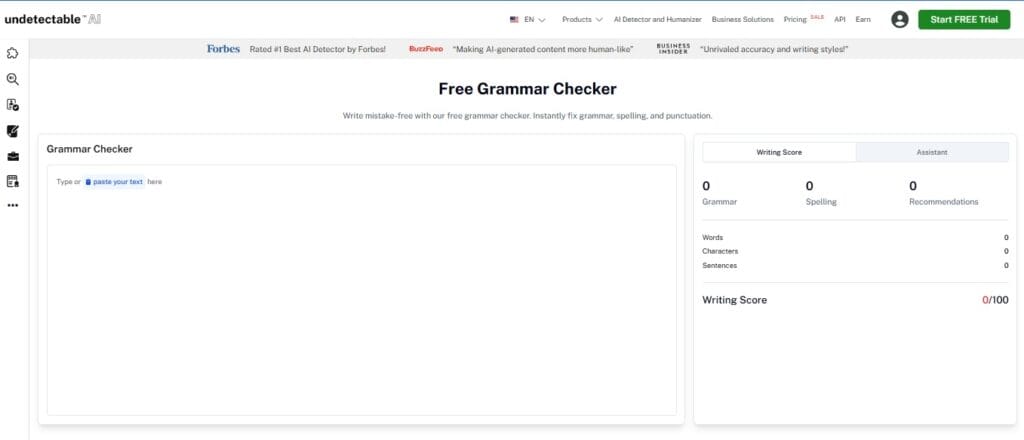
However, to bypass the stress that comes with editing and proofreading your writing, you can use our Grammar Checker to catch any judgment spelling errors and grammatical inconsistencies that are present in your writing.
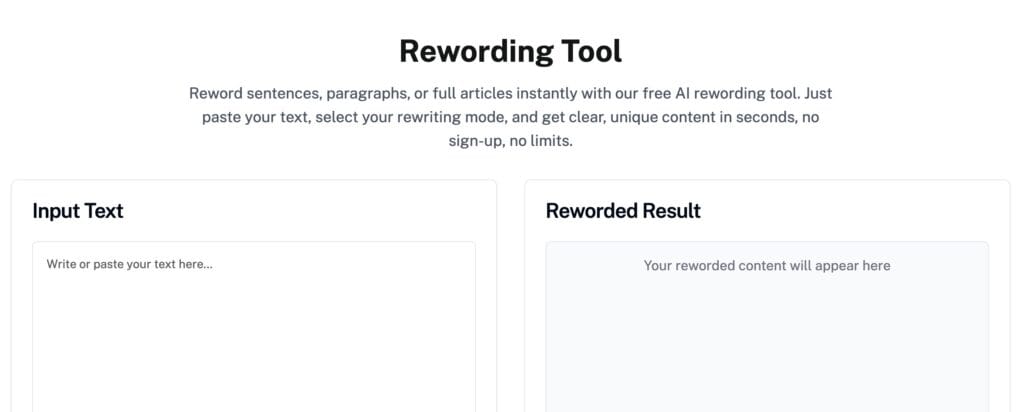
You can also make use of our Rewording Tool alongside the grammar checker to ensure that your work will be reworded to suit your tone for your preferred audience, either in the US or UK.
Try our AI Detector and Humanizer in the widget below!
Final Thoughts
The answer to the question is it judgement or judgment is simple. The judgment or judgement spelling difference is just based on location and this difference doesn’t affect the meaning and usage of the words.
All you need to do is to be consistent with your decision and spell the word correctly to the audience that you are addressing. Note that in American English, judgment is used more often, but in British English, the term judgement is primarily used.
However, the British legal system and all British courts in other parts of the world favor the use of “judgment” irrespective of regional spelling conventions.
You can use the tools of Undetectable AI to refine your next write-up and get additional clarification regarding the correct usage of the spelling.
Keep your spelling consistent and audience-appropriate with the help of Undetectable AI.