
If Kato Lomb could master 16 different languages in an era before the internet, what is stopping you?
She had no different brain than us.
In fact, she was a Hungarian translator who began her journey by teaching herself English using nothing but a romance novel and a dictionary.
She treated language learning like a game of deciphering a secret code.
And by the end of her life, she was successful in learning 16 different cultures and grammars.
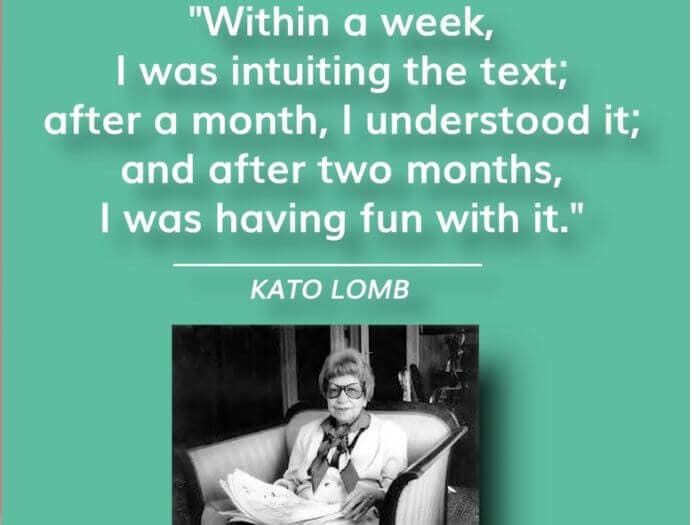
If you’re reading this blog, it means you also intend to learn a language.
If so, keep reading.
In this guide, we’ll cover 6 practical language learning tips for beginners. Plus a full breakdown of the best language learning apps available today so you can pick the one that actually fits your life.
Let’s get into it.
Key Takeaways
- The best language learning apps combine input, output, and review, not just gamified quizzes.
- Mastering phonetics in week one saves months of pronunciation confusion later.
- Learning chunks (full phrases) instead of isolated words speeds up conversations.
- Free language learning apps like Duolingo and Memrise are great starting points, but paid tools like italki and Babbel unlock faster fluency.
- Daily writing builds grammar muscle faster than passive reading.
- The best language learning app for you depends on your goal: travel, career, conversation, or academic use.
- Pairing a language learning app with a real human partner is the single fastest path to fluency.
What are Language Learning Basics?
Before you explore the best language learning apps available today, keep these fundamentals in mind.
#1 — Master the Phonetic Foundation
Languages don’t always sound the way they look on paper. Example


Never Worry About AI Detecting Your Texts Again. Undetectable AI Can Help You:
- Make your AI assisted writing appear human-like.
- Bypass all major AI detection tools with just one click.
- Use AI safely and confidently in school and work.
- English has 44 different phonemes despite only having 26 letters.
- The letters “ough” alone are pronounced differently in though, through, cough, and thought.
- In Spanish, words are almost always spelled exactly how they sound.
- But sounds like the rolled rr (as in perro) and the soft b/v distinction don’t exist in English, so beginners need deliberate practice.
- French has silent letters.
- Nasal vowels (un, en, on), and liaison rules blend the words together in speech.
Most language learning apps include audio from native speakers — use that feature heavily in week one.
#2 — Understand the Core Grammar
Every language has a sentence structure, and understanding it early saves you enormous confusion later.
- English and Spanish follow Subject-Verb-Object (S-V-O)
- She eats apples.
- Ella come manzanas.
- French also follows S-V-O but adds grammatical gender to every noun
- Pain (masculine bread) vs. la maison (feminine house)
- It affects adjectives and articles throughout the sentence.
- Japanese and Korean follow Subject-Object-Verb (S-O-V)
- She apples eats.
- Arabic and Hebrew have Verb-Subject-Object (V-S-O) structures and are written right to left.
#4 — Keep Your Input and Output in Balance
Every effective language learning app, and every good language teacher will tell you the same thing: language learning rests on three building blocks:
- Comprehensible Input: Exposure to the language through listening or reading, at a level you can mostly understand. This is how your brain absorbs patterns passively.
- Comprehensible Output: Producing the language by speaking or writing. This forces your brain to retrieve and apply what it has absorbed.
- Review and Feedback: Identifying your mistakes and correcting them. Without this, errors quietly solidify into bad habits.
An effective study plan maximizes all three. Focusing only on input feels productive but leaves your speaking and writing far behind. The reverse is also true.
Build Strong Vocabulary Every Day
Following are the sections to master your daily word count:
- Learn common everyday words
Most beginners make the mistake of learning random vocabulary from a textbook.
A more effective approach? Identify the gaps in your own life first.
What do you talk about every day in your native language: your job, food, getting around, making plans? Those are the topics to tackle first in your target language. The best language learning apps are built around exactly this principle.
Here are the high-priority everyday categories, with examples in both Spanish and French:
Spanish
| Category | Words |
| Greetings | hola (hello), buenos días (good morning), gracias (thank you), por favor (please), de nada (you’re welcome) |
| Food & Shopping | agua (water), pan (bread), mercado (market), ¿cuánto cuesta? (how much does it cost?) |
| Time | hoy (today), mañana (tomorrow), ¿qué hora es? (what time is it?) |
| Directions | ¿dónde está? (where is?), izquierda / derecha (left / right), cerca / lejos (near / far) |
French
| Category | Words |
| Greetings | bonjour (hello), merci (thank you), s’il vous plaît (please), excusez-moi (excuse me) |
| Food | café (coffee), boulangerie (bakery), je voudrais (I would like) |
| Transport | gare (train station), billet (ticket), arrêt de bus (bus stop) |
| Daily Actions | manger (to eat), dormir (to sleep), travailler (to work) |
- Practice with flashcards
Flashcards work because they make you actively recall information instead of just recognizing it. That effort helps your brain remember things for longer.
Example:
- Front: The Spanish word agua + a picture of a glass of water
- Back: The English word “water” + a full sentence: Quiero agua, por favor. (I want water, please.)
- Audio variation: Record yourself or a native speaker saying agua. Use the audio as the front of the card instead of text
- Use words in sentences
Memorizing a word alone only gives you part of the skill. You also need to know how it changes with different subjects, tenses, and situations.
The best way to learn this is to use each new word in sentences and then change those sentences in different ways.
Example:
New word: correr (to run)
- Step 1 — Basic sentence: Yo corro en el parque. (I run in the park.)
- Step 2 — Change the subject: Ella corre rápido. (She runs fast.)
- Step 3 — Turn it into a question: ¿Cuándo corres? (When do you run?)
Use any new word at least 5 times on the day you learn it, then at least once every day for the rest of that week.
Practice Speaking With Simple Conversations
- Start with short phrases
Don’t memorize individual words. Memorize chunks. Example
Instead of learning just “water”, learn “A glass of water, please.”
- Spanish: Un vaso de agua, por favor.
- French: Un verre d’eau, s’il vous plaît.
Other examples of chunks worth learning early:
- “I don’t understand” → No entiendo (Spanish) / Je ne comprends pas (French)
- “How much does this cost?” → ¿Cuánto cuesta? / Combien ça coûte?
- “Can you repeat that?” → ¿Puedes repetirlo? / Pouvez-vous répéter?
Most top language learning apps teach this way. Babbel and Pimsleur, for example, are built almost entirely around phrase-first learning.
- Repeat useful expressions
Focus on expressions used in everyday social situations, such as agreeing, disagreeing, apologizing, showing uncertainty, and buying or asking for things.
These come up all the time, and beginners struggle to find the right words for them during conversations.
Example:
Spanish
| Expression | Meaning |
| Lo siento | I’m sorry |
| Disculpe | Excuse me |
| Claro que sí | Of course |
| No estoy seguro/a | I’m not sure |
| ¿Tiene…? | Do you have…? |
| Es demasiado caro | It’s too expensive |
French
| Expression | Meaning |
| Avec plaisir | With pleasure |
| Ça dépend | It depends |
| N’importe quoi! | No way! / Nonsense! |
Write a short conversation using three expressions in one situation, or play a mad-lib style game where you change the expressions in the same sentence pattern.
- Speak with language partners
At some point, no app or flashcard deck can replace a real person. A language partner gives you natural conversation, unexpected replies, and quick feedback.
You can find partners on platforms like italki, Tandem, and HelloTalk. You can also practice with a friend, sibling, or classmate who is learning the language too.
Beginner tip: Do not start with a native speaker or someone much better than you. The skill gap can make you nervous and stop you from speaking. Practice with someone at a similar level.
But conversation practice is only half the problem.
Many learners face another issue. You can write a grammatically correct sentence and still sound unnatural.
Example:
You write: “Today I went to market. I bought bread. It was expensive. I came home.”
The grammar is correct. But native speakers usually connect ideas and vary their sentences.
A tool like the Undetectable AI’s AI Humanizer might rewrite it like this: “This morning I went to the market and bought some bread. The prices were high, but I made it back home.”
The meaning is the same. The difference is flow, connectors, and natural rhythm.
How to use this as a learning tool:
- Write practice sentences in your target language.
- Put them into the Humanizer.
- Compare the new version with your original.
- Notice what changed.
- Rewrite your sentence using what you learned.
The tool helps you see the difference between correct language and natural language.
How Undetectable AI Helps Language Learning
One of the biggest problems in language learning is understanding and translating phrases correctly.
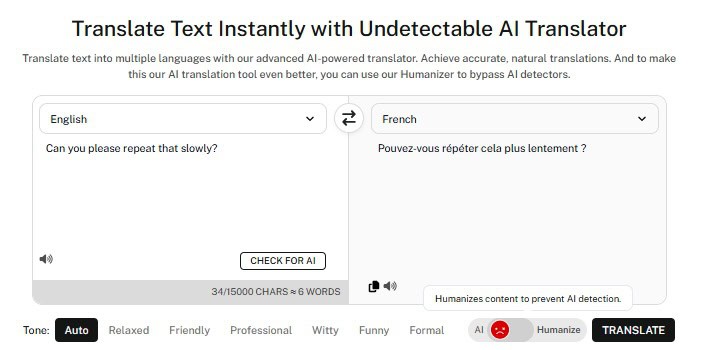
Traditional translators provide clunky, word-for-word results that are very robotic. The Undetectable AI’s Translator helps solve this problem.
It provides fast and accurate translations in 20+ languages.
- Switch between formal, friendly, or professional tones.
- Fix grammar and sentence structure to avoid literal translation mistakes.
- You can enter a phrase you heard in a show or conversation to understand its real meaning.
Example:
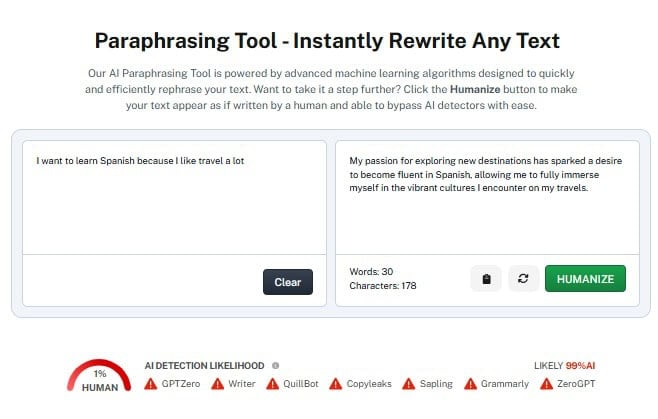
A common plateau for learners is using the same five verbs for everything. The Undetectable AI’s Paraphrasing Tool shows you alternative ways to say the same thing.
- Rewrite your sentences using different word orders and synonyms.
- Move you away from basic Subject-Verb-Object patterns toward more native-sounding structures.
- The tool is free and requires no sign-up.
Example:
Best Language Learning Apps List
Whether you’re looking for the best language learning apps for adults, or free language learning apps your kids can use right now, this list covers it all.
Top 10 Language Apps For Adults
- Babbel: The best language learning app if you want to use the language on a trip.
- Duolingo: Perfect for beginners who need a fun streak to stay motivated every day.
- Rosetta Stone: It has no translations, just pictures and audio. It teaches you to think in the new language from day one.
- Italki: Connects you with live human tutors for 1-on-1 video lessons.
- Pimsleur: All-audio lessons you can do while driving or at the gym. Focuses entirely on speaking and listening.
- Memrise: Uses thousands of video clips of native speakers so you can hear.
- Lingopie: Learn by watching TV shows and movies with interactive subtitles.
- ELSA Speak: An AI coach that listens to you speak and gives detailed feedback to fix your pronunciation.
- Busuu: Native speakers in the community correct your written and spoken exercises.
- Taalhammer: Focuses on full sentences instead of isolated words.
Best Language Learning Apps for Kids
Children learn better through play and visual immersion rather than grammar rules.
- Studycat: Best for toddlers (ages 3–7).
- Dinolingo: Great for younger kids; features colorful animations and rewards.
- Duolingo ABC: Specifically designed to help kids learn to read and write in a fun way.
- Gus on the Go: Focuses on vocabulary through simple, interactive stories.
Improve Writing Through Daily Practice
If you don’t practice writing regularly, your ability to structure complex thoughts will weaken over time.
The good news?
Even 10 minutes a day makes a real difference, and many language learning apps now include built-in writing modules to help.
5 Daily Habits to Improve Your Writing
- Every evening, write just 3–5 simple sentences in your target language about what you did that day.
- Take a basic phrase like “I ate bread” and modify it to “I ate pasta,” then “She ate pasta at a restaurant” to practice different subjects and settings.
- After listening to a short audio clip or video, write one paragraph explaining the main idea to practice summarizing information.
- Send a few text messages to a language partner on apps like Tandem or WhatsApp to get used to informal, real-time writing.
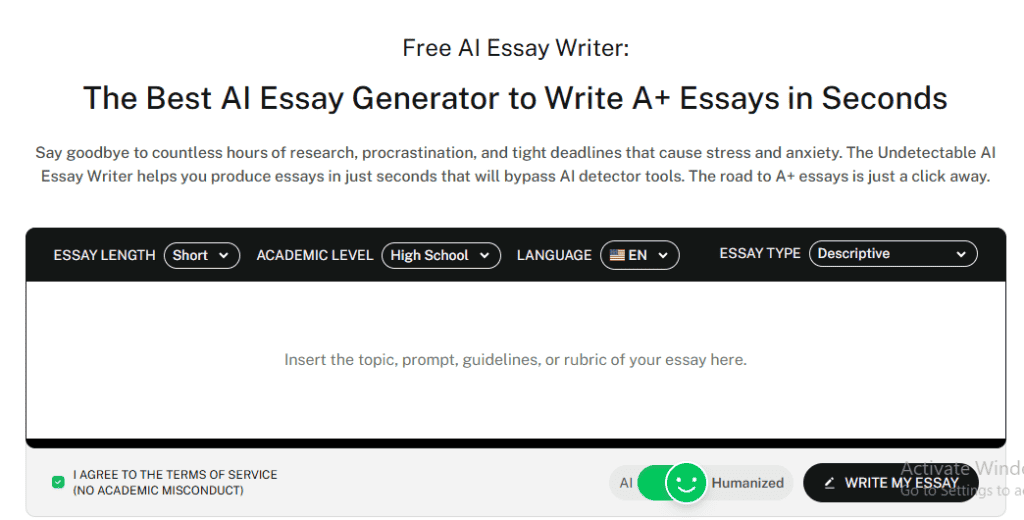
When you are ready to move from simple sentences to structured essays, the Undetectable AI’s Essay Writer will be your personal editing coach.
It can generate well-researched drafts in various formats.
- Choose a topic (e.g., “My Future Career Goals”) and write a rough draft yourself using your current knowledge.
- Use the AI Essay Writer to create a draft on the same topic with your specific guidelines.
- Look at the AI version next to yours. Notice where the AI uses better transition words, more advanced vocabulary, or a smoother sentence flow.
This tool isn’t a replacement for your effort, it just helps you in spotting the gaps in your own writing so you can bridge them faster.
Try the AI Detector and Humanizer tools in the widget below!
Final Thoughts
Finding the best language learning apps is only the beginning. The real secret to fluency is how you use them.
Whether you choose a free language learning app like Duolingo to stay consistent, or invest in a premium one like Babbel or italki for structured guidance, what matters most is daily, active practice.
Every app can be the best if you’ll actually open it every day.
Combine your chosen language learning apps with solid fundamentals such as phonetics, grammar structure, vocabulary in context, and real conversation practice.
Most learners quit because they wait to “feel ready.” They don’t. They just start.
Pick one language learning app from this list today. Give it 15 minutes everyday for the next 6 months. That’s all it takes to begin.
Practice daily and refine your writing in any language with Undetectable AI to keep it natural and fluent.